Laser Pegs: When building sets learned to glow
Laser Pegs brought LED lighting into classic construction play. Launched in 2007, the light-up pieces added spectacle without sacrificing open-ended creativity, appealing to kids and nostalgic adults alike.
Compare prices and availability
Check current prices and availability for this guide on eBay.
As an eBay Partner, we may be compensated if you make a purchase.
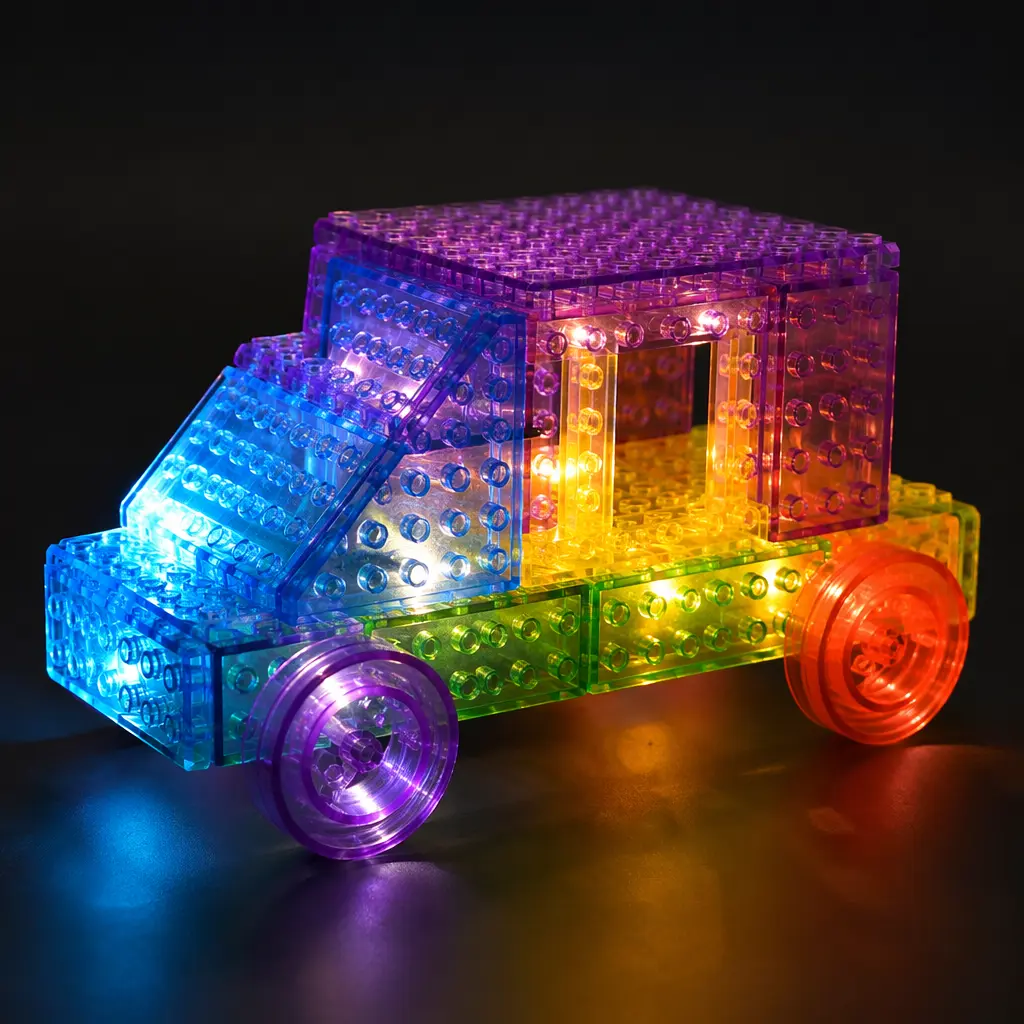
At first glance, Laser Pegs look like a familiar construction toy—small pieces snapped together to make vehicles, creatures, and abstract builds. Then the lights come on. Suddenly the model glows from the inside, turning a classic building activity into something closer to a desk lamp crossed with a science project. That mix of old-school construction play and modern spectacle is what made Laser Pegs stand out when they appeared in the late 2000s.
Where it came from
Laser Pegs were introduced in 2007 by a US-based toy company aiming to refresh the well-worn construction set category. The idea was straightforward but ambitious: embed tiny LED lights into individual building pieces so that any model could light up once completed. Unlike novelty light-up toys of the time, these pieces were designed to remain compatible within their own system and sturdy enough for everyday play.
The original purpose wasn’t just flash. Laser Pegs were marketed as educational building sets that encouraged spatial thinking and problem-solving, much like traditional bricks and pegs. The lighting element was meant to reward completion and experimentation, making structures visually exciting without dictating what kids had to build.
Why it works
Laser Pegs succeed because the light is integrated into the building process, not layered on top of it. Each translucent piece carries light through the structure, so the more thoughtfully a model is built, the better it glows. That cause-and-effect relationship keeps the focus on construction rather than just pressing a button.
From a design perspective, the system balances creativity with guidance. Sets usually include suggested builds, but the pieces themselves remain modular and reusable. Standout features include:
- Translucent pegs that diffuse LED light through connected pieces
- Simple power bases that illuminate entire builds
- Sturdy connectors designed for repeated assembly
- Compatibility across different Laser Pegs sets
Who it's for
Laser Pegs are typically aimed at school-age children who have the fine motor skills to assemble small parts and the patience to follow or invent builds. The visual payoff also makes them appealing to kids who might otherwise lose interest in standard construction toys. There’s a quieter adult appeal too: parents often enjoy the gentle glow as a display piece, and older builders appreciate the novelty of combining electronics with hands-on construction.
Variants and what to look for today
Over the years, Laser Pegs expanded into themed kits, larger starter tubs, and motorised or moving builds. Today’s sets tend to emphasise durability and brighter, more efficient LEDs compared with early versions. When shopping, it’s worth checking how the power source works—some use removable bases, others rely on battery packs that integrate into the build.
As with many popular building toys, generic light-up peg sets exist. While some are perfectly serviceable, others cut corners on connector strength or light quality. Look for consistent brightness across pieces and a system that clearly explains how power is distributed through the model.
Frequently asked questions
Do Laser Pegs work in daylight?
Yes, but the effect is more subtle. The glow is most dramatic in dim or evening light, which is when many families notice the biggest visual impact.
Are they educational or just decorative?
They function like traditional construction toys in terms of skill-building. The lighting element adds motivation and introduces basic ideas about circuits and power flow without formal lessons.
Can pieces from different sets be mixed?
Within the Laser Pegs family, most pieces are designed to be interchangeable. Mixing sets is part of the appeal and allows for larger, more complex builds.
Are there safety concerns with the lights?
The LEDs are enclosed and low-heat. As with any small-piece construction toy, age guidelines and supervision for younger children still apply.
Nearly two decades after their debut, Laser Pegs remain a reminder that innovation in toys doesn’t always mean reinventing play. Sometimes it’s about enhancing what already works. By adding light without limiting imagination, Laser Pegs carved out a glowing niche in the construction toy world.