Makedo: How cardboard construction became real engineering play
Makedo turned everyday cardboard into a hands-on building system, blending recycling with engineering thinking. Here’s how a simple idea grew into a modern maker staple for kids and classrooms.
Compare prices and availability
Check current prices and availability for this guide on eBay.
As an eBay Partner, we may be compensated if you make a purchase.
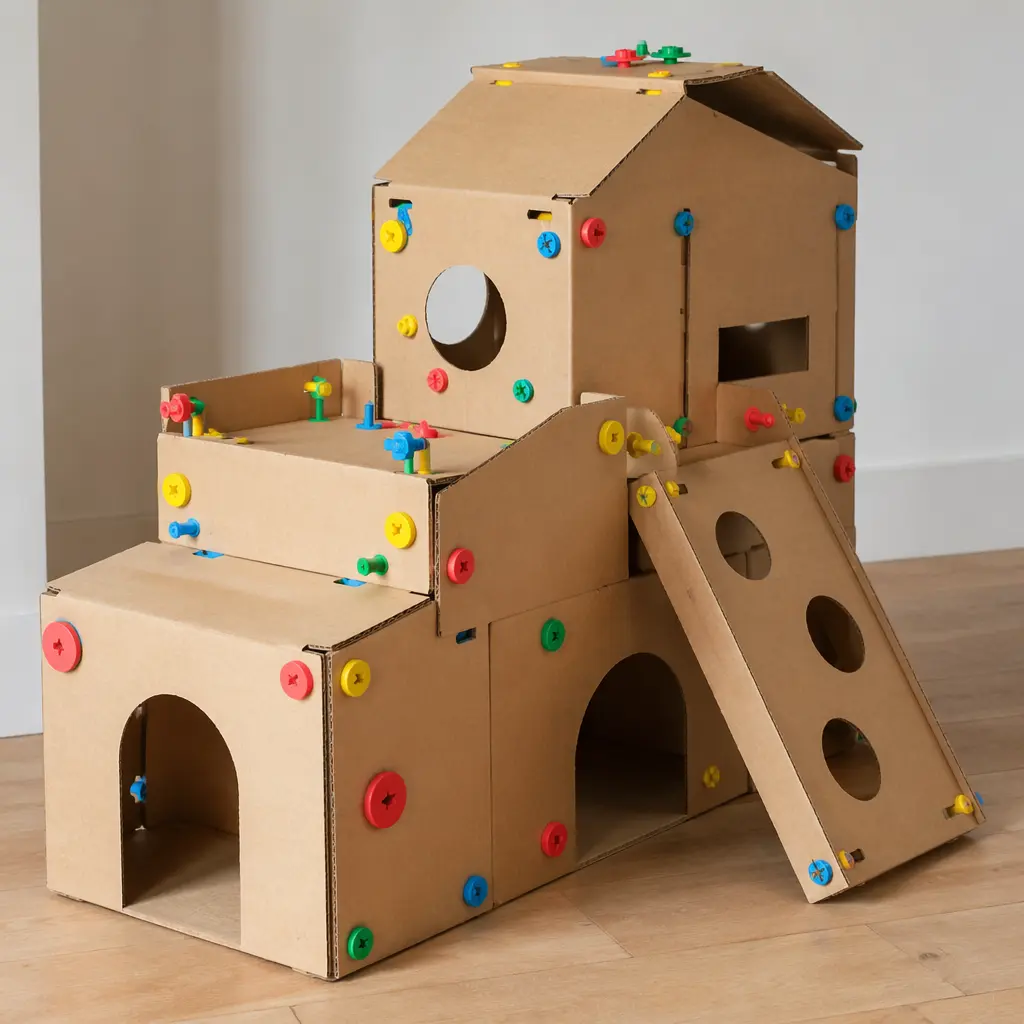
At first glance, Makedo looks almost too simple: cardboard boxes held together with reusable plastic connectors. But that simplicity is exactly the point. Instead of giving children a finished toy, Makedo gives them a system for turning everyday waste into something engineered, imaginative, and proudly homemade. It’s a modern construction toy that treats recycling not as a lesson to be taught, but as raw material to be explored.
Where it came from
Makedo originated in Australia in 2012, created by industrial designers who noticed two things happening at once: kids loved building with cardboard, and households were throwing away mountains of it. The original idea wasn’t to compete with traditional plastic construction sets, but to support the kind of free-form box building that already happened in living rooms and classrooms—just with better tools.
The system was designed to work with what families already had on hand. Instead of proprietary bricks, Makedo uses connectors, hinges, and safe cutting tools that adapt cardboard into a true building medium. From early classroom pilots, it spread through schools, maker spaces, and eventually homes, gaining traction as STEM education and sustainability became central talking points.
Why it works
Makedo succeeds because it shifts the focus from collecting pieces to solving problems. Cardboard bends, tears, and varies in thickness, which means children have to think like engineers: Where does this need support? How do I reinforce a joint? What happens if I change the angle?
The connectors are intentionally simple, encouraging experimentation rather than perfection. Builds are rarely permanent, so kids learn through iteration—take it apart, try again, improve the design.
- Reusable plastic screws and connectors that work with most cardboard
- Child-safe cutting and scoring tools
- Open-ended system with no fixed instructions
- Encourages structural thinking and problem-solving
- Turns recycled materials into core play components
Who it’s for
Makedo is typically suited to school-age children, roughly from early primary years onward, when cutting and planning become part of play. Younger children can join in with adult help, while older kids—and even adults—often get pulled into ambitious projects like wearable costumes or room-sized forts. Its appeal doesn’t fade quickly because the challenge grows with the builder’s skills.
Variants and what to look for today
Today, Makedo is available in a range of kits, from small starter sets to large classroom bundles. The core components remain consistent: screws, connectors, and safe cutting tools. Larger kits simply provide more connectors, making bigger builds easier without changing the underlying experience.
When shopping, it’s worth focusing on connector quantity rather than fancy extras. Generic cardboard is the real star, so compatibility and durability matter more than themed add-ons. Be cautious of very cheap lookalikes that use brittle plastic or sharp fasteners—part of Makedo’s reputation comes from being safe and reusable over many projects.
Frequently asked questions
Does Makedo need special cardboard?
No. Standard shipping boxes and packaging cardboard work well. Thicker cardboard provides more strength, while thinner pieces are easier to cut for details.
Is it messy or hard to store?
Projects can take up space while in progress, but the connectors themselves store compactly. Finished builds can be recycled again when play is over.
Is this more of a toy or a learning tool?
It functions as both. Children see it as play, while adults and educators appreciate the engineering, design, and sustainability skills it naturally encourages.
Can it replace traditional building sets?
It doesn’t replace them so much as complement them. Makedo offers scale and freedom that brick-based systems can’t, especially for large, imaginative builds.
Makedo’s lasting impact comes from redefining what counts as a construction toy. By elevating cardboard from trash to tool, it gives children permission to build big, think critically, and see engineering everywhere—even in yesterday’s delivery box.