Mousetrap Cars: The kitchen-table racers that teach physics
Built from simple materials and powered by a mousetrap spring, mousetrap cars became a popular hands-on STEM project by turning force, friction, and design tradeoffs into a competitive home challenge.
Compare prices and availability
Check current prices and availability for this guide on eBay.
As an eBay Partner, we may be compensated if you make a purchase.
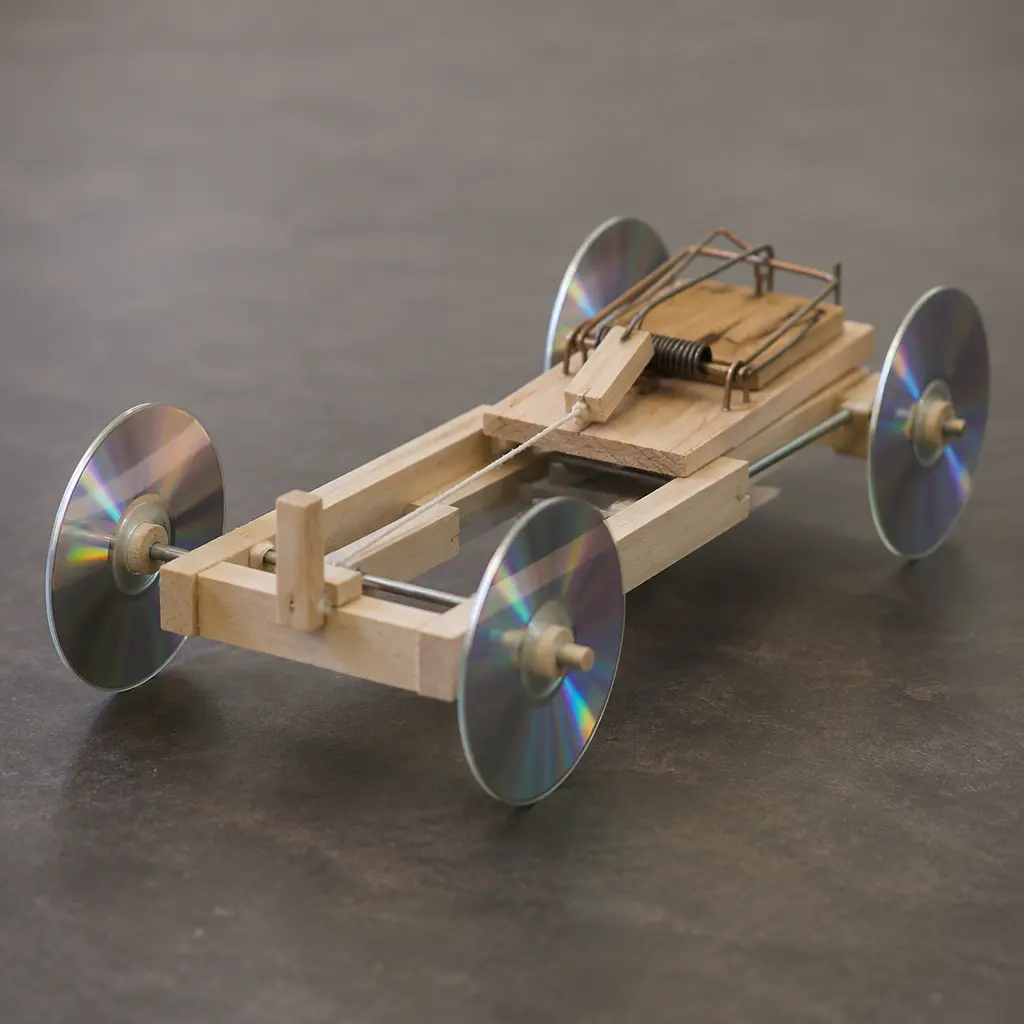
Mousetrap cars sit in an unusual corner of the toy world. They are not sold as one fixed product, and they rarely come out of a box fully assembled. Instead, they exist as a challenge: build a small vehicle powered only by the spring from a standard mousetrap, then see how far or how fast it can travel. What began as a classroom engineering exercise grew into a broader hobby for families, hobbyists, and science clubs because it turns abstract physics lessons into something visible, noisy, and surprisingly competitive. A few scraps of wood, some wheels, a lever arm, and trial-and-error tuning are enough to create hours of experimentation at the kitchen table or school gym.
Where it came from
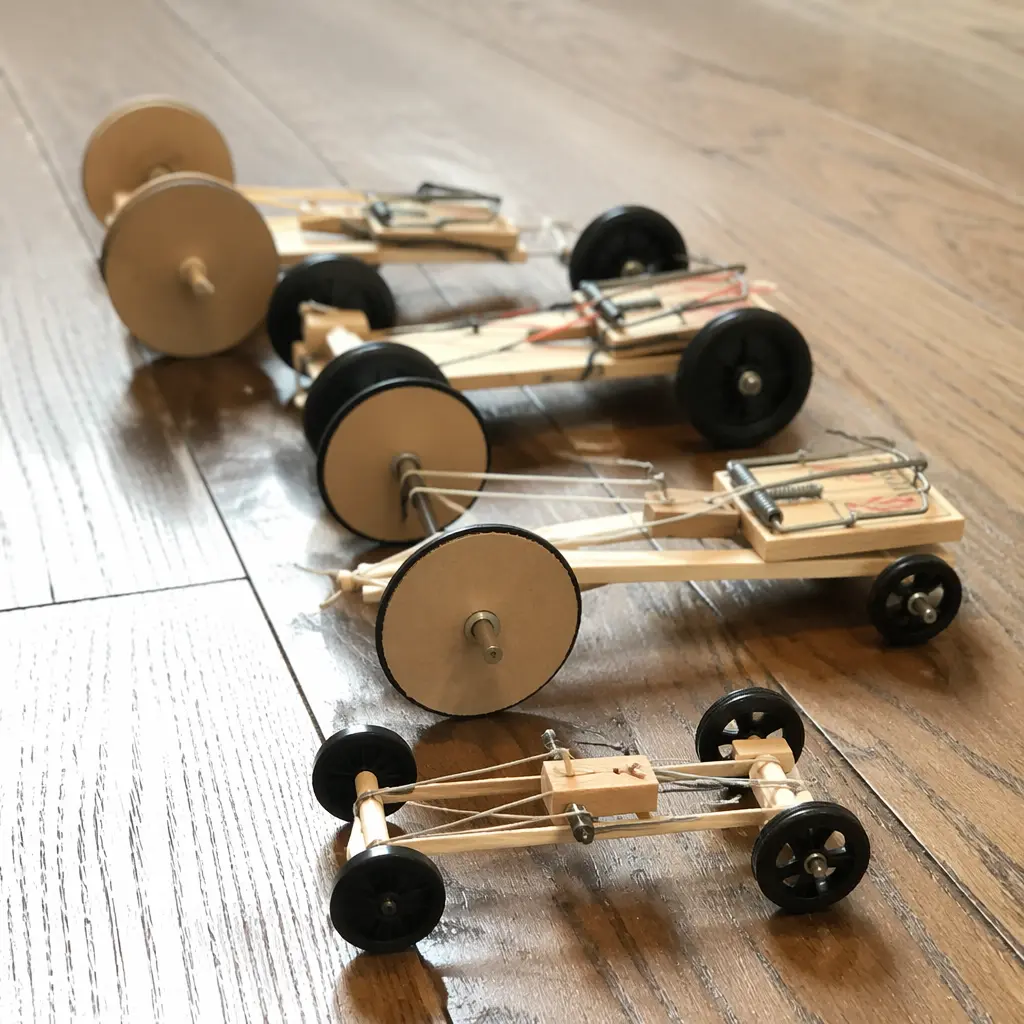
The idea of using a mousetrap spring to power a small vehicle has existed for decades in science fairs and engineering classrooms, but mousetrap cars became especially widespread in the early 2000s as STEM education expanded in schools and online hobby communities. Teachers embraced the format because it could demonstrate energy transfer, friction, torque, leverage, and aerodynamics using inexpensive household materials. Students could build one in an afternoon, then spend days refining it.
Unlike many educational toys, mousetrap cars were never tied to one dominant manufacturer. Craft stores, science suppliers, and educational brands sold kits, but many builders preferred homemade versions assembled from balsa wood, foam board, CDs, bottle caps, or hobby-shop wheels. The open-ended nature of the project became part of its appeal. Every design decision mattered. Long lever arms increased efficiency but reduced acceleration. Large rear wheels improved distance. Lightweight frames moved faster but sometimes became unstable. The toy was really a miniature engineering lab.
Why it works
The core mechanic is simple enough for younger builders to understand quickly. A mousetrap stores potential energy in its spring. A string attached to the trap's snapping arm winds around an axle. When released, the arm rotates slowly, unwinding the string and turning the wheels. From there, the challenge becomes balancing power, traction, weight, and stability.
What keeps mousetrap cars interesting is that there is no single perfect solution. Cars designed for speed look very different from cars designed for distance. Builders learn through direct experimentation. Move the axle slightly, change wheel diameter, shorten the lever arm, or reduce friction in the bearings, and the entire performance changes. It is one of the clearest examples of a STEM toy where failure is part of the entertainment rather than a setback.
- Uses visible mechanical energy instead of batteries or electronics
- Encourages experimentation with gearing, friction, and balance
- Can be built from low-cost household or hobby materials
- Works as both a solo project and a classroom competition
- Rewards iterative design instead of one-time assembly
Who it's for
Mousetrap cars are most common among middle-school and high-school age builders, but younger children can participate with supervision and pre-cut parts. The project scales well by age because the simplest version only requires basic assembly, while advanced hobbyists can spend weeks optimizing wheel alignment and weight distribution. Adults often enjoy them as much as kids do, especially parents who appreciate projects that combine creativity with practical problem-solving. Science teachers and robotics clubs also continue to use mousetrap racers because they are inexpensive, repeatable, and easy to modify.
Variants and what to look for today
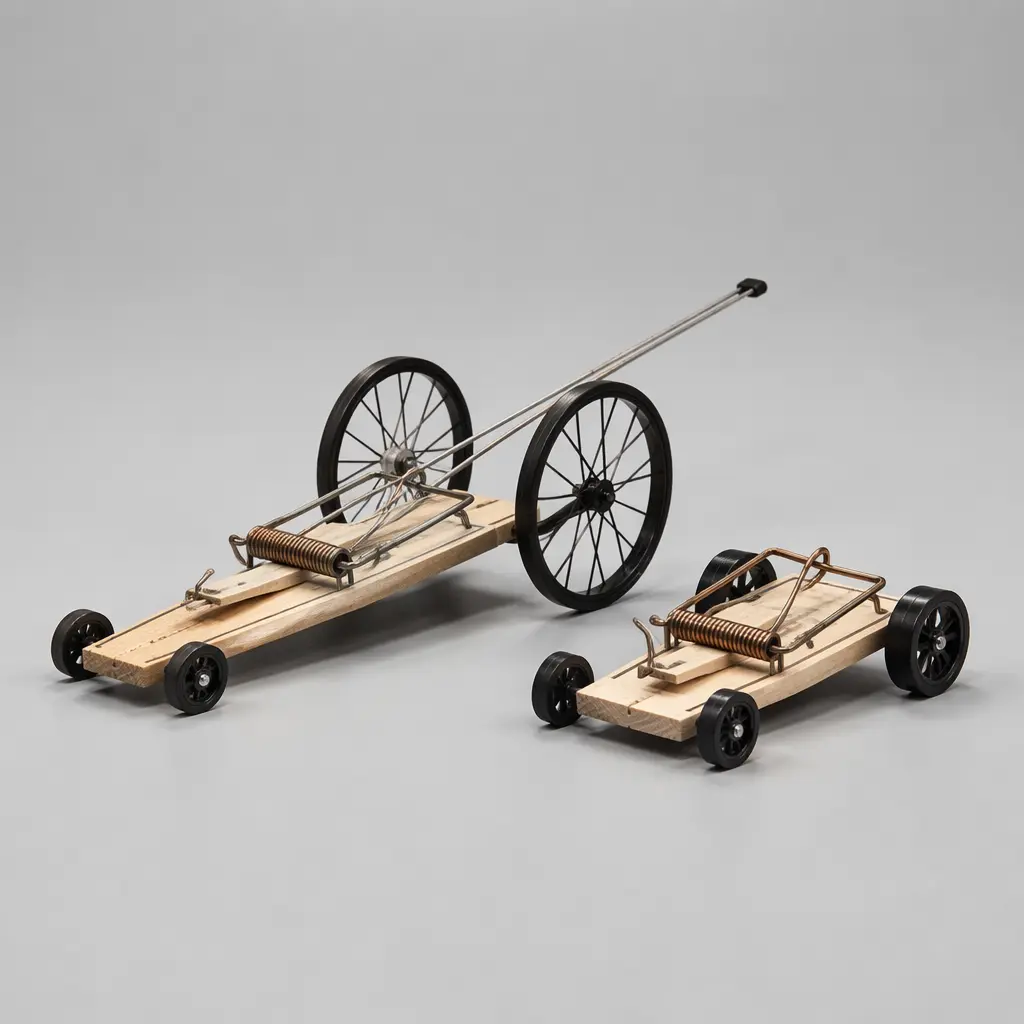
Today, mousetrap cars are available in several forms. Ready-to-build classroom kits remain popular because they simplify assembly and include pre-measured materials. Hobby-focused kits offer upgraded wheels, precision axles, and lightweight chassis parts for more advanced tuning. Many builders still prefer fully homemade versions because customization is central to the experience.
When shopping for materials or kits, the biggest difference is usually between speed-oriented and distance-oriented designs. Distance racers often use large wheels and long lever arms to stretch out the spring's energy over a longer period. Speed racers tend to be shorter, sturdier, and more compact. Build quality matters more than decorative styling. Straight axles, smooth wheel rotation, and a stable frame will usually outperform flashy extras.
- Look for lightweight but rigid frame materials
- Choose wheels that spin evenly without wobbling
- Simple kits are often better for first-time builders
- Avoid overly brittle plastic parts that crack under tension
- Extra tuning components can be useful for advanced hobbyists
Frequently asked questions
Are mousetrap cars considered toys or school projects?
They are usually both. Many people first encounter them through classroom STEM activities, but hobbyists and families often continue building them at home because the design challenge remains engaging outside school.
How far can a mousetrap car travel?
Distance depends heavily on design choices and surface conditions. Well-built cars with efficient drivetrains and large wheels can travel surprisingly long distances across smooth floors, while compact speed cars focus on short bursts of acceleration.
Do you need special tools to build one?
Basic versions can be assembled with simple hand tools and common craft supplies. More advanced builders may use hobby saws, drills, or precision bearings, but many successful designs rely on inexpensive materials and simple construction methods.
Why are mousetrap cars still popular in STEM education?
They provide immediate, visible feedback. Students can see how small design changes affect performance in real time, which makes concepts like energy transfer and friction easier to understand than they are in textbooks alone.
Mousetrap cars endure because they make engineering feel approachable. They are inexpensive to build, easy to personalize, and endlessly adjustable. More importantly, they turn physics into something tangible. Every crooked wheel, improved axle, or redesigned lever arm tells a story about experimentation and problem-solving. In a world full of sealed electronics and pre-programmed gadgets, that hands-on simplicity still stands out.