Nintendo Labo: The cardboard kits that turned games into builds
Nintendo Labo reframed video games as something you assemble. Launched in 2018, these cardboard kits mixed craft, coding ideas, and play—showing how building can be part of the game itself.
Compare prices and availability
Check current prices and availability for this guide on eBay.
As an eBay Partner, we may be compensated if you make a purchase.
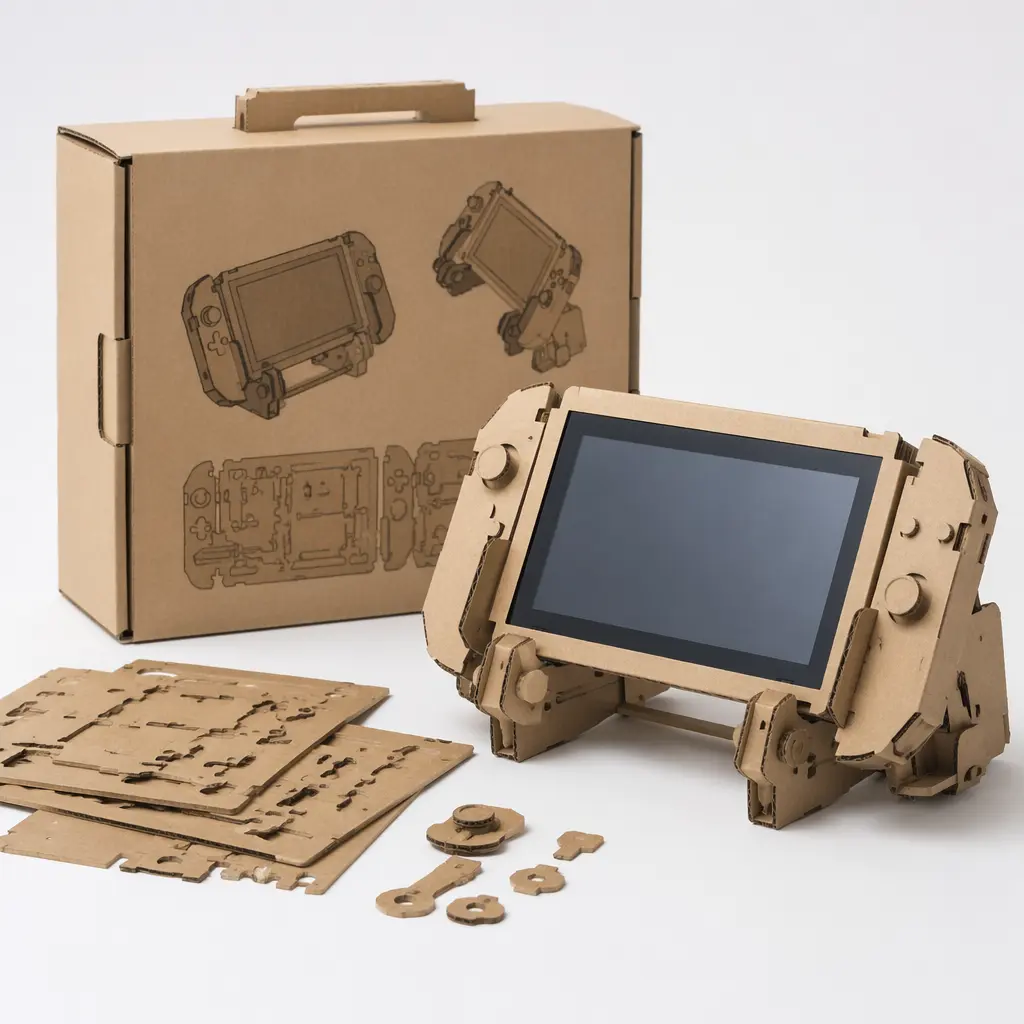
When Nintendo announced Labo in 2018, it sounded like a contradiction: a video game you had to build first. The idea was simple but bold. Instead of jumping straight into on-screen action, players folded sheets of cardboard into steering wheels, pianos, fishing rods, and even a backpack robot. Only then did the software come alive. Labo wasn’t about sharper graphics or faster processors; it was about reminding families that games can be tactile, mechanical, and creative.
Where it came from
Nintendo Labo launched in 2018, developed internally by Nintendo as an experiment in rethinking how people interact with games. The company has a long history of playful hardware ideas, and Labo grew out of that tradition. Rather than focusing on competitive gaming or realism, the goal was to blend hands-on making with digital feedback.
Each Labo set combined pre-cut cardboard sheets with a software cartridge. Players followed step-by-step instructions on-screen, learning how folds and tabs turned flat pieces into functional objects. The original purpose wasn’t just entertainment. Nintendo positioned Labo as a way to explore basic engineering concepts—levers, pulleys, rotation—without framing it as homework.
Why it works
Labo works because it makes curiosity the main mechanic. Building is not a side activity; it’s the entry point. By the time a child finishes assembling a cardboard piano or vehicle controller, they already understand something about how it functions. The screen then responds in ways that reward that understanding, closing the loop between physical cause and digital effect.
The design leans into simplicity. Cardboard is lightweight, forgiving, and unintimidating. If something bends or tears, it feels fixable rather than precious. That choice encourages experimentation, which is rare in mainstream video games.
- Build-first play: assembling the toy is part of the experience
- Clear links between physical movement and on-screen response
- Accessible materials that invite tinkering and modification
- Guided instructions that quietly teach engineering basics
Who it's for
Nintendo Labo is best suited to primary-school-aged children and their families, though older kids and adults often enjoy the building phase just as much. Younger children usually need help with assembly, which turns Labo into a shared activity rather than solo screen time. For adults, the appeal is less about challenge and more about watching ideas click—seeing how a simple fold becomes a working input.
Variants and what to look for today
Over time, Nintendo released several Labo kits built around different themes, from variety packs with multiple small builds to more ambitious single-concept sets. While production has slowed, many kits are still available through retailers and second-hand markets. The core idea remains the same across versions: cardboard builds paired with playful software experiences.
If you’re looking for Labo today, condition matters more than edition. Unused or gently used cardboard sheets make assembly far less frustrating. It’s also worth checking that all pieces are present, as missing tabs can stop a build from working properly. Generic cardboard kits inspired by Labo exist, but they often lack the tight integration between build and software that made the original stand out.
Frequently asked questions
Is Nintendo Labo educational?
Yes, though it teaches indirectly. Labo introduces concepts like motion, balance, and mechanical input through play. Children learn by doing rather than following formal lessons.
Does the cardboard break easily?
The cardboard is sturdier than it looks, but it isn’t indestructible. Normal play is fine, but rough handling or exposure to water will shorten its life.
Can kids customise the builds?
Customisation is encouraged. Markers, tape, and extra cardboard can be added without affecting the core function, making each build feel personal.
Is it fun without building?
Not really. The building process is central to the experience. Skipping it removes much of what makes Labo distinctive.
Nintendo Labo didn’t redefine the games industry, but it did something quieter and perhaps more lasting. It showed that even in a digital age, there’s room for scissors, folds, and patience. By treating cardboard as a controller and construction as play, Labo reminded families that learning and fun don’t have to live on opposite sides of the screen.