The Pogo Ball: How one bouncy sphere became backyard bravado
Part pogo stick, part balance trainer, the Pogo Ball turned a single rubber sphere into a test of nerve and coordination—and became a late-70s playground legend.
Compare prices and availability
Check current prices and availability for this guide on eBay.
As an eBay Partner, we may be compensated if you make a purchase.
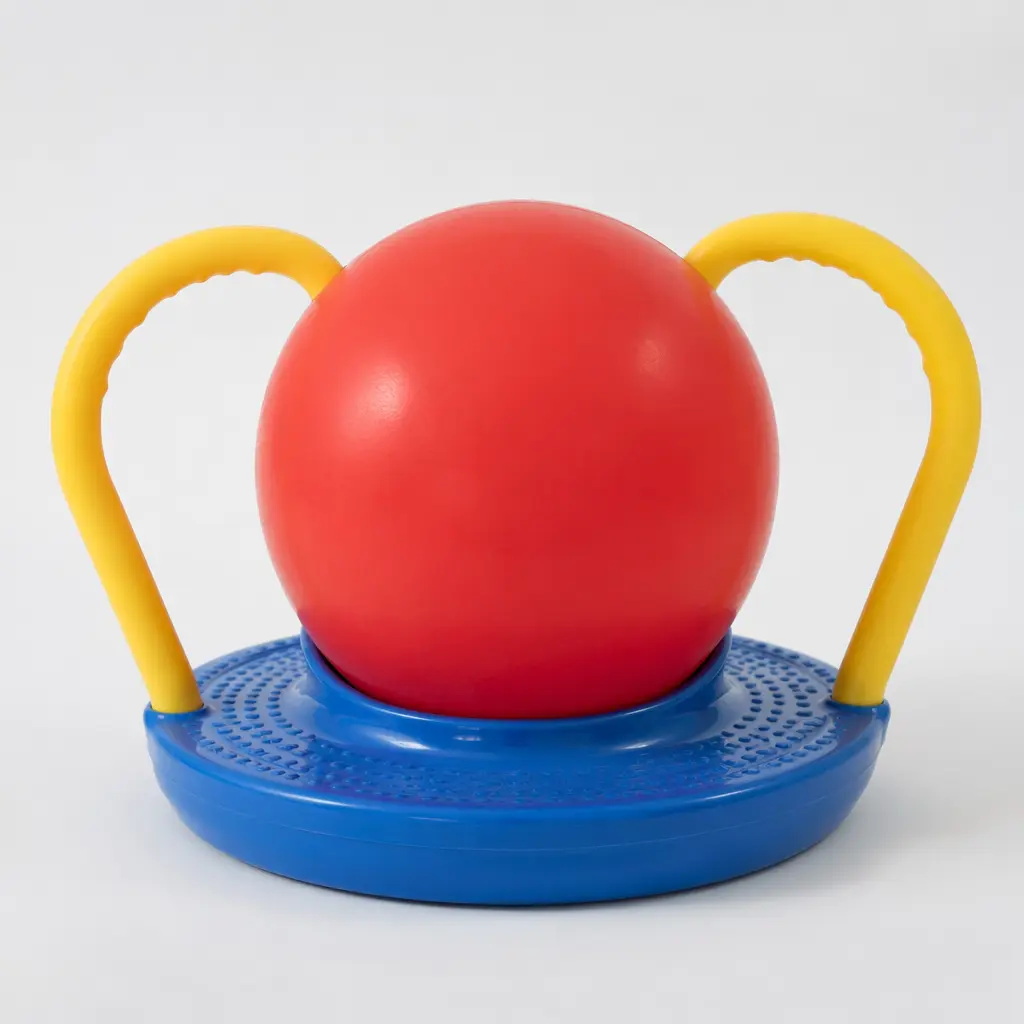
The Pogo Ball looks simple—almost too simple. A rubber ball locked into a plastic ring. No handlebars. No safety rails. Just you, gravity, and bounce. Yet for kids of a certain era, it was the backyard challenge that separated the daring from the cautious. Mastering it felt less like learning a toy and more like earning a small athletic credential.
Where it came from
The Pogo Ball emerged in 1979, at the tail end of a decade obsessed with motion. Skateboards, pogo sticks, and trampolines were already fixtures of outdoor play, and the Pogo Ball felt like a logical—and slightly reckless—next step. Instead of gripping a stick or standing on a board, kids stood directly over a single inflated ball, balanced by a surrounding platform.
Its original appeal was partly novelty and partly bravado. The design stripped away supports and left balance as the main skill. In an era before structured playdates and organized activities filled afternoons, toys like this thrived because they offered open-ended challenge. You didn’t “finish” a Pogo Ball. You tried not to fall off.
Why it works
At its core, the Pogo Ball works because it turns balance into immediate feedback. Every lean, wobble, or correction is answered by the ball beneath your feet. There’s no learning curve manual—your body figures it out in real time. That simplicity is what made it addictive.
The design also invites experimentation. Some kids bounced straight up. Others tried to hop sideways, spin, or see how long they could stay centered without moving. The toy didn’t prescribe a game; it dared you to invent one.
- Single-point balance that rewards core control
- Inflated rubber ball for unpredictable bounce
- Circular platform that keeps feet roughly aligned
- No handles or straps, increasing the challenge
- Works on grass, pavement, or gym floors
Who it's for
The Pogo Ball has always skewed toward confident movers—typically older children and early teens with decent balance and coordination. Younger kids often find it frustrating at first, while adults discover it’s much harder than it looks. That adult difficulty, however, is part of its enduring charm. It’s one of those toys that quietly humbles parents who assume it will be easy.
Variants and what to look for today
While the original Pogo Ball is a product of the late 1970s, the concept never fully disappeared. Modern versions stick closely to the same formula: a heavy-duty rubber ball and a sturdy circular deck. The biggest differences today are materials and sizing.
When shopping now, look for reinforced platforms that don’t flex excessively and balls made from thick, durable rubber. Some newer versions add textured foot areas or slightly wider decks for stability. Be cautious of very lightweight copies, which can feel unstable or wear out quickly.
Frequently asked questions
Is a Pogo Ball the same as a pogo stick?
Not really. A pogo stick provides vertical support and handles, while a Pogo Ball removes those aids entirely. The experience is less about height and more about balance and control.
What age is it suitable for?
Most children do best once they’ve developed basic balance and coordination, often around ages 8 and up. Adult supervision is recommended for beginners.
Does it help with fitness?
Yes, indirectly. Using a Pogo Ball engages core muscles, legs, and balance systems, even though it feels like pure play rather than exercise.
Why did it become popular in the 1970s?
The late 1970s favored bold, physical toys that encouraged risk-taking and independence. The Pogo Ball fit neatly into that cultural moment.
Today, the Pogo Ball reads like a snapshot of a freer, less padded era of play. It’s not flashy, and it doesn’t beep or connect to an app. What it offers instead is a pure test of balance—and the quiet satisfaction that comes from finally sticking the landing.