The Radio Flyer Wagon: How a red wagon became childhood freedom
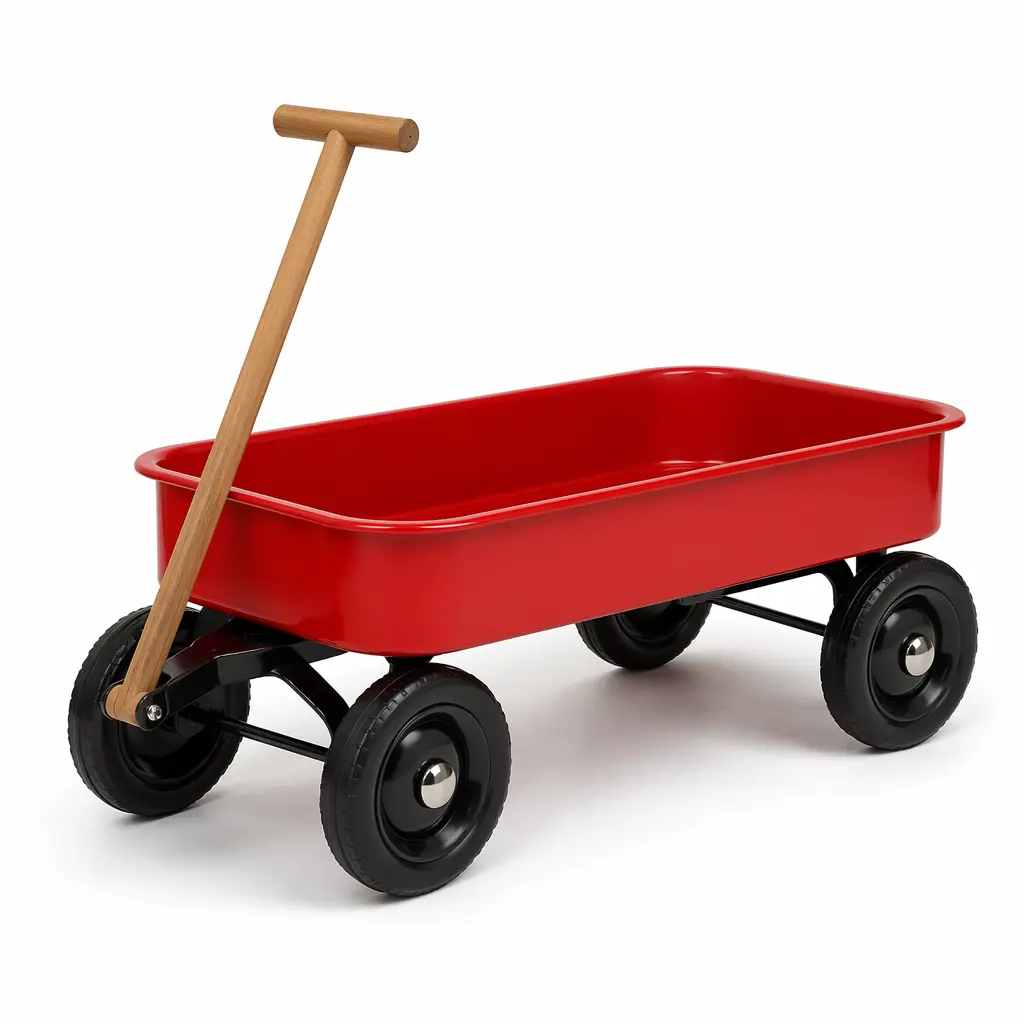
For more than a century, the Radio Flyer wagon has symbolised childhood independence—hauling toys, siblings and imaginations down sidewalks across generations.
Compare prices and availability
Check current prices and availability for this guide on eBay.
As an eBay Partner, we may be compensated if you make a purchase.
Few toys carry as much cultural weight as the humble red wagon. Long before children had scooters with suspension or ride-on cars with batteries, a simple pull wagon offered something powerful: freedom. It could be a truck, a pirate ship, a parade float, or just a way to move precious cargo from one end of the block to the other. Over time, the Radio Flyer wagon became the version most people picture when they think of that experience—a shorthand for childhood itself.
Where it came from
The story of the Radio Flyer wagon begins in 1917, when Italian immigrant Antonio Pasin started building wooden wagons in Chicago. His early wagons were handmade and designed to be sturdy, affordable, and appealing to children at a time when toys were often scarce or fragile. As mass production improved, the wagons evolved from wood to stamped steel, becoming lighter, stronger, and easier to produce.
The name itself reflected optimism and progress. Inspired by the excitement around aviation in the early 20th century, Pasin combined "Radio"—a modern marvel of the time—with "Flyer," nodding to flight. The bright red paint was practical as well as eye-catching, standing out on city streets and grassy yards alike. By the mid-20th century, the wagon was firmly embedded in American childhood.
Why it works
At its core, the wagon succeeds because it is simple. There are no rules, no instructions, and no right way to play. Children decide what it becomes and how it’s used, whether that’s hauling stuffed animals, giving a younger sibling a ride, or collecting leaves in the garden.
- Open-ended design that encourages imaginative play
- Durable metal or wood construction built to last
- Low center of gravity for stable riding
- Large wheels that handle grass, pavement, and dirt
- A long handle that lets kids (and adults) pull with ease
That mix of toughness and flexibility explains why wagons are often passed down rather than worn out. Unlike trend-driven toys, the wagon doesn’t age out of relevance. A child today uses it much the same way a child did decades ago.
Who it's for
Wagons are typically suited to toddlers through early primary-school ages, though their appeal stretches further. Younger children enjoy being pulled along, while older kids use wagons for transporting toys, sports gear, or creative projects. Adults often appreciate them too, whether for gardening, beach trips, or simply for the nostalgia they carry.
Variants and what to look for today
While the classic metal red wagon remains the most recognisable version, modern wagons come in a variety of styles. Folding fabric wagons prioritise portability, wooden wagons lean into heritage aesthetics, and all-terrain versions feature wider wheels for outdoor adventures. Some are designed strictly for hauling gear, while others are built with children riding in mind.
When shopping today, it’s worth checking weight limits, wheel quality, and handle design. Cheaper wagons may look the part but can struggle with stability or durability. A well-made wagon should feel solid, roll smoothly, and handle repeated use without loosening or bending.
Frequently asked questions
Are wagons safe for toddlers?
Many wagons are suitable for toddlers, especially those with high sides and stable wheelbases. Adult supervision is important, and children should sit rather than stand while riding.
Why are red wagons so iconic?
The bright red colour was both practical and memorable. Over time, it became closely associated with the most popular wagons, embedding itself in advertising, photographs, and family memories.
Do modern wagons still last as long?
Build quality varies, but well-made modern wagons can still last for years. Materials and manufacturing have changed, so it’s worth choosing one designed for durability rather than novelty.
Is a wagon just for kids?
Not at all. Many families use wagons for groceries, beach gear, picnics, and gardening. Their usefulness often extends long after children outgrow riding in them.
More than a toy, the Radio Flyer wagon represents a way of growing up—one where the world feels just a little bigger, and a little closer, with every pull of the handle. Its enduring presence says less about changing trends and more about timeless play.