Rokenbok: The motion-based build set that teaches engineering
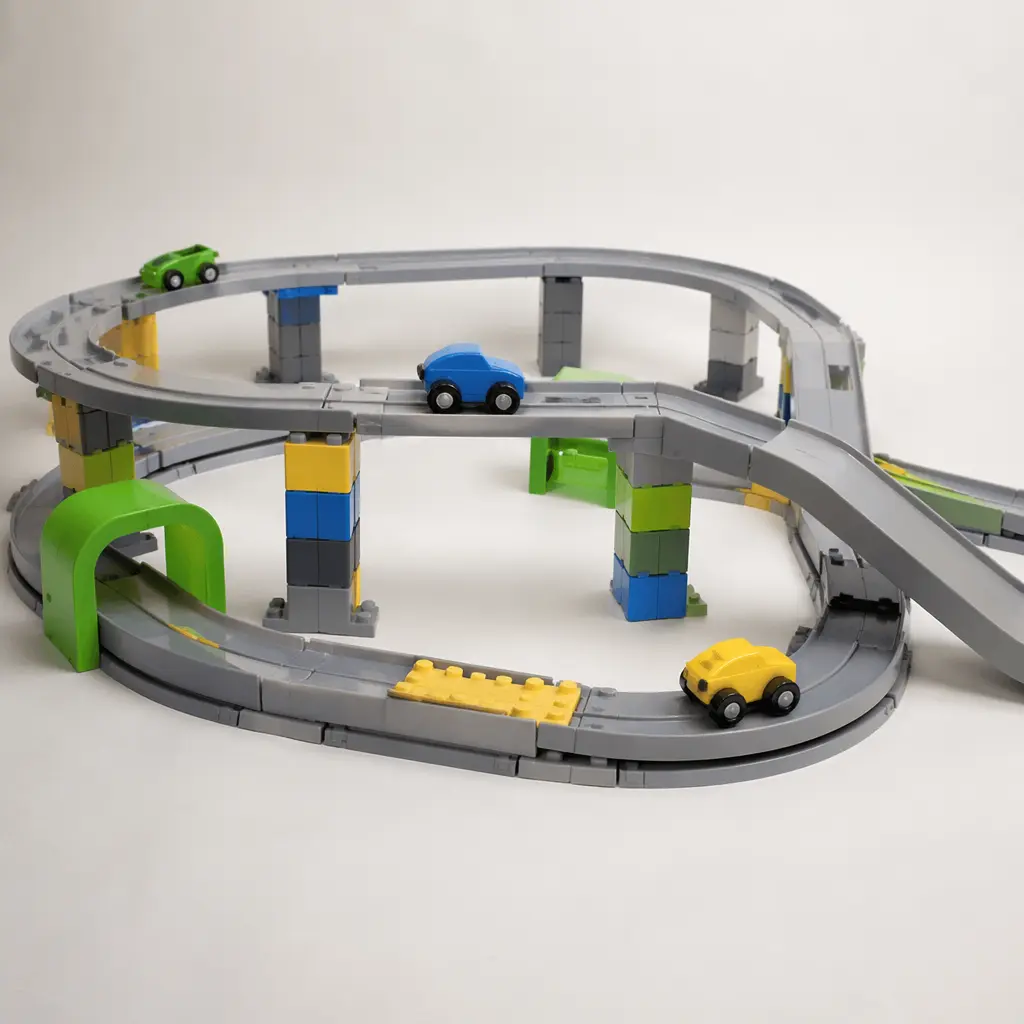
Rokenbok is a modular construction system where vehicles, tracks, and switches turn building into lessons about motion, cause-and-effect, and systems thinking—without feeling like school.
Compare prices and availability
Check current prices and availability for this guide on eBay.
As an eBay Partner, we may be compensated if you make a purchase.
Rokenbok isn’t a household name in the way some building toys are, but it has quietly earned a devoted following among parents, educators, and kids who like to see things move. Instead of static towers or decorative models, Rokenbok creations are meant to operate: vehicles roll, switches flip, balls drop, and one action triggers the next. The appeal isn’t just building something—it’s building a system that works.
Where it came from
Rokenbok was introduced in the mid-1990s, during a period when educational toy makers were experimenting with more hands-on approaches to science and engineering. The idea was to create a construction system that went beyond stacking or snapping pieces together, and instead focused on how real-world systems behave once they’re set in motion.
Rather than mimicking a single subject like architecture or vehicles, Rokenbok blended elements of mechanical engineering, physics, and problem-solving. Its creators emphasized open-ended play: kids weren’t given a single model to copy, but a set of components that could be recombined endlessly. From the start, the system was positioned as a learning tool disguised as a toy, suitable for classrooms as well as living rooms.
Why it works
The core strength of Rokenbok is that motion is central to the experience. Builds are tested the moment a vehicle starts rolling or a ball is released. If something doesn’t work, the failure is visible and immediate, encouraging kids to adjust angles, add supports, or rethink the sequence. This trial-and-error loop mirrors real engineering in a way few toys manage.
Unlike purely digital STEM tools, Rokenbok keeps learning physical. Kids feel resistance, gravity, and balance through their hands. The pieces are sized for stability, which reduces frustration, but the system still allows for complexity as builds grow larger.
- Modular blocks and tracks that connect securely but can be reconfigured quickly
- Vehicles and rolling elements that introduce speed, momentum, and friction
- Switches, ramps, and triggers that demonstrate cause-and-effect
- Open-ended designs that reward experimentation over instructions
Who it's for
Rokenbok is generally aimed at school-age kids, roughly from early primary years through early teens, depending on the complexity of the build. Younger children enjoy the simple satisfaction of making something move, while older kids gravitate toward multi-step systems that require planning and troubleshooting. Adults often find themselves drawn in as well, especially parents or educators who enjoy collaborative building or problem-solving challenges.
Variants and what to look for today
Over the years, Rokenbok has been offered in various starter sets and expansion packs, typically centered on core building blocks, track elements, and vehicles. Some sets lean toward simple motion, while others add more components for complex routing and interaction. The key is compatibility: the system is designed so pieces from different sets work together.
When shopping today, look for complete sets with a good mix of blocks, tracks, and at least one moving element. Generic imitations may resemble the look but often lack the precision needed for smooth motion. A well-kept used set can be just as effective as a new one, as the pieces are built to withstand repeated rebuilding.
Frequently asked questions
Is Rokenbok a STEM toy?
Yes, though it rarely labels itself that way. Rokenbok naturally introduces concepts from physics and engineering through hands-on play rather than formal lessons or screens.
Does it require instructions to enjoy?
Basic instructions help get started, but the system is designed for free building. Many users find the most enjoyment comes from experimenting without a set plan.
How does it compare to other construction sets?
Compared with brick-based systems, Rokenbok focuses more on movement and systems than on appearance. It’s less about what you build and more about what your build does.
Is it suitable for classroom use?
Yes. Its durability and emphasis on collaboration make it a popular choice for group activities and project-based learning environments.
Rokenbok’s lasting appeal lies in its quiet confidence. It doesn’t rely on characters, licenses, or flashy trends. Instead, it trusts that kids will be curious about how things move and why they sometimes don’t. For families looking for a construction system that grows with a child’s understanding, Rokenbok remains a thoughtful, motion-driven option.