Screwball Scramble: The Marble Maze That Never Got Easier
First released in 1979, Screwball Scramble turned a simple marble run into a tense tabletop challenge. Its chain of levers, bridges, and traps still tests patience, timing, and coordination today.
Compare prices and availability
Check current prices and availability for this guide on eBay.
As an eBay Partner, we may be compensated if you make a purchase.
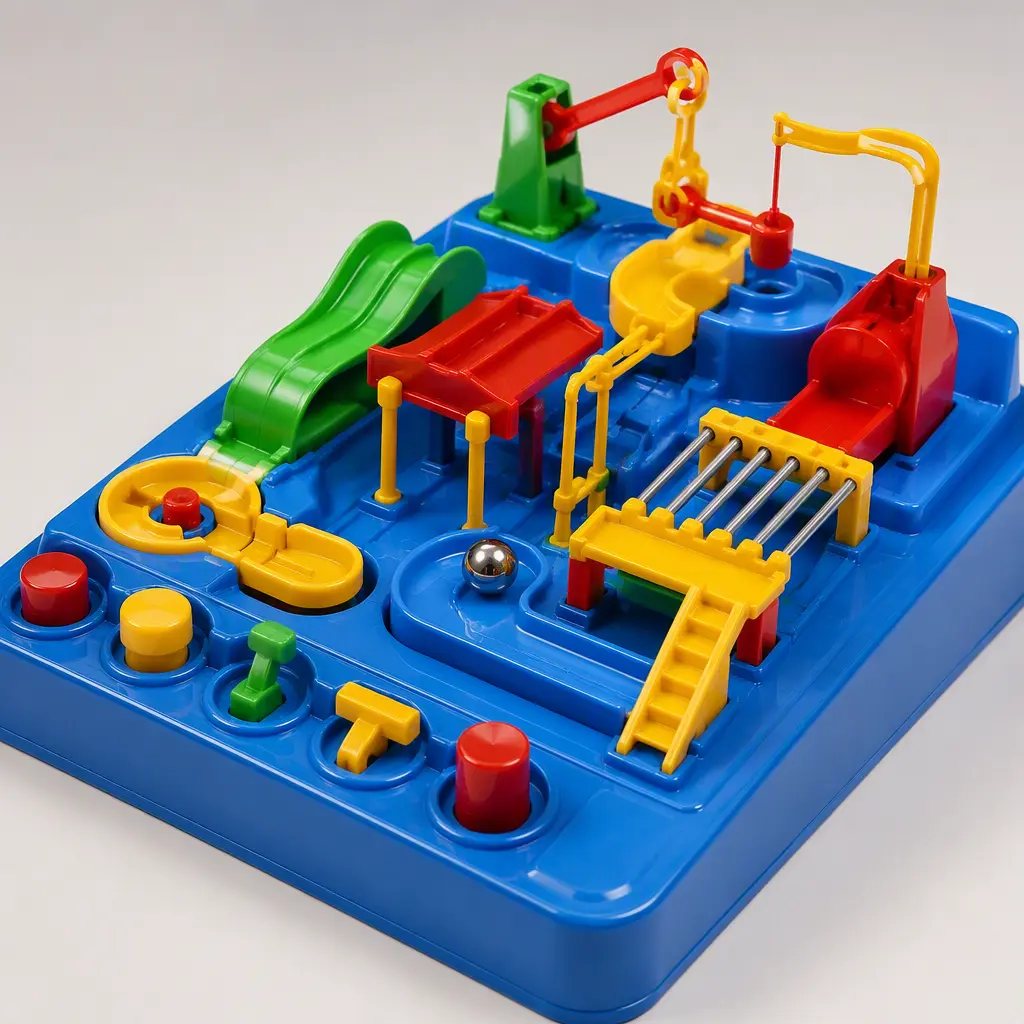
Few toys create such immediate confidence followed by instant failure as Screwball Scramble. At first glance, it looks manageable: guide a small metal marble through a compact obstacle course using knobs, sliders, and buttons around the edge of the board. Then the marble drops off a bridge, misses a swing, or bounces backward after a near-perfect run. Since its debut in 1979, the game has frustrated children, entertained adults, and become one of the defining dexterity toys of the late twentieth century. Unlike electronic games that rely on screens or sound effects, Screwball Scramble turns physical coordination into the entire experience.
Where it came from
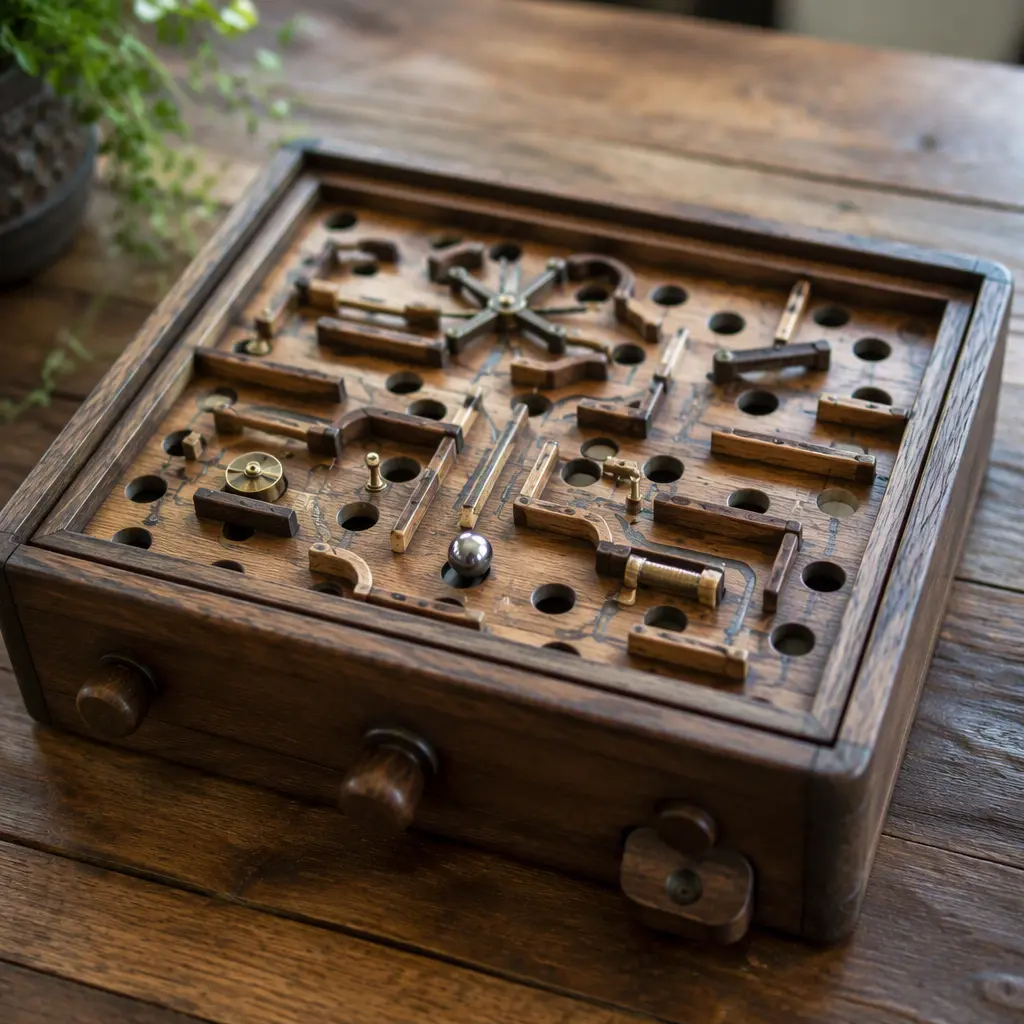
Screwball Scramble arrived during a period when toy companies were experimenting with more active tabletop games. Released in 1979 by Tomy, the game combined elements of pinball, marble runs, and dexterity puzzles into a single timed challenge. Instead of relying on luck or turn-taking, players controlled every movement of the marble through mechanical inputs placed around the board.
The idea was simple but effective: create a compact obstacle course that felt dramatic without needing batteries or complicated setup. The player would move around the perimeter of the board while operating different controls in sequence. Each section introduced a new motion or timing challenge. One moment required a careful balance adjustment, while the next demanded a quick launch or swing. The design gave the impression of a miniature adventure course, and the visible movement of the marble made every mistake easy to follow. That visibility became part of the appeal. Watching another player fail inches from the finish line could be just as entertaining as taking a turn yourself.
Why it works
Screwball Scramble succeeds because it transforms ordinary hand movements into escalating pressure. The toy creates tension through momentum. Once the marble starts rolling, players instinctively rush to keep it moving, even though speed often causes mistakes. That balance between patience and urgency keeps the game engaging long after players memorize the course layout.
The obstacle design also matters. Rather than repeating one mechanic, the course constantly changes expectations. Some obstacles require precision, while others reward rhythm or quick reactions. The controls are spread around the board, forcing players to move physically as they play. That movement gives the game an almost arcade-like feeling despite its entirely mechanical construction.
- Mechanical obstacles create visible cause-and-effect gameplay
- No batteries or screens are needed for the full experience
- Short play sessions encourage repeated attempts
- The difficulty feels fair even when the course is frustrating
- Watching other players attempt the course adds spectator appeal
Who it's for
The game is usually associated with children, but its appeal stretches well beyond younger players. School-age kids often enjoy the challenge because the rules are easy to understand immediately: get the marble from start to finish without falling off the course. Adults, meanwhile, tend to appreciate the toy's physicality and surprising difficulty. Many parents who played it decades ago now introduce it to their own children, creating a rare cross-generational toy experience. Younger children may struggle with some fine motor tasks, but older kids and adults often become highly competitive once timed runs enter the picture.
Variants and what to look for today
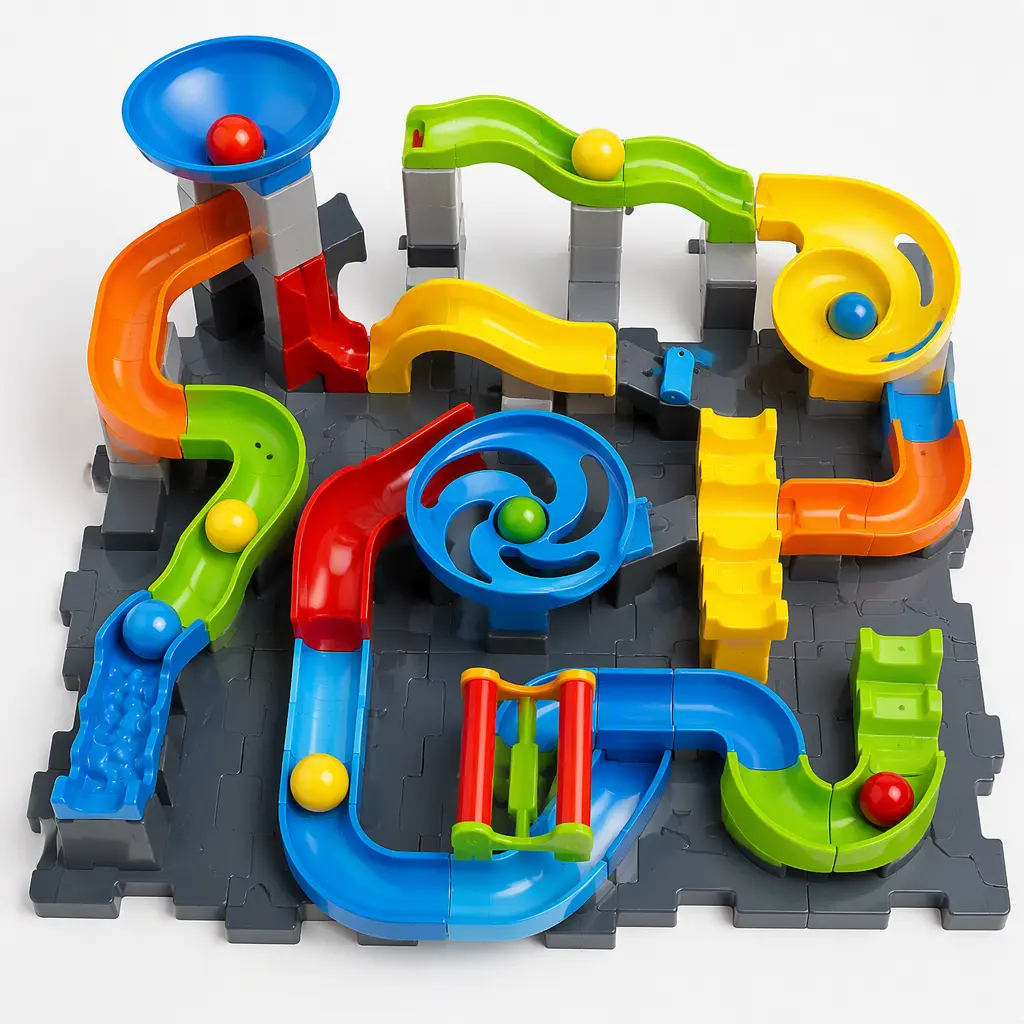
Over the years, Screwball Scramble has appeared in several updated forms, including expanded courses and travel-sized variations. Some modern editions adjust colors, obstacle layouts, or materials, but the core idea remains the same: direct control over a marble moving through a chain of mechanical challenges. Vintage editions from the late 1970s and 1980s are still popular with collectors, partly because of nostalgia and partly because the original bright plastic design became instantly recognizable.
If you are searching for one today, condition matters more than packaging. Mechanical toys depend on smooth movement, so worn pivots, cracked ramps, or missing marbles can affect gameplay significantly. Generic marble maze toys can offer a similar experience, but some lower-quality versions use lighter plastic or poorly aligned obstacles that make the course feel inconsistent rather than challenging.
- Look for complete obstacle sections with no broken hinges or ramps
- Check that the marble rolls smoothly through each stage
- Vintage versions may show discoloration but can still play well
- Modern reissues are often easier to find for family play
- Compact travel variants trade complexity for portability
Frequently asked questions
Is Screwball Scramble a board game or a puzzle?
It sits somewhere between the two. There are no cards or traditional turns, but players usually compete for the fastest completion time. Its main challenge comes from dexterity and coordination rather than strategy.
Why is the game considered difficult?
The difficulty comes from combining several different physical skills into one uninterrupted sequence. Players must constantly adapt to new obstacle mechanics while maintaining control of the marble's momentum.
Do modern versions play differently from older ones?
Most modern versions keep the same overall structure and challenge level, though materials and colors may differ slightly. Some updated editions add extra obstacles or alternate layouts, but the core gameplay remains recognizable.
Can younger children play it?
Many younger children enjoy experimenting with the controls even if they cannot complete the full course consistently. Older children generally have the coordination and patience needed to finish runs successfully.
More than four decades after its introduction, Screwball Scramble remains memorable because it delivers a kind of challenge that digital games rarely reproduce. Every wobble, bounce, and near miss is physical and visible. Success depends entirely on timing, coordination, and persistence. That direct connection between player and toy helps explain why the game continues to survive changing trends in entertainment. It is simple to understand, difficult to master, and still capable of making an entire room react when a marble falls seconds before the finish.