Sorry!: How a 1930s race game made setbacks part of the fun
First published in 1934, Sorry! turned the sting of being sent back to start into laughter. Its mix of luck, light strategy, and social friction keeps families coming back.
Compare prices and availability
Check current prices and availability for this guide on eBay.
As an eBay Partner, we may be compensated if you make a purchase.
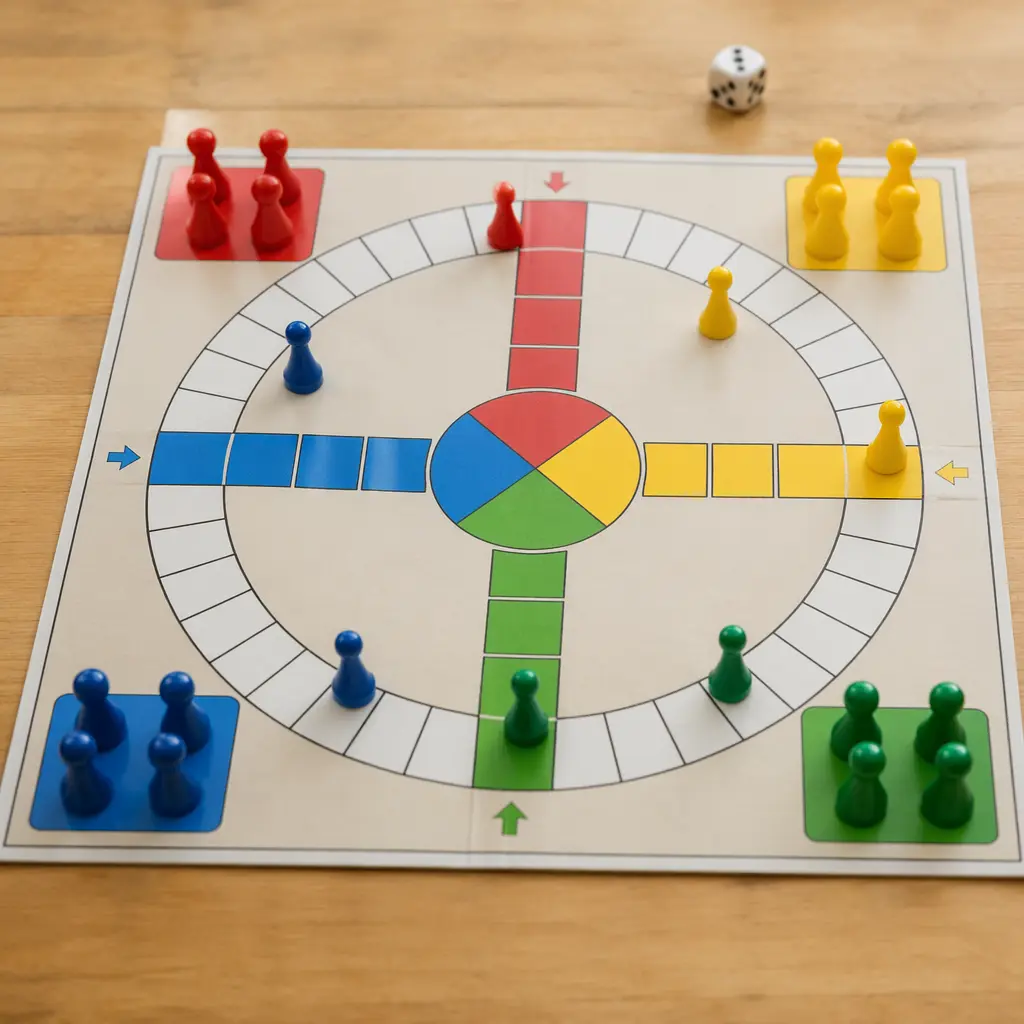
Sorry! is one of those games many people feel they already know, even if they haven't played it in years. You race pawns around a board, draw cards, and occasionally knock an opponent all the way back to start. That last part is the hook. Sorry! made reversal of fortune not just possible, but central to the experience—and families have been reacting to it for generations.
Where it came from
Sorry! was first published in the United States in 1934 by Parker Brothers, though its roots go back much further. The design is closely related to Pachisi and other cross-and-circle games that originated in India centuries ago. Like many Western adaptations, it simplified the board, replaced dice with cards, and tightened the playtime for family tables.
The timing mattered. During the Great Depression, board games were affordable entertainment that could be shared across ages. Sorry! fit that moment well: inexpensive to produce, easy to explain, and dramatic enough to keep everyone engaged. Over time it became a staple of American households, surviving shifts in tastes and competition from newer formats.
Why it works
At its core, Sorry! is about momentum and interruption. Players feel progress as their pawns inch closer to home, then feel the jolt of being blocked, swapped, or sent back. That emotional swing is intentional. The game creates stories in a short amount of time, even if the actual decisions are fairly simple.
- Card-driven movement that removes the need for dice
- Direct interaction through bumping and swapping pawns
- Clear goals that are easy for younger players to grasp
- Short turns that keep downtime low
- A built-in comeback mechanism that keeps scores close
The balance of luck and light tactics is key. You can make smart choices about which pawn to move, but you can’t fully control outcomes. That keeps experienced players from dominating and gives everyone a reason to stay emotionally invested.
Who it's for
Sorry! is typically recommended for elementary-school-aged children and up, but its real strength is mixed-age play. Younger kids enjoy the clear cause-and-effect of the cards, while adults appreciate the nostalgia and social dynamics. It’s not a strategy showcase, but it’s often a hit at family gatherings where accessibility matters more than depth.
Variants and what to look for today
Over the years, Sorry! has appeared in many forms, including travel-sized boards, deluxe editions with heavier pieces, and themed versions tied to popular media. The underlying rules usually stay close to the original, though some versions add extra cards or tweak movement to speed things up.
If you’re picking up a copy today, look for sturdy pawns and a board that lies flat—especially if it will see frequent play. Be cautious with off-brand versions that closely mimic the look but may use thin cards or poorly fitting pieces, which can affect how smoothly the game runs.
Frequently asked questions
How long does a typical game last?
Most games wrap up in 30 to 45 minutes, depending on player count and how often pawns are sent back to start.
Is Sorry! purely luck-based?
Luck plays a major role, but players still choose which pawn to move and when to take risks. Those decisions can shape the flow of the game, even if outcomes aren’t fully controllable.
Can adults enjoy it without kids?
Yes, especially as a light, social game. It’s often enjoyed more for conversation and shared reactions than for competitive depth.
Is it suitable for younger children?
Many children can play by age six, but emotional readiness matters. Being sent back to start can be upsetting for some kids, so supervision helps.
Nearly a century after its debut, Sorry! remains recognizable because it embraces a simple truth: games don’t have to be fair to be fun. By turning misfortune into a shared laugh, it carved out a lasting place on family shelves—and at family tables.