Stickle Bricks: The quiet classic that made building click
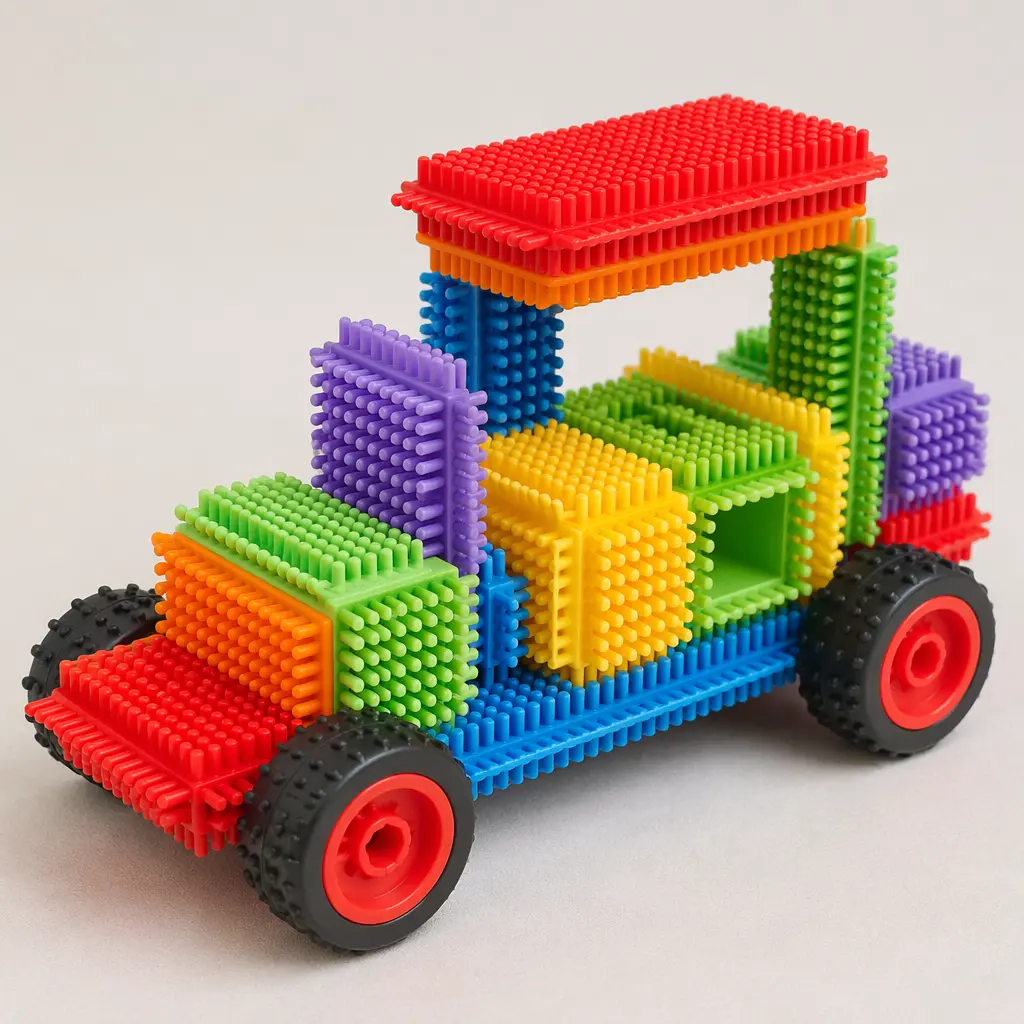
First sold in 1969, Stickle Bricks used soft bristles instead of studs to let young children build freely. It’s a simple idea that solved early construction play—and still makes sense today.
Compare prices and availability
Check current prices and availability for this guide on eBay.
As an eBay Partner, we may be compensated if you make a purchase.
Stickle Bricks don’t shout for attention. There’s no licensed theme, no flashing lights, and no instruction booklet telling you what to make. Yet for decades, this bristle-based construction toy quietly solved a problem that many early building sets struggled with: how to let very young children build confidently, without frustration.
Where it came from
Stickle Bricks were introduced in 1969 by the British company Stickle Bricks Ltd, at a time when construction toys were largely split between wooden blocks and stud-and-tube plastic systems. Both had strengths, but neither was ideal for preschoolers still developing hand strength and coordination.
The solution was deceptively simple: flexible nylon bristles moulded into plastic blocks. Press two pieces together and the bristles grip. Pull them apart and they separate without tools or sore fingers. The system was forgiving, tactile, and instantly understandable—even to toddlers. Over the years, the brand changed hands and ranges evolved, but the core idea stayed the same.
Why it works
The brilliance of Stickle Bricks lies in how little explanation they need. There’s no “right” orientation, no precise alignment, and no fear of pieces not fitting. Children can focus on experimenting, stacking, and rearranging rather than on mastering a connection system.
- Bristle-based connections that grip at almost any angle
- Large, chunky pieces suited to small hands
- Immediate success with minimal instruction
- Easy separation without twisting or force
- Compatibility across many decades of sets
This design encourages open-ended play. A model doesn’t have to be stable or symmetrical to be ‘finished’. If it falls apart, rebuilding is quick and satisfying. That low penalty for failure is a big reason the toy has remained popular in nurseries and early years classrooms.
Who it's for
Stickle Bricks are primarily aimed at preschool and early primary ages, typically around 2 to 6 years old. That said, adults often find themselves joining in, especially when helping younger children explore shapes, colours, and simple engineering ideas. For parents, the appeal is that it’s a construction toy children can genuinely use independently early on.
Variants and what to look for today
Modern Stickle Bricks sets tend to focus on themed builds—vehicles, animals, or buildings—while keeping the same core connector system. You’ll also find starter tubs aimed at free building, which most closely resemble the classic experience.
When buying today, look for sets with a good mix of basic bricks, wheels, and flat pieces. Very small packs can be limiting, while oversized novelty parts sometimes reduce flexibility. Generic bristle-block alternatives exist, but quality varies; softer, resilient bristles tend to last longer and hold builds together better over time.
Frequently asked questions
Are Stickle Bricks safe for toddlers?
They are designed with young children in mind, using large pieces and flexible connectors. As with any toy, it’s important to follow the age guidance on the box and supervise very young children.
Do old and new sets work together?
In most cases, yes. The bristle connection system has remained broadly consistent, making it possible to mix pieces from different eras, though colours and plastic feel may vary.
How do they compare to stud-based bricks?
Stickle Bricks trade precision for flexibility. They’re easier for younger children to use, but less suited to intricate, display-style models. Many families use both at different stages.
More than fifty years on, Stickle Bricks remain a reminder that good toy design doesn’t have to be complicated. By meeting children where they are developmentally, this quiet classic earned its place in playrooms—and it continues to do so without fuss.