The Wobbel Balance Board: How a curved plank reshaped play
Born in the 2010s, the Wobbel balance board helped make open‑ended movement play mainstream. This profile looks at where it came from, why kids keep using it, and what to know before buying one today.
Compare prices and availability
Check current prices and availability for this guide on eBay.
As an eBay Partner, we may be compensated if you make a purchase.
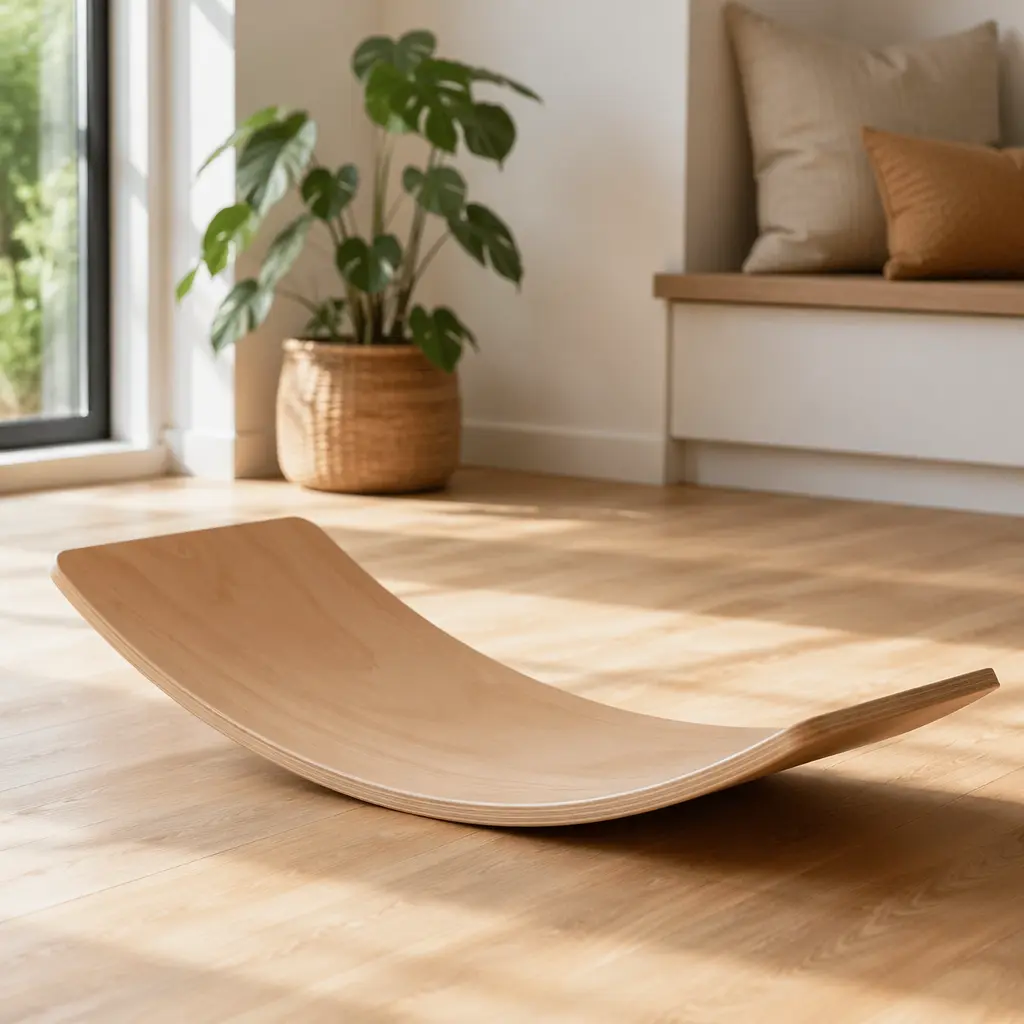
At first glance, the Wobbel balance board looks almost too simple to matter: a single curved piece of wood, no handles, no moving parts. And yet, in homes, nurseries, and therapy rooms around the world, this humble board has become a go‑to tool for movement play. Its rise says a lot about how parents and educators now think about play, bodies, and screen‑free time.
Where it came from
The Wobbel balance board emerged around 2015, developed in Europe and influenced by earlier Waldorf and Montessori ideas about movement and self‑directed play. Curved balance boards themselves aren’t new; similar shapes have been used for decades in physical therapy and early‑years classrooms. What Wobbel did was bring that concept into the mainstream home in a polished, design‑forward way.
Made from layered wood and finished to look as much like furniture as a toy, the board appealed to parents who wanted play equipment that blended into living spaces. Its timing also mattered. As concerns grew about sedentary childhoods and screen time, a product that quietly encouraged daily movement — without batteries or instructions — struck a nerve.
Why it works
The magic of the Wobbel isn’t in a hidden feature; it’s in the open question it poses to a child’s body. The curve invites rocking, balancing, tipping, and climbing, but never dictates what comes next. One moment it’s a bridge, the next a slide, a cradle, a surfboard, or a quiet place to sit and read.
From a physical point of view, the board constantly challenges balance and core strength. Small adjustments — shifting weight, bending knees, engaging muscles — happen naturally during play. Because there’s no "right" way to use it, children tend to return to it again and again, finding new challenges as their bodies grow.
- Curved shape that encourages balance and rocking
- Strong wooden construction that supports active movement
- No fixed rules, allowing imaginative and physical play to mix
- Works across ages, from toddlers to adults
Who it’s for
Balance boards like the Wobbel are often marketed for children from toddler age upward, but their real strength is flexibility. Younger children may use the board on the floor for gentle rocking or crawling, while older kids turn it into an obstacle, ramp, or fitness tool. Many adults end up using it too, whether for stretching, balance exercises, or even as a standing‑desk accessory. That wide age span is a big part of its staying power.
Variants and what to look for today
Today, the Wobbel concept has expanded into a small family of options. You’ll find boards in different sizes, thicknesses, and finishes, sometimes with added felt on the underside to protect floors or soften sound. While the original brand helped popularise the category, many similar balance boards now exist.
When shopping, it’s worth paying attention to build quality rather than extras. A good balance board should feel solid, with smooth edges and a stable curve. Be cautious of very cheap copies that use thin wood layers or rough finishes, as these can affect both safety and durability.
Frequently asked questions
Is a balance board safe for toddlers?
Yes, with supervision. Toddlers usually use the board close to the ground, rocking or crawling. Using it on a rug and staying nearby helps reduce the risk of slips.
Does it really help physical development?
Balance boards encourage core strength, coordination, and body awareness. While it’s not a therapy device on its own, it supports the kind of movement that builds these skills naturally through play.
Will kids get bored of it?
Because there’s no single function, boredom tends to be short‑lived. Children often return to the board at different stages, using it in new ways as their abilities and interests change.
Is it just for play?
Not necessarily. Many families use balance boards for stretching, yoga, or light exercise. Some adults also use them for active sitting or standing.
The Wobbel balance board’s success lies in its restraint. By offering almost nothing — just a curve and a surface — it makes room for movement, imagination, and growth. In a toy world crowded with features and flashing lights, that simplicity is exactly what keeps it in use long after the novelty wears off.