Yahtzee: Why five dice and a scorecard still deliver endless replay
First published in the 1950s, Yahtzee turns five dice and a pencil into a game of luck, timing and choice that still works for families and adults decades later.
Compare prices and availability
Check current prices and availability for this guide on eBay.
As an eBay Partner, we may be compensated if you make a purchase.
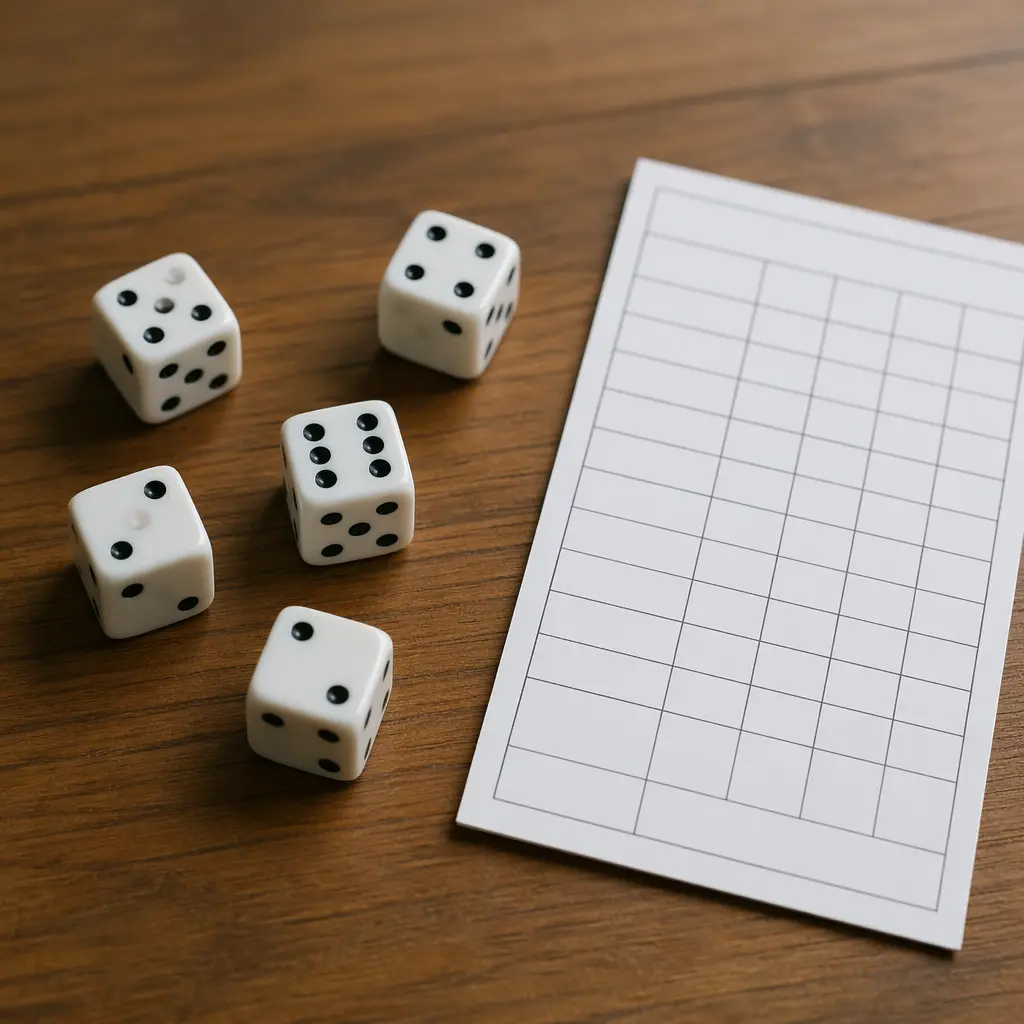
Yahtzee is one of those games many people feel they already know — a cup, five dice, a scorecard — yet it continues to earn its place in cupboards and holiday rentals around the world. On the surface it’s simple luck. Underneath, it’s a quiet lesson in risk, probability and decision-making. That balance is why Yahtzee, first released in 1956, still delivers strong replay value nearly seventy years on.
Where it came from
Yahtzee was created by Canadian couple Edward and Eleanor Lowe, who adapted a dice game they enjoyed playing with friends on their yacht — hence the nautical-sounding name. In 1956, they partnered with game manufacturer E.S. Lowe to produce and distribute it more widely. The original idea was modest: a social game that felt approachable, portable and easy to explain.
What made Yahtzee stand out at the time was its blend of casual play and structured scoring. Dice games were nothing new, but pairing them with a defined scorecard created a sense of progression and tension. Players weren’t just rolling; they were committing results, locking themselves out of future options, and learning the consequences of early choices.
Why it works
At its core, Yahtzee works because it gives players meaningful choices without overwhelming them. Each turn offers up to three rolls, but the real decision is what to keep and what to chase. Do you settle for a safe score now, or risk it all hoping for a high-value category later?
The scorecard is the game’s quiet genius. It turns random dice into a long-term puzzle, where every filled box narrows the path ahead. Over a full game, players experience highs, disappointments and recoveries — all without complex rules or setup.
- Simple components: just dice, a cup and a pencil
- Clear turn structure that’s easy to teach
- Meaningful risk-versus-reward decisions
- High replay value thanks to randomness
- A satisfying endgame bonus that rewards planning
Who it’s for
Yahtzee suits a wide age range. Children can grasp the basics as soon as they can add numbers, while adults appreciate the probabilities and long-term planning. It works well for families, mixed-age groups and even solo play. Many adults also return to Yahtzee later in life, finding it a relaxing, low-pressure alternative to heavier strategy games.
Variants and what to look for today
Over the years, Yahtzee has appeared in many forms, from travel editions with smaller components to deluxe versions with heavier dice and sturdier cups. There are also themed editions that reskin the game, though the underlying mechanics remain the same.
If you’re buying Yahtzee today, focus on component quality and readability rather than novelty. Solid dice that roll well, a durable cup, and a clear scorecard matter more than cosmetic extras. Be cautious of very cheap copies with lightweight dice or poorly printed score sheets, which can undermine the experience.
Frequently asked questions
Is Yahtzee mostly luck?
Luck plays a role, but smart decisions matter. Choosing when to take a low score, when to gamble, and how to manage the upper section bonus can significantly affect outcomes.
Can Yahtzee be played solo?
Yes. Many people play solo, aiming to beat their previous high score. The structure of the scorecard makes solo play feel complete rather than improvised.
How long does a game usually take?
A standard game with two to four players typically takes 20–30 minutes, making it easy to fit into an evening or play multiple rounds.
Is Yahtzee suitable for younger children?
Children who can count and add can play with some guidance. Many families simplify scoring at first, gradually introducing the full rules.
Yahtzee endures because it doesn’t try to be more than it is. With minimal components and clear choices, it creates tension, excitement and conversation around the table. In an era of ever more elaborate games, its simplicity remains its greatest strength.