Calming Puzzle Toys That Help Kids Wind Down After School
A parent-friendly guide to calming puzzle toys for ages 6–8. Learn what to look for, age fit, safety tips, and quiet puzzle types that build focus without screens or batteries.
Compare prices and availability
Check current prices and availability for this guide on eBay.
As an eBay Partner, we may be compensated if you make a purchase.
After a long school day, many kids need help shifting from busy classrooms and schedules into a calmer home routine. Puzzle toys can play a helpful role in that transition. For children ages 6–8, the right puzzle offers quiet focus, gentle problem-solving, and a sense of completion—without screens, noise, or flashing lights. This guide explains what to look for when choosing calming puzzle toys and how different types can support after-school wind-down time.
What to look for
Not all puzzles are equally calming. Some are designed for speed or competition, which can raise energy levels rather than lower them. When your goal is relaxation and focus, pay attention to how the puzzle looks, feels, and plays.
- Moderate challenge: Puzzles should be engaging but not frustrating. Look for designs that match your child’s problem-solving level without requiring constant adult help.
- Quiet materials: Wood, thick cardboard, felt, or sturdy plastic tend to be quieter than thin or loose pieces.
- Clear visual organization: Defined spaces, trays, or boards help kids understand where pieces go and reduce overwhelm.
- Single-player focus: Solo puzzles encourage independent play and concentration, which is often calming after social school settings.
- Open-ended pacing: Puzzles without timers, scores, or pressure allow kids to work at their own speed.
Age suitability
Children ages 6–8 are developing longer attention spans and stronger reasoning skills, but they still benefit from structure and clarity. At this stage, puzzles with 50–150 pieces, logic-based challenges with visible rules, or hands-on spatial tasks tend to work well. Too-simple puzzles may feel boring, while overly complex ones can lead to frustration at the end of a tiring day. Many families find it helpful to offer a few options so children can choose based on their energy level.
Standout categories or types
Several puzzle categories are especially well suited to calming, after-school play. Each type supports focus in a slightly different way, so variety can be useful depending on your child’s mood.
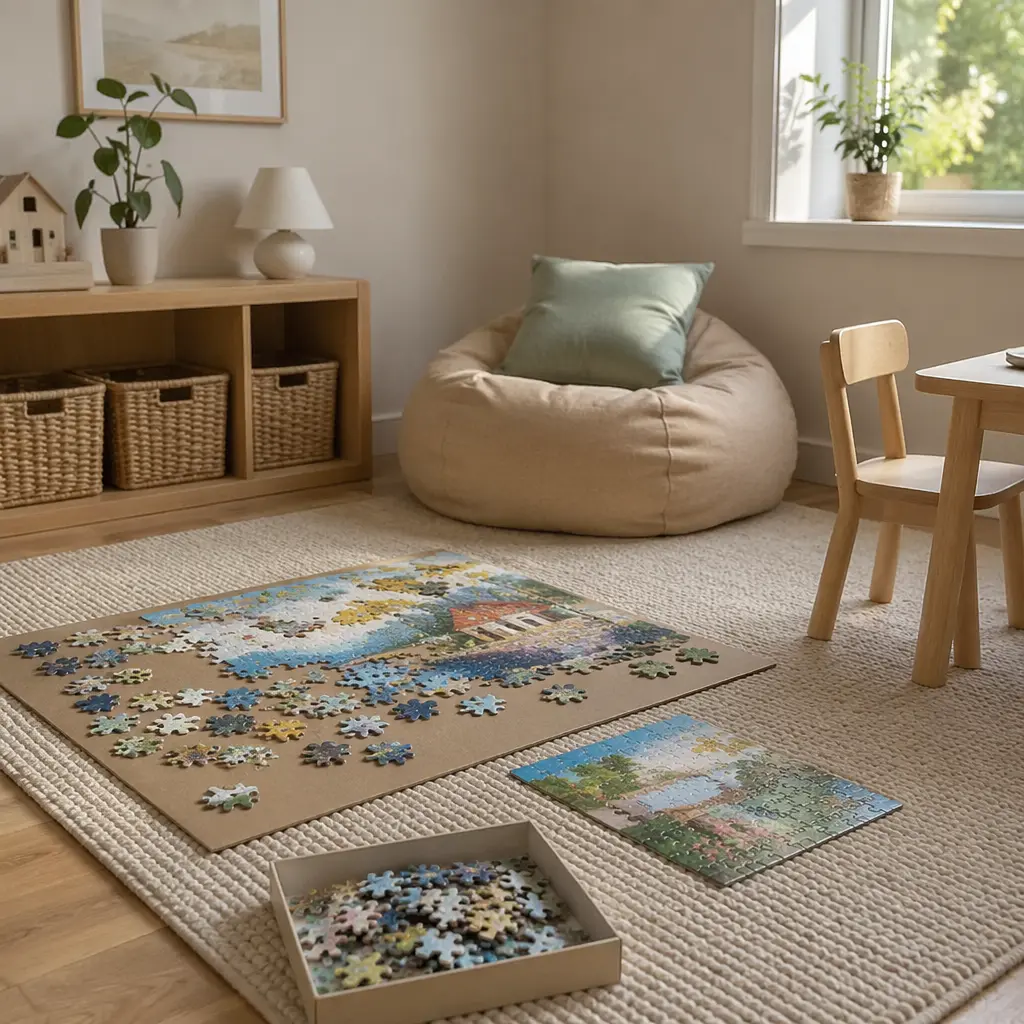
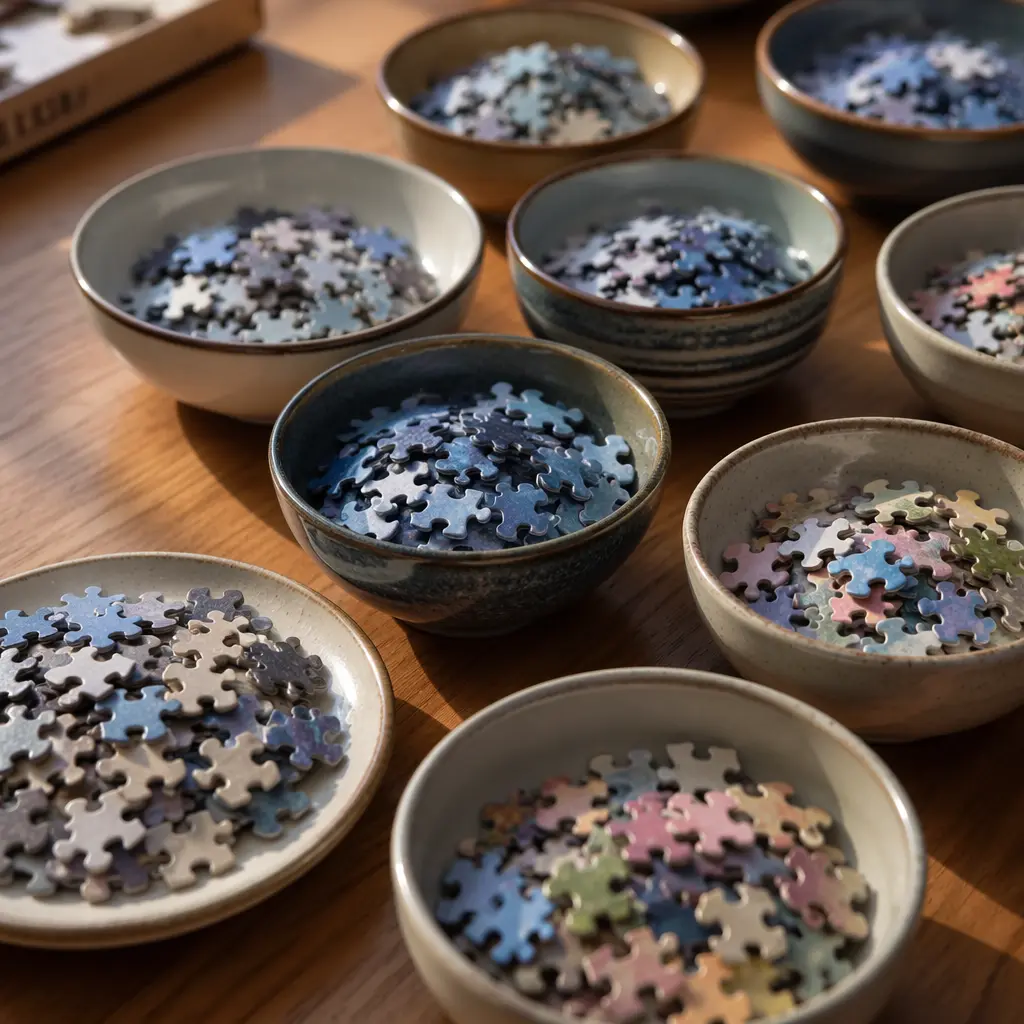
- Jigsaw puzzles: Traditional jigsaws encourage visual scanning and patience. Scenes with clear color sections or gentle themes are often more relaxing than busy images.
- Logic and deduction puzzles: These involve figuring out patterns, sequences, or placements using clues. They can be calming for kids who enjoy quiet thinking and clear rules.
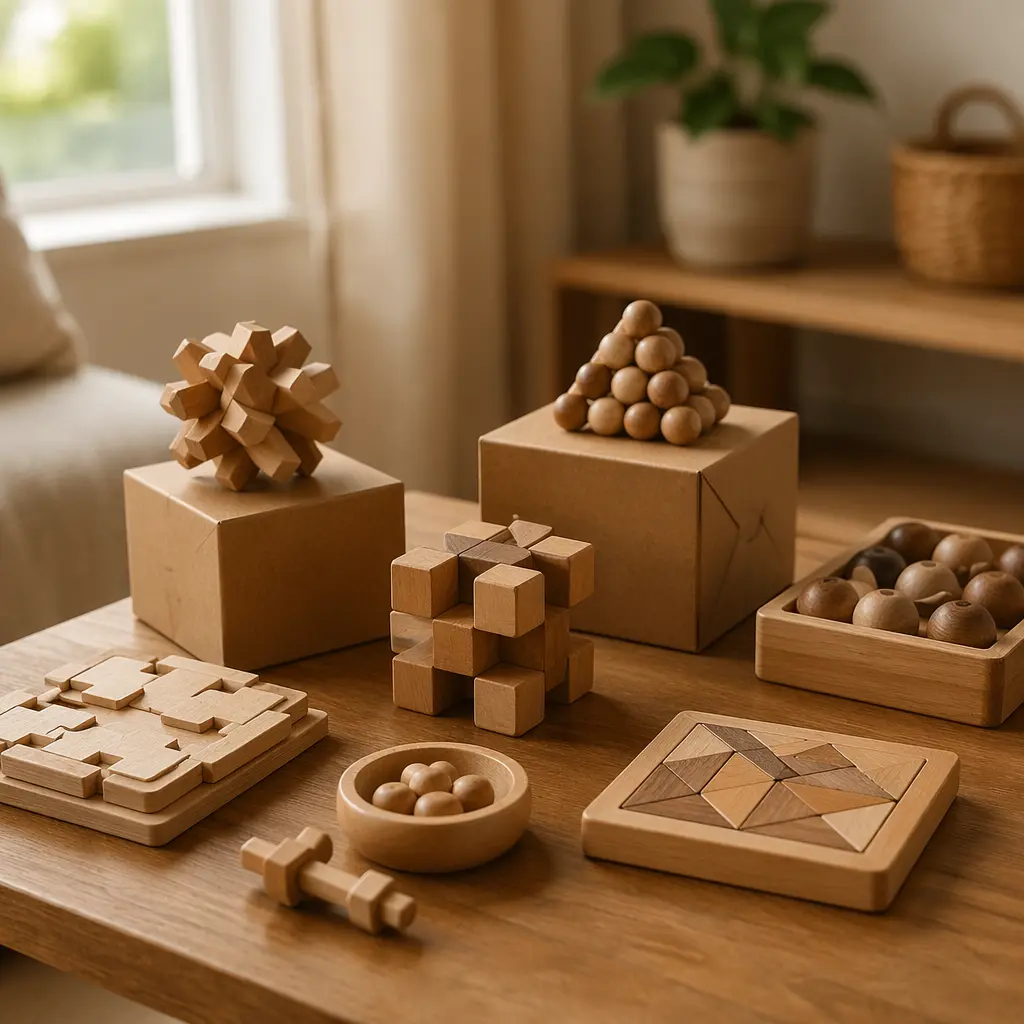
- Spatial and building puzzles: Tangram-style sets or shape-fitting challenges support hands-on problem-solving and can feel soothing due to repetitive movement.
- Maze and path puzzles: Following routes or guiding pieces through a track provides focus without needing speed or competition.
- Sorting and matching puzzles: Categorizing shapes, colors, or symbols helps some children settle through repetition and order.
Frequently asked questions
How long should a calming puzzle activity last?
There is no set time, but many children benefit from 10–30 minutes of quiet puzzle play after school. The goal is not to finish quickly, but to provide a gentle transition from school demands to home time.
Are puzzles better than screen-based games for winding down?
For many kids, physical puzzles are easier on the senses. They avoid bright light, sound effects, and fast pacing, which can make it easier for children to relax and refocus before dinner or homework.
What if my child gets frustrated with puzzles?
Frustration usually means the challenge level is off or the child is too tired. Offering a simpler option, working together briefly, or saving harder puzzles for weekends can help keep after-school play positive.
Do calming puzzles still support learning?
Yes. Many puzzles build skills such as spatial reasoning, planning, attention control, and perseverance. The learning happens quietly, without pressure or formal instruction.
Calming puzzle toys can be a valuable part of an after-school routine for children ages 6–8. By choosing puzzles that are quiet, age-appropriate, and focused on steady problem-solving, parents can offer kids a way to decompress while still engaging their minds. A small, thoughtful selection often goes further than a large collection, helping children associate puzzle time with comfort, focus, and calm.