Compact Board Games That Fit in One Backpack Pocket
A parent-focused guide to truly portable board and card games for ages 6–8, with low-mess setup, quick play times and practical tips for travel, restaurants and waiting rooms.
Compare prices and availability
Check current prices and availability for this guide on eBay.
As an eBay Partner, we may be compensated if you make a purchase.
Portable board games can make long waits, restaurant meals and travel days much easier for families with children aged 6 to 8. The challenge is finding games that are genuinely compact rather than just marketed as “travel size.” A good pocket-friendly game should set up quickly, stay organised on small tables, and avoid dozens of loose pieces that disappear under car seats or restaurant booths. Short play sessions also matter. Many children in this age range enjoy games that finish within 10 to 20 minutes, especially in busy environments with distractions and interruptions. Choosing the right type depends on where the game will be used most often, how many players usually join in, and how much noise or cleanup parents are willing to manage.
What to look for
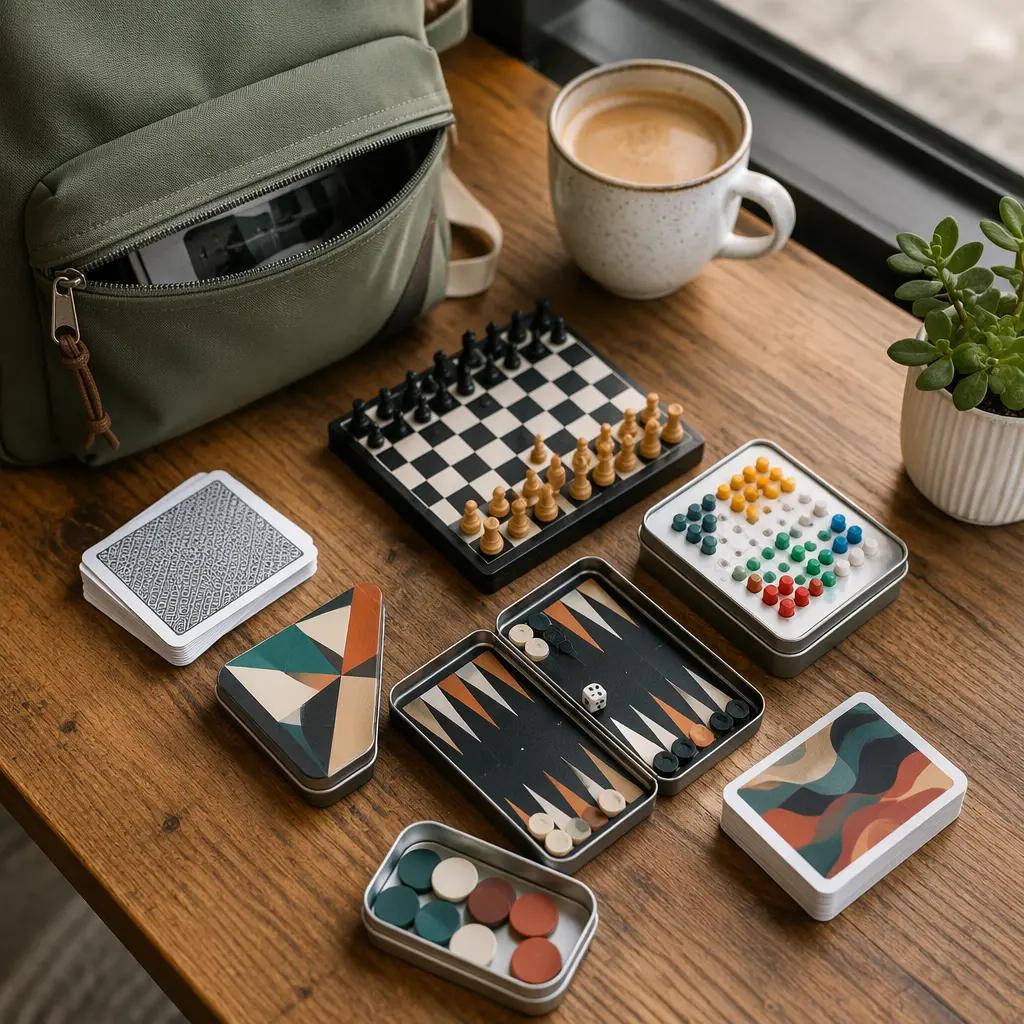
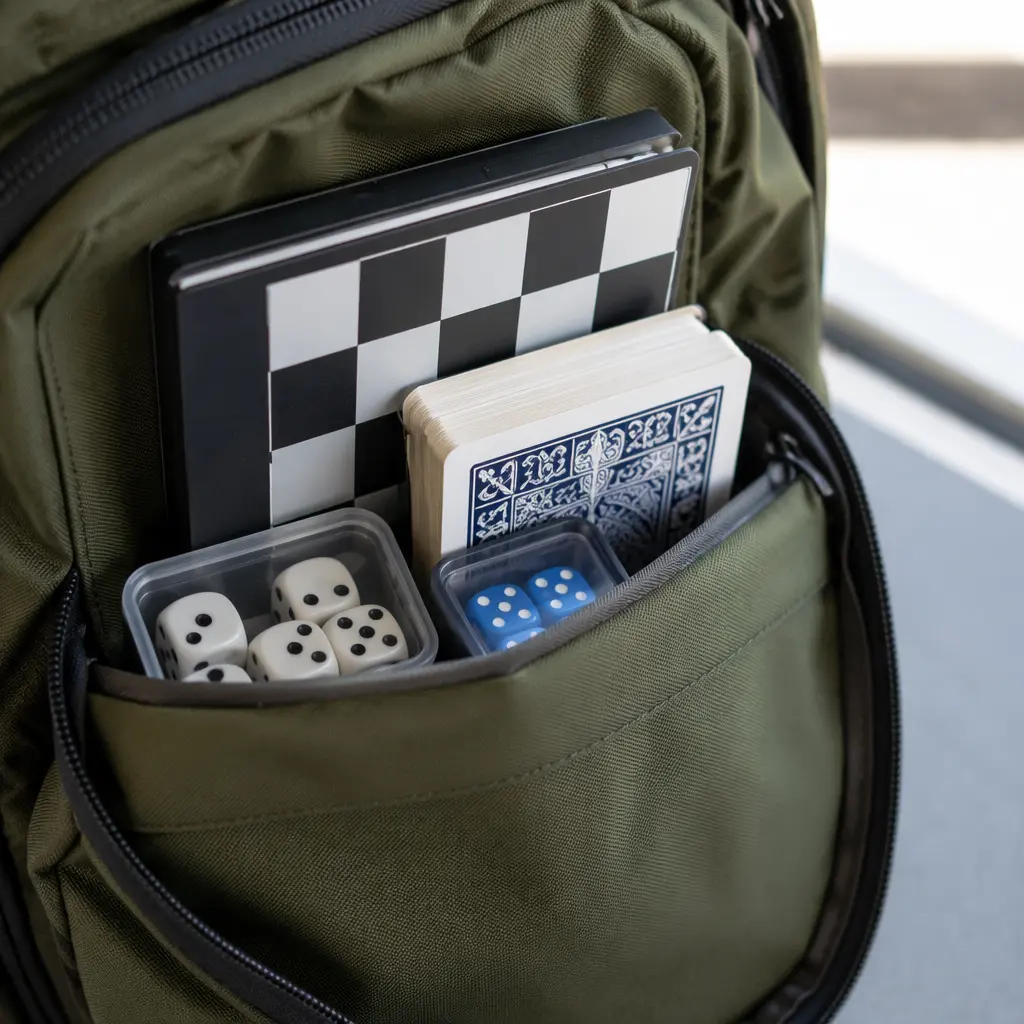
The best portable games for this age group balance simplicity with enough challenge to stay interesting after repeated play. Storage design is often more important than the game theme itself. Games packed in sturdy tins, zip cases or compact hard boxes usually survive travel better than oversized cardboard packaging. Magnetic pieces can help on trains, airplanes or outdoor tables, while card-only games reduce bulk and setup time. Parents may also want to think about how easily a child can learn the rules independently. Complicated scoring systems or lengthy instructions tend to work poorly in noisy public spaces.
- Choose games with fewer loose pieces to reduce cleanup and lost parts.
- Look for short rounds that can pause easily during meals or announcements.
- Magnetic boards or sturdy card cases work well for travel and uneven surfaces.
- Quiet games are usually better for restaurants, clinics and shared waiting areas.
- Games that support two players are often the most practical for travel.
- Avoid oversized “travel editions” that still require large table space.
- Simple rule sets help children play with minimal adult supervision once learned.
Age suitability
Children aged 6 to 8 are often ready for games involving strategy, memory, pattern recognition and simple teamwork, but attention span still matters. Many children in this age band enjoy portable games most when turns move quickly and outcomes feel fair. Fast card games, tile-laying puzzles and compact cooperative games are often easier to manage than long competitive strategy games. Younger six-year-olds may still need reminders about rules or scorekeeping, while older children closer to eight can usually handle more planning and tactical thinking. Families travelling with siblings should also check whether the game works well across mixed ages. Some compact games scale nicely for adults and children together, while others feel too repetitive for older players after a few rounds.
Options compared
Card-only games are usually the easiest option for families prioritising portability above everything else. A single deck-sized box fits into jacket pockets, backpack organisers or seat pouches without adding noticeable weight. These games often support fast rounds and flexible player counts, making them practical for airports, trains and restaurant tables. The trade-off is that some younger children may struggle holding many cards at once, and windy outdoor settings can make card play frustrating.
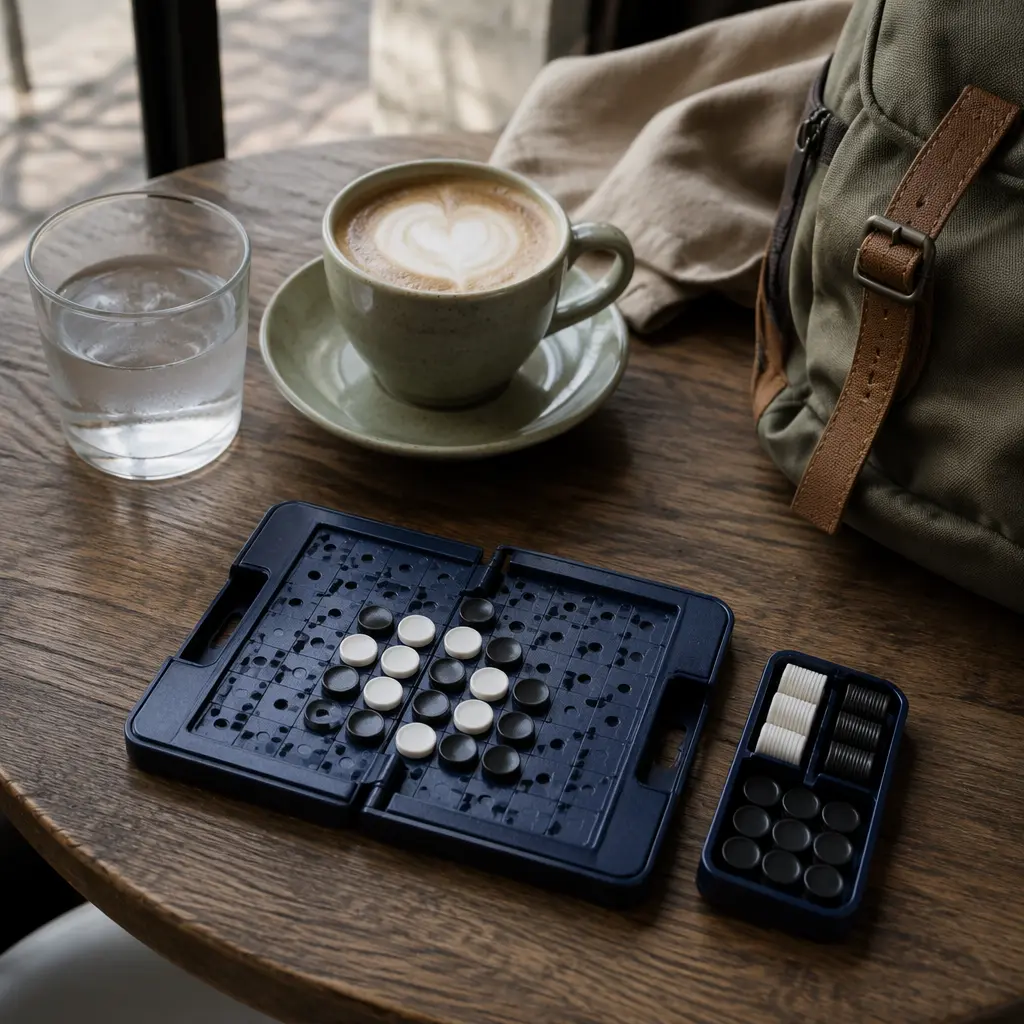
Mini magnetic board games work well when stability matters more than absolute compactness. Magnetic checkers, chess, puzzle mazes and travel strategy games can stay organised during movement, which helps on road trips or flights. They do take slightly more setup space than card games, though, and some compact magnetic sets use very small pieces that are easy to misplace. Dice games are another strong travel option because they are easy to learn and replay. However, rolling noise can become disruptive in quiet waiting rooms or restaurants unless the game includes a soft rolling tray or cup.
- Card games: lightest and easiest to carry; best for restaurants and quick waiting periods.
- Magnetic travel games: stable and reusable; useful for planes, trains and moving vehicles.
- Tile or token games: often more strategic but require careful piece storage.
- Dice games: quick and social, though sometimes noisy in public spaces.
- Cooperative games: useful for siblings who dislike direct competition during stressful travel days.
- Puzzle-style solo games: helpful for independent play while adults manage travel logistics.
Frequently asked questions
Are travel-sized board games actually practical for restaurants?
Some are, but smaller is usually better. Games with cards, magnetic pieces or a compact play area tend to work best on restaurant tables. Large folding boards, complicated scoring systems and games requiring constant sorting are often difficult to manage around food and drinks.
What types of games are easiest to pack for flights?
Slim card games, magnetic games and compact puzzle games are usually the most practical for air travel. They fit into seat pockets or small carry-on compartments and can often pause quickly during boarding, snacks or announcements.
How many pieces are too many for a portable game?
That depends on the setting, but families using games in public spaces often prefer fewer than 30 loose pieces. Games with dedicated storage trays, zip pouches or magnetic parts are generally easier to keep organised during travel.
Are cooperative games better for travel?
They can be. Cooperative games sometimes reduce arguments between siblings in confined spaces such as cars, airports or hotel rooms. They also allow adults to join casually without creating a highly competitive atmosphere during already tiring travel days.
What should parents avoid in a portable game?
Games with fragile cardboard inserts, very tiny tokens, long setup times or large table requirements are often less practical outside the home. Loud electronic features may also be unsuitable for waiting rooms, restaurants or public transport.
A truly portable board game should feel easy to bring along without becoming another item parents need to manage constantly. For children aged 6 to 8, compact card games, magnetic travel sets and quick cooperative games usually offer the best balance of entertainment, portability and simple cleanup. Choosing a format that matches the family’s typical travel habits will usually matter more than choosing the most complex or feature-heavy game.