Chunky Domino Sets vs Card Games for Early Strategy
Comparing chunky domino sets and simple card games for ages 3–5, with practical guidance on attention span, frustration levels, storage, supervision, and early strategy skills.
Compare prices and availability
Check current prices and availability for this guide on eBay.
As an eBay Partner, we may be compensated if you make a purchase.
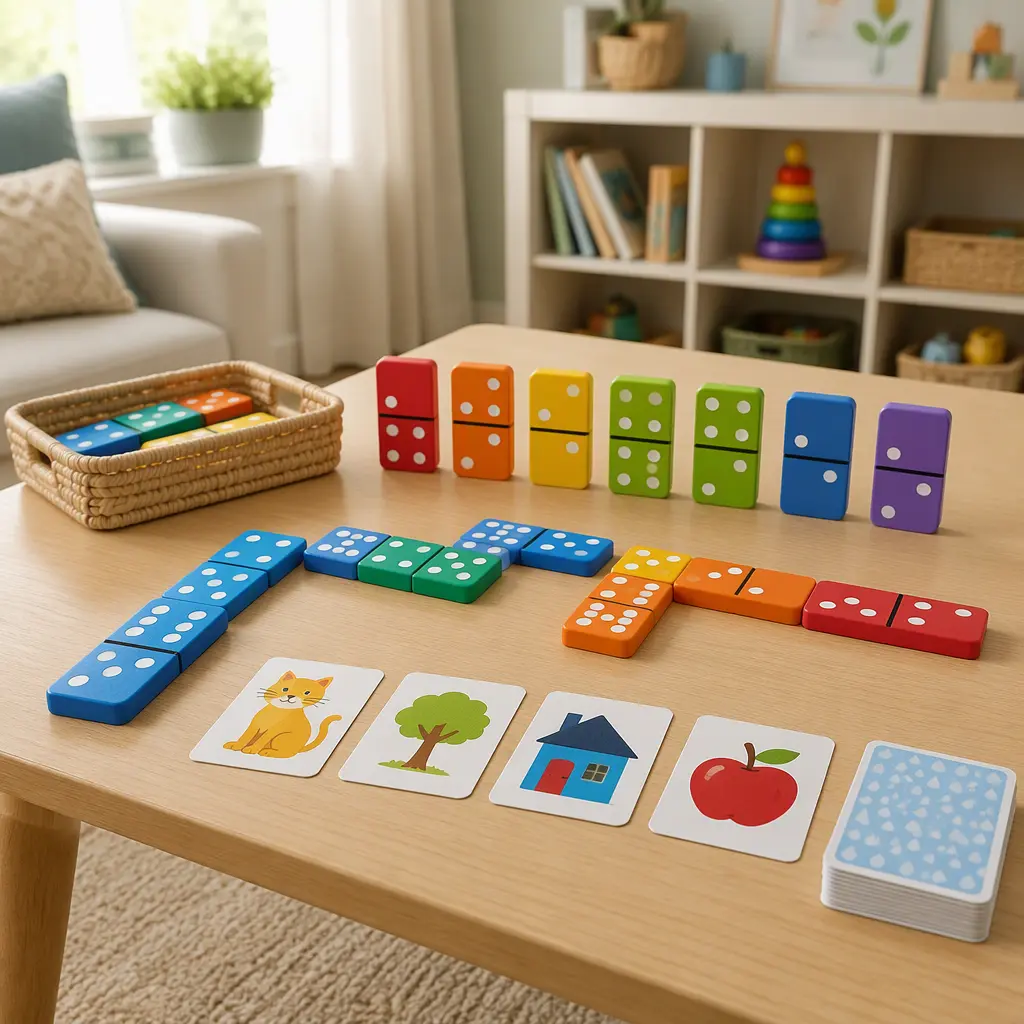
For children aged 3 to 5, early strategy games work best when the rules are simple, turns are short, and the materials feel approachable. Two common starting points are chunky domino sets and beginner card games. Both can help children practice matching, memory, patience, and flexible thinking, but they suit different personalities and stages of development. Some children enjoy tactile play with sturdy pieces they can line up and stack, while others prefer fast-moving games with clear goals and a bit of surprise. Choosing between the two often comes down to attention span, frustration tolerance, storage space, and how much adult guidance will be needed during play.
What to look for
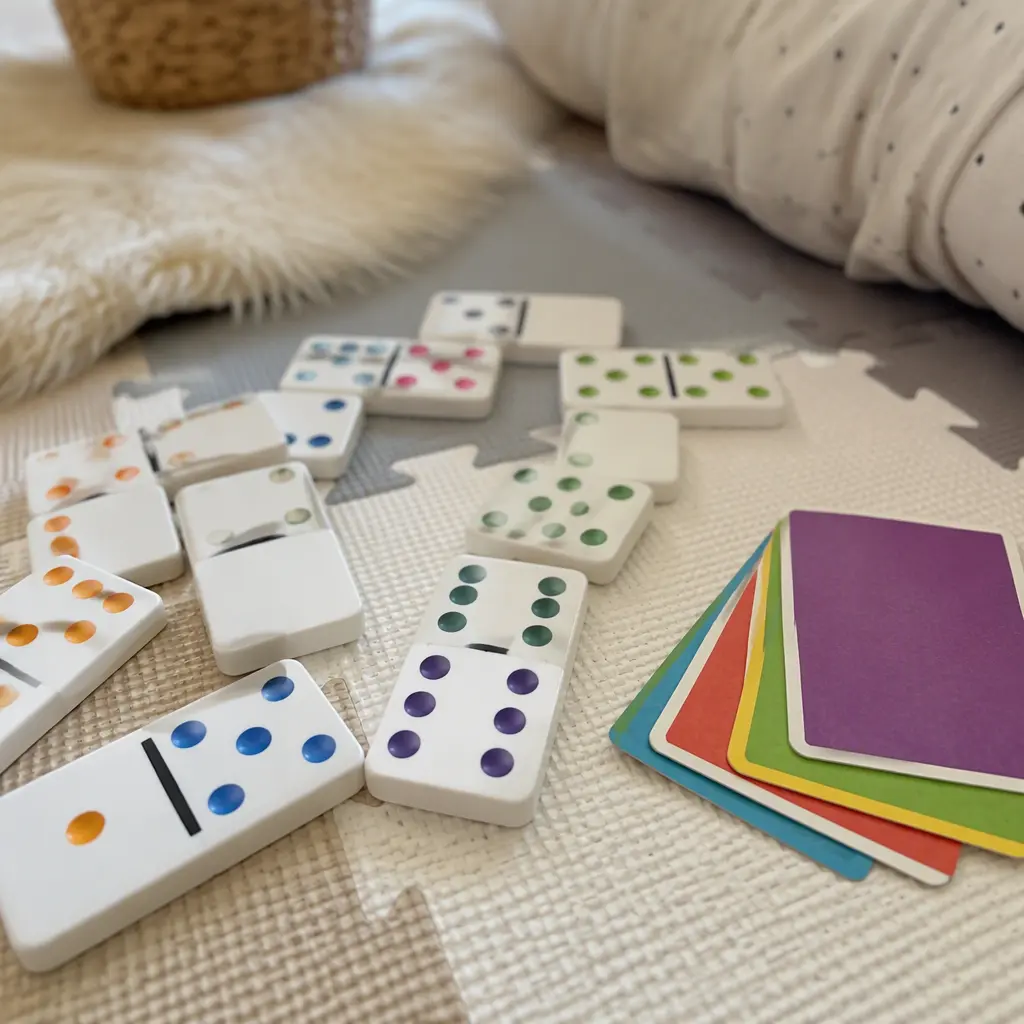
At this age, game design matters more than complexity. Preschoolers usually learn best through repetition and hands-on interaction, so sturdy materials and easy-to-understand rules are more useful than competitive depth. Dominoes and card games can both support early strategic thinking, but the right choice depends on how your child handles turn-taking, losing, and transitions between activities.
- Choose large, durable pieces that are easy for small hands to grip and difficult to bend or tear.
- Look for short play sessions. Games that finish within 10 to 15 minutes are often easier for preschoolers to enjoy repeatedly.
- Consider frustration levels. Dominoes tend to feel calmer and more open-ended, while card games may involve stricter rules and more visible winning or losing.
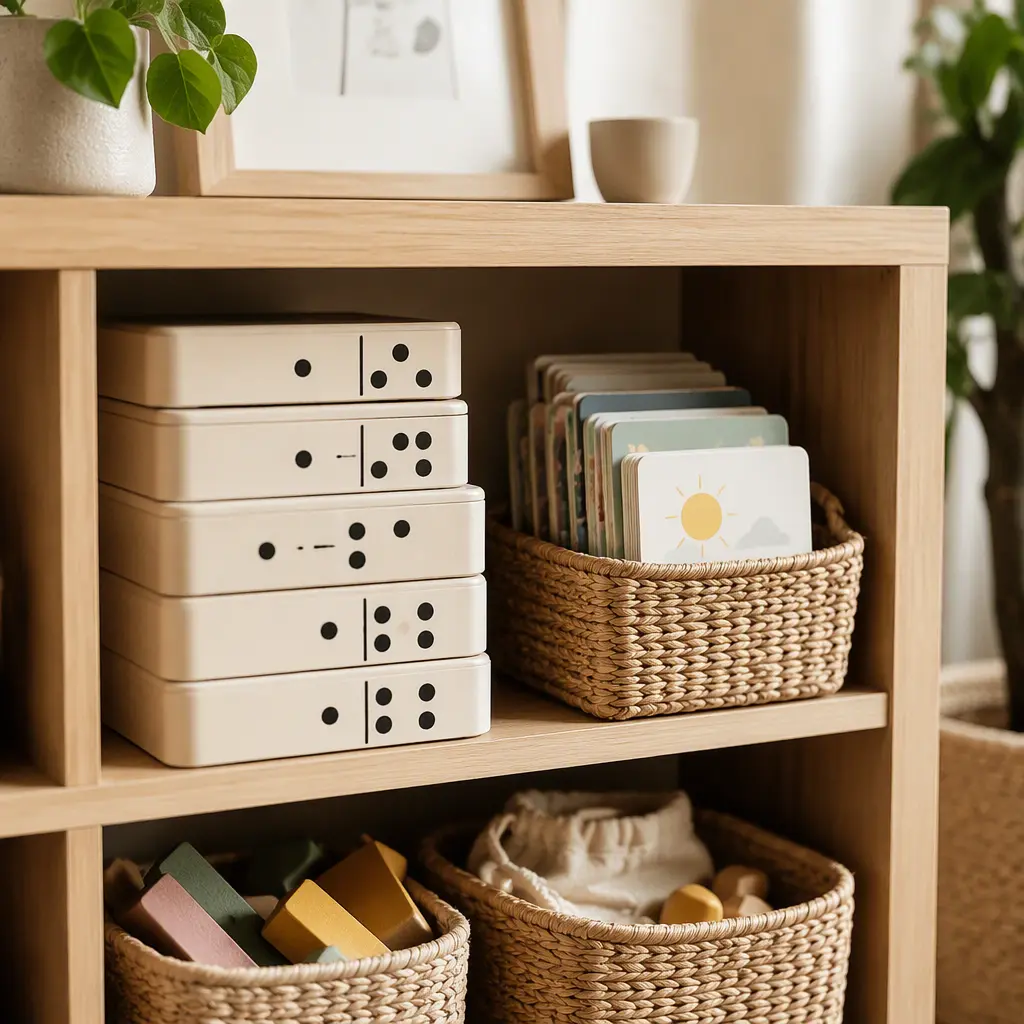
- Check storage needs. Card games are compact, while chunky dominoes take more shelf space but are usually easier for children to tidy independently.
- Think about noise and activity level. Dominoes encourage quieter table or floor play, while card games can become more energetic and competitive.
- Pay attention to visual clarity. High-contrast colors, simple pictures, and uncluttered layouts help younger children follow the game without constant reminders.
Age suitability
Most children around age 3 can begin with simple matching activities using chunky dominoes, especially sets with colors, animals, or familiar pictures instead of traditional dots. These sets support early counting and pattern recognition without requiring strict rules. By ages 4 and 5, many children are ready for beginner card games with turn-taking, memory, or simple decision-making. However, age labels are only rough guides. A child who enjoys sorting, building, or lining up objects may engage with dominoes for longer periods, while a child who likes surprises and social interaction may respond better to cards. Children who become upset by losing often find open-ended domino play less stressful than competitive card games.
Options compared
Chunky domino sets are usually the easier starting point for frustrated beginners. The tactile nature of the pieces allows children to experiment without feeling locked into strict gameplay. Many preschoolers use dominoes in several ways before they ever follow formal rules: matching colors, building lines, stacking towers, or knocking them down. That flexibility can reduce pressure and encourage independent play. Dominoes also tend to hold up well over time, especially wooden or thick plastic sets designed for preschool use.
Simple card games introduce more structured thinking. Children practice following rules, waiting for turns, remembering instructions, and adapting when outcomes change unexpectedly. Matching games, basic memory games, and beginner action-card games can build confidence gradually. The trade-off is that cards are often less forgiving for children who dislike losing or who struggle with impulse control. Cards can also slide around easily on tables, become bent during rough handling, or require more adult setup and explanation.
- Chunky domino sets suit children who enjoy tactile play, sorting, lining up objects, or quieter independent activities.
- Dominoes are often better for children who become frustrated quickly because the play can stay cooperative and flexible.
- Simple card games suit children who enjoy social interaction, surprises, and quick rounds with clear goals.
- Card games are usually easier to pack for travel, restaurants, or waiting rooms due to their compact size.
- Families with limited storage may prefer cards, while households prioritizing durability may lean toward sturdy domino sets.
- Children who struggle to sit still for long may prefer fast card rounds over slower domino matching activities.
Frequently asked questions
Are traditional numbered dominoes too advanced for preschoolers?
Not necessarily, but many children aged 3 to 5 engage more easily with picture or color dominoes first. Traditional dot-counting versions may work better closer to age 5, especially for children already comfortable with counting small groups.
Do card games help with school readiness?
Simple card games can support skills linked to classroom learning, including listening, turn-taking, memory, and following multi-step directions. The benefit usually comes from repeated relaxed play rather than competitive pressure.
Which option works better for independent play?
Dominoes generally support independent play more naturally because children can explore them creatively without strict rules. Most preschool card games require at least occasional adult help with setup, reminders, or reading instructions.
What if my child gets upset when losing?
Cooperative or open-ended games are often a better starting point. Dominoes can be used collaboratively with shared goals, while some beginner card games can be adapted to focus on matching and storytelling instead of winning.
Are wooden or cardboard components better for this age?
Wooden dominoes are usually more durable and easier for small hands to manage, though they are heavier and louder when dropped. Cardboard cards are lightweight and portable but may crease or tear more quickly with frequent preschool use.
For many families, chunky dominoes make the gentler introduction to early strategy play because they combine structure with open-ended exploration. Simple card games become more rewarding once a child is comfortable with rules, turn-taking, and small disappointments. Some households eventually use both: dominoes for calmer independent play and cards for social family game time. Focusing on short sessions, age-appropriate rules, and low-pressure play usually matters more than choosing the most advanced game.