Card Games vs Tile Games for Restaurant Dinners
Compare card games and tile games for restaurant dinners with children ages 6–8. Learn which options fit small tables, reduce dropped pieces, and keep rounds short and screen-free.
Compare prices and availability
Check current prices and availability for this guide on eBay.
As an eBay Partner, we may be compensated if you make a purchase.
Restaurant dinners can involve long waits, crowded tables, and restless children, especially for ages 6–8 who may already be tired or hungry by the time food arrives. Travel games can help fill that gap without relying on screens, but not every format works equally well in a busy restaurant. Card games and tile games each solve different problems. Some are better for tiny tables, while others are easier for younger children to handle without scattering pieces onto the floor. The right choice depends on how much space you usually have, how quickly your child loses focus, and how much setup and cleanup you are willing to manage between courses.
What to look for
The best restaurant travel games are usually simple to pause, quick to reset, and compact enough to avoid taking over the table. Children ages 6–8 often enjoy games with light strategy and clear turns, but restaurants add extra challenges such as drinks, limited elbow room, and interruptions from servers. Games that work well at home may suddenly feel awkward in a booth or at a small two-person table.
- Choose games with short rounds so children can stop and restart easily when food arrives.
- Look for larger cards or chunky tiles that are easier to pick up without bending or slipping.
- Avoid games with many tiny scoring tokens or pieces that roll easily under tables.
- Compact storage matters if the game needs to fit into a handbag, backpack, or coat pocket.
- Quiet gameplay is often better in restaurants than games involving shouting, buzzing, or fast reactions.
- Games with flexible player counts work better when adults join briefly or younger siblings participate.
- Simple cleanup is important because restaurant tables may need clearing quickly at the end of the meal.
Age suitability
Children ages 6–8 are often ready for turn-taking games with basic strategy, memory, matching, or simple deduction. At this age, many can hold cards comfortably and understand scoring rules, but patience levels still vary widely. Younger six-year-olds may prefer visual games with fewer decisions per turn, while older children closer to eight may enjoy tactical choices and slightly longer rounds. Restaurant play also favors games that can pause without ruining progress. Competitive games with complicated scoring or long-term planning can become frustrating when interrupted by drinks arriving or meals being served. Families with younger siblings may find tile games easier because thicker pieces are often simpler for small hands to manage than fanned cards.
Options compared
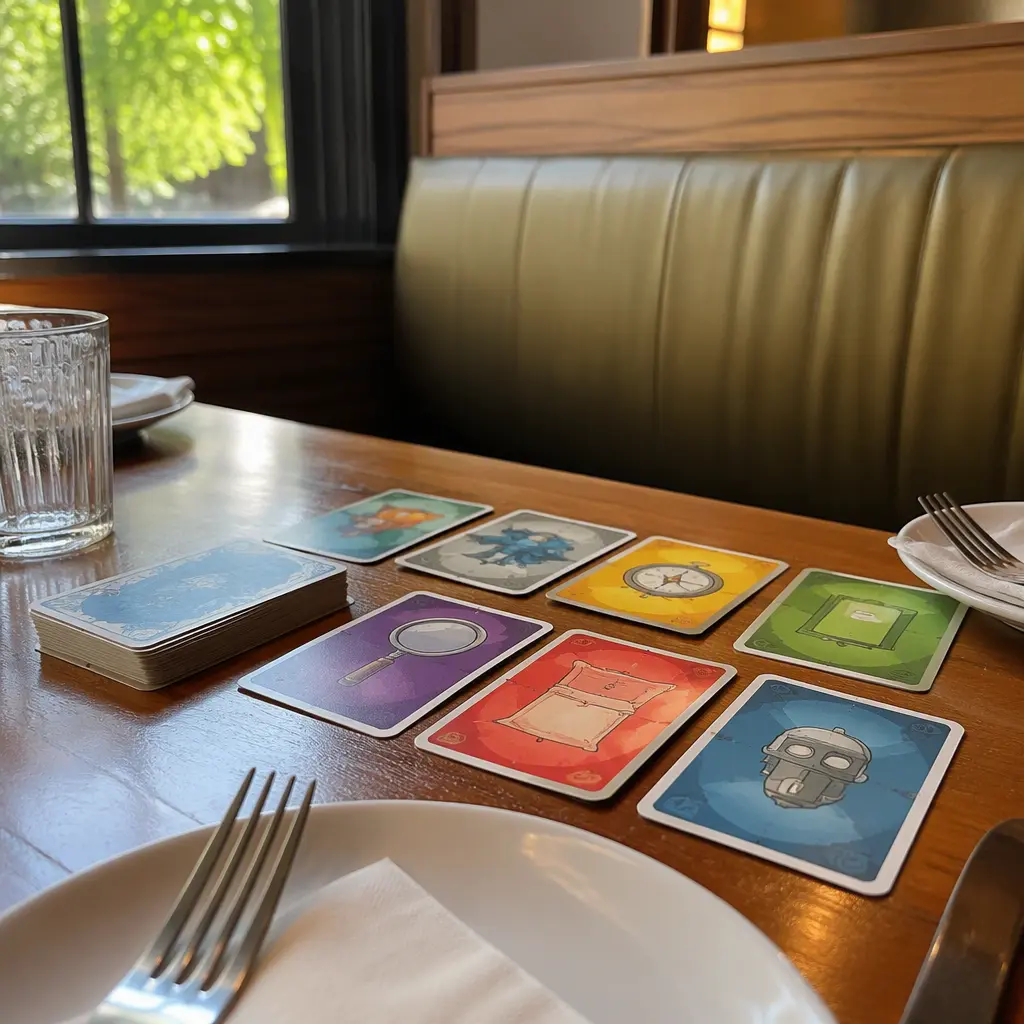
Card games are usually the easiest option for restaurant dinners because they pack small, start quickly, and fit almost any table size. Many family card games support short rounds of five to fifteen minutes, which suits waiting times between ordering and food arriving. Standard playing-card-sized games also slide easily into bags or coat pockets. For families prioritizing portability and minimal cleanup, card games are often the simpler choice.
The main drawback is that cards can spread out across the table or slide onto the floor, especially on glossy restaurant surfaces. Younger children may also struggle to hold large hands of cards discreetly or keep them organized in tight seating. Some games require central discard piles and draw decks that become awkward beside drinks and condiments. Card games tend to work best for children who already understand turn-taking and can manage their own cards carefully.
- Simple matching or set-collection card games suit small tables and short waits.
- Cooperative card games can reduce arguments during tiring evening meals.
- Tile games often feel more tactile and stable because pieces stay in place better than loose cards.
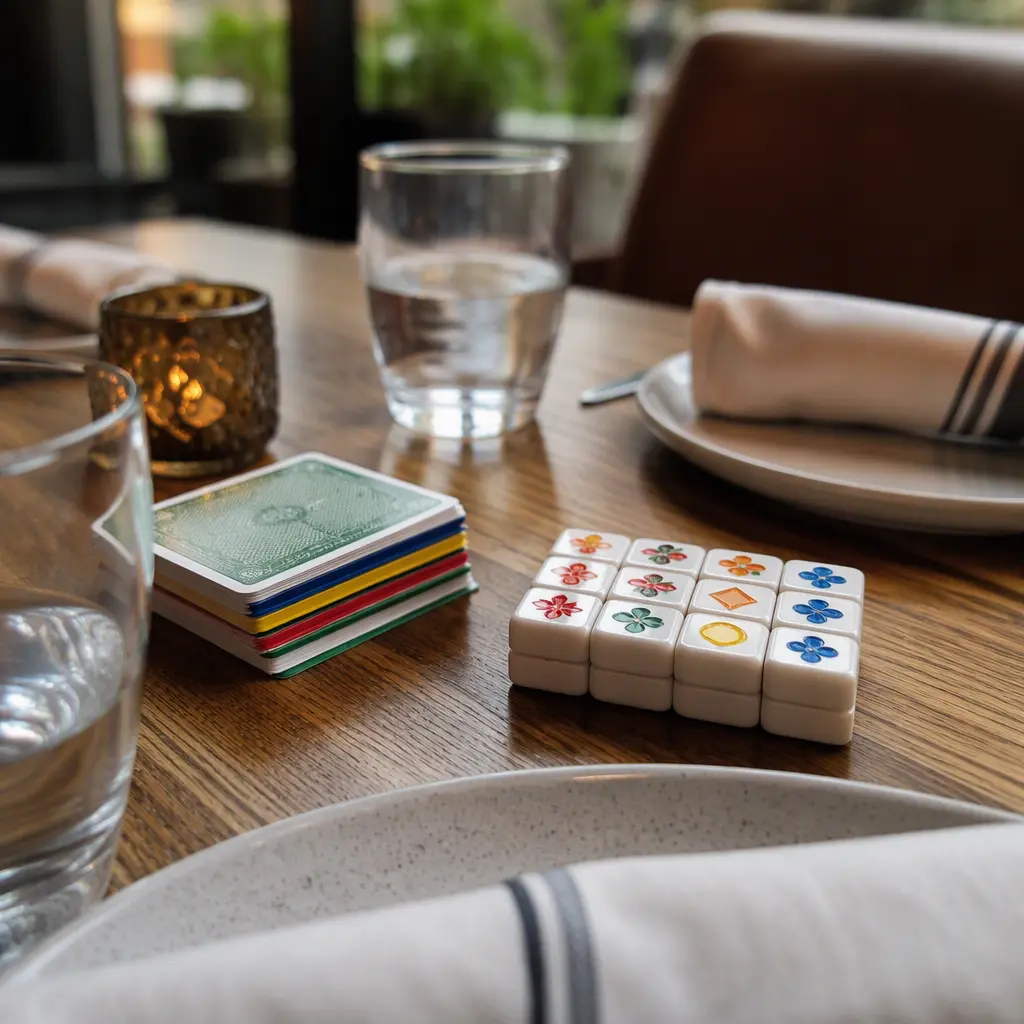
- Chunky travel tiles are easier for some younger children to handle without bending or dropping pieces.
- Tile games with grid-building or pattern-making mechanics can occupy children longer during slower service.
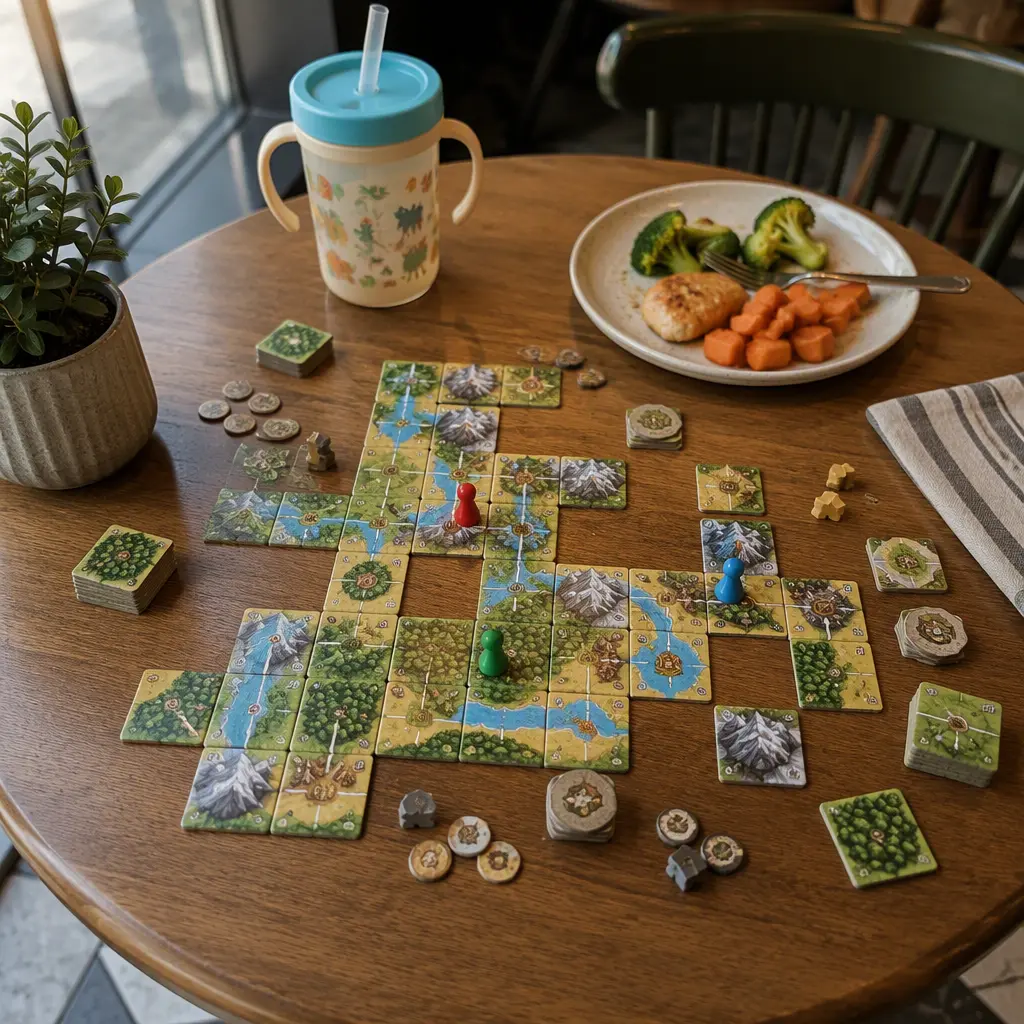
- Games with too many tiles may become difficult in booths with limited table depth.
- Magnetic travel versions can help prevent dropped pieces during crowded restaurant meals.
- Avoid games requiring large layouts, hidden screens, or constant reshuffling in tight spaces.
Frequently asked questions
Are card games or tile games quieter in restaurants?
Most traditional card games are quieter because cards can be placed softly on the table, while some tile games involve harder pieces clicking together. However, player behavior matters more than the format itself. Fast-paced reaction games are usually noisier regardless of whether they use cards or tiles.
Which option works better in very small booths?
Compact card games generally fit more easily into narrow booths because they require less table depth. Tile games can work well too, but games needing large layouts or spreading patterns may quickly run out of space beside plates and drinks.
What if younger siblings are at the table?
Families with toddlers may prefer larger-format tile games because oversized pieces are easier to supervise and less likely to bend or tear. Very small tiles or tokens should still be avoided around younger children who may mouth loose pieces.
Do travel-sized games make play harder for children?
Sometimes. Mini cards and tiny tiles improve portability but can frustrate children with developing fine motor skills. For ages 6–8, slightly larger travel editions are often easier to manage in dim restaurant lighting and crowded seating.
How long should restaurant games last?
Short rounds are usually more practical than long campaign-style play. Games lasting roughly five to fifteen minutes per round are easier to pause between courses and reduce frustration if the table needs clearing quickly.
For most restaurant dinners, compact card games are the more practical all-around option because they travel easily and support quick rounds in limited space. Tile games become more appealing when stability, tactile play, or younger children are priorities. Families who dine out regularly may even prefer keeping one of each style packed in a travel bag so they can match the game to the restaurant setup, waiting time, and energy level of the child that evening.