Card Games vs Dice Games for Kids Learning Strategy
Compare card games and dice games for children ages 6–8, including attention span, mixed-age play, luck balance, noise, storage and how each format handles frustration and strategy learning.
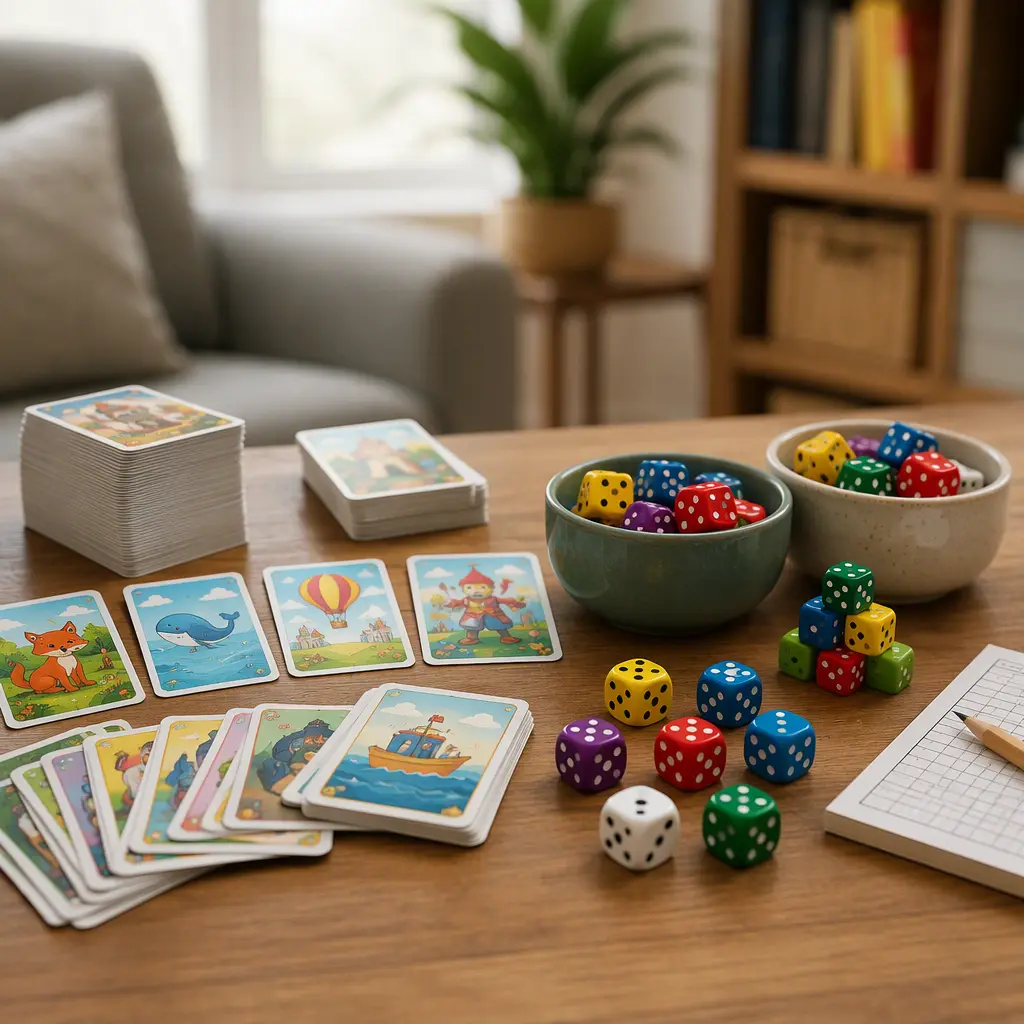
Compare prices and availability
Check current prices and availability for this guide on eBay.
As an eBay Partner, we may be compensated if you make a purchase.
For children ages 6–8, both card games and dice games can build early strategy skills, but they encourage different habits and suit different family situations. Card games often reward planning, memory and pattern recognition, while dice games usually move faster and lean more heavily on luck. That difference matters for children with short attention spans, siblings playing together across age gaps, or families trying to reduce frustration after losses. The best choice depends less on which format is “better” overall and more on how your child reacts to competition, waiting turns and unpredictable outcomes.
What to look for
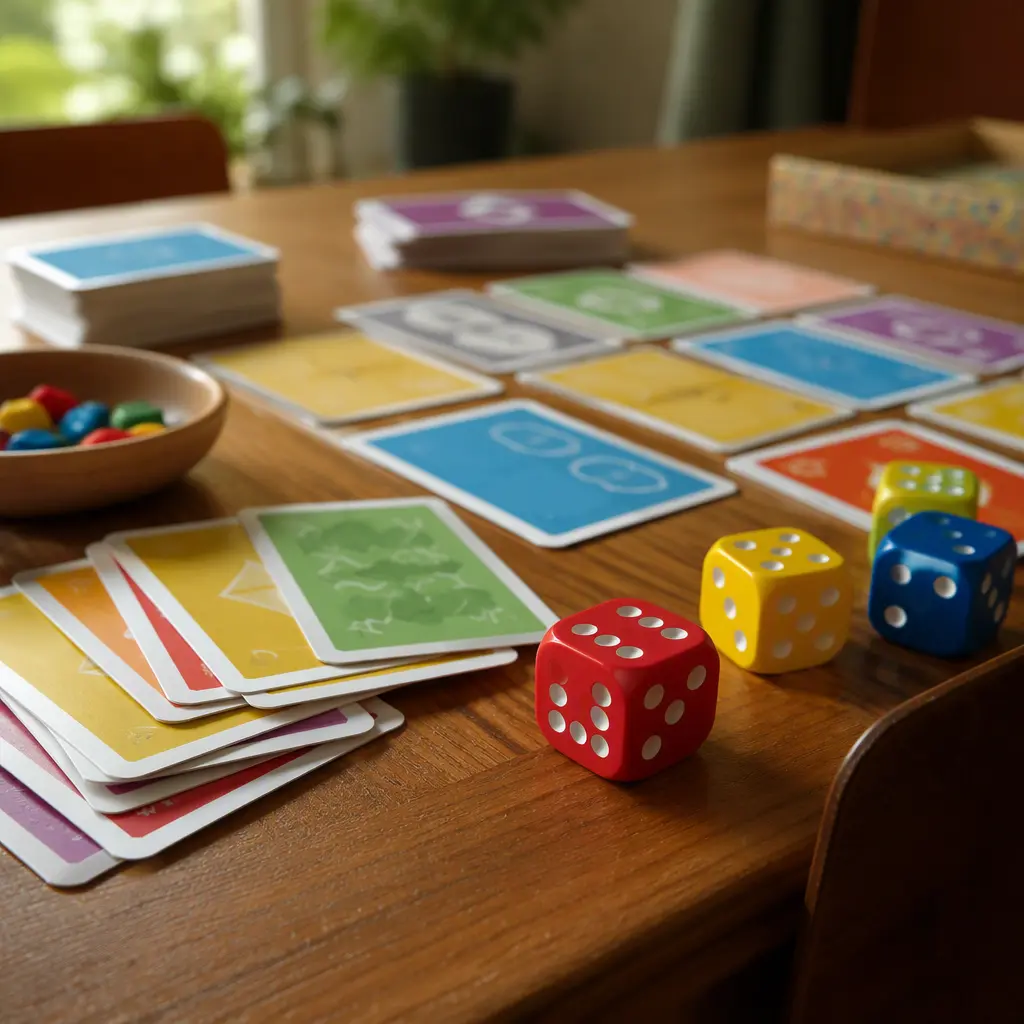
Games for this age group work best when the rules are easy to explain but still leave room for decisions. Children around 6–8 are usually beginning to understand planning ahead, probability and reading other players’ choices, but many still struggle with long downtime or complicated scoring. The structure of the game matters as much as the theme.
- Short rounds help children stay engaged and make losing feel less overwhelming.
- Games with some luck can balance skill gaps between younger and older players.
- Large cards or chunky dice are easier for smaller hands to manage.
- Low setup and quick cleanup are useful for weeknight play.
- Quiet games suit apartments, shared spaces and bedtime routines better than loud rolling or table-slapping games.
- Compact games travel more easily for restaurants, holidays or waiting rooms.
- Cooperative or team-based formats can reduce arguments for children who dislike losing.
- Durable materials matter because frequent shuffling, bending and dropped pieces are common at this age.
Age suitability
Most children ages 6–8 can handle basic strategic thinking, but patience levels vary widely. Younger six-year-olds may prefer dice games because turns are usually quick and the results feel immediate. Many seven- and eight-year-olds begin to enjoy card games that involve collecting sets, planning combinations or holding cards for later turns. Mixed-age groups often do better with games where luck still plays a visible role, because older children cannot dominate every round through skill alone. Children who become upset after losing sometimes cope better with dice-based games since random outcomes spread blame away from individual decisions. On the other hand, children who enjoy puzzles and remembering information may find card games more satisfying over time because they reward learning and improvement.
Options compared
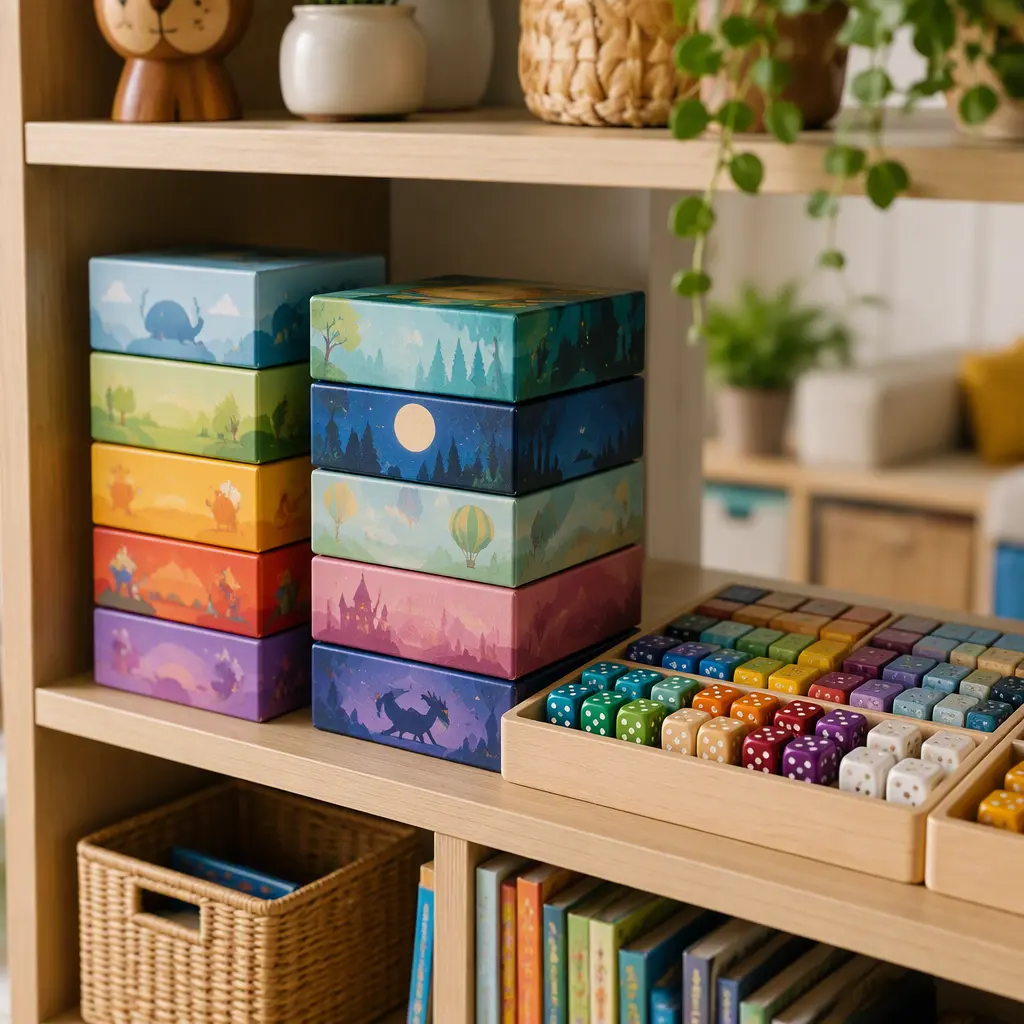
Card games are usually the stronger choice for children ready to practice planning and flexible thinking. Even simple games often involve deciding whether to save a card, block another player or change strategy based on what appears in the hand. That can build patience and decision-making skills over repeated sessions. Card games also tend to store easily, create less noise and travel well. Families with limited space may prefer them because a single deck can support many different styles of play.
The trade-off is that card games can feel slower for children with short attention spans. Waiting with a hand of cards while another player thinks through options may lead to boredom or distraction. Children who dislike losing may also react strongly if they feel another player “outsmarted” them. In mixed-age groups, older siblings can sometimes dominate strategy-heavy card games unless the game includes enough luck or hidden information to level the field.
- Dice games usually suit energetic children who enjoy quick turns and visible action. Rolling dice creates excitement and keeps rounds moving.
- Luck-heavy dice games can reduce tension between siblings because outcomes feel more random and less personal.
- Many dice games are easier for mixed-age play since younger children still have a realistic chance to win.
- Dice games often require less reading, making them accessible for children still building literacy skills.
- Some dice games become noisy, especially on hard tables, which may not suit shared living spaces or calm evening play.
- Games that rely almost entirely on luck may not hold older children's interest for long once the novelty fades.
- Card games generally encourage more long-term strategic thinking and memory practice.
- Children who enjoy collecting, organizing or spotting patterns may stay engaged with card games longer than with repetitive rolling mechanics.
Frequently asked questions
Are dice games too luck-based to teach strategy?
Not necessarily. Many children learn early strategic thinking through deciding when to take risks, when to stop rolling or how to respond to changing outcomes. Dice games often teach probability and emotional resilience alongside strategy. They simply place more emphasis on adapting to chance rather than planning several turns ahead.
Which format is better for sore losers?
Dice games are often easier emotionally because random outcomes soften the feeling of personal failure. Children may accept a bad roll more easily than being outplayed by a sibling. Cooperative card games can also work well because players solve problems together instead of competing directly.
What works best for short attention spans?
Fast-paced dice games usually hold attention more effectively, especially for younger children or busy after-school evenings. Look for games with quick turns and short rounds regardless of format. Some card games designed for children also move quickly, particularly matching or set-collection styles.
Are card games harder to learn?
Some are, but many family card games for ages 6–8 use very simple rules. The challenge often comes later as children begin noticing deeper strategies. Games with symbols instead of heavy reading demands are usually easier for younger players to pick up independently.
Which format travels better?
Compact card games are generally easier for travel because they fit into bags and are less likely to roll under furniture or car seats. Dice games can still work well for travel if they include a tray, cup or contained rolling area to reduce mess and lost pieces.
For many families, the most practical approach is keeping one or two of each format available. Dice games can suit busy evenings, mixed-age groups and children who need quick engagement, while card games often provide stronger long-term replay value and deeper strategy practice. Choosing according to your child’s temperament, patience level and play environment will usually matter more than choosing one format over the other.