Washable Markers vs Paint Sticks for Low-Mess Art Play
A parent-friendly comparison of washable markers and paint sticks for ages 3–5, covering cleanup, drying time, independence, storage, and practical trade-offs for low-stress art play.

Compare prices and availability
Check current prices and availability for this guide on eBay.
As an eBay Partner, we may be compensated if you make a purchase.
For parents trying to keep creative play manageable, washable markers and paint sticks are two of the most practical options for preschool-aged children. Both support screen-free creativity without the setup required for traditional paints, but they behave very differently in daily family life. The better choice often depends less on artistic results and more on cleanup, drying time, storage space, and how independently a child can use the supplies. Some families want quick drawing activities that can happen before dinner with almost no supervision. Others prefer a more paint-like experience without open pots, water cups, or brushes. Understanding the trade-offs can help narrow down which option fits your home and your child’s stage best.

What to look for
Low-mess art supplies are not all equally easy to live with. Some clean easily from tables but stain fabric. Others feel dry to the touch but smear under pressure. For children ages 3 to 5, practical details matter more than having the largest color range or the boldest packaging. Parents often find that ease of use determines whether art supplies are used regularly or avoided after a few frustrating experiences.
- Washability: Check whether the product is designed to clean from skin, tables, and common fabrics using normal household washing.
- Drying time: Faster-drying supplies reduce accidental smears and make it easier to display or stack artwork.
- Cap and storage design: Preschoolers often forget to replace lids securely, so simple closures help reduce waste and drying out.
- Grip size: Chunkier supplies are easier for younger children to hold and control.
- Paper compatibility: Some paint sticks work best on heavier paper, while markers usually suit standard printer paper.
- Odor level: Strong smells can bother sensitive children or make indoor use less pleasant.
- Independence: Consider whether your child can open, close, and use the supplies without constant adult help.
- Surface risk: Even washable products may behave differently on walls, wood, upholstery, or textured surfaces.
Age suitability
For ages 3 to 5, both washable markers and paint sticks can work well, but they suit slightly different developmental stages. Younger preschoolers often manage chunky paint sticks more easily because they glide across paper with less pressure. The twist-up format can also feel intuitive once shown how it works. However, some children press too hard, causing the stick to break or smear heavily. Washable markers usually require more controlled hand pressure and careful lid placement, which older preschoolers often handle better. Around age 4 or 5, many children begin drawing with more detail, making markers useful for outlines, letters, and smaller shapes. Paint sticks tend to encourage broader coloring and more sensory exploration. Families with children who dislike sticky textures may prefer markers, while children who enjoy bold color coverage often gravitate toward paint sticks.
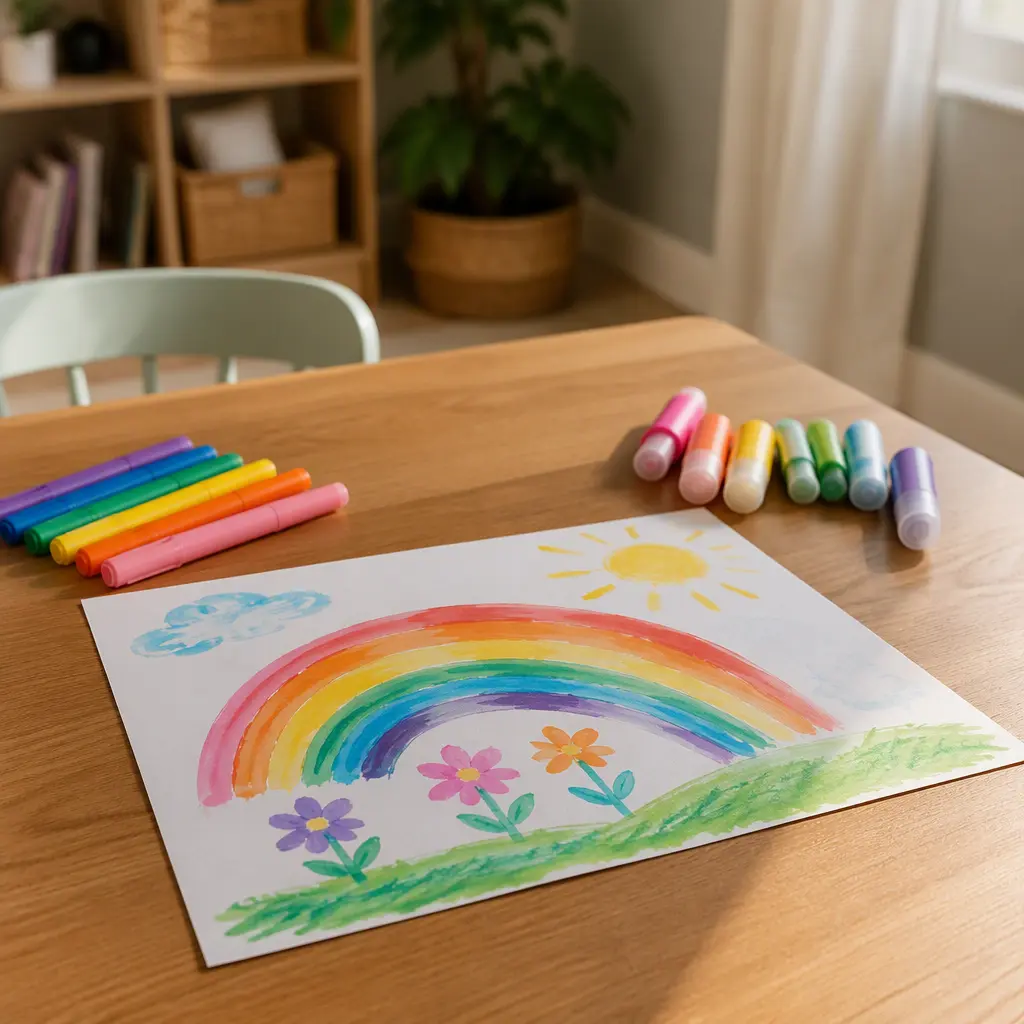
Options compared
Washable markers are usually the easiest option for quick setup and quick cleanup. They work especially well for families who want short, independent art sessions with minimal preparation. Most preschoolers understand markers immediately, and they store compactly in cups or bins. Drying time is typically fast, which helps reduce smearing on hands and tables. They are also quieter and less physically messy than paint-based supplies. The main frustration is lid management. Markers dry out if left uncapped, and younger children may struggle to keep colors organized. Some washable formulas also clean better from hard surfaces than from fabrics or carpets.
Paint sticks create a more paint-like result without brushes or water cups, making them appealing for parents who want richer color with less traditional paint mess. They tend to glide smoothly and cover large areas quickly, which can help children who become frustrated by faint marker lines. However, paint sticks usually require a little more patience during drying. Artwork may smear if stacked too soon, and some formulas leave residue on hands or tables during heavy use. Storage can also be slightly bulkier because the sticks are thicker than markers. For highly mess-sensitive homes, paint sticks may still feel cleaner than liquid paint but not always as controlled as markers.
- Choose washable markers if you want fast cleanup, compact storage, quick drying, and easy everyday drawing activities.
- Choose paint sticks if your child enjoys bold color coverage, sensory art play, or becomes frustrated with standard markers.
- Markers often suit travel, restaurants, and portable activity bags better because they dry quickly and take up less space.
- Paint sticks can work well for easel art, larger paper, and rainy-day indoor projects where children want a more expressive feel.
- Families with limited table space may find markers easier to organize and store.
- Parents sensitive to smearing on hands or sleeves may prefer markers over slower-drying paint sticks.
Frequently asked questions
Are paint sticks less messy than traditional paint?
Usually yes. Paint sticks remove the need for open paint pots, brushes, and water containers, which reduces spills significantly. However, they can still smear before drying and may transfer color to hands or sleeves during use.
Do washable markers really wash out of clothing?
Many washable markers are designed for easier cleanup from common fabrics, but results vary depending on the material, how long the stain sits, and washing conditions. Prompt cleanup generally improves the chances of removal.
Which option works better for independent play?
Washable markers are often easier for fully independent use because they dry quickly and involve less waiting. Paint sticks may require more reminders about gentle pressure, recapping, and allowing artwork to dry before handling.
Do paint sticks need special paper?
Not always, but thicker paper can help reduce warping or smearing, especially when children apply heavy layers. Standard paper works well for markers and is usually sufficient for lighter paint stick use.
What is the easiest option for travel or restaurants?
Washable markers are typically more convenient outside the home because they are lighter, dry faster, and fit easily into small bags. Paint sticks are bulkier and can leave smudges if packed away before fully dry.
For many mess-sensitive homes, washable markers are the simplest all-around choice because they combine portability, fast drying, and easy storage. Paint sticks make more sense for families who want a closer alternative to painting without dealing with liquid paint supplies. Some households eventually keep both: markers for everyday drawing and travel, and paint sticks for supervised craft sessions at home. Matching the supply to your child’s habits, your available cleanup time, and your tolerance for smearing will usually lead to a better fit than choosing based on packaging or color count alone.