Baby Activity Cubes vs Play Gyms for Small Spaces
Comparing baby activity cubes and play gyms for apartment living, with guidance on floor space, developmental stages, cleanup, storage, supervision and age suitability.
Compare prices and availability
Check current prices and availability for this guide on eBay.
As an eBay Partner, we may be compensated if you make a purchase.
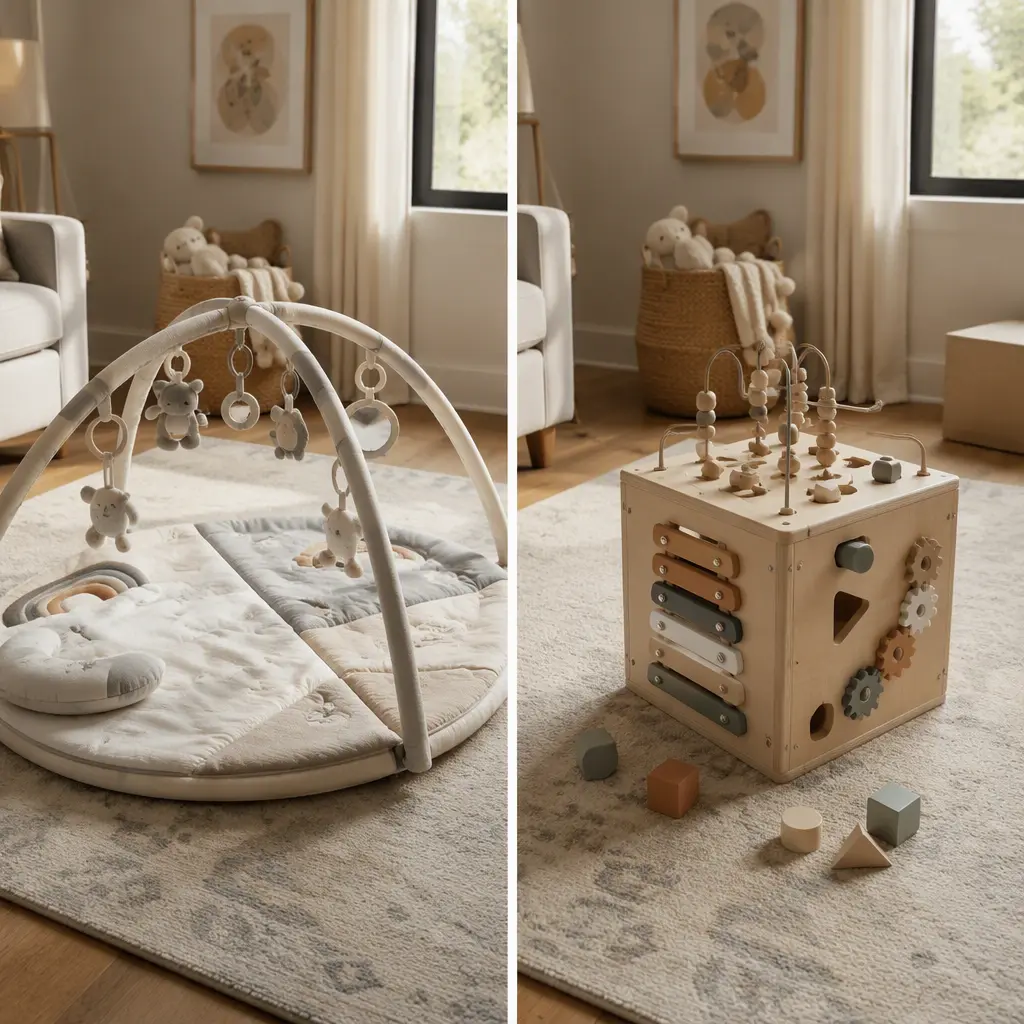
For families living in apartments or shared homes, baby toys often need to fit around everyday life rather than take over a room. Activity cubes and play gyms are both popular screen-free choices for babies under 12 months, but they suit different stages and space constraints. Play gyms are designed for floor-based play during the first months, while activity cubes tend to support sitting, reaching and fine motor play later on. The better choice depends on how much open floor space you have, whether you need easy storage between uses, and how your baby currently plays.
What to look for
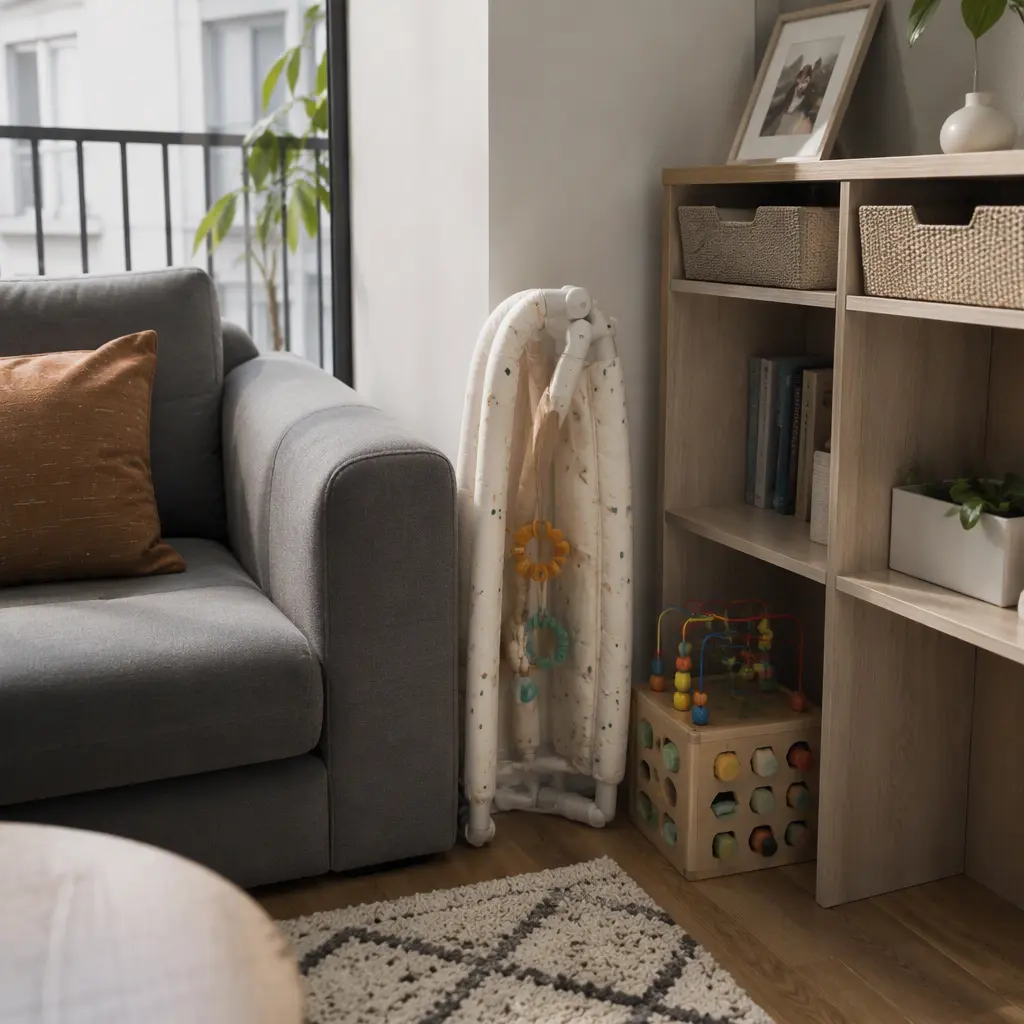
The biggest difference between these toy types is how they use space. A play gym spreads across the floor and usually works best when babies are lying down or beginning tummy time. Activity cubes use vertical space instead, making them easier to position beside furniture or in a corner once a baby can sit steadily. Parents in smaller homes often end up thinking about setup time, cleanup and storage just as much as developmental features.
- Floor footprint: Play gyms need open floor space during use, while activity cubes usually occupy a smaller permanent area.
- Storage: Foldable mats and removable arches are easier to slide under furniture than rigid cubes.
- Noise level: Some cubes include beads, clickers or musical elements that may feel louder in shared buildings.
- Cleanup demands: Fabric play gyms can collect lint and require washing, while wooden or plastic cubes wipe clean more quickly.
- Developmental stage: Play gyms suit early sensory play and tummy time, while cubes encourage grasping, turning, sliding and standing support later on.
- Durability: Wooden activity cubes often hold up well for longer-term use, but heavier designs can be awkward to move in small apartments.
- Supervision needs: Babies using standing features or hanging toys still need close supervision during play.
Age suitability
Play gyms are generally most useful from the newborn stage through the first several months, especially during tummy time and early reaching practice. Many babies lose interest once they become highly mobile. Activity cubes usually become more relevant later, often after a baby can sit with support or independently. Some cubes also appeal during cruising and early standing stages because they encourage side-to-side movement and hand coordination. Families trying to buy only one major toy for a small home may want to consider timing carefully. A play gym offers immediate use for younger babies, while an activity cube may stay relevant longer into toddlerhood.
Options compared
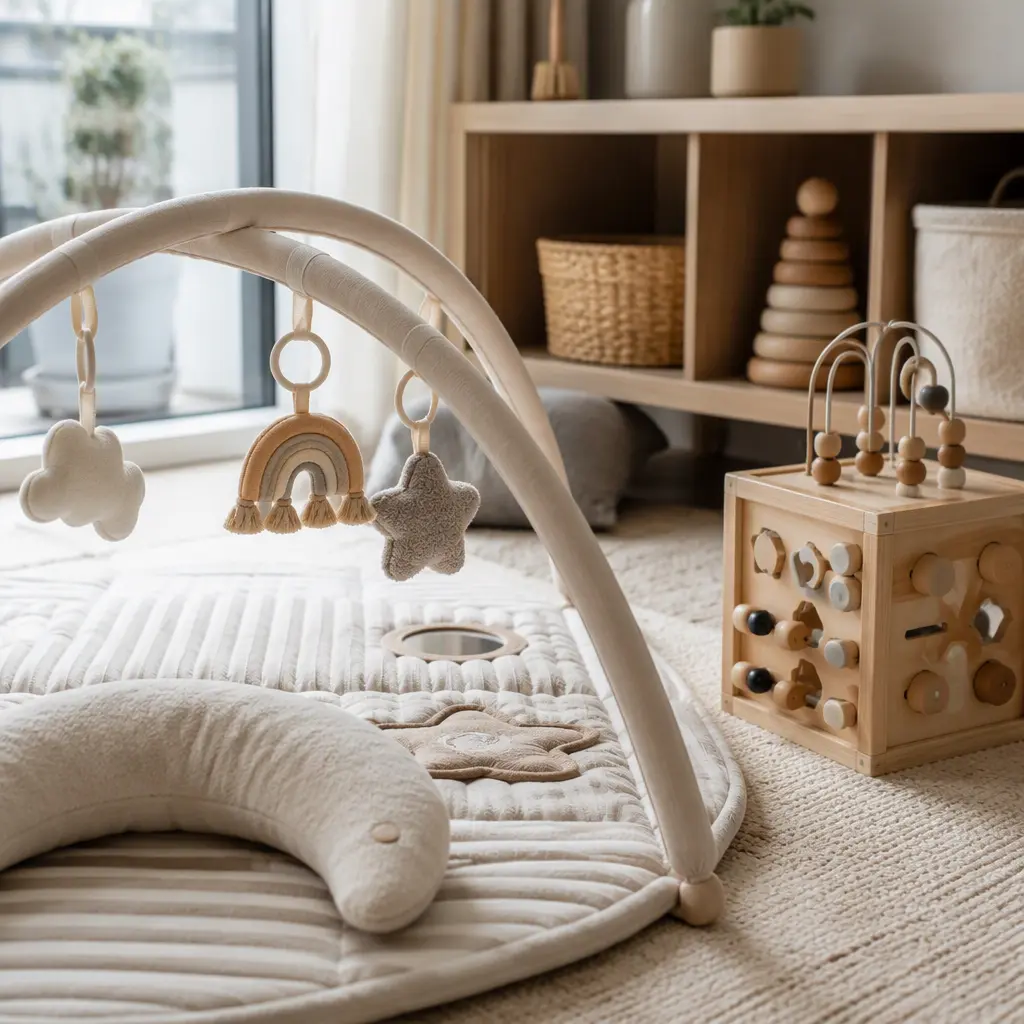
Play gyms are usually the better fit for very young babies who are not yet sitting independently. They support floor play, visual tracking and reaching without requiring extra positioning equipment. In small apartments, however, they can become inconvenient because they interrupt walking paths and may need to be packed away daily. Foldable versions are often easier to manage in homes where the living room also serves as a dining or work space.
Activity cubes trade floor spread for height and density. They are typically easier to leave in place beside a sofa or storage unit, making them practical for homes with limited open space. They also tend to include more varied fine motor activities in one object, which can reduce toy clutter. The trade-off is that younger babies may not use them much at first. Some larger cubes can also feel visually bulky in compact rooms, and heavier wooden styles may be difficult to relocate regularly.
- Choose a play gym if you need newborn-friendly play from day one, want tummy time support or prefer soft washable materials.
- Choose an activity cube if your baby already sits confidently, you want a smaller footprint or you prefer toys that stay useful longer.
- Avoid oversized cubes in very tight apartments where storage flexibility matters more than long-term use.
- Avoid large fixed play gyms if you regularly need clear floor space for meals, pets or older siblings.
- For minimal clutter, look for toys with multiple sensory activities built into one compact design rather than several detachable accessories.
Frequently asked questions
Do activity cubes work for newborns?
Most activity cubes are better suited to babies who can sit with support or independently. Newborns usually benefit more from floor-based play that encourages looking, reaching and tummy time.
Which option is easier to store in an apartment?
Foldable play gyms are often easier to tuck under beds or sofas between uses. Activity cubes generally stay assembled, although compact versions may fit neatly into a corner or shelving area.
Are wooden activity cubes quieter than plastic ones?
They can be, but it depends on the features included. Beads, spinning blocks and moving panels still create noise during active play. Soft play gyms are usually the quietest option overall for shared walls or apartment living.
Which toy lasts longer?
Activity cubes often remain interesting for a longer period because babies can revisit the same activities as their coordination improves. Play gyms are usually most useful during the early months before crawling becomes the main focus.
Can one toy replace a full play area?
Not completely. Babies still benefit from open floor movement, supervised tummy time and interaction with caregivers. In small homes, though, a thoughtfully chosen activity cube or play gym can reduce the need for multiple bulky toys.
For apartment living, the most practical choice is often the one that matches your baby's current stage while fitting comfortably into daily routines. Play gyms are usually strongest for early sensory development and newborn use, while activity cubes suit families looking for a compact, longer-lasting toy after the sitting stage begins. Measuring available floor space before buying can prevent frustration later, especially in homes where every corner serves more than one purpose.