Clip-On Crib Toys vs Floor Gyms for Small Nurseries
Choosing between clip-on crib toys and baby floor gyms comes down to space, supervision and play style. This guide compares both options for babies from 0–12 months.
Compare prices and availability
Check current prices and availability for this guide on eBay.
As an eBay Partner, we may be compensated if you make a purchase.
Parents setting up a small nursery often end up choosing between two common baby play options: clip-on crib toys and floor gyms. Both support early sensory play, reaching and visual tracking, but they fit into daily life very differently. In a compact home, the decision is not only about entertainment. Floor space, storage, supervision needs, sleep routines and how long a toy remains useful all matter. Some families prefer a portable toy that stays attached to a crib or stroller, while others want a larger play area that encourages tummy time and movement. Understanding the trade-offs can help avoid buying gear that quickly becomes inconvenient or underused.
What to look for
The best choice depends on how the nursery is used throughout the day. A family living in a small apartment may prioritize easy storage and flexibility, while parents with enough open floor area may value movement-focused play. Since babies develop rapidly during the first year, it also helps to think about how long each type of toy will remain interesting and practical.
- Floor space available once furniture, laundry baskets and changing supplies are in place
- Whether the toy will be used during awake supervised play or near sleep spaces
- How easy the toy is to clean after spit-up or drool
- Noise level, especially in shared rooms or apartments
- Portability for moving between rooms or travel
- Storage needs when the toy is not in use
- Whether the toy supports tummy time, reaching, kicking or grasping skills
- How quickly the baby may outgrow the toy's main features
Age suitability
For newborns, both clip-on toys and floor gyms are mainly used for visual stimulation and early reaching. High-contrast shapes, gentle textures and simple dangling objects are usually enough during the first few months. As babies approach 3 to 6 months, floor gyms often become more useful because they encourage tummy time, rolling and batting at hanging toys from different positions. Between 6 and 12 months, many babies begin sitting, crawling or pulling themselves forward, which can make some newborn-style floor gyms feel too limiting unless they convert into larger activity mats. Clip-on crib toys can remain useful longer for brief distraction during diaper changes or travel, but they are generally less effective for full-body movement and active play.
Options compared
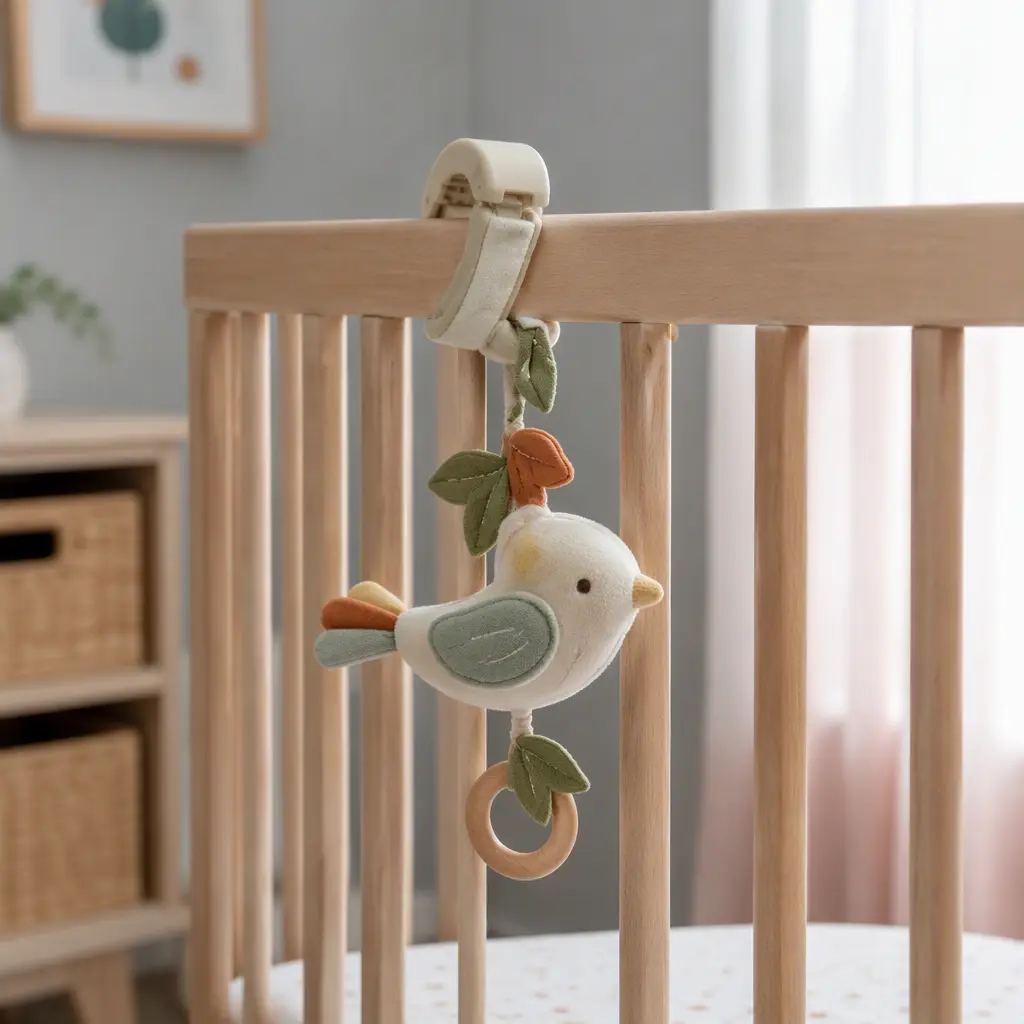
Clip-on crib toys are usually the easier choice for very small nurseries or shared bedrooms. They take up almost no floor space and can often move between a crib, stroller, playpen or car seat. This flexibility appeals to families who need portable entertainment without adding another large item to the room. Simple hanging toys also tend to create less clutter and are easier to store in a drawer when not in use.
The trade-off is developmental variety. Clip-on toys mainly support looking, grasping and short bursts of interaction. They do not provide the same open play area that encourages kicking, rolling or tummy time. Some babies also lose interest quickly if the toy arrangement never changes. In addition, parents should avoid turning the crib into a busy play zone if the goal is to maintain a calm sleep environment.
- Clip-on crib toys suit families with limited floor space, frequent travel needs or multipurpose rooms where baby gear must stay compact
- Clip-on toys may be less suitable for babies who already enjoy active floor movement or extended tummy time sessions
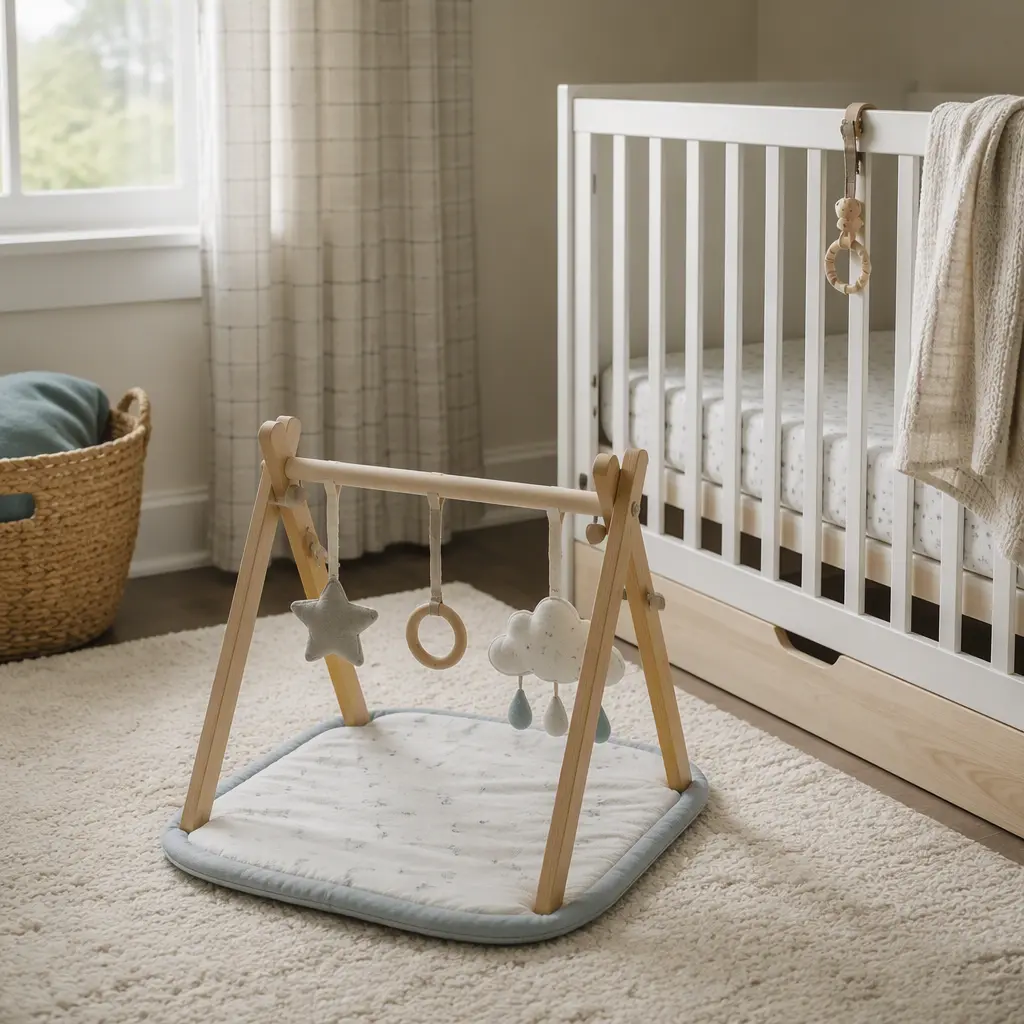
- Floor gyms support broader physical development by encouraging reaching, rolling and body movement across a larger area
- Padded activity gyms can make hard apartment floors more comfortable for daily supervised play
- Large floor gyms may frustrate parents who need quick cleanup or who already feel crowded by swings, bassinets and storage bins
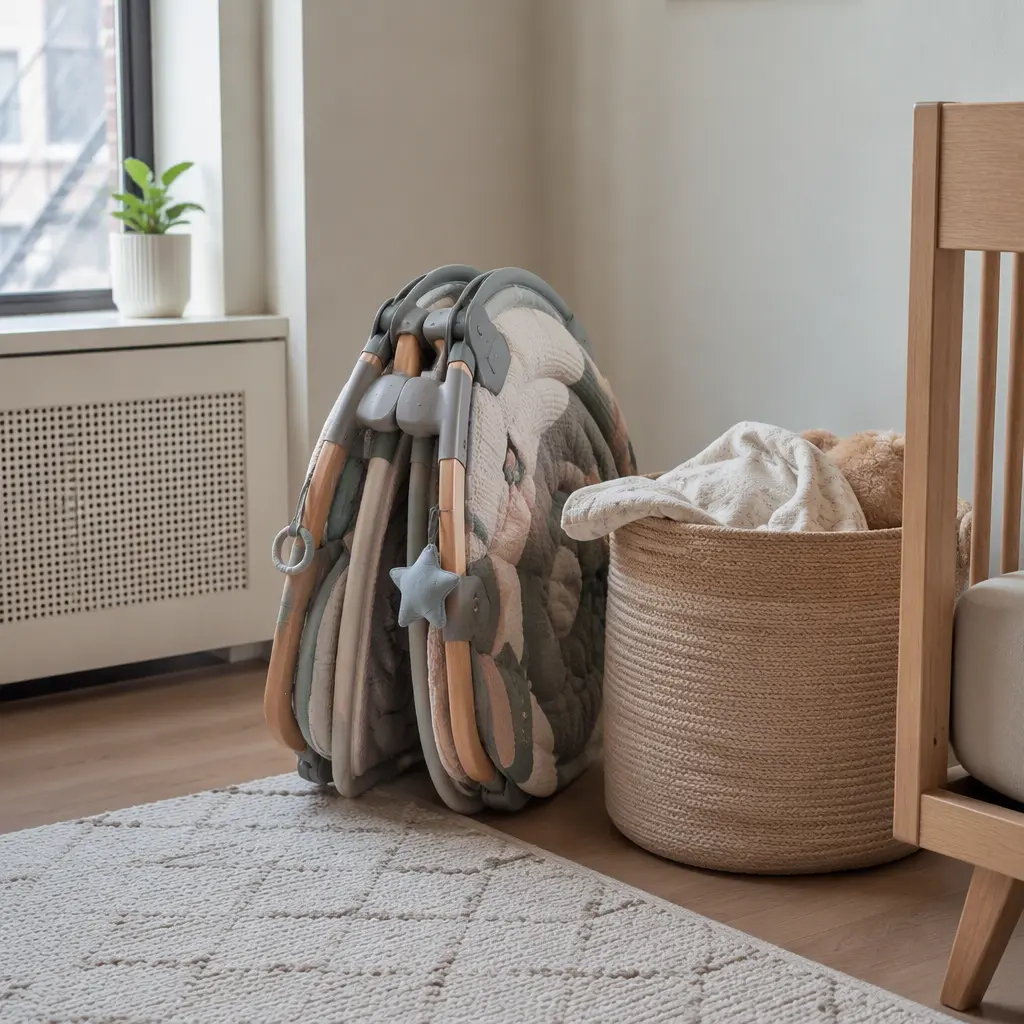
- Foldable or minimalist floor gyms work better in small nurseries than oversized activity centers with fixed arches and electronic panels
- Simple offline designs with removable toys often stay useful longer because parents can rotate textures and objects as the baby grows
Frequently asked questions
Can a floor gym replace tummy time?
A floor gym can support tummy time by adding visual interest and reachable objects, but babies still benefit from varied supervised floor positions throughout the day. The gym works best as a comfortable play surface rather than a complete substitute.
Are clip-on crib toys safe for sleep?
Toys designed for supervised awake play should generally not remain loose in a baby's sleep area overnight. Parents should check attachment security regularly and follow safe sleep recommendations from pediatric and safety organizations.
Which option lasts longer during the first year?
Many babies outgrow simple hanging crib toys sooner than adaptable floor gyms. However, a compact clip-on toy may still remain useful for travel or stroller use even after a baby becomes more mobile.
Do electronic lights and sounds help babies engage longer?
Some babies enjoy lights and music, but simpler screen-free toys are often easier to use daily and create less noise in shared living spaces. Non-electronic toys also avoid battery replacement and tend to be lighter and easier to clean.
What works best in a studio apartment or shared bedroom?
Families with very limited space often prefer foldable floor gyms or portable clip-on toys that can be packed away quickly. Choosing one versatile item usually works better than filling the room with multiple bulky baby activity products.
For most small nurseries, the decision comes down to whether parents value compact convenience or broader movement-based play. Clip-on crib toys save space and travel easily, while floor gyms create a more flexible area for supervised developmental play. Families trying to minimize clutter may benefit from starting with one simple, adaptable option rather than buying several specialized activity products during the first year.