Lift-the-Flap vs Touch-and-Feel Books for Busy Babies
Compare lift-the-flap and touch-and-feel books for babies 0–12 months, including durability, sensory value, supervision needs, and which format suits different stages.
Compare prices and availability
Check current prices and availability for this guide on eBay.
As an eBay Partner, we may be compensated if you make a purchase.
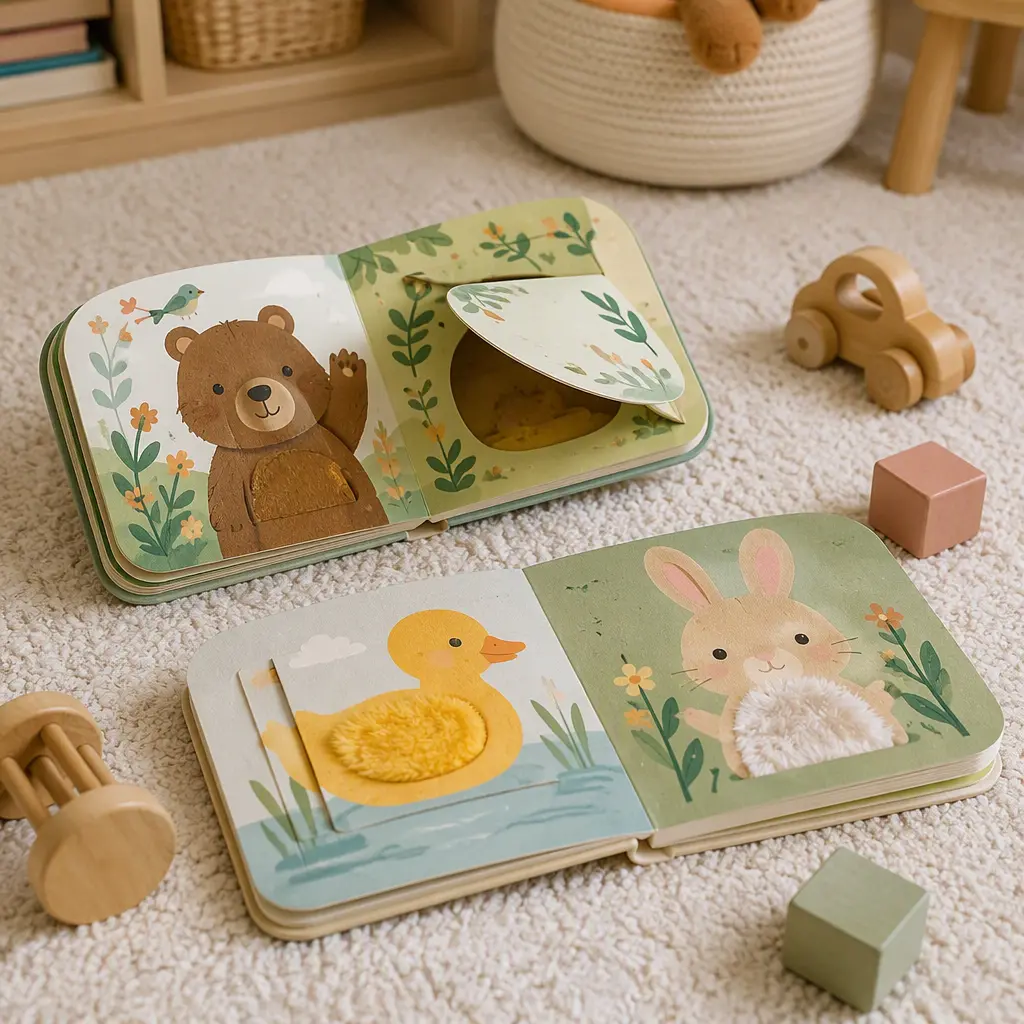
Interactive books can hold a baby’s attention longer than standard board books because they add movement, texture, and surprise. For parents choosing between lift-the-flap and touch-and-feel formats, the main difference is how babies interact with the pages. Lift-the-flap books encourage curiosity and simple problem-solving, while touch-and-feel books focus on sensory exploration through different textures. Both can support early language exposure and screen-free play, but they differ in durability, supervision needs, and how well they match different stages within the first year.
What to look for
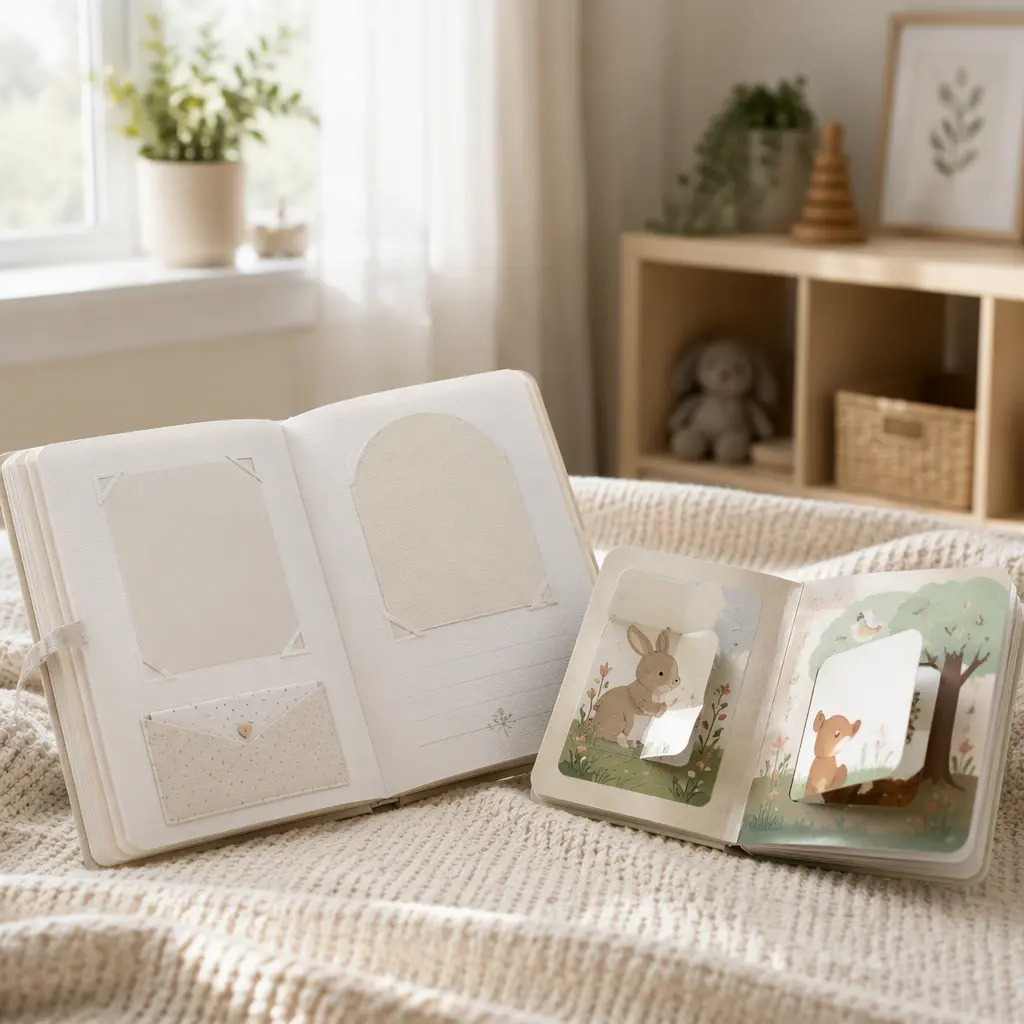
For babies under 12 months, the safest and most practical interactive books are sturdy, simple, and easy to clean. Thick board pages are usually more durable than thin paper pages, especially once babies begin grabbing, chewing, and bending objects. Touch-and-feel books often include fabric, silicone-like textures, or fuzzy patches, while lift-the-flap books rely on hinges and folded card sections that can wear out faster if pulled roughly. The best choice depends partly on how your baby currently explores objects. Younger babies often mouth books before they actively lift flaps, while older babies may enjoy searching for hidden pictures and repeating familiar actions.
- Choose thick board-book construction for better resistance to bending and tearing.
- Look for securely attached textures and flaps with rounded edges.
- Avoid books with small detachable decorations, ribbons, or delicate pop-up elements for this age group.
- Consider wipe-clean surfaces if books will be used during meals or teething phases.
- Check flap size and stiffness: very thin flaps are easier for babies to rip accidentally.
- For travel or stroller use, compact square formats are easier for small hands and diaper bags.
- If noise sensitivity matters, avoid electronic sound books that add buttons and batteries instead of tactile play.
Age suitability
Within the 0–12 month range, babies change quickly in how they interact with books. Around the first few months, high-contrast images and soft textures tend to be more engaging than hidden flaps because fine motor control is still developing. Between roughly 6 and 9 months, many babies begin actively grabbing pages, patting textures, and chewing corners. At this stage, touch-and-feel books are often easier to use independently because they do not require coordinated lifting actions. Closer to 9–12 months, lift-the-flap books can become more rewarding as babies learn cause and effect and enjoy repetition. Some babies will repeatedly open the same flap because the predictable surprise helps reinforce memory and attention. Families looking for one format to last through the entire first year may find sturdy touch-and-feel board books slightly more forgiving in the earlier months, while flap books often become more interactive later in infancy.
Options compared
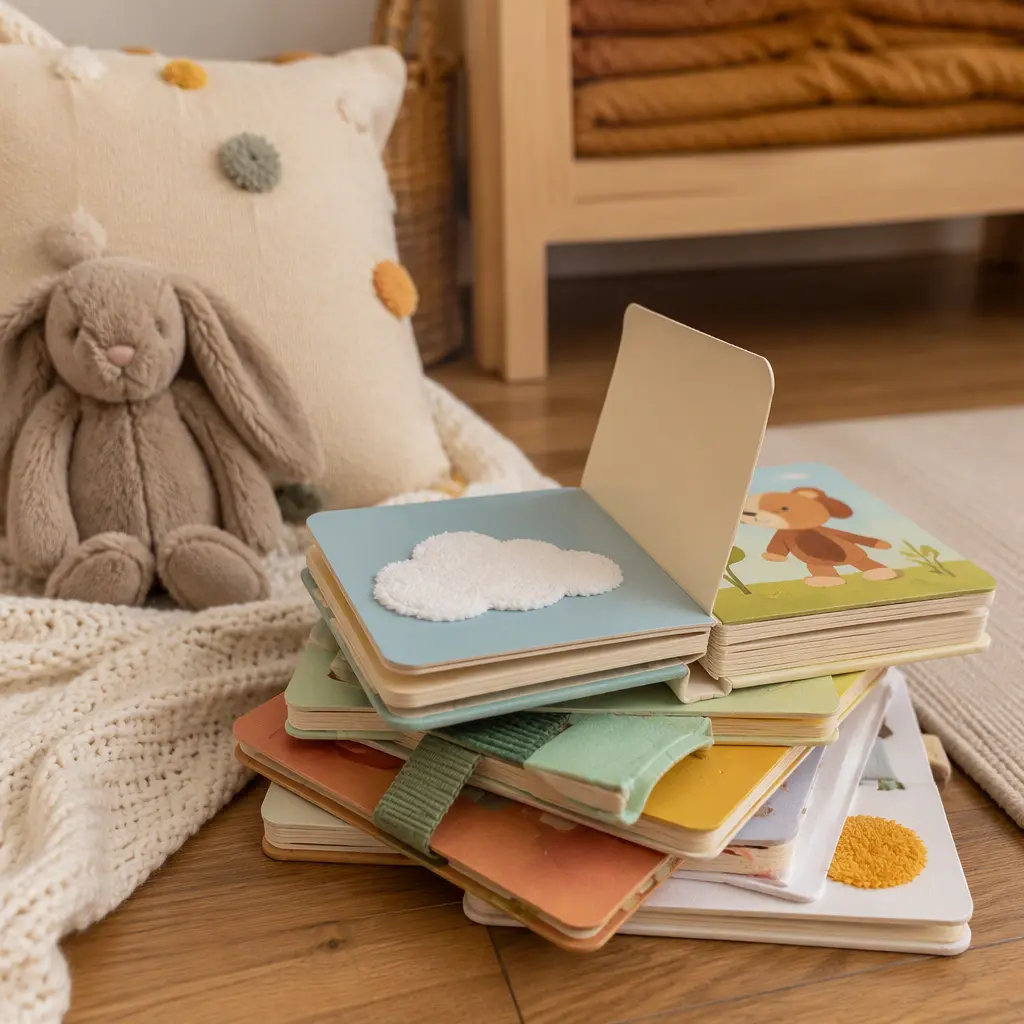
Touch-and-feel books are usually the easier starting point for younger or highly active babies. They encourage sensory exploration without requiring precise page manipulation, and many babies enjoy repeatedly rubbing textured patches even before they understand the pictures. These books also tend to have fewer moving parts, which can make them more durable over time. For families concerned about ripped pages, this format is often the lower-maintenance choice. The trade-off is that some texture books rely heavily on a single sensory gimmick, so engagement may fade faster if the images and language are very simple.
Lift-the-flap books are often more engaging for older babies approaching toddlerhood because they add surprise and interaction. Babies who enjoy peekaboo-style games may stay focused longer while searching under flaps. This format can support turn-taking and early vocabulary as caregivers name hidden objects or animals. The downside is durability. Frequent pulling, bending, and chewing can weaken hinges quickly, especially on cheaper books with thin flaps. Parents who prefer low-supervision independent play may find flap books frustrating during the heavy mouthing stage. Some families use touch-and-feel books for everyday access and save flap books for shared reading sessions.
- Touch-and-feel books: usually better for younger babies, sensory-focused, more durable, easier for independent exploration.
- Lift-the-flap books: often more engaging later in infancy, encourage interaction and anticipation, but flaps can tear more easily.
- Cloth sensory books: lightweight and washable, useful for travel or tummy time, though usually less visually detailed.
- Large board books with simple textures: easier for babies with developing motor skills to handle without frustration.
- Books with mirrors: can hold attention well, but mirrored inserts should be securely embedded and scratch-resistant.
Frequently asked questions
Are lift-the-flap books safe for babies under one year?
They can be appropriate when made from thick board material with large sturdy flaps, but they usually need closer supervision than standard board books. Babies often pull harder than intended, and damaged flaps can create sharp cardboard edges.
Do touch-and-feel books help sensory development?
Different textures can encourage tactile exploration and attention, especially during the first year when babies learn heavily through touch and mouthing. The interaction itself matters more than having many textures packed into one book.
Which format lasts longer?
Touch-and-feel board books are often more durable because they have fewer moving parts. Lift-the-flap books can still last well when made with reinforced flaps and used mainly during shared reading rather than unsupervised play.
Are cloth books better than board books for chewing babies?
Cloth books can be a practical option during intense teething phases because they are softer and often washable. However, they may not provide the same page-turning experience or visual clarity as sturdy board books.
How many interactive books does a baby need?
A small rotation is usually enough. Babies often benefit more from repeated exposure to familiar books than from having a large collection. Rotating a few durable favorites can also reduce wear and overstimulation.
For most families with babies under 12 months, touch-and-feel books are the more forgiving everyday option because they handle rough use better and suit earlier developmental stages. Lift-the-flap books become more rewarding as babies approach their first birthday and start enjoying predictable surprises and interactive play. Choosing sturdy construction, age-appropriate features, and supervised use matters more than collecting a large number of interactive formats.