Wooden Baby Gyms vs Fabric Activity Mats
Compare wooden baby gyms and fabric activity mats for newborn play spaces, including sensory input, cleanup, portability, storage and overstimulation concerns for babies 0–12 months.
Compare prices and availability
Check current prices and availability for this guide on eBay.
As an eBay Partner, we may be compensated if you make a purchase.
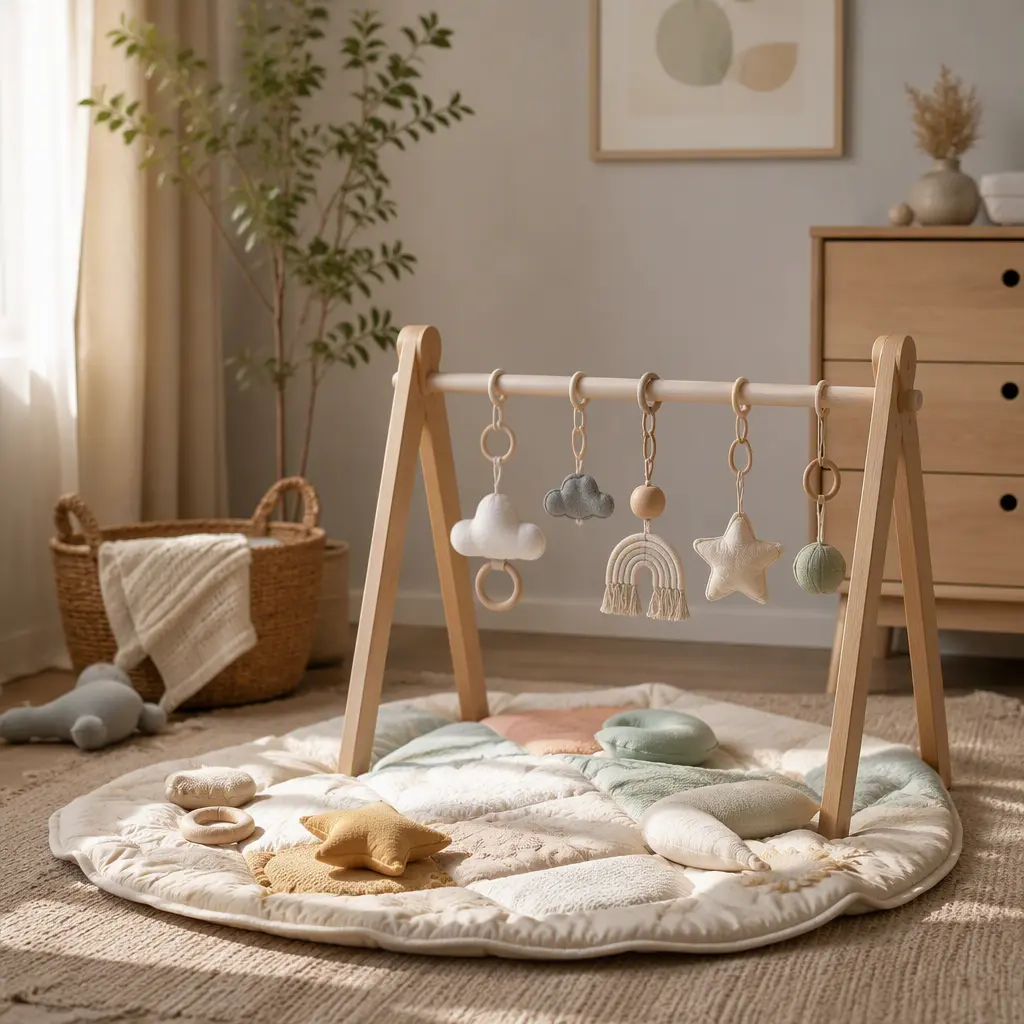
Wooden baby gyms and fabric activity mats both create safe spaces for floor play, but they support different styles of sensory experience and fit different family routines. A simple wooden gym usually focuses on hanging toys, open-ended movement and a calmer visual environment. Fabric activity mats often include textures, mirrors, sounds and bright colors designed to encourage reaching, kicking and tummy time. For many parents, the better choice comes down to space, cleanup needs, portability and how much stimulation feels manageable during the first year.
What to look for
The safest and most useful play spaces for young babies are usually the simplest to maintain and easiest to adapt as development changes. Newborns benefit from time on the floor with room to stretch, turn their heads and gradually practice reaching. Some babies respond well to colorful sensory input, while others become unsettled by constant music, flashing lights or crowded toy layouts. Parents often appreciate products that can be cleaned quickly and moved easily between rooms.
- Stable construction that does not wobble or tip during kicking and reaching
- Washable fabrics or removable covers for easier cleanup after spit-up and drool
- Enough open floor space for tummy time without too many attached toys
- Portable designs if the play area will move between rooms or travel frequently
- Muted or adjustable sensory features for babies who become overstimulated easily
- Compact storage options for smaller homes or shared living spaces
- Age-appropriate hanging toys positioned safely out of reach of the face
Age suitability
For newborns, both toy types are mainly about supervised floor time rather than active play. In the first two to three months, babies may simply watch hanging objects, listen to soft sounds or practice turning toward movement. Around three to six months, reaching, batting and kicking become more purposeful, which is when gyms and mats often become more engaging. Older babies may lose interest in overhead toys once they start rolling and crawling, although larger mats can continue to work as soft floor spaces. A very busy activity mat may appeal to curious, active babies around six months, while calmer babies may stay engaged longer with simpler wooden gyms and rotating toys.
Options compared
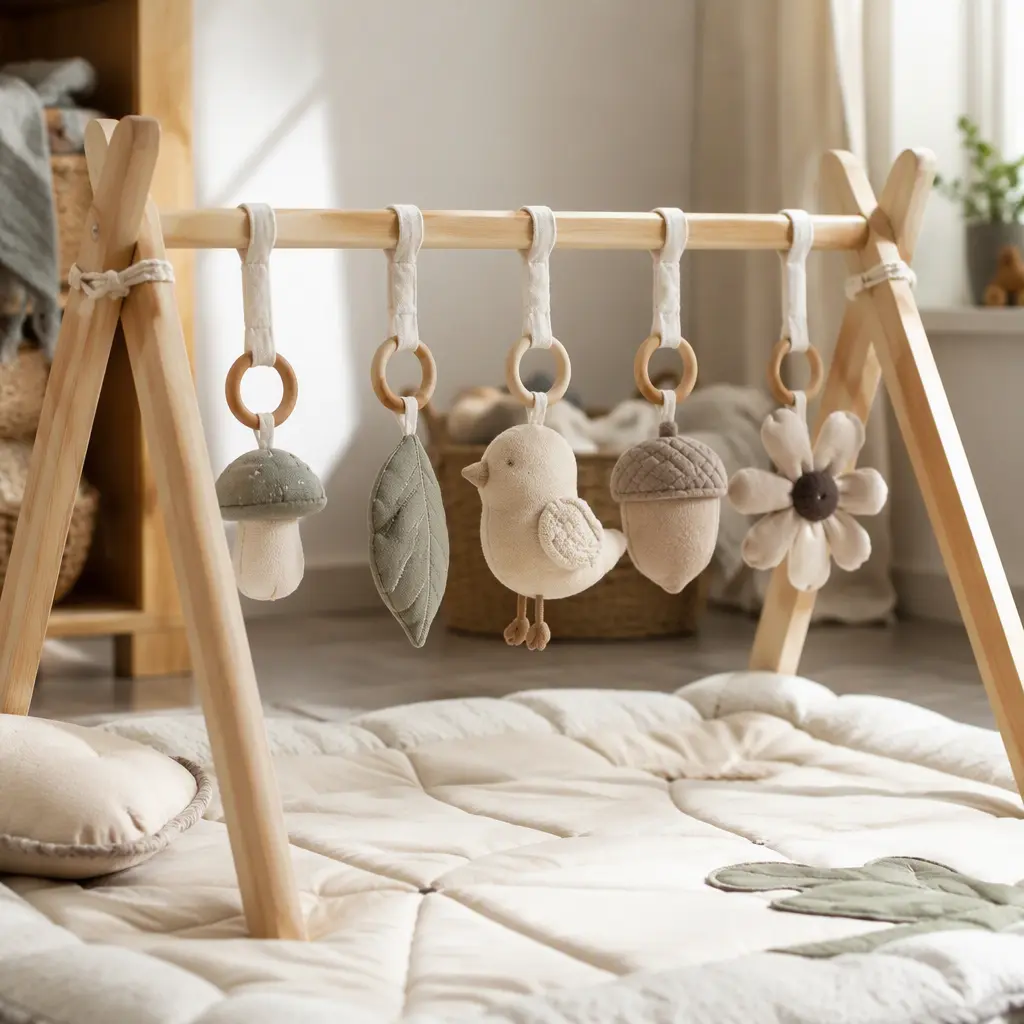
Wooden baby gyms are usually chosen for their simplicity, lower visual clutter and natural materials. Many include only a few hanging toys, which can make it easier for babies to focus on movement and tracking. They also tend to fit more easily into shared living spaces because the designs are often neutral and compact. Parents who prefer quieter, screen-free play spaces may appreciate that wooden gyms rarely include electronic features. The trade-off is that they can feel less immediately engaging for babies who enjoy lights, music or varied textures, and some models require a separate mat underneath.
Fabric activity mats generally offer more built-in sensory variety. Crinkle fabrics, mirrors, textured panels and detachable toys can support tummy time and encourage reaching. Many fold up for travel and include padding that works well on harder floors. However, heavily featured mats can create more noise and visual stimulation than some babies tolerate comfortably. They also tend to need more frequent washing because fabric surfaces collect spit-up, lint and crumbs. Larger padded mats may be harder to store in small apartments, while battery-powered versions can add ongoing maintenance.
- Choose a wooden baby gym if you want a calmer play area, easier visual integration into the home and fewer electronic distractions.
- Choose a fabric activity mat if tummy time support, portability and varied sensory textures are higher priorities.
- Minimalist gyms suit parents aiming for lower overstimulation and simpler cleanup routines.
- Feature-heavy mats suit babies who actively seek movement, textures and frequent sensory changes.
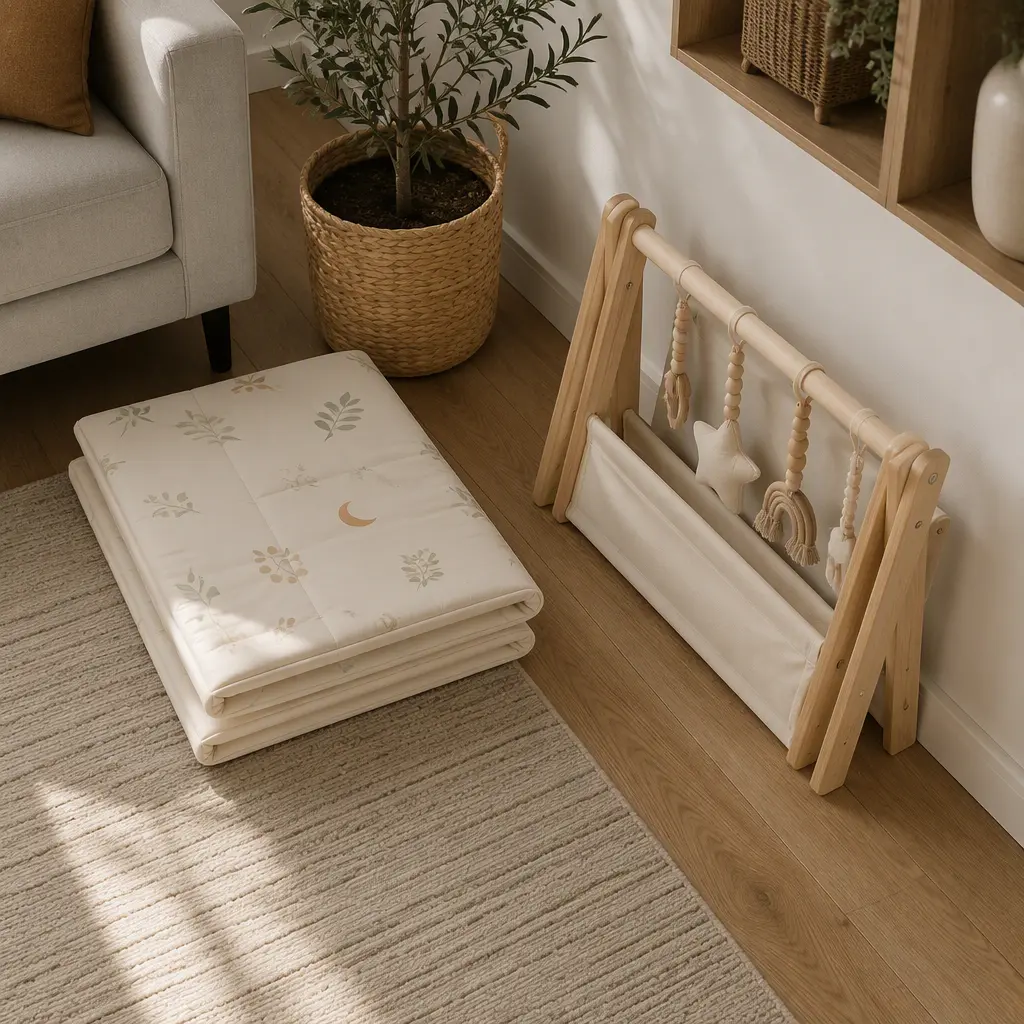
- Families with limited storage may prefer foldable mats or collapsible gym frames.
- Parents sensitive to noise may want to avoid mats with fixed sound modules or loud musical buttons.
Frequently asked questions
Do babies need an activity gym or mat?
No single play product is essential, but many parents find them useful for supervised floor time. A simple blanket on the floor can also support development. Gyms and mats mainly provide structure, hanging toys and soft surfaces that encourage reaching and movement.
Can a baby become overstimulated by activity mats?
Some babies become unsettled by bright colors, constant sounds or too many sensory features at once. Signs may include turning away, fussiness or difficulty settling afterward. Simpler setups with fewer toys can help reduce sensory overload, especially during the newborn months.
Are wooden baby gyms easier to clean?
Wooden frames are often straightforward to wipe down, but any attached fabric toys still need occasional washing. Fabric mats usually require more frequent cleaning because babies spend more time directly on the surface during tummy time and feeding-adjacent play.
Which option works better for small homes?
Compact wooden gyms can take up less visual space, especially when paired with a small mat already owned by the family. Foldable activity mats may be easier to slide under furniture or pack away daily. The better fit depends on whether storage height or floor space is more limited.
How long do babies usually use them?
Many babies use overhead gyms and mats most actively from birth to around six or seven months. Larger mats may continue to work as soft crawling or sitting spaces after that stage, while overhead toy frames often become less useful once babies are moving independently.
A wooden baby gym and a fabric activity mat can both support healthy, screen-free floor play during the first year, but they create different home environments. Parents looking for a quieter, simpler setup often lean toward wooden gyms, while families wanting built-in tummy time support and sensory variety may prefer activity mats. Considering storage, cleanup, stimulation level and how the play space fits into everyday routines usually leads to the most practical choice.