Baby Toys That Encourage Reaching and Grasping Naturally
A parent-focused guide to baby toys that gently support reaching and grasping from birth to 12 months, with tips on age fit, safety, and play value.
Compare prices and availability
Check current prices and availability for this guide on eBay.
As an eBay Partner, we may be compensated if you make a purchase.
Reaching and grasping are some of the first purposeful movements babies make. From a newborn’s reflexive grip to an older infant intentionally grabbing and exploring, these skills build the foundation for later coordination, feeding, and play. The right toys don’t need to be flashy or complex. Simple, well-designed items can invite babies to stretch, swipe, hold, and explore at their own pace—supporting motor development in a natural, pressure-free way.
What to look for
Toys that encourage reaching and grasping work best when they match a baby’s physical abilities and curiosity. Instead of focusing on labels like “educational,” look at how a toy invites movement and exploration. A few thoughtful features can make a big difference in how often a baby engages with it.
- Easy-to-grip shapes: Thin rings, short handles, or soft loops fit small hands better than bulky designs.
- Lightweight materials: Toys should be easy to lift, shake, or mouth without causing strain.
- High-contrast or simple colors: Bold contrasts are easier for young babies to see and reach for.
- Varied textures: Smooth, ribbed, crinkly, or nubby surfaces give hands something interesting to explore.
- Gentle cause-and-effect: Subtle sounds or movement when touched can motivate repeated reaching.
Age suitability
From 0–3 months, reaching is mostly uncoordinated, so toys that dangle within arm’s length or brush lightly against the hands can spark awareness. Between 3–6 months, babies begin to swat intentionally and briefly hold items; lightweight grasping toys and soft rattles tend to work well here. From about 6–12 months, stronger hand control allows for passing toys between hands, banging, and more focused exploration. At this stage, toys with multiple textures or parts to manipulate can keep interest without overwhelming.
Standout categories or types
Certain types of toys consistently support early reaching and grasping because they align with how babies naturally move. These categories are less about trends and more about timeless design principles that work across many homes and play styles.
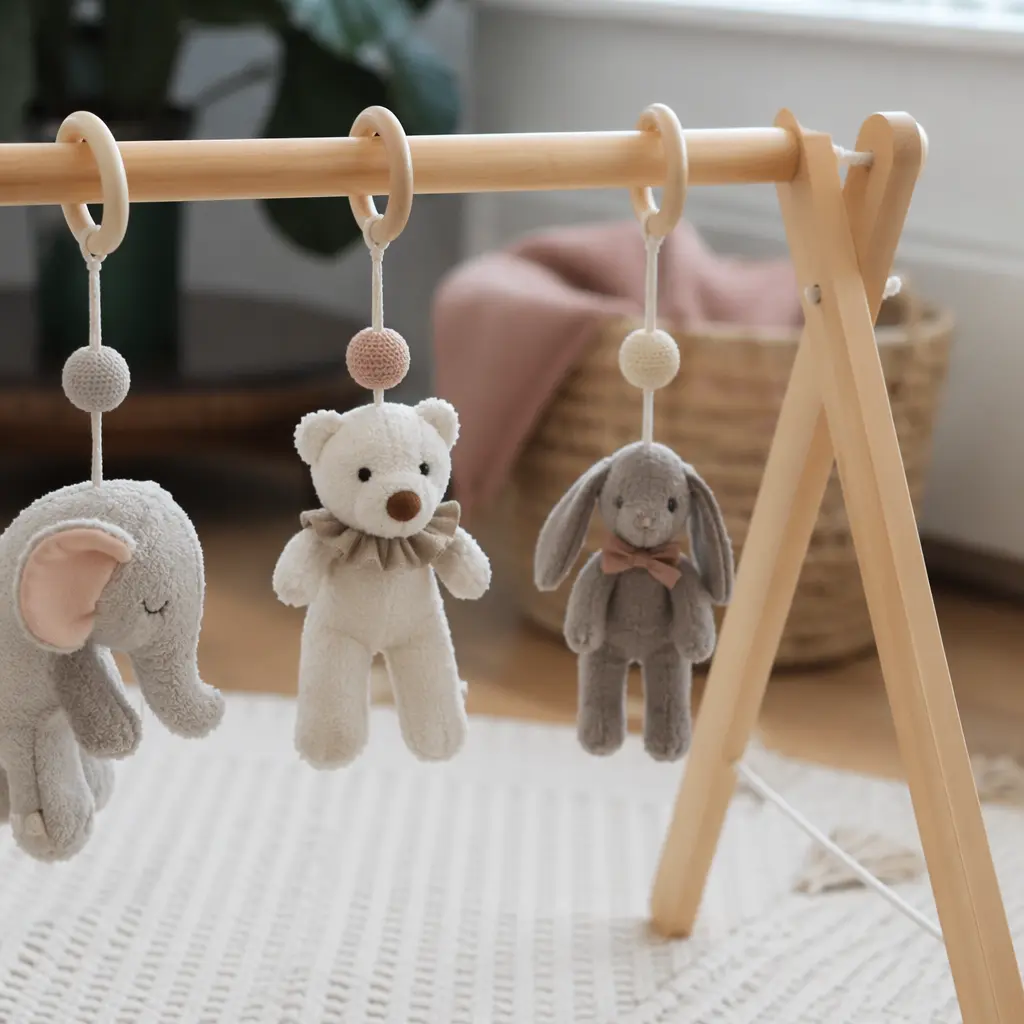
- Play gyms and arches: Suspended toys encourage upward reaching and coordinated arm movements during floor time.
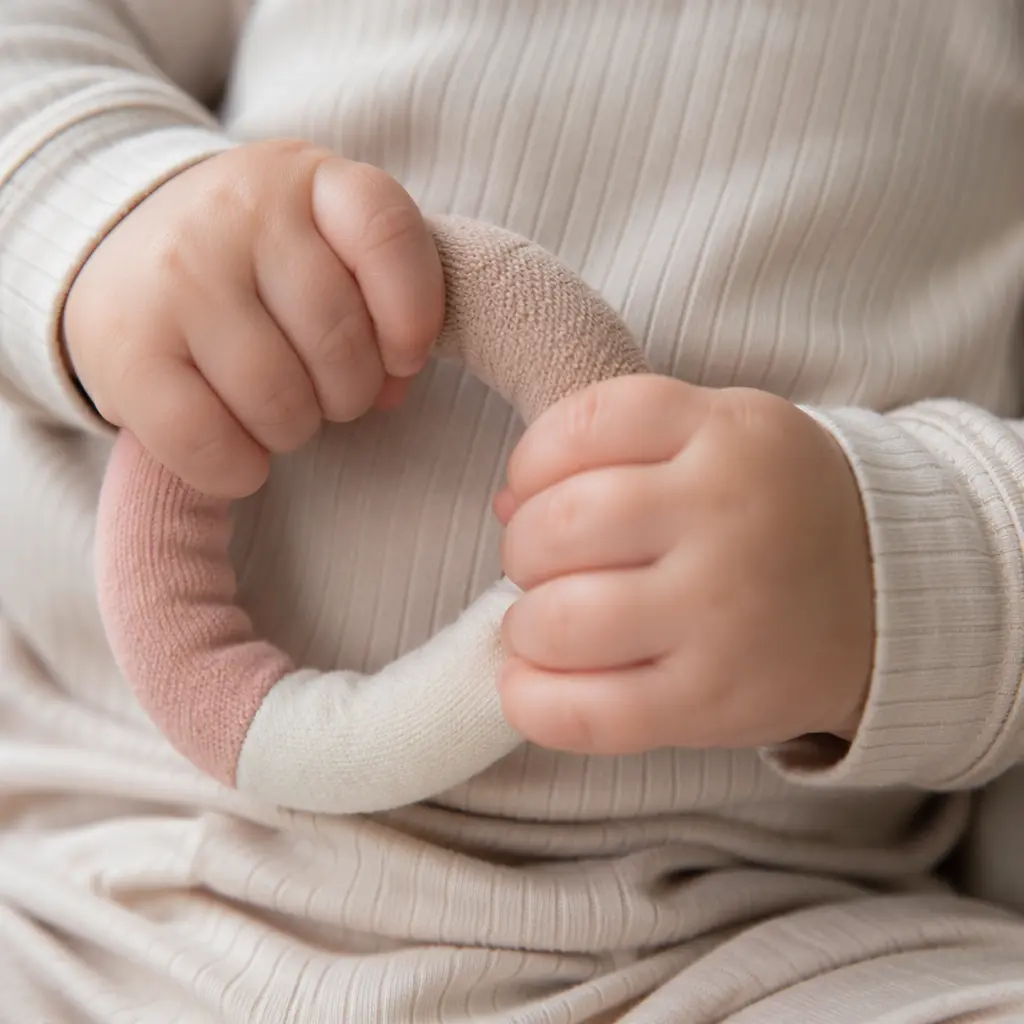
- Soft grasping toys: Fabric rings, knots, or small plush shapes are forgiving for early attempts to hold on.
- Textured teethers: When designed for easy grip, they support grasping while also meeting teething needs.
- Crinkle and sound toys: Gentle noise rewards movement without overstimulation.
- Simple linking toys: Short chains or links can be held, pulled, and transferred between hands as skills grow.
Frequently asked questions
Do babies need special toys to learn reaching and grasping?
No special equipment is required, but thoughtfully designed toys can make practice more inviting. Everyday items like a caregiver’s finger or a soft cloth also encourage grasping. Toys simply provide safe, repeatable opportunities for exploration.
How many toys should be available at one time?
A small selection is usually enough. Too many choices can be distracting, while one or two well-placed toys encourage focus and repeated attempts. Rotating toys every few days can renew interest without adding clutter.
Are electronic toys better for motivating movement?
Not necessarily. Simple toys often work just as well, especially for young babies. Overly loud or bright electronics can distract from the physical action of reaching and holding, which is the main goal at this stage.
When should I worry if my baby isn’t reaching yet?
Development varies, and early reaching can look messy or inconsistent. If you have concerns about movement or muscle tone, a pediatrician can offer guidance tailored to your baby’s age and history.
Toys that encourage reaching and grasping don’t need to do the work for the baby. The best options simply invite movement, reward curiosity, and leave room for exploration. By choosing simple, safe designs and matching them to your baby’s stage, you can support early motor skills in a way that feels natural and enjoyable for both baby and caregiver.