Baby Toys That Encourage Reaching (No Lights or Sounds)
A parent-friendly guide to pediatrician-favored baby toys that build early reaching and grasping skills—without batteries, flashing lights, or electronic noise.
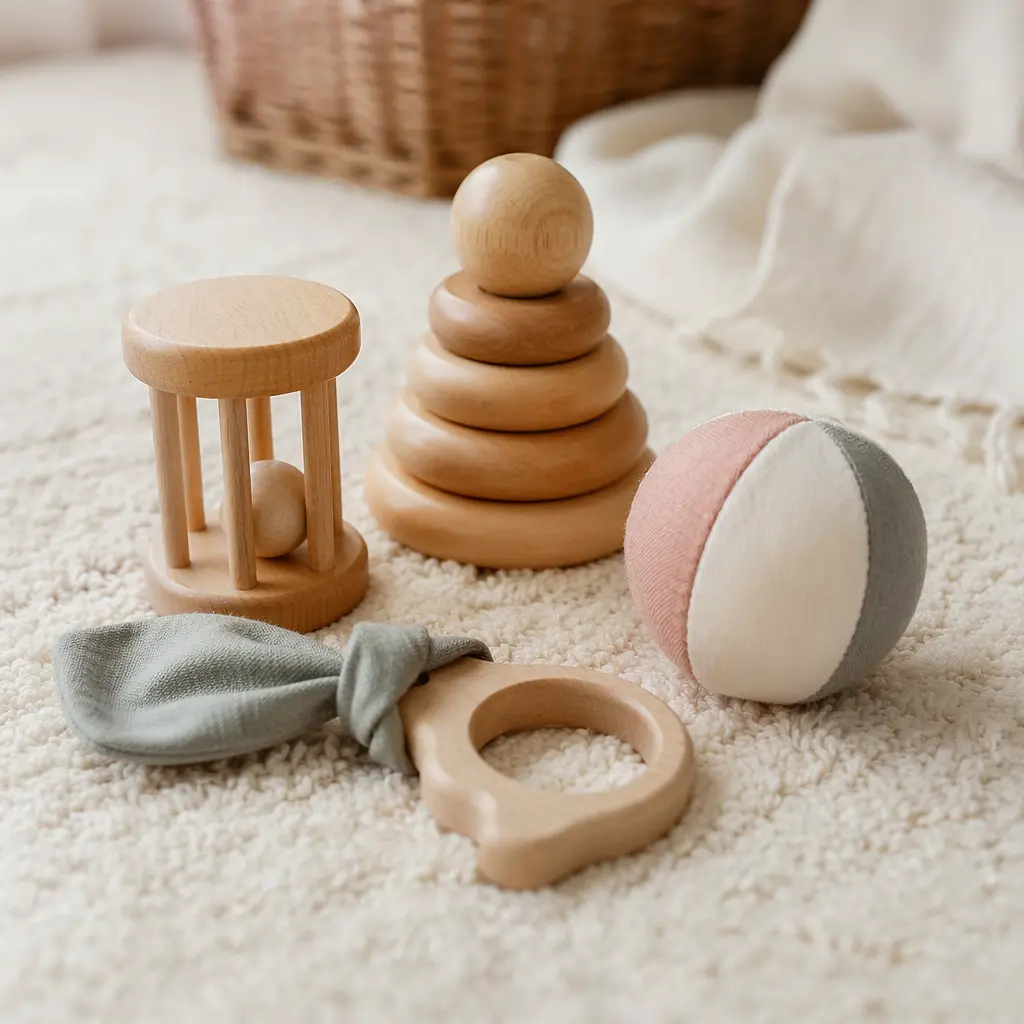
Compare prices and availability
Check current prices and availability for this guide on eBay.
As an eBay Partner, we may be compensated if you make a purchase.
In the first year of life, babies learn by moving their bodies—especially by reaching, grasping, and bringing objects closer. Toys that encourage these actions don’t need flashing lights or electronic sounds. In fact, many pediatricians and child development specialists favor simple, no-battery toys because they let babies focus on movement, touch, and cause-and-effect at their own pace.
What to look for
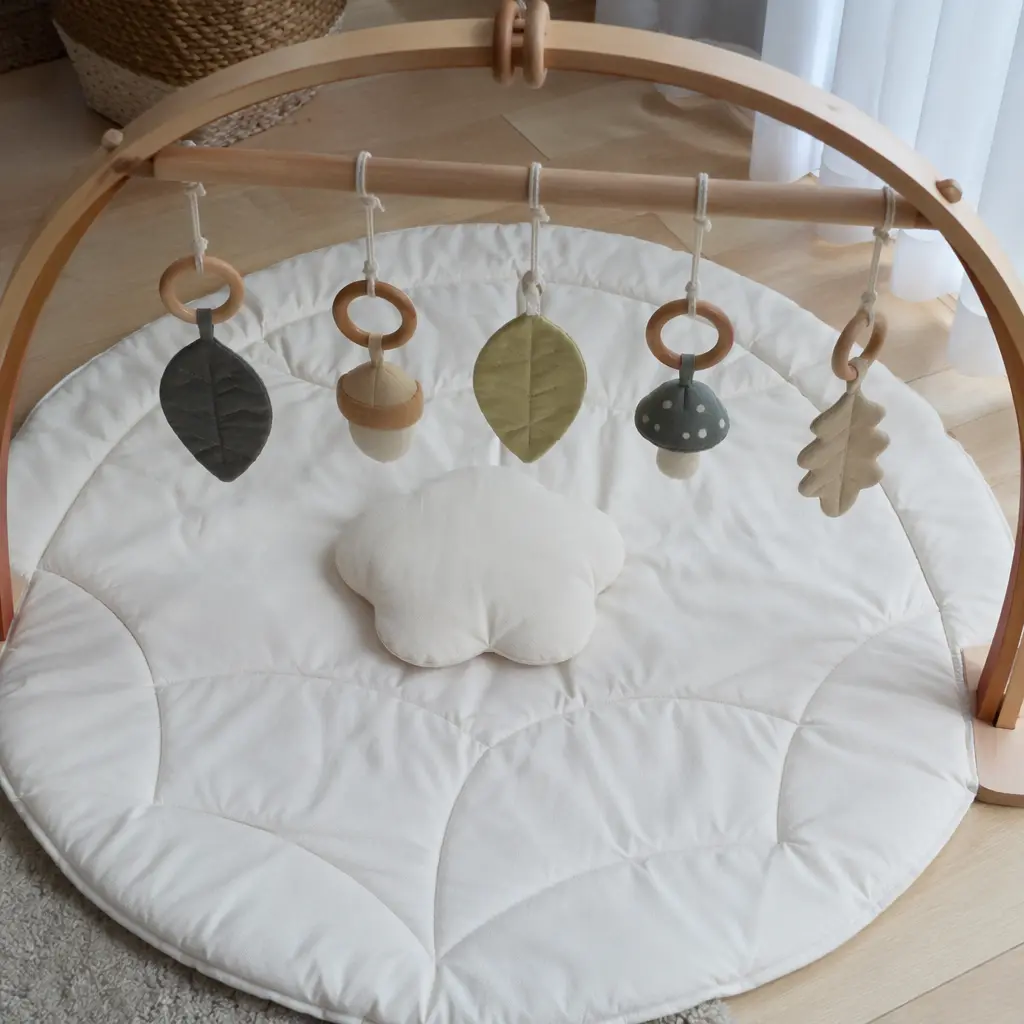
When choosing toys that support early reaching, the goal is to invite movement without overwhelming a baby’s senses. The best options are easy to see, safe to touch, and interesting enough to motivate a baby to stretch an arm or open a hand.
- Lightweight construction so babies can move or bat at the toy with minimal effort
- High-contrast or simple colors that are easier for young eyes to notice
- Different textures, such as smooth wood, soft fabric, or gentle ridges
- Simple shapes that are easy to grasp, like rings, bars, or small balls
- Materials that are sturdy, non-toxic, and easy to clean
- Designs without lights, music, or electronic features that can distract from movement
Age suitability
From birth to around 12 months, babies progress quickly in their motor abilities. In the early months, reaching may look like slow arm movements or accidental swipes. As strength and coordination improve, babies begin to intentionally reach, grasp, transfer objects between hands, and explore with their mouths. Look for toys labeled for your child’s current stage, but also consider whether a toy will still be useful as skills develop. Many simple toys grow with a baby, offering new challenges without needing to be replaced.
Standout categories or types
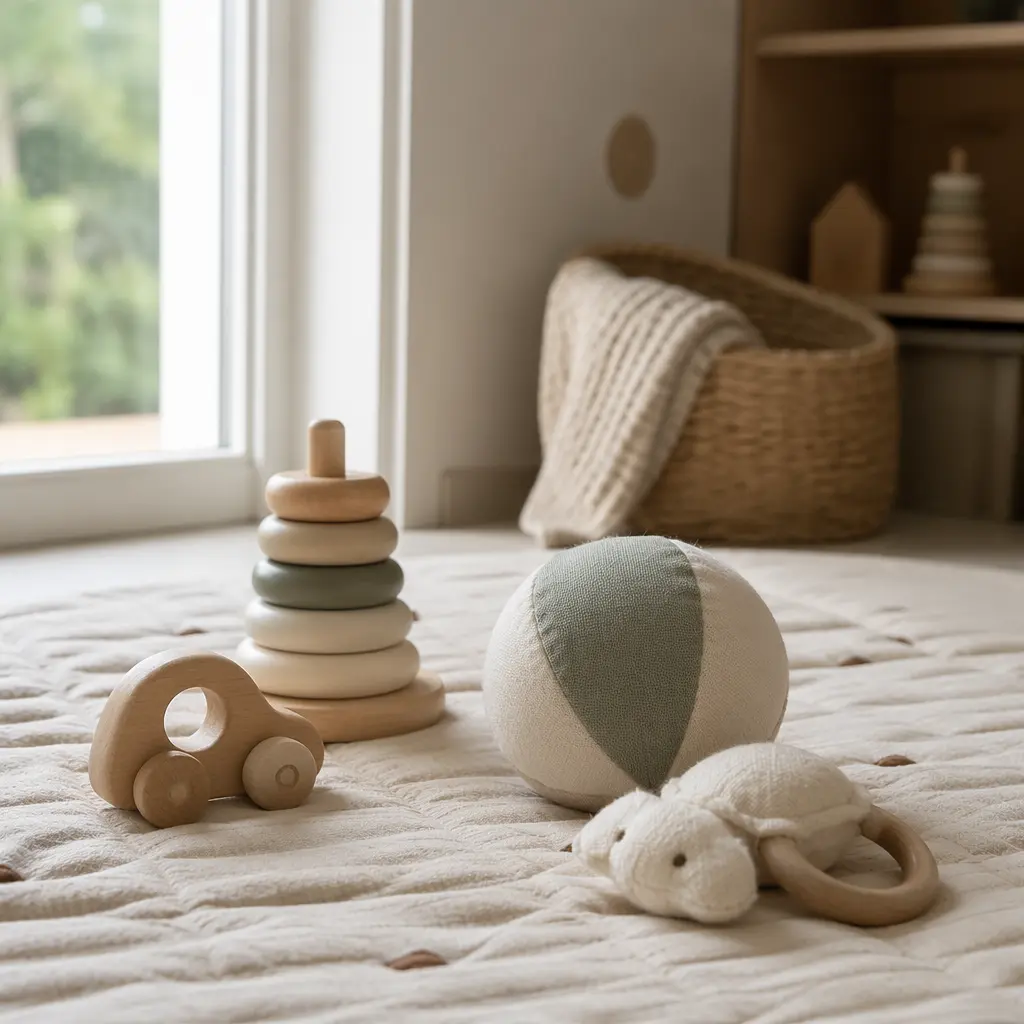
Several categories of no-battery toys are especially effective at encouraging reaching. These toys rely on physical interaction rather than electronic feedback, helping babies connect their movements with results.
- Hanging toys for play gyms or activity arches that dangle just within reach
- Soft blocks or fabric shapes that invite squeezing and grabbing
- Wooden or silicone rings that are easy to hold and mouth
- Textured balls that roll slightly, encouraging repeated reaches
- Floor mirrors designed for infants, which motivate reaching toward reflections
Many parents appreciate these types of toys because they fit well into calm routines and can be used during tummy time, back play, or supervised floor play. Their simplicity often makes them easy to mix and match with what you already have at home.
Frequently asked questions
Do babies really need toys without lights or sounds?
Babies don’t need electronic features to develop motor skills. Simple toys can be just as engaging and often allow babies to focus more on movement, touch, and visual tracking without added stimulation.
At what age do babies start reaching on purpose?
Intentional reaching often begins around 3 to 4 months, though every baby develops at their own pace. Earlier play may involve accidental swipes that gradually become more controlled.
Are simple toys better for independent play?
Many parents find that simpler toys support short periods of independent play because babies are not waiting for lights or sounds to activate. The focus stays on the baby’s own actions.
How many toys should be out at one time?
Fewer toys can actually help babies engage more deeply. Offering one to three reaching-friendly toys at a time can reduce distraction and make it easier for babies to practice specific movements.
Choosing toys that encourage reaching without lights or sounds is less about following a trend and more about supporting how babies naturally learn. By focusing on simple, well-made options, parents can create a play environment that builds early motor skills while keeping stimulation calm and developmentally appropriate.