Bath Toys That Dry Fully Between Uses
A parent-focused guide to bath toys that resist trapped water and mold by drying properly between uses, with practical advice on cleaning, storage, and age suitability for toddlers.
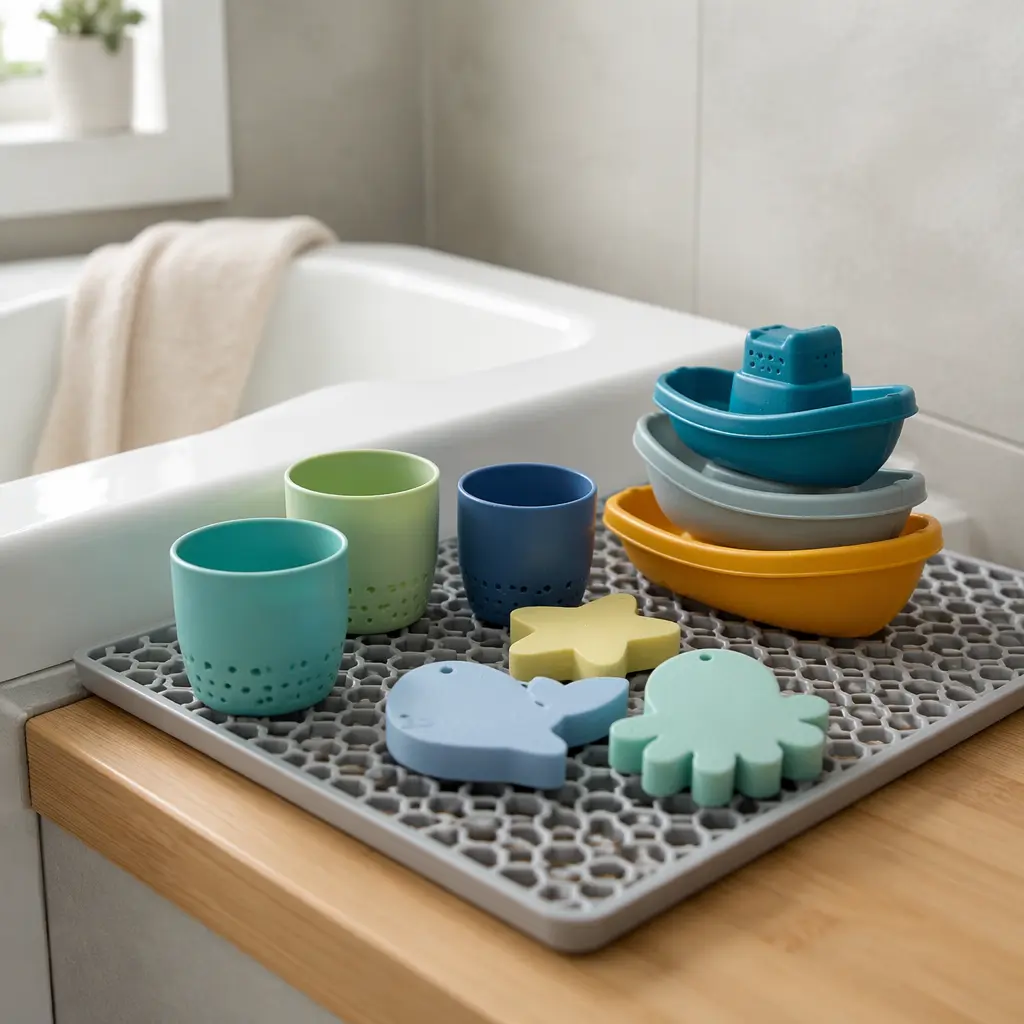
Compare prices and availability
Check current prices and availability for this guide on eBay.
As an eBay Partner, we may be compensated if you make a purchase.
Bath toys can make washing easier for toddlers, but many popular designs trap water inside and stay damp for days. That creates a frustrating cycle of hidden grime, difficult cleaning, and toys that need replacing long before the rest of the bath setup wears out. Parents looking for lower-maintenance options often have the best results with toys that either open fully for drying or avoid enclosed spaces entirely. The most practical choices balance easy cleaning with safe toddler play, manageable storage, and materials that tolerate frequent rinsing and air exposure.
What to look for
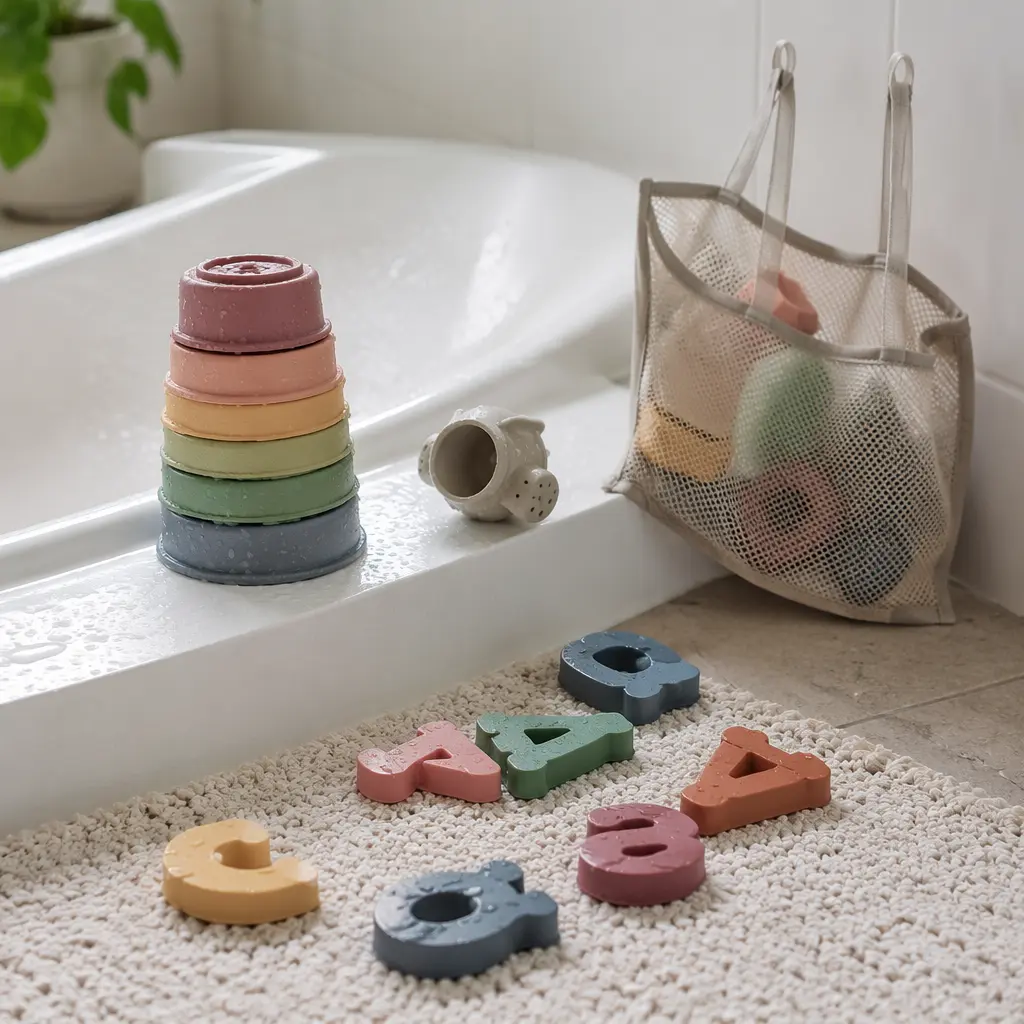
The easiest bath toys to maintain are usually the simplest ones. Toys without sealed cavities dry faster and are easier to inspect visually. Materials also matter. Silicone and solid plastic generally tolerate regular cleaning better than fabric-filled or sponge-like toys that stay damp internally. For toddlers aged 1–2 years, size and grip are important too, since toys should be easy to hold without presenting choking risks or complicated moving parts.
- Choose toys with fully open designs or large drainage holes rather than tiny pinhole openings.
- Look for smooth surfaces with few seams where residue can collect.
- Consider dishwasher-safe materials if frequent deep cleaning is important.
- Mesh storage bags or drying baskets help airflow between baths.
- Avoid squeeze toys that trap water unless they can fully separate for cleaning.
- Large stacking cups, floating boats, and foam bath shapes are often easier to maintain than squirting animals.
- Check whether the toy dries quickly outside the bathroom, especially in humid homes.
Age suitability
For children aged 1–2 years, bath toys should support simple cause-and-effect play without requiring complicated assembly or strong hand coordination. Open cups, floating containers, bath-safe blocks, and foam shapes usually work well at this stage because toddlers can pour, stack, scoop, and sort independently. Some toys marketed for older children include narrow parts, hidden compartments, or battery sections that increase cleaning difficulty and supervision needs. Very soft squeeze toys may appeal to younger toddlers, but they are also among the hardest to dry thoroughly unless designed to open completely.
Options compared
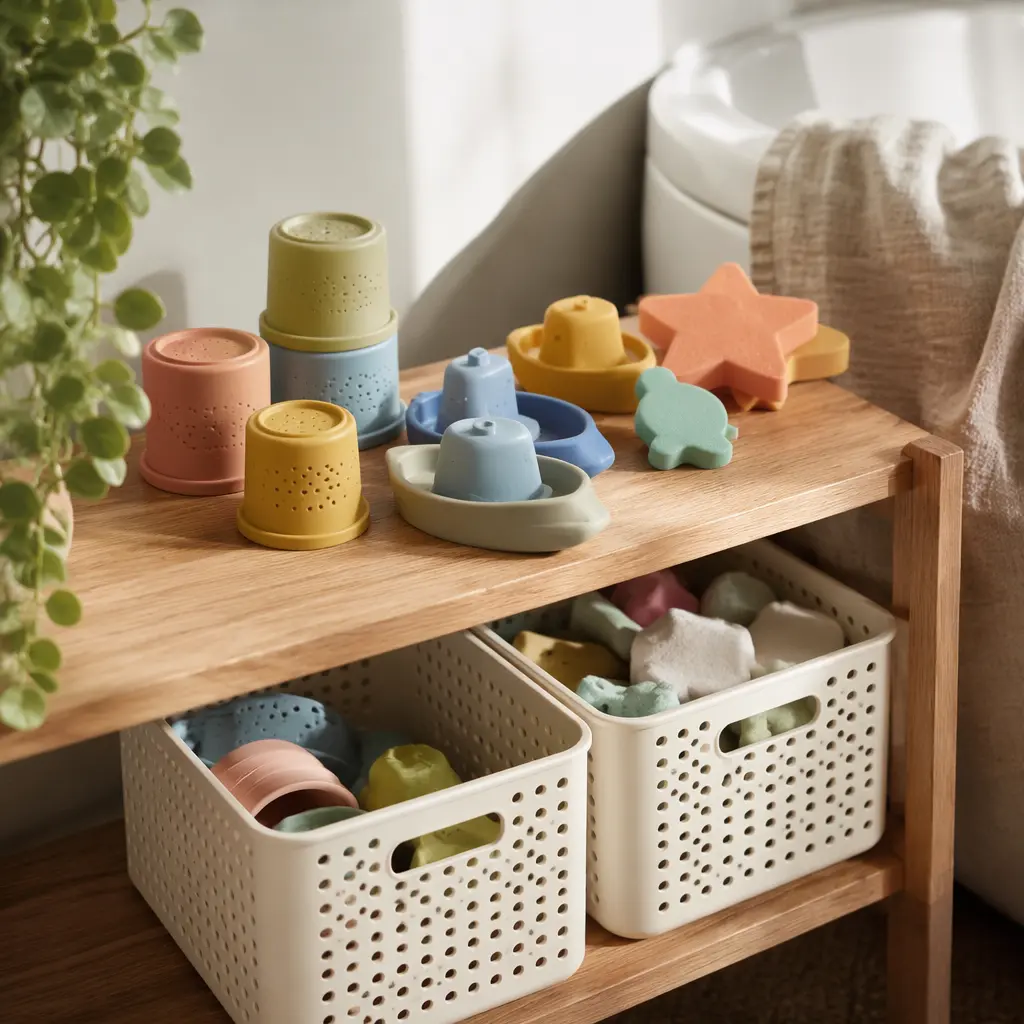
Open-ended bath toys are usually the easiest option for parents who want minimal maintenance. Silicone stacking cups, pouring buckets, and floating bowls dry quickly because water drains immediately and every surface stays visible. These toys also tend to store compactly and work outside the bath for water tables or sensory play. The trade-off is that they offer simpler play patterns than toys with moving features or squirting functions.
Foam bath shapes are another low-maintenance choice because they contain no enclosed cavities. Many toddlers enjoy sticking foam letters, animals, or geometric shapes to wet tub walls. Parents should still allow them to dry flat after use, since foam can remain damp when stacked together. These toys suit small bathrooms because they store thinly, though some families find loose pieces harder to keep organized.
Plastic boats and floating containers with open tops are often a practical middle ground. They encourage imaginative play while still allowing full airflow for drying. Hard plastic tends to be durable, but lighter pieces may drift around the tub and require extra rinsing if soap residue collects underneath.
Squeeze toys and bath squirters are usually the most difficult category to keep clean. Traditional sealed rubber or plastic animals pull water inside through a small hole and rarely dry fully between baths. Some newer designs separate into pieces for cleaning, which improves longevity, but parents still need to wash and dry them consistently. Families wanting the lowest-effort option often skip fully enclosed squirting toys altogether.
- Best for easiest cleaning: open silicone cups and pouring toys.
- Best for compact storage: foam bath shapes and flat floating pieces.
- Best for imaginative play: open-top boats and bath containers.
- Best avoided in humid bathrooms: sealed squeeze toys with tiny drainage holes.
- Best for mixed indoor play: stackable bath toys that also work for sensory bins or water tables.
Frequently asked questions
How often should bath toys be cleaned?
Quick rinsing and air drying after every bath helps prevent buildup. A more thorough cleaning schedule depends on how often the toys are used and how humid the bathroom stays. Toys with enclosed spaces generally need more frequent inspection than fully open designs.
Are silicone bath toys better than plastic ones?
Silicone is often flexible, easy to rinse, and resistant to cracking, which can make cleaning simpler. Hard plastic can still work well when the design is fully open and smooth. The toy’s shape and drainage usually matter more than the material alone.
Do mesh bath toy organizers help?
They can improve airflow and reduce standing moisture compared with closed bins. However, mesh organizers work best when toys are already mostly drained before storage. Overfilled bags may still keep toys damp in the center.
Should bath toys stay in the bathroom?
In very humid bathrooms, moving toys to a better-ventilated area can help them dry faster. Some families rotate toys onto an open shelf outside the tub area after rinsing. Faster drying generally supports longer toy life.
What signs mean a bath toy should be replaced?
Persistent odors, visible discoloration inside seams, cracking, peeling surfaces, or trapped residue that cannot be removed are common signs that a toy has reached the end of its useful life. Toys that no longer drain properly may also become harder to keep sanitary.
For most toddlers, the most practical bath toys are not the most complicated ones. Open designs that drain quickly and dry completely usually require less supervision, less cleaning effort, and less frequent replacement. Parents balancing storage space, maintenance time, and durability often find that a smaller set of easy-to-clean bath toys works better than a large collection of enclosed squirters or novelty pieces.