Fisher-Price Activity Walker: The Push Toy That Stayed Put
For decades, the Fisher-Price Activity Walker has blended stability, sound, and simple hands-on play into one of the most recognizable push toys for early walkers.
Compare prices and availability
Check current prices and availability for this guide on eBay.
As an eBay Partner, we may be compensated if you make a purchase.
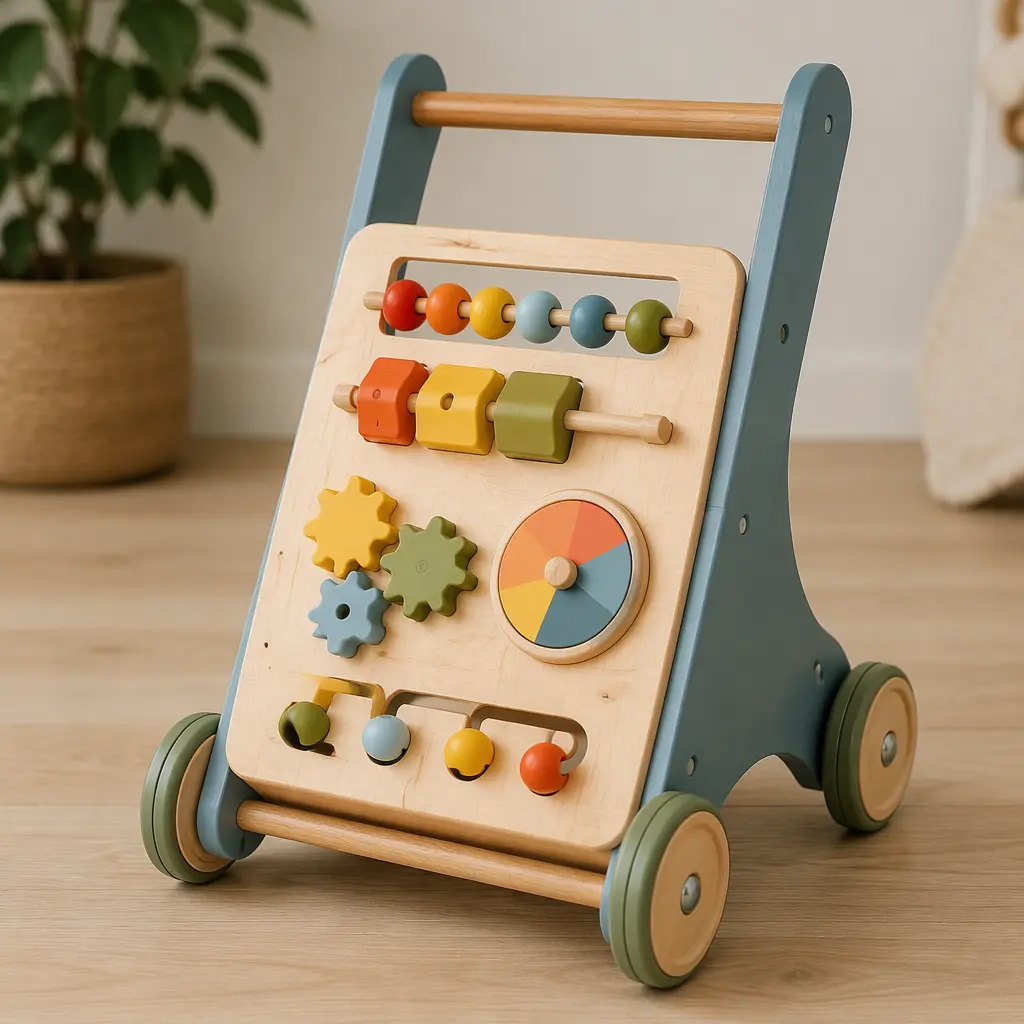
Long before app-connected baby gear and electronic learning systems became common, the Fisher-Price Activity Walker built its reputation with a much simpler promise: give toddlers something stable to push and something interesting to explore. Part push toy and part activity center, it became a familiar sight in living rooms and nurseries from the late 20th century onward. Parents appreciated the sturdy design, while children were drawn to the spinning parts, clicking sounds, and the satisfying feeling of moving across the floor under their own power.
Where it came from
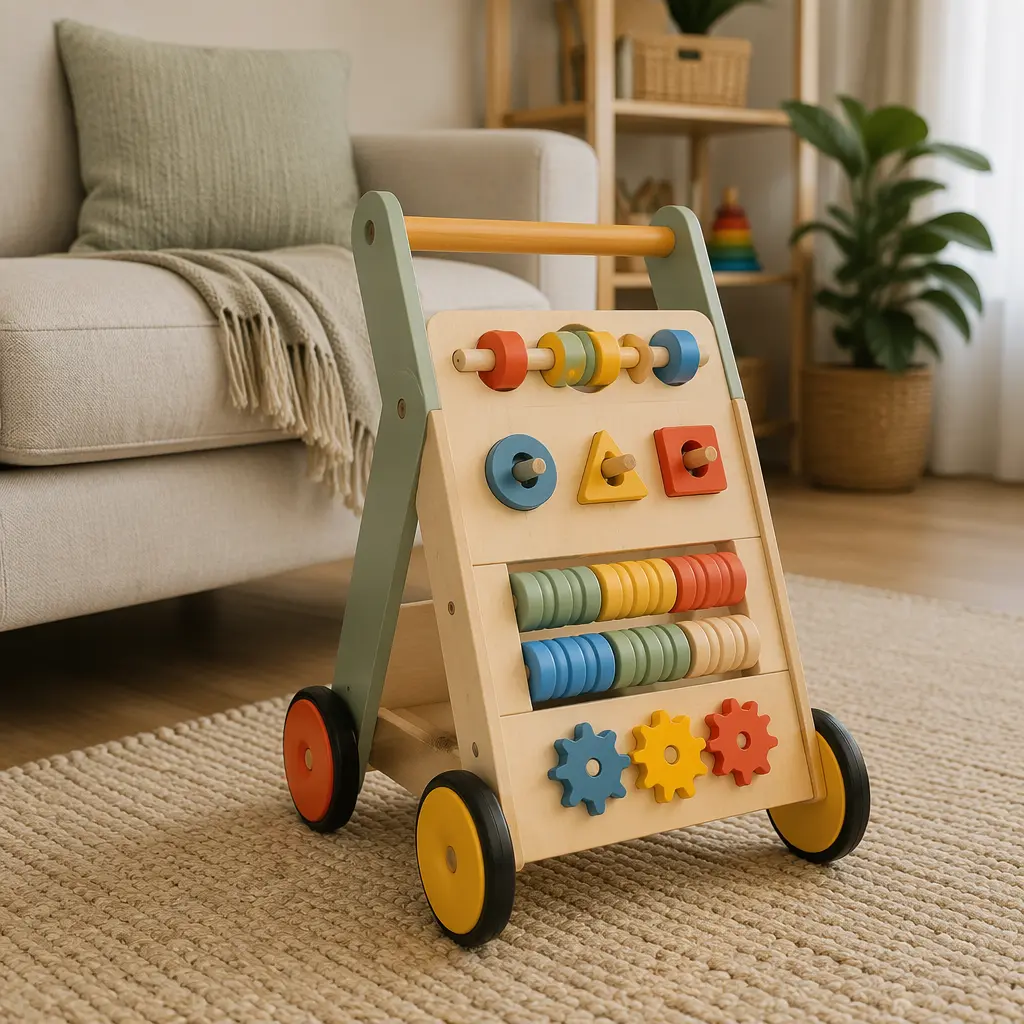
Fisher-Price built much of its identity around developmental toys for infants and preschoolers, and push walkers became an important part of that story. Early versions appeared during a period when toy companies were increasingly focused on combining movement with sensory play. Instead of creating a walker that only rolled forward, Fisher-Price added built-in activities that encouraged toddlers to stop, touch, spin, flip, and experiment.
The design reflected broader ideas about child development that became especially popular in the 1970s and 1980s: children learn through repetition, movement, and hands-on discovery. The walker’s wide wheel base and upright handle gave children a sense of support during the uncertain stage between crawling and walking. At the same time, colorful moving parts rewarded curiosity even when the toy was standing still. That dual-purpose approach helped the toy endure through multiple redesigns and generations of families.
Why it works
The appeal of the Activity Walker comes from how naturally it matches early toddler behavior. New walkers tend to alternate between cautious movement and stationary exploration. Fisher-Price leaned into that rhythm. A child might push the toy a few feet, stop to spin rollers or flip panels, then continue moving again. The toy supports short bursts of confidence rather than forcing a single style of play.
Physically, the design is intentionally oversized and stable compared with lightweight pull toys. Large wheels help smooth movement over carpet and hard floors, while the broad frame reduces tipping. Most versions also include sensory elements that produce gentle mechanical feedback rather than loud electronic effects. That quieter style of interaction is one reason older editions remain popular with collectors and parents who prefer low-tech toys.
- Wide wheel base designed for stability during early walking
- Built-in sensory activities such as spinners, rollers, beads, or clicking panels
- Chunky handles sized for small hands
- Movement that encourages balance and coordination
- Durable plastic construction meant to withstand heavy daily use
Who it's for
The Activity Walker is aimed primarily at babies transitioning from crawling to independent walking, typically during the later infant and early toddler stages. Many children first use it while pulling themselves upright, then gradually begin pushing it across the floor as confidence improves. Adults often remember earlier versions from their own childhoods, which gives the toy an unusual cross-generational appeal. Grandparents frequently recognize the familiar shape and sounds immediately, even when newer models have updated colors or added activities.
Variants and what to look for today
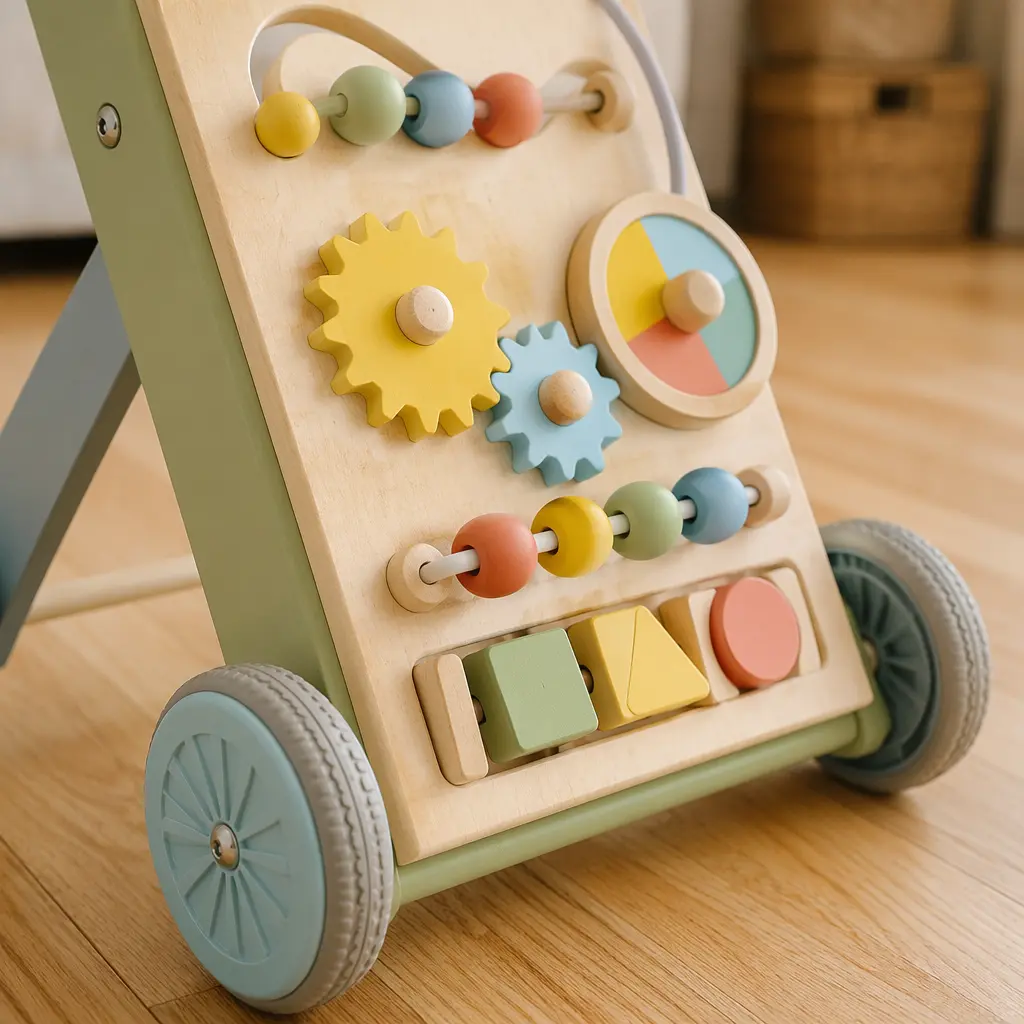
Over the years, Fisher-Price released several variations on the basic activity walker idea. Some emphasized bright sensory panels and spinning elements, while others introduced animal themes, shape sorting, or electronic sounds. More recent push walkers from many brands often include removable play panels or convert into ride-on toys, reflecting modern demand for multi-stage products.
For parents shopping today, older vintage models and newer reproductions both remain widely available through secondhand marketplaces and major toy retailers. Condition matters more than age. Wheels should roll evenly, handles should feel secure, and any removable pieces should fit tightly without cracks or excessive wear. Vintage toys can be especially durable, but buyers should still inspect for brittle plastic, loose fasteners, or missing components.
- Classic low-tech walkers with mechanical activities remain popular among collectors
- Modern versions may add lights, music, or removable play panels
- Look for stable wheel movement rather than overly fast rolling
- Avoid heavily worn secondhand toys with cracked plastic or loose small parts
- Simple designs often hold a child’s attention longer than crowded electronic layouts
Frequently asked questions
Are push walkers considered safer than seated baby walkers?
Push walkers are generally viewed differently from seated baby walkers because children remain upright and in control of their own movement. Pediatric safety experts have long raised concerns about seated walkers with wheels that allow babies to move rapidly without full balance control. Push toys encourage walking practice while keeping the child’s feet on the ground.
Do children lose interest once they can walk confidently?
Some do, but many continue using the toy as a general activity center or for pretend play. Toddlers often enjoy pushing toys around the house long after mastering walking. The interactive features can also remain engaging independently of the movement aspect.
Why do vintage Fisher-Price walkers still attract attention?
Part of the appeal is durability. Many older Fisher-Price toys were built with thick plastic components and simple mechanical features that held up over time. Nostalgia also plays a major role. Parents and grandparents often seek out toys that resemble the versions they remember from childhood.
What surfaces work best for activity walkers?
Most push walkers perform best on flat indoor surfaces. Carpet can slow movement helpfully for beginners, while smooth hardwood or tile floors may allow faster rolling. Outdoor use is usually limited because small indoor wheels can struggle on uneven ground.
The Fisher-Price Activity Walker never depended on trend cycles or complicated technology to stay relevant. Its success came from understanding a narrow but important stage of childhood development and building around it thoughtfully. Decades after its introduction, the basic formula still feels recognizable: a sturdy object to lean on, a few satisfying things to touch and spin, and the freedom to move forward one careful step at a time.