Offline Music Toys That Don’t Become Background Noise
A parent-focused guide to offline music toys for babies 0–12 months, comparing volume, replay value, durability and how manageable each option is in small homes and shared spaces.
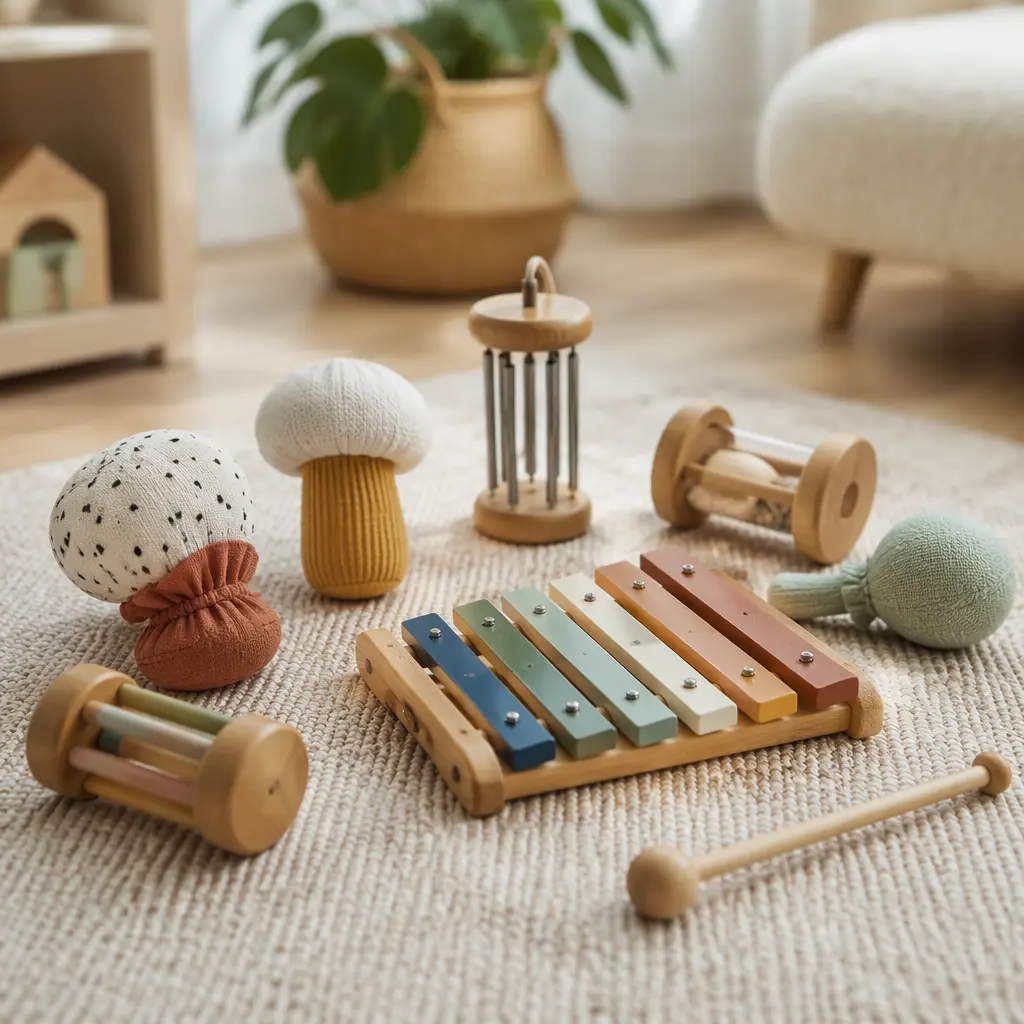
Compare prices and availability
Check current prices and availability for this guide on eBay.
As an eBay Partner, we may be compensated if you make a purchase.
Music toys for babies can support sensory play, movement and early cause-and-effect learning, but some quickly become constant background noise in the home. For parents shopping for babies under 12 months, the most useful difference is not whether a toy plays music at all, but how the sound is produced, how easy it is to control, and whether the toy stays interesting once the novelty wears off. Offline music toys without apps or screens are often easier to manage day to day because they encourage shorter, more intentional play sessions and do not add notifications, flashing menus or charging routines to the mix.
What to look for
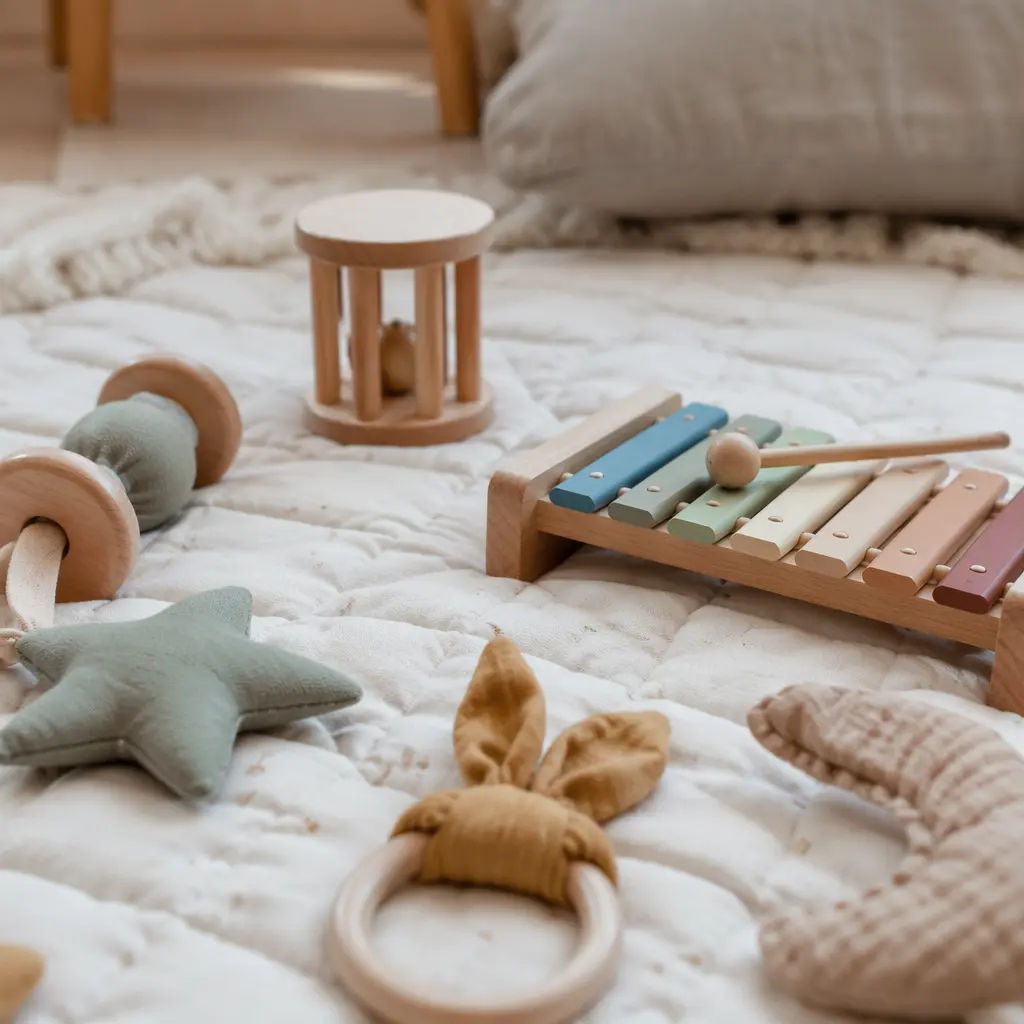
For babies in the first year, simple sound toys are usually more practical than feature-heavy electronic activity centers. Parents often end up preferring toys that make softer, shorter sounds rather than continuous songs or looping melodies. A toy that can be muted, dampened or naturally played at a low volume tends to fit more easily into shared living spaces, apartment living and nap schedules. It also helps to think about replay value from the parent perspective: toys that respond differently depending on how a baby shakes, taps or squeezes them often stay useful longer than toys with a single button that repeats the same tune every time.
- Look for adjustable volume or naturally quiet sound sources such as fabric rattles, bells or wooden percussion.
- Choose toys with simple cause-and-effect actions that babies can trigger independently.
- Check whether the toy is easy to wipe clean, especially for teething babies.
- Consider storage size if you already have play gyms, floor seats or larger baby gear.
- Avoid overly bright flashing lights if your goal is calmer, screen-free play.
- For travel or shared spaces, soft instruments usually create less tiring background noise than battery-powered melody toys.
Age suitability
For newborns through about 3 months, softer sound toys work best because babies are still adjusting to sensory input. Gentle rattles, crinkle fabric toys and soft bells are usually easier to tolerate than loud electronic music toys. Around 4 to 8 months, many babies begin actively shaking, kicking and banging toys to produce sound, which makes lightweight percussion toys more engaging. By 9 to 12 months, babies often enjoy repeatable actions such as tapping drums, pressing large buttons or experimenting with simple rhythm patterns. At this stage, sturdier materials become more important because toys are likely to be dropped, chewed and thrown repeatedly.
Options compared
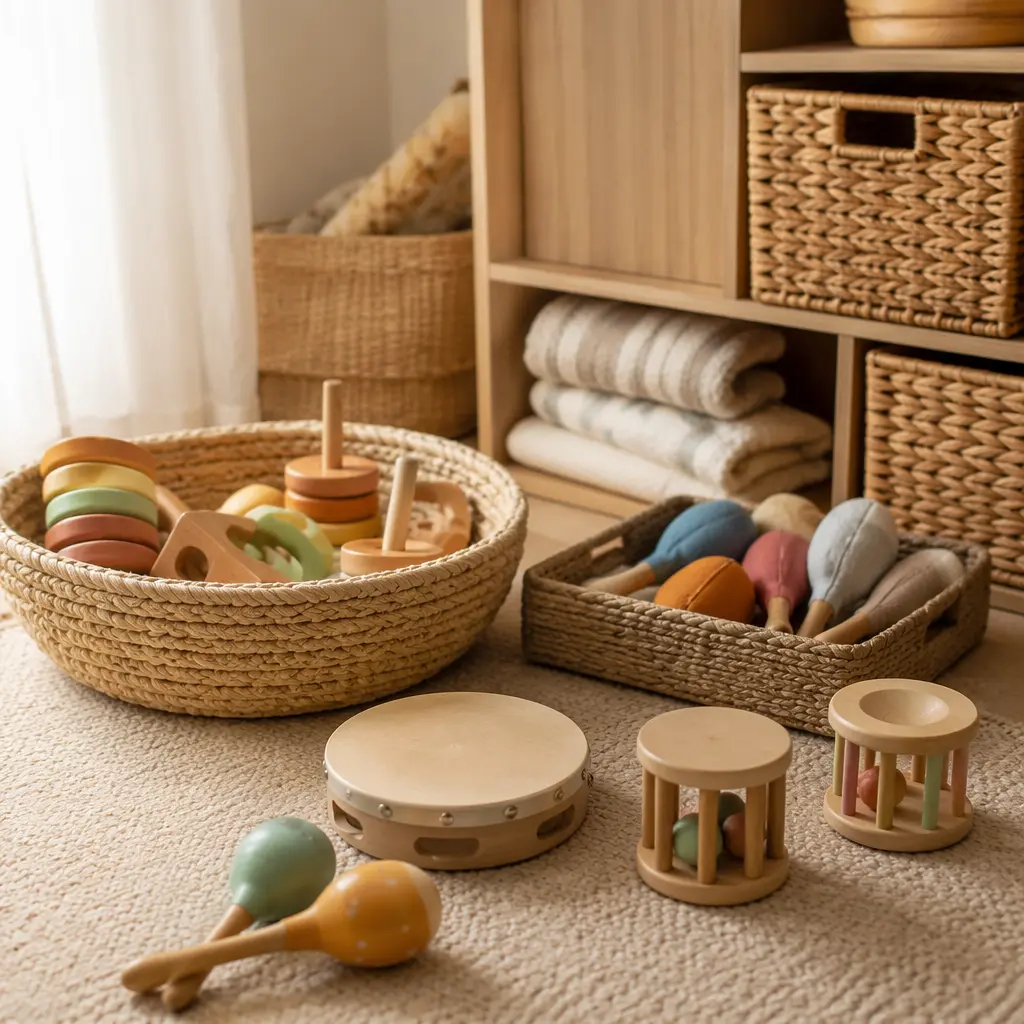
Soft fabric music toys are usually the easiest starting point for babies under 6 months. Fabric rattles, crinkle toys and plush toys with gentle chimes create quieter sounds that are less likely to dominate the room. They also tend to travel well and fit easily into diaper bags. The trade-off is that replay value can be shorter once babies become more physically active and want stronger sensory feedback.
Wooden and silicone percussion toys often work better from the middle of the first year onward. Shakers, egg rattles and small hand drums can offer more satisfying sound variation without relying on electronic music loops. These toys usually suit parents looking for screen-free play with lower ongoing noise levels, although hard materials can become louder when banged on floors or high chairs. Some families place a folded play mat underneath to soften the sound.
- Battery-powered melody toys: convenient and attention-grabbing, but often repetitive and harder to silence completely. Best for short supervised sessions rather than all-day access.
- Push-button musical toys with volume control: more manageable in small homes if the lowest setting is genuinely quiet. Useful for older babies learning cause and effect.
- Manual percussion toys: strong replay value because babies create the sound themselves. Better for parents trying to avoid repetitive electronic songs.
- Soft rattles and sensory sound toys: easiest on parent ears and appropriate for younger babies, though they may not hold attention as long later in the first year.
- Activity gyms with built-in music: combine movement and sound in one item, but can take up significant floor space and may become background noise if always switched on.
Frequently asked questions
Are electronic music toys bad for babies?
Not necessarily, but moderation matters. Toys with constant lights and looping songs can become overstimulating for some babies and tiring for adults nearby. Many parents prefer using them occasionally while relying more heavily on quieter sensory toys during everyday play.
What is the quietest type of music toy for infants?
Soft fabric rattles, cloth crinkle toys and plush chime toys are generally the quietest options. They produce shorter, softer sounds and are less likely to echo through hard floors or small rooms.
Do babies need musical toys for development?
Babies do not need dedicated musical toys to benefit from sound play. Singing, clapping and household sounds also support early listening and rhythm awareness. Music toys can still be useful when they encourage interaction and movement rather than passive listening.
How many music toys are practical for a small home?
A small rotation often works better than a large collection. One soft sound toy, one handheld shaker and one larger interactive music toy are enough for many families during the first year. Rotating toys can maintain interest without adding constant clutter or noise.
What materials hold up best for babies who chew toys?
Silicone, sealed wood and washable fabrics are common choices for this age group. Parents should regularly inspect toys for cracks, loose seams or worn attachments, especially once babies begin teething heavily.
The most parent-friendly music toys are usually the ones that blend into daily life instead of demanding constant attention. Softer sounds, manual play and realistic volume control tend to create a calmer environment while still giving babies opportunities to explore rhythm, movement and sensory play offline.