Soft Baby Books vs Crinkle Toys for Tummy Time
Compare soft baby books and crinkle toys for tummy time play, including mouthing safety, sensory stimulation, engagement length, storage, noise and age suitability for babies 0–12 months.
Compare prices and availability
Check current prices and availability for this guide on eBay.
As an eBay Partner, we may be compensated if you make a purchase.
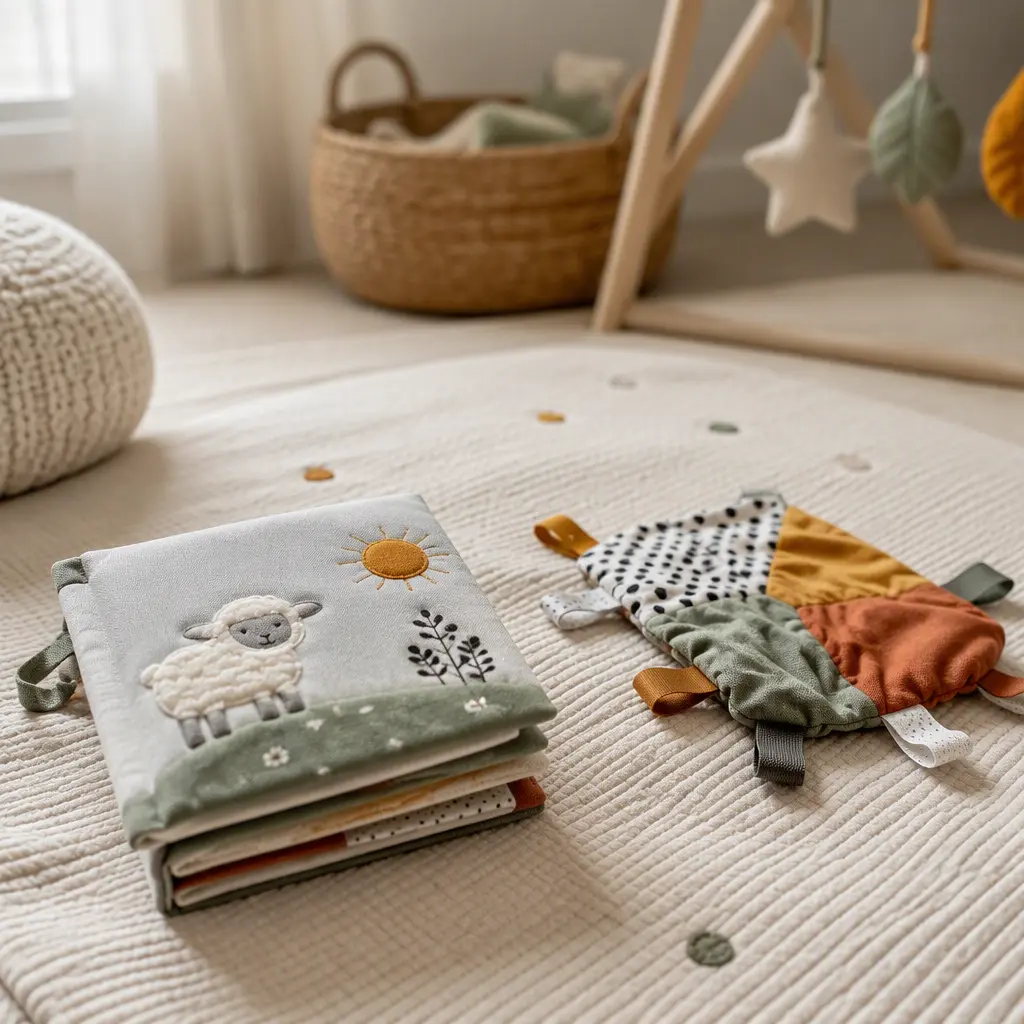
Soft baby books and crinkle toys are both common tummy time choices for babies under 12 months, but they support play in different ways. Soft books usually encourage slower exploration through textures, flaps and simple pictures, while crinkle toys focus on sound and sensory feedback that can quickly grab a baby's attention. For parents deciding between them, the main differences are often practical rather than developmental claims: how much stimulation a baby enjoys, how easy the toy is to clean after mouthing, how noisy it becomes during repeated play and whether it still feels interesting after the early months. Some babies stay engaged with a soft book for longer because it changes as visual skills develop, while others respond more strongly to the instant reward of a crinkle texture. Choosing well often comes down to matching the toy to the baby's stage and household routine rather than looking for a single “better” option.
What to look for
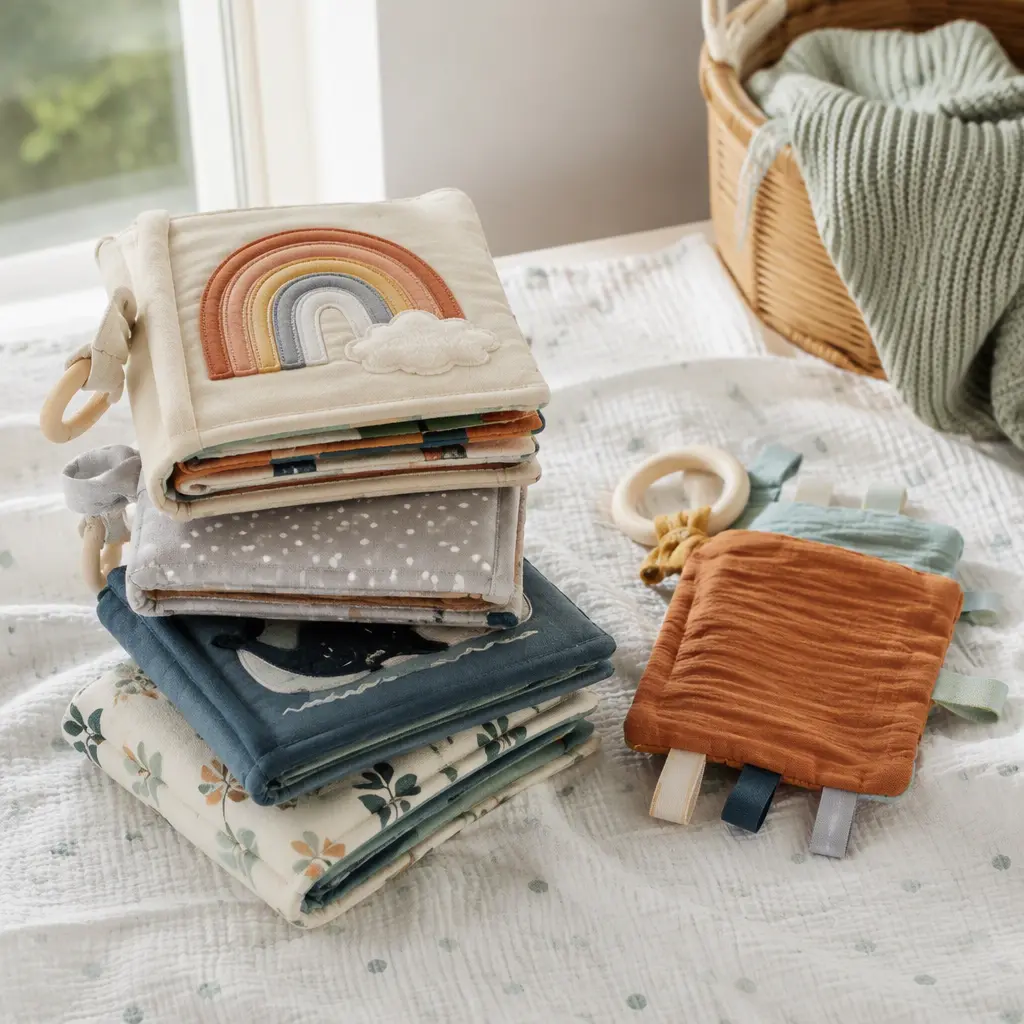
For tummy time toys, practical design matters more than novelty features. Babies in the first year explore heavily through mouthing, grabbing and repeated dropping, so durability and easy cleaning are usually more important than extra attachments or electronics. Parents may also notice that overstimulating toys can shorten tummy time instead of helping it, especially for younger babies who become unsettled by loud sounds or flashing elements. Soft books and crinkle toys both work best when they are lightweight enough for babies to bat, grasp and pull without frustration.
- Choose washable fabrics or wipe-clean surfaces since both toy types spend time in babies' mouths.
- Look for securely stitched seams and attached parts that cannot easily loosen with chewing or pulling.
- Consider noise level carefully if tummy time happens in shared living spaces or near nap times.
- Soft books with high-contrast pages often stay useful longer as babies move from visual tracking to page-turning.
- Crinkle toys are usually compact and travel-friendly but may provide shorter play sessions for some babies.
- Avoid toys with excessive dangling accessories that can distract rather than support focused tummy time play.
- Storage matters in smaller homes: flat cloth books stack easily, while plush sensory toys can become bulky.
Age suitability
From birth to around three months, many babies respond best to simple sensory input. Soft books with black-and-white patterns or gentle textures can support short tummy time sessions without overwhelming visual or auditory stimulation. Crinkle toys may still appeal at this stage, but very loud materials can startle some younger infants. Between four and eight months, crinkle toys often become more engaging because babies begin intentionally grabbing, squeezing and repeating actions to hear sounds. During this stage, toys that reward movement can help encourage reaching and longer floor play. By nine to twelve months, soft books frequently gain an advantage again because babies start exploring page-turning, pointing and early picture recognition. Some older babies also lose interest in basic crinkle sounds once they become familiar. Parents looking for longer-term use may therefore lean toward soft books, while families focused on short bursts of sensory engagement during early tummy time may prefer crinkle toys.
Options compared
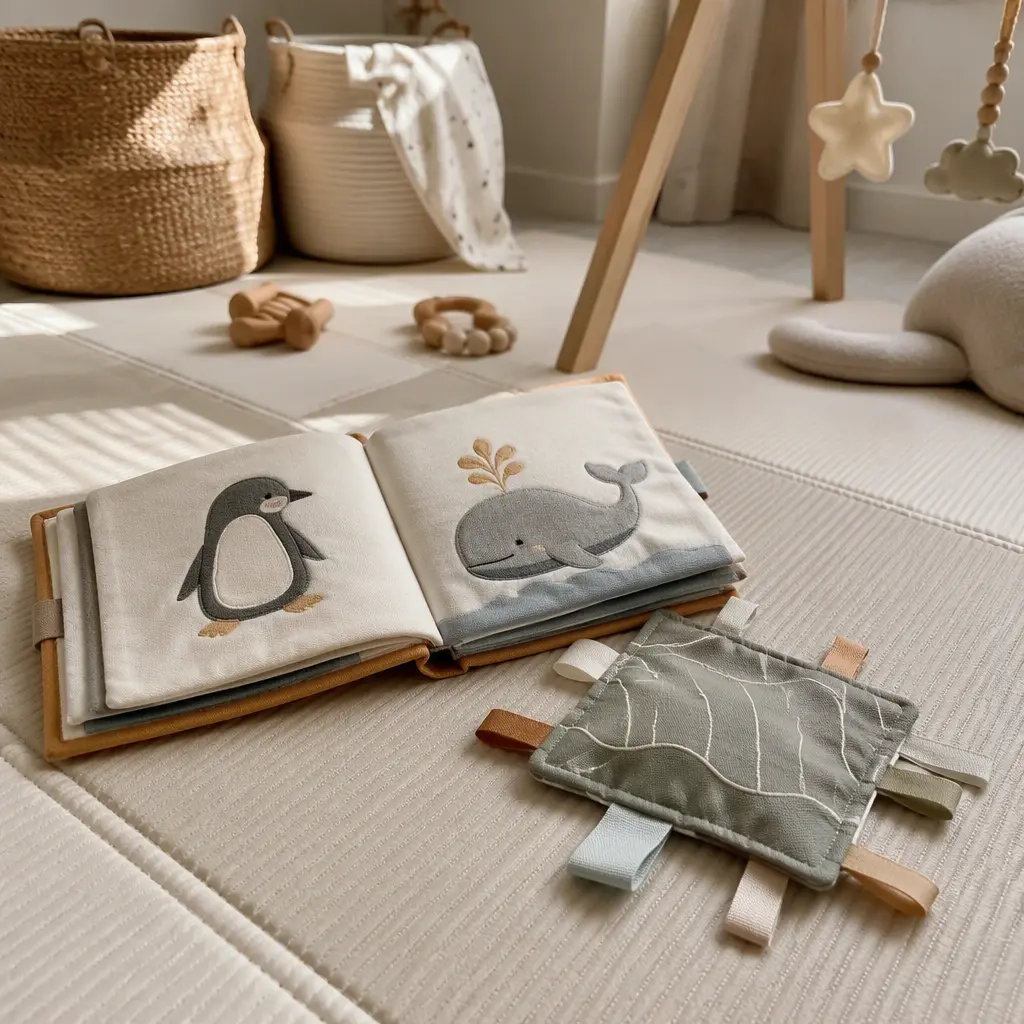
Soft baby books generally suit parents looking for quieter, lower-intensity play that can grow with the baby over several stages. Many include different textures, mirrors or flaps without relying entirely on sound. They also fit well into bedtime routines or calmer play periods. The trade-off is that some younger babies may not immediately engage unless an adult helps position or interact with the book during tummy time. Cloth books can also take longer to dry after washing, especially heavily padded styles.
Crinkle toys are often better for capturing quick attention during difficult tummy time sessions. The immediate sound feedback can motivate reaching and arm movement, especially for babies who lose interest quickly on the floor. Smaller crinkle squares or sensory tags also travel easily in diaper bags and strollers. However, repeated crinkling can become tiring for adults in quieter households, and some babies move through the novelty phase fairly quickly. Highly stimulating versions with multiple textures, bright colors and loud materials may also overwhelm babies who are sensitive to noise or busy sensory input.
- Soft books suit calmer sensory play, longer-term use and quieter homes.
- Crinkle toys suit short attention spans, travel use and babies motivated by sound feedback.
- Minimalist designs often work better for babies who become overstimulated easily.
- Combination toys that include a few crinkle pages inside a cloth book can offer balance without adding too much sensory input.
- Families with limited storage may prefer fold-flat cloth books over bulky plush sensory toys.
- Parents wanting independent floor play later in infancy may find books stay relevant longer than simple crinkle shapes.
Frequently asked questions
Are crinkle toys too stimulating for young babies?
It depends on the baby and the toy design. Some infants enjoy the sound immediately, while others react better to quieter sensory experiences. Simpler crinkle toys with one or two textures are often easier for younger babies to process than large multi-sensory toys with bright colors and loud sounds.
Which option is easier to clean?
Many soft books and crinkle toys are surface washable, but fully machine-washable fabric books can be more convenient for heavy drooling stages. Plush toys with thick padding may take longer to dry. Checking care instructions before buying is useful because some sensory inserts do not tolerate frequent washing well.
Do babies lose interest in crinkle toys quickly?
Some do, especially after the novelty of the sound wears off. Toys that combine crinkle textures with mirrors, ribbons or different fabrics may hold attention longer. Soft books often remain useful later because babies can revisit them as visual and motor skills change.
Can soft books replace reading time with regular books?
Soft books work well for independent exploration during infancy, but many families also introduce sturdy board books later in the first year for shared reading. Cloth books are mainly designed for safe sensory handling and mouthing rather than storytelling depth.
Is it worth owning both types?
For many families, a mix works well because the toys support different moods and stages. A soft book can suit calmer play or bedtime routines, while a small crinkle toy may help during short tummy time sessions or travel. Keeping the overall toy selection limited can also prevent overstimulation and clutter.
Parents choosing between soft baby books and crinkle toys do not necessarily need the most feature-packed option. Babies in the first year often engage best with simple, easy-to-handle toys that match their sensory tolerance and developmental stage. Soft books tend to offer quieter, longer-lasting exploration, while crinkle toys provide fast sensory feedback that can motivate movement during tummy time. Considering cleaning, noise, storage and how easily a baby becomes overstimulated will usually lead to a more useful choice than focusing on trends or novelty features.