Toy Arch vs Ceiling Mobile for Small Nursery Spaces
Choosing between a toy arch and a ceiling mobile for a small nursery? This guide compares space use, baby engagement, sleep disruption, setup, and age suitability for 0–12 months.
Compare prices and availability
Check current prices and availability for this guide on eBay.
As an eBay Partner, we may be compensated if you make a purchase.
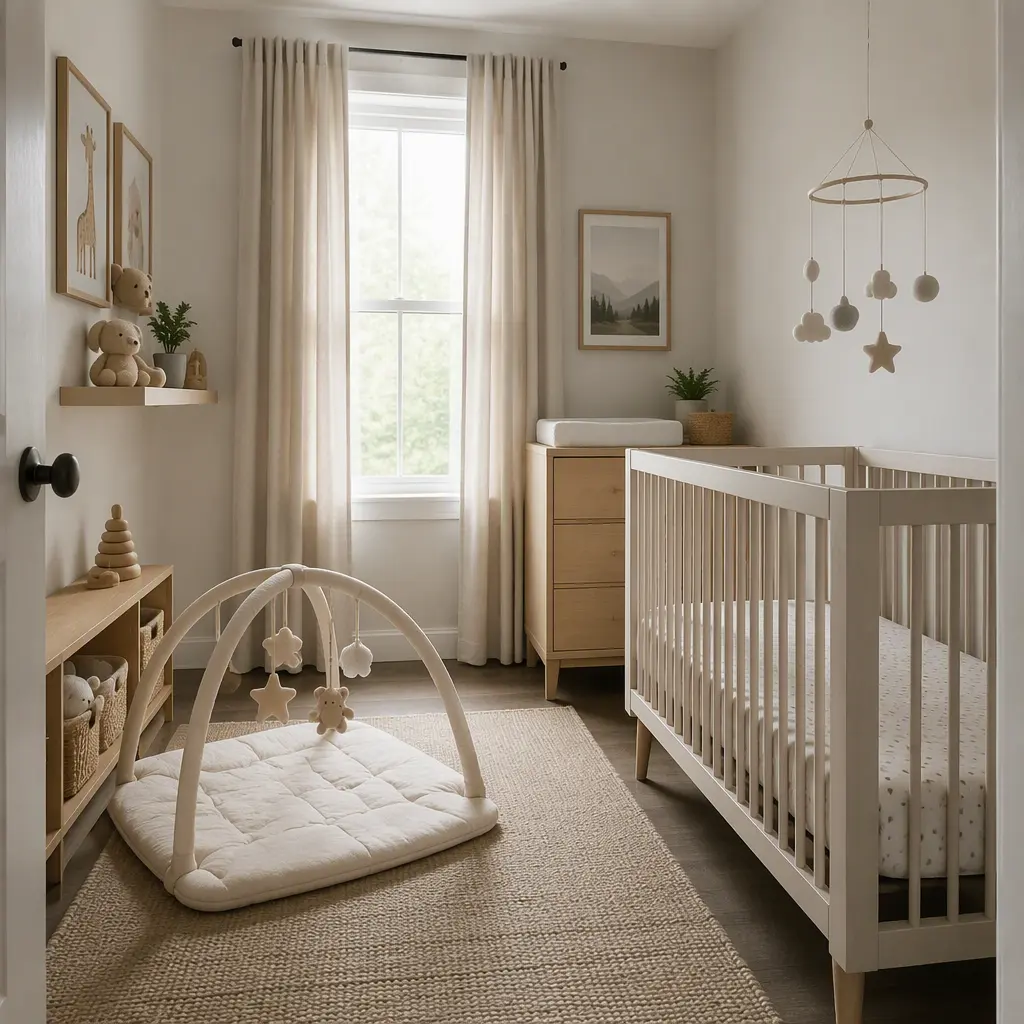
In a small nursery, every item needs to earn its space. Toy arches and ceiling mobiles both support early visual attention and sensory development for babies, but they work very differently in tight rooms. A toy arch creates a reachable play zone on the floor, while a ceiling mobile keeps the floor clear and draws attention upward. The better choice depends on how much open floor space you have, whether the nursery doubles as a sleep space, and how you plan to use the room during the first year.
What to look for
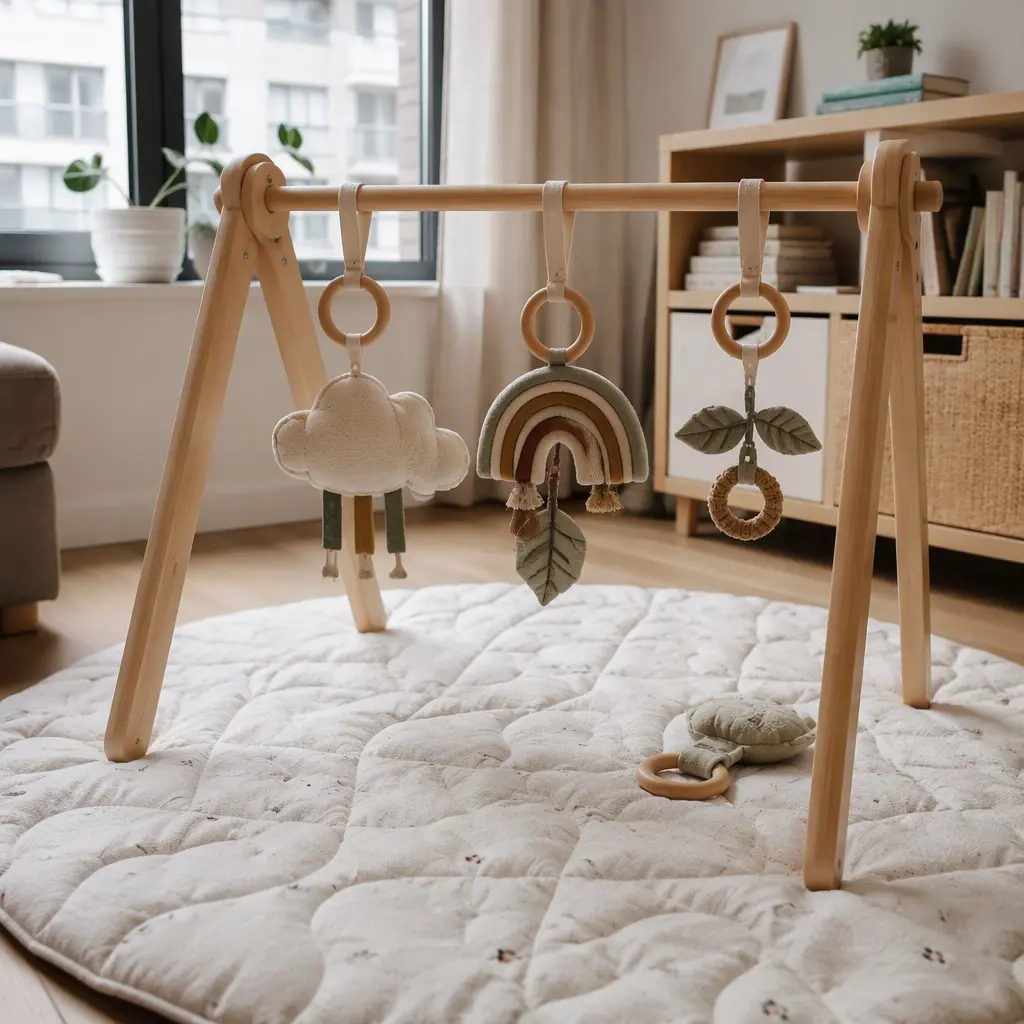
The main difference between these two toy types is where they occupy space and how babies interact with them. A toy arch sits at floor level and encourages reaching, kicking, and hand-eye coordination during awake play. A ceiling mobile hangs overhead and is usually used for visual tracking and calming during crib time. In a compact nursery, practical considerations matter as much as developmental goals.
- Floor footprint: Toy arches require clear floor space for a mat or blanket, while ceiling mobiles keep floors open and can suit narrow rooms.
- Sleep environment: Mobiles placed above a crib may overstimulate some babies at bedtime if brightly colored, musical, or constantly moving.
- Engagement style: Toy arches support active play and reaching as babies grow, while mobiles are mostly visual and passive.
- Storage and portability: Many toy arches fold or move between rooms. Ceiling mobiles are more fixed once installed.
- Noise level: Battery-powered mobiles with music or motorized movement can add background noise that may not suit light sleepers.
- Cleaning and durability: Fabric hanging toys may need regular washing, while mobiles collect dust overhead and can be harder to clean safely.
- Longevity: Toy arches often stay useful longer because older babies can bat, grab, and interact directly with toys.
Age suitability
For newborns through roughly three months, ceiling mobiles can help support visual tracking because babies spend much of their time lying on their backs and observing movement. High-contrast shapes and slow movement are usually easier for young infants to follow than busy designs. Toy arches become more engaging as babies gain better control of their arms and begin reaching intentionally, often between three and six months. By the second half of the first year, many babies lose interest in passive mobiles but still enjoy floor play with hanging toys they can touch and pull. Families planning for longer-term use may therefore find toy arches more versatile across the full 0–12 month range.
Options compared
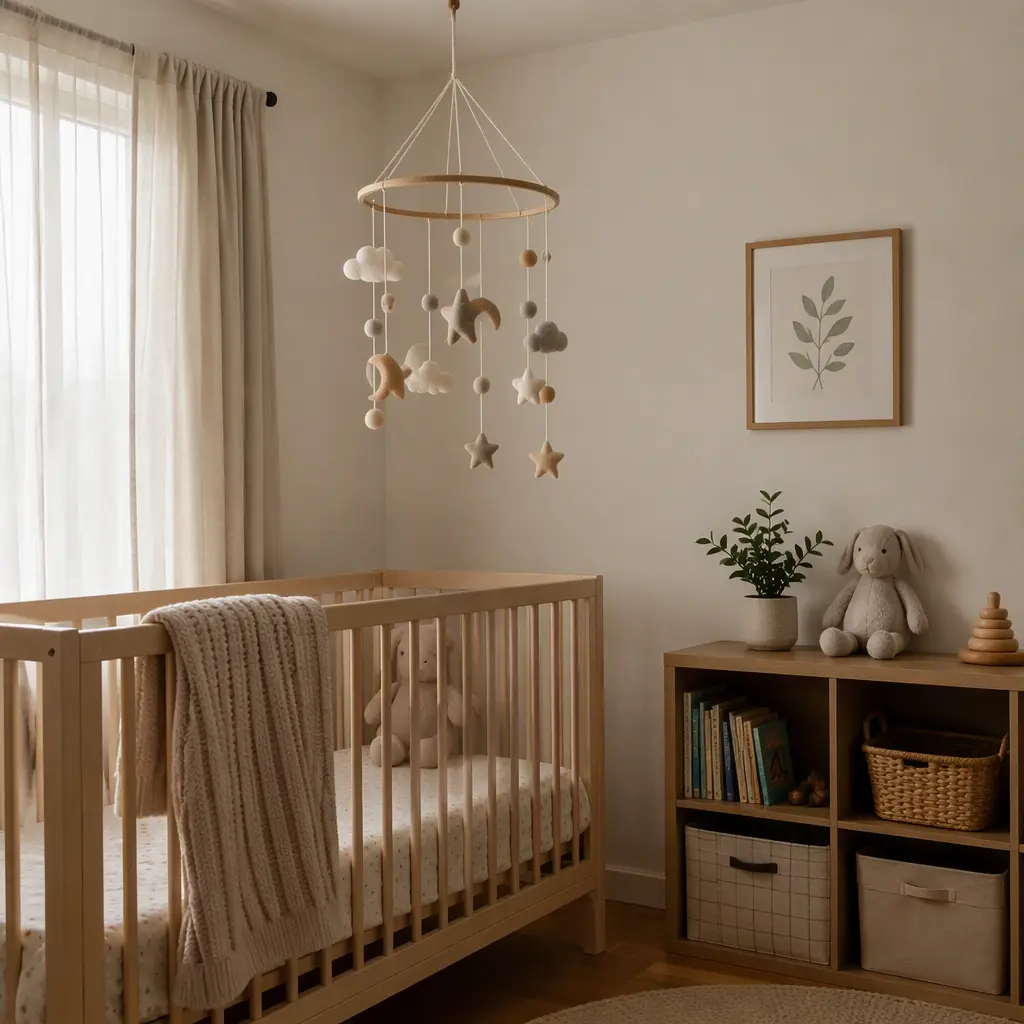
A toy arch is often the stronger choice for families who already spend time on floor play or who need a flexible toy that can move between rooms. In a small apartment, a foldable arch can be packed away after use, freeing up valuable floor area. It also gives babies more direct interaction as they develop coordination. The trade-off is that even compact arches still require temporary floor space, which may feel inconvenient in very narrow rooms or shared bedrooms.
Ceiling mobiles suit nurseries where floor space is extremely limited or where parents want to avoid additional items on the ground. They can create a calm visual focal point above a crib or changing area without affecting storage space. However, mobiles have a shorter practical lifespan for many babies and may interfere with sleep routines if they are too stimulating, brightly lit, or motorized. Some families also prefer to keep cribs visually simple to separate sleep from play.
- Choose a toy arch if you want longer-lasting active play, portability between rooms, or more tummy-time and floor-play interaction.
- Choose a ceiling mobile if floor space is very limited or you want visual stimulation without adding another item on the floor.
- Avoid bulky arches in very cramped nurseries where setup and storage will become frustrating.
- Avoid heavily musical or brightly flashing mobiles if your baby is sensitive to stimulation around sleep times.
- A simple non-motorized mobile may suit minimalist nurseries better than larger electronic versions.
- Soft fabric hanging toys are often quieter than hard plastic attachments during kicking and batting play.
Frequently asked questions
Can a ceiling mobile replace tummy-time toys?
Not completely. Mobiles are mainly visual and are usually viewed while a baby lies on their back. Toy arches and floor-based toys are better suited to active movement, reaching, and supervised tummy time.
Which option works better in a shared bedroom?
A ceiling mobile usually takes up less practical space in a shared room because it does not need floor setup. A foldable toy arch can still work well if it is easy to store during the day.
Are musical mobiles useful for sleep?
Some babies respond well to gentle sound, but others become more alert or dependent on constant motion and music. Simpler mobiles with slow movement and muted colors are often easier to integrate into bedtime routines.
How long do babies typically use toy arches?
Many babies enjoy toy arches from around three months until they become more mobile and interested in crawling. Some arches continue to work as seated play toys later in the first year, depending on the design.
Do small nurseries need both?
Usually not. In compact spaces, choosing one based on your daily routine is often more practical. Families focused on floor play may get more overall use from a toy arch, while those prioritizing a visually calm room may prefer a mobile.
For most small nurseries, the decision comes down to whether you value flexible active play or maximum floor space. Toy arches generally offer more hands-on engagement across a longer portion of the first year, while ceiling mobiles keep the room visually open and uncluttered. A simple design, easy cleaning, and age-appropriate stimulation are often more important than extra electronic features, especially in compact sleep spaces.