Toy Arch vs Play Gym for Small Living Rooms
Choosing between a toy arch and a play gym for a small home? This guide compares space, setup, storage and age suitability to help parents pick the better fit for babies from 0–12 months.
Compare prices and availability
Check current prices and availability for this guide on eBay.
As an eBay Partner, we may be compensated if you make a purchase.
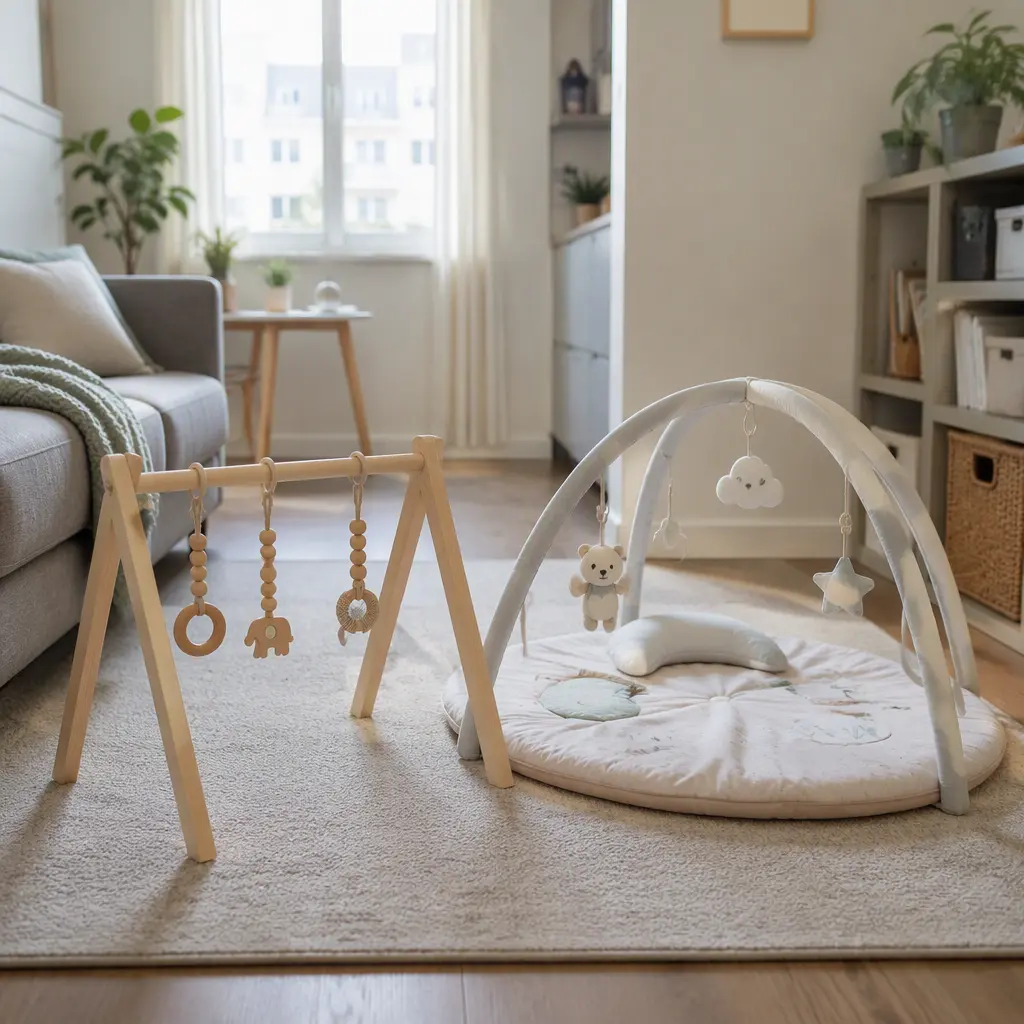
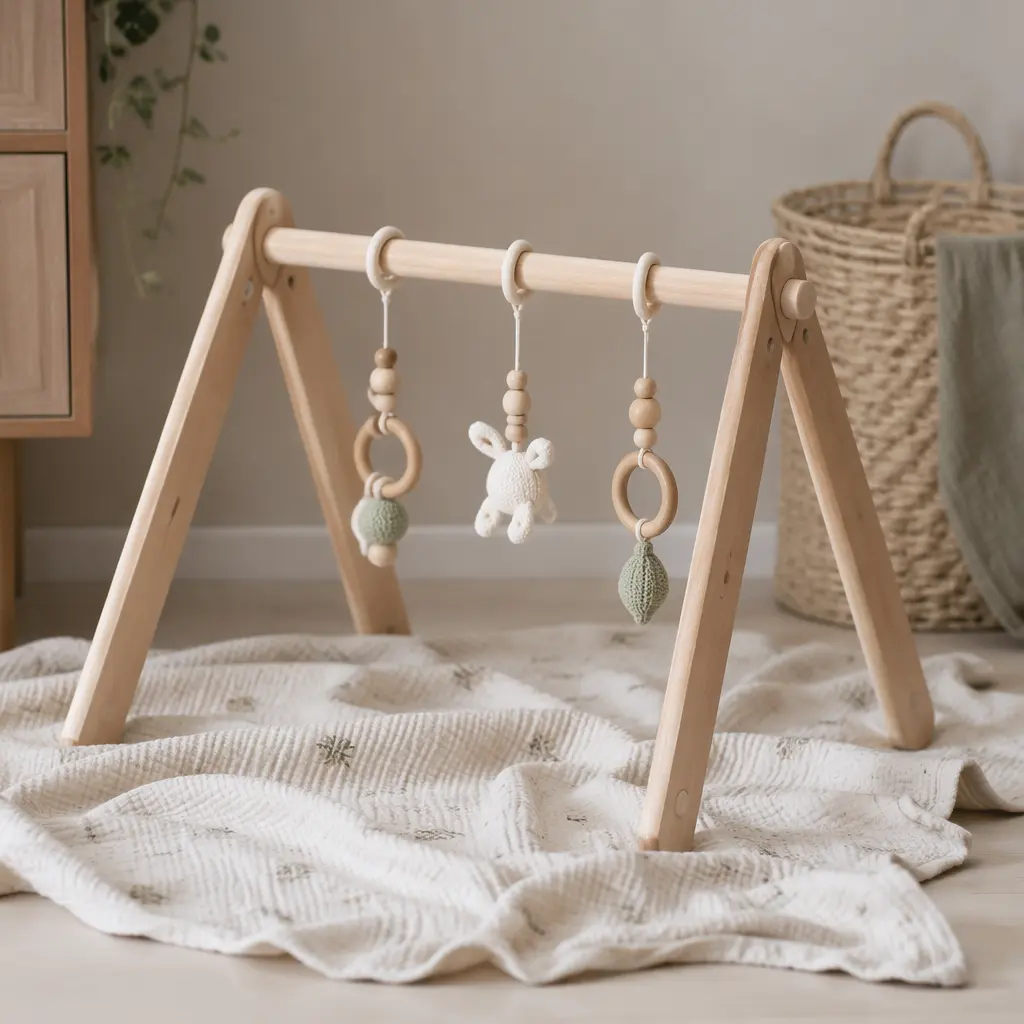
For parents in apartments or smaller homes, baby gear often needs to earn its place quickly. Toy arches and play gyms both support early sensory play, but they use space differently and suit different routines. A toy arch is usually a lightweight frame that hangs a few toys above a baby lying on a mat or blanket. A play gym combines overhead toys with a dedicated padded mat and sometimes extra textures, mirrors or side features. The better choice depends less on trends and more on how much floor space you can spare, how often you move items around the room, and how long you want the setup to stay useful before your baby outgrows it.
What to look for
The biggest difference between these options is footprint. A toy arch usually takes up less visual and physical space because it does not include a large mat or built-in padding. It can often be lifted aside in seconds and stored against a wall or under furniture. Play gyms tend to create a larger dedicated play area, which can be helpful if you want an all-in-one spot for tummy time and floor play but less practical if your living room changes use throughout the day.
- Check the assembled floor dimensions before buying, especially in narrow living rooms or shared spaces.
- Consider setup time. Simple arches are often ready immediately, while some gyms need assembly or multiple pieces attached.
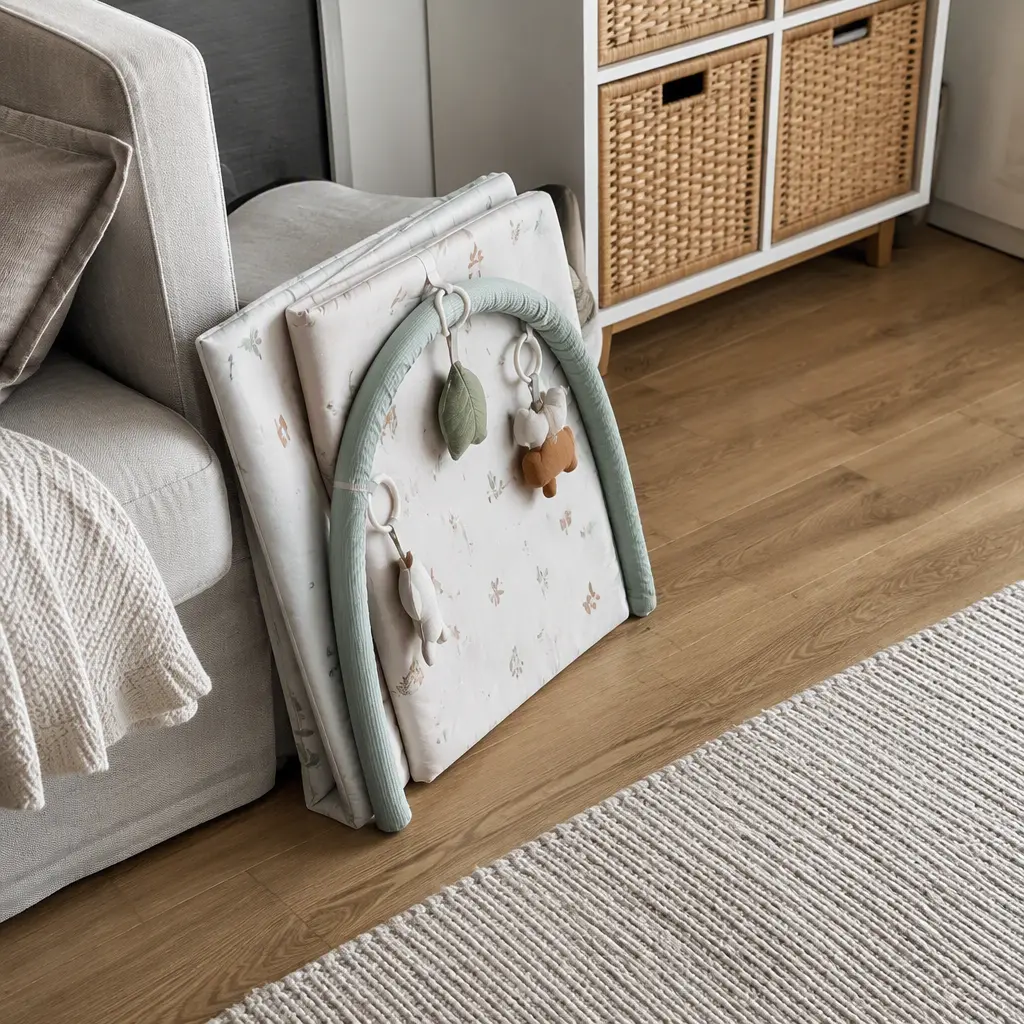
- Look at storage shape as well as size. Fold-flat frames are easier to slide behind furniture.
- Think about cleaning. Separate mats can go in the wash more easily than bulky padded gyms.
- Choose hanging toys that can be removed or swapped to keep babies interested longer.
- For noise-sensitive homes, avoid electronic versions with music if you prefer quieter play.
- Consider flooring. Homes with hard floors may benefit from a padded gym mat, while carpeted homes may not need extra cushioning.
- Check whether the toy height can adjust as babies grow and begin reaching or kicking more actively.
Age suitability
Both toy arches and play gyms are mainly designed for the first year, especially from the newborn stage through early sitting milestones. Young babies benefit from high-contrast objects, gentle movement and reachable hanging toys that encourage visual tracking and arm movement. Around three to six months, many babies become more active and begin batting, grabbing and kicking. This is often when engagement peaks. By the later crawling stage, some babies lose interest in lying under overhead toys and prefer moving around independently. A simple toy arch may feel outgrown sooner because it focuses on overhead play only, while a larger play gym with textured mats or detachable toys can continue to support tummy time and seated exploration for a bit longer. However, larger gyms also occupy more space during the months when babies become increasingly mobile.
Options compared
A basic toy arch suits parents who want minimal equipment and quick cleanup. These are often lighter, easier to move between rooms and less visually dominant in small homes. They work well for short play sessions on an existing blanket, foam mat or rug. Families who already own a tummy-time mat may prefer this simpler setup rather than adding another large item. The trade-off is that arches can feel limited after the early months if there are only a few toys or little variety in textures and positions.
Play gyms are better suited to families who want one dedicated activity area with built-in sensory features. The padded base can make daily floor play more comfortable, particularly on tile or hardwood floors. Some gyms include detachable toys that can later attach to strollers or car seats, which may extend usefulness slightly. The downside is storage. Even foldable gyms can take up a noticeable amount of closet or floor space, and larger mats may need regular washing. In very small living rooms, parents sometimes find themselves stepping around the gym all day unless it is packed away after each use.
- Toy arch: smaller footprint, faster to move and store, quieter and simpler, but often outgrown sooner.
- Play gym: more features and sensory variety, better for tummy time, potentially longer engagement, but bulkier and slower to tidy away.
- Minimalist homes: toy arches usually blend into shared living spaces more easily.
- Homes with hard flooring: padded gyms can reduce the need for extra blankets or foam tiles.
- Frequent room changes: lightweight arches are easier to carry between rooms.
- Babies who enjoy longer floor sessions: gyms may hold attention longer because there is more to explore.
Frequently asked questions
Does a baby need both a toy arch and a play gym?
Most families do not need both. A play gym already includes overhead play features, while a toy arch can provide similar stimulation in a simpler format. Choosing one usually comes down to space, storage and whether you want an all-in-one play area.
Which option is easier to store in a small apartment?
Toy arches are generally easier to store because they are lighter and often narrower. Some fold flat or can slide under furniture. Play gyms with thick mats or multiple support bars usually require more storage space even when folded.
How long do babies typically use these toys?
Interest often peaks between two and six months, when babies spend more time lying on the floor and reaching for objects. Some babies continue using parts of a play gym during sitting and early crawling stages, especially if toys detach for separate play.
Are electronic play gyms better for engagement?
Electronic features can attract attention, but they are not essential for infant play. Many parents prefer quieter, screen-free options with simple textures, mirrors and hanging toys. Non-electronic setups are also usually lighter and easier to store.
What works best in a shared living room?
Compact arches often fit shared spaces better because they can be moved quickly when adults need the room. Neutral-colored play gyms with foldable frames may also work well if you want a more permanent baby play area without overwhelming the space.
For very small homes, a toy arch is often the easier everyday choice because it creates less clutter and stores faster. A play gym makes more sense when parents want a dedicated floor-play station with extra comfort and sensory variety. Measuring the available floor area before buying is usually more helpful than comparing features alone, since even well-designed baby gear can feel oversized in compact living rooms.