Best Portable Board Games With No Loose Pieces
A parent-focused guide to compact board games for ages 6–8 that stay organized during travel, café visits, and repeated packing, with practical advice on durability, noise, and storage.
Compare prices and availability
Check current prices and availability for this guide on eBay.
As an eBay Partner, we may be compensated if you make a purchase.
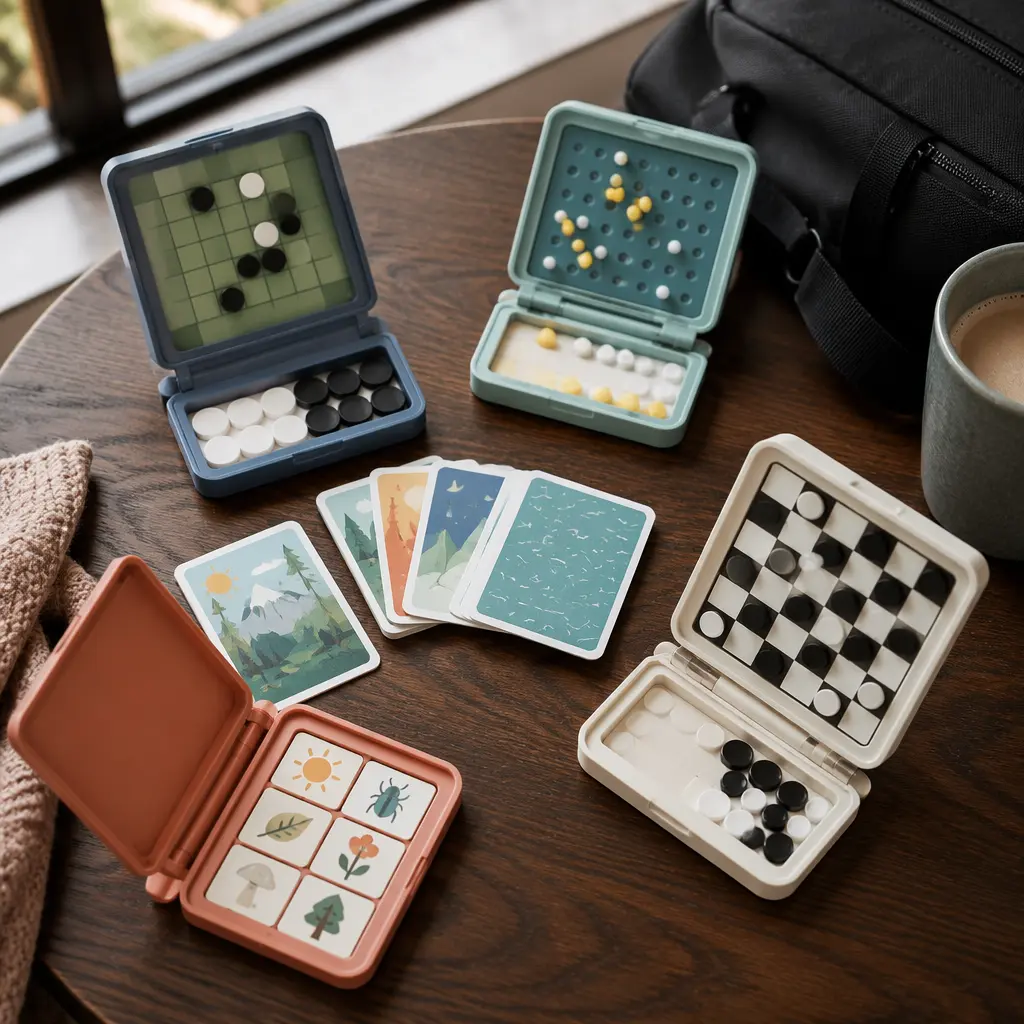
Portable board games for ages 6–8 need to solve a simple problem: keeping children engaged without creating a trail of missing pieces across the car, café floor, or hotel room. The most practical options use magnetic boards, sliding covers, dice poppers, connected components, or card-only formats that pack down quickly and survive repeated travel. For parents, the best choice often depends less on the theme and more on how the game handles storage, setup time, noise, and supervision. Some compact games are ideal for quiet restaurant waits, while others work better for road trips, airports, or short family holidays.
What to look for
Portable games without loose pieces usually trade large components for convenience, so it helps to focus on how and where the game will actually be used. A game that works well in a parked car may become frustrating during a moving train ride if pieces slide around. Likewise, a game designed for quiet thinking may not hold attention during a long journey with multiple children sharing space.
- Magnetic or attached components help prevent lost pieces during travel and make games easier to pause and resume.
- Flip-close storage cases or built-in compartments reduce packing time and lower the chance of pieces mixing together in bags.
- Card-only games are often the lightest option, but younger children may need help keeping cards organized in small spaces.
- Dice poppers or spinner-based games can be useful in cafés and cars because they reduce rolling pieces and noise.
- Short play sessions of 10–20 minutes usually work better for travel than long strategy games that require constant focus.
- Quiet gameplay matters in shared spaces. Games with plastic buzzers, loud timers, or repeated table tapping may not suit restaurants or waiting rooms.
- Durable cards with thicker finishes or wipe-clean surfaces generally cope better with repeated packing and snack-time spills.
- Games with simple rules are easier to revisit after interruptions, which is common during travel days.
Age suitability
Children aged 6–8 are often ready for more strategy and independent play, but portability changes how games feel. Smaller boards, compact cards, and travel-sized pieces can frustrate younger six-year-olds who still need more physical space to organize turns. Cooperative card games, matching games, and simple logic puzzles tend to suit the lower end of the age range, while memory-based strategy and compact abstract games often appeal more to older children around seven or eight. Parents should also consider reading demands. Many travel games rely on symbols and patterns rather than text, which can help mixed-age siblings play together more easily.
Options compared
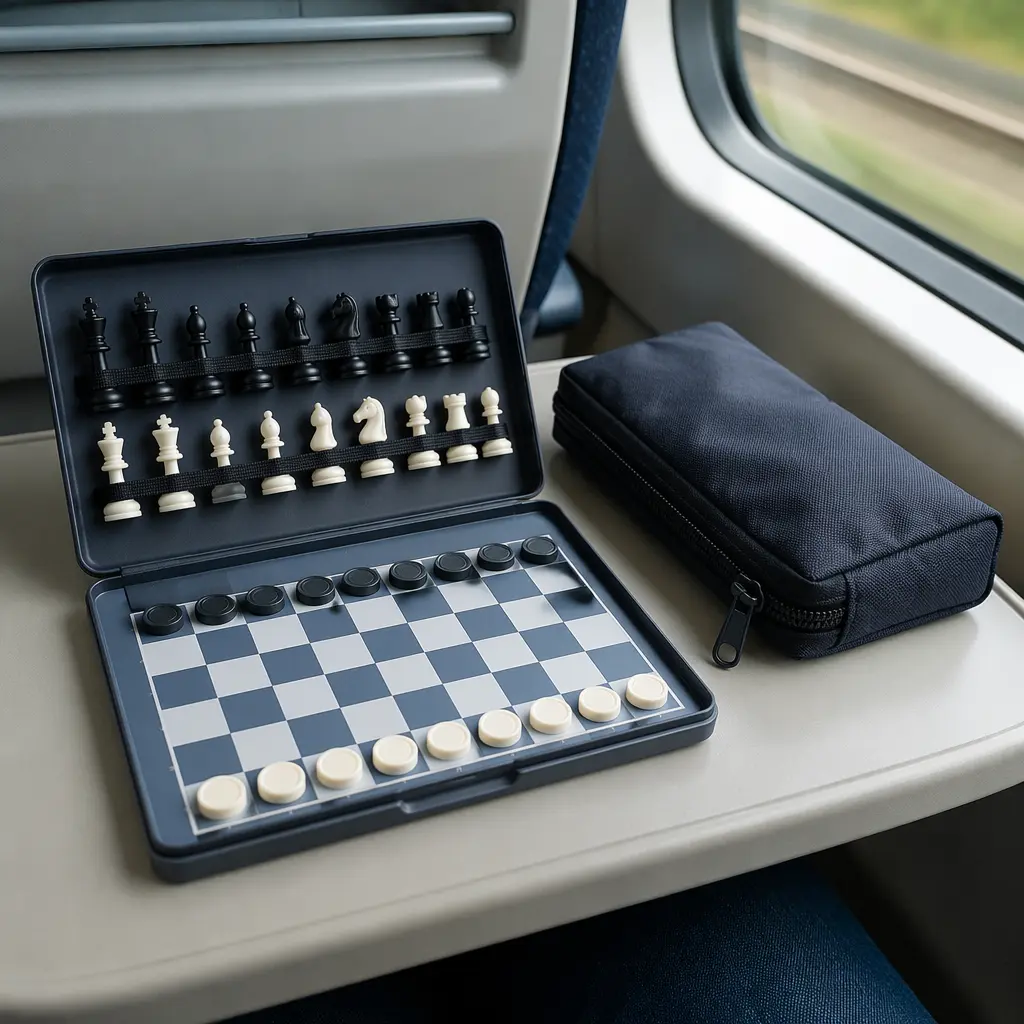
Magnetic travel games are usually the most reliable choice for moving vehicles and uneven tables. Classic strategy formats like magnetic checkers, chess, tic-tac-toe, and grid-based puzzles stay organized well and are easy to pause mid-game. They also tend to store neatly in slim cases. The trade-off is replay variety. Some children lose interest quickly if the gameplay does not change much between sessions.
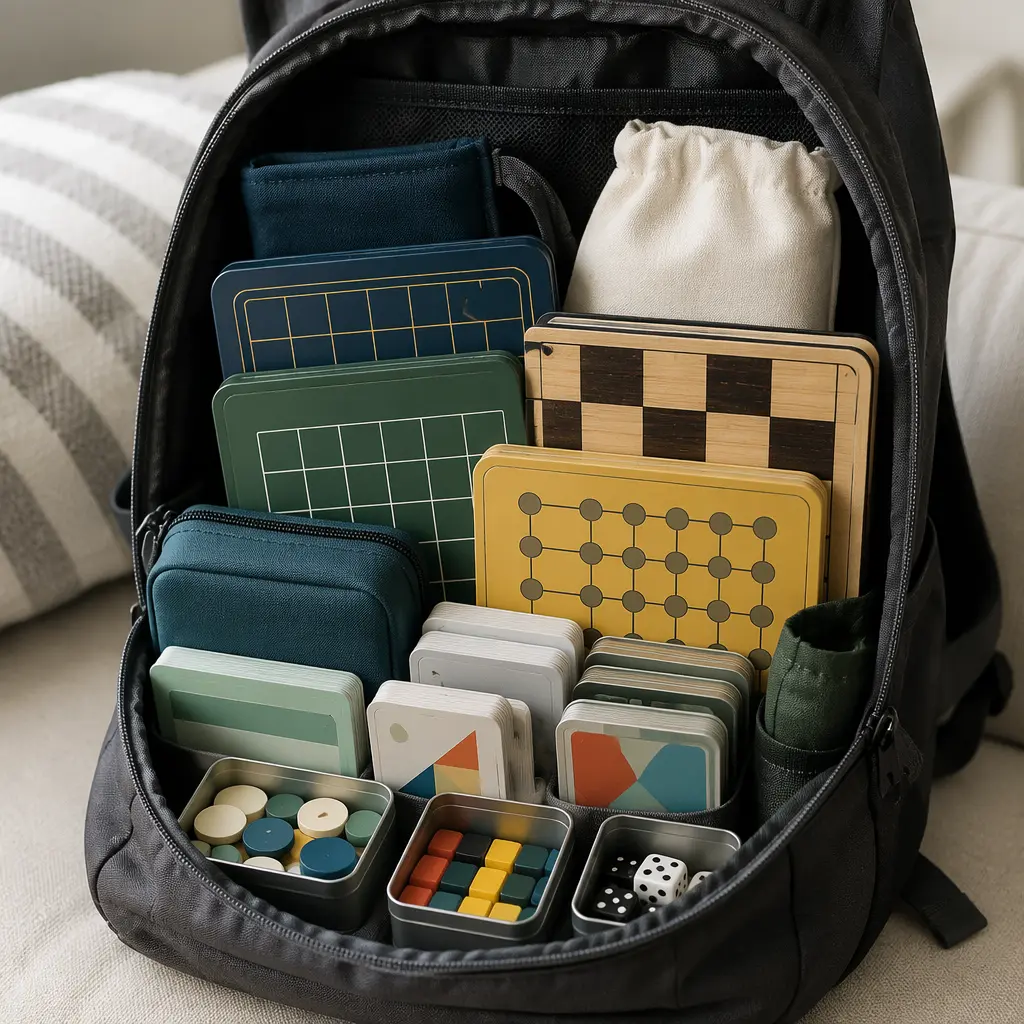
Card-only games are often better for families who want lightweight entertainment that fits into a handbag or coat pocket. Many modern card games for this age group focus on matching, memory, teamwork, or simple strategy while avoiding large boards entirely. These games usually set up quickly and work well in cafés or airports. However, cards can bend or scatter more easily than magnetic pieces, especially in windy outdoor settings or cramped seating.
- Magnetic board games: Best for cars, trains, and situations where pieces could slide away. Usually quieter and easier to store, but some have smaller play areas that may frustrate younger players.
- Flip-and-play puzzle games: Good for solo travel entertainment and independent thinking. Compact and mess-free, though they may not encourage group interaction.
- Card tin games: Lightweight and flexible for family travel. Better for varied gameplay, but cards can wear faster with repeated packing.
- Dice popper games: Useful for children who enjoy chance-based gameplay without chasing dice across the floor. Often noisier than card games.
- Connected-piece games: Some travel games use linked tiles or attached components that fold into the case. These are practical for younger children who struggle with organization.
- Trivia or word-based travel games: Better suited to confident readers near the top of the age range. Less ideal for tired travel moments when concentration drops.
Frequently asked questions
Are magnetic travel games strong enough for car trips?
Many magnetic games are designed specifically for travel and hold pieces reasonably well during normal movement. They are usually more dependable than standard board games in cars or trains, though sudden drops or sharp turns can still dislodge pieces.
What type of portable game works best in restaurants?
Quiet card games, compact logic puzzles, and small magnetic strategy games tend to work best in cafés and restaurants. Games with loud electronic sounds, large setups, or fast-moving rounds can become disruptive in shared spaces.
Do travel-sized games feel too small for children?
Some do. Children at the younger end of the 6–8 range may find very small cards or tiny boards harder to manage. Slightly larger compact games often balance portability and comfort more successfully than ultra-mini versions.
Are solo travel games worth considering?
Solo puzzle games can be useful during long waits, flights, or situations where siblings want different activities. They also reduce arguments over turns and can encourage independent concentration without screens.
How can parents avoid losing pieces during trips?
Games with built-in storage, zip cases, magnetic components, or connected pieces are usually the easiest to manage. Keeping one small pouch or travel organizer specifically for games also helps prevent parts getting mixed with snacks, chargers, or crayons.
The most useful portable board games are not always the smallest or most complex. For ages 6–8, durable design, simple cleanup, and flexible play matter more than novelty. A compact game that survives repeated packing and can be played almost anywhere will usually see far more use than a larger set that stays at home. Choosing a format that matches your family’s travel habits, noise tolerance, and available space can make journeys and waiting times noticeably easier without relying on screens.