Board Games for Kids Who Struggle With Losing
A parent-focused guide to cooperative and low-conflict board games for children aged 6–8 who find losing difficult, with practical tips on challenge level, pacing, noise, and supervision.
Compare prices and availability
Check current prices and availability for this guide on eBay.
As an eBay Partner, we may be compensated if you make a purchase.
Some children enjoy competition right away, while others become overwhelmed by losing, sudden rule changes, or direct conflict during play. That does not mean board games are a poor fit. For children aged 6–8, the right game structure can make a major difference. Cooperative games, team-based play, and lower-conflict mechanics allow children to practise patience, planning, and emotional regulation without every round ending in frustration. The goal is not to remove challenge completely. Instead, it helps to choose games where mistakes feel recoverable, turns move quickly, and players work toward shared goals rather than focusing on who failed.
What to look for
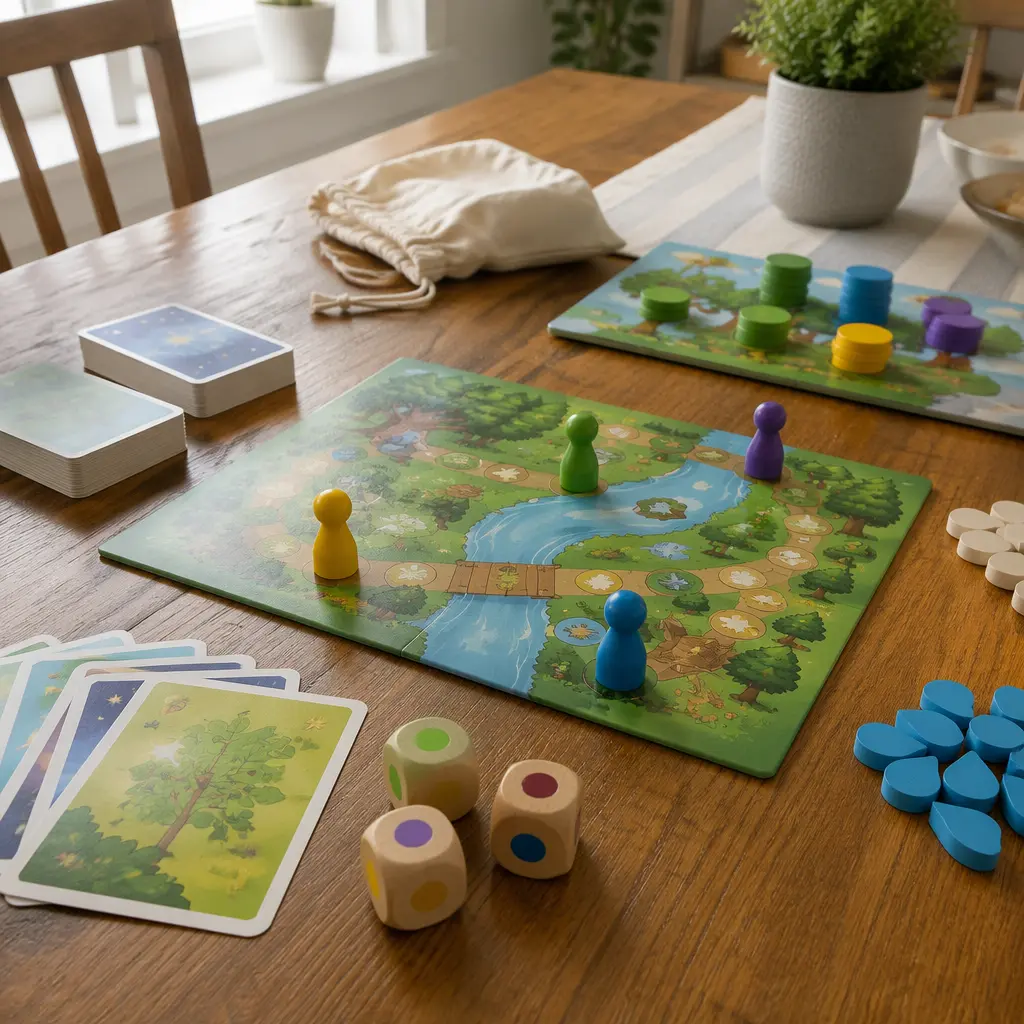
Games for children who struggle with losing tend to work best when the experience stays predictable, collaborative, and short enough to avoid emotional overload. Many parents find that the structure of the game matters more than the theme. A child who melts down during direct competition may still enjoy a challenging game if the pressure is shared across the group.
- Cooperative goals where players win or lose together instead of against each other
- Short turns that keep waiting time low and reduce frustration
- Limited player elimination so nobody sits out while others continue playing
- Clear visual rules and simple scoring that are easy to follow
- Adjustable difficulty levels that allow families to scale challenge gradually
- Low-noise components if your child becomes overstimulated easily
- Compact storage if the game will be used regularly in shared family spaces
Age suitability
The 6–8 age range covers a wide span of emotional and cognitive development. Some children can manage strategic planning and competitive setbacks comfortably by age six, while others still need highly structured play with adult guidance. Cooperative games often work especially well at this stage because they encourage discussion and shared decision-making. Games with reading-heavy instructions may frustrate younger six-year-olds unless an adult helps. For older children in this range, light strategy games with indirect competition can build resilience gradually without creating the high-pressure feeling of winner-takes-all play.
Options compared
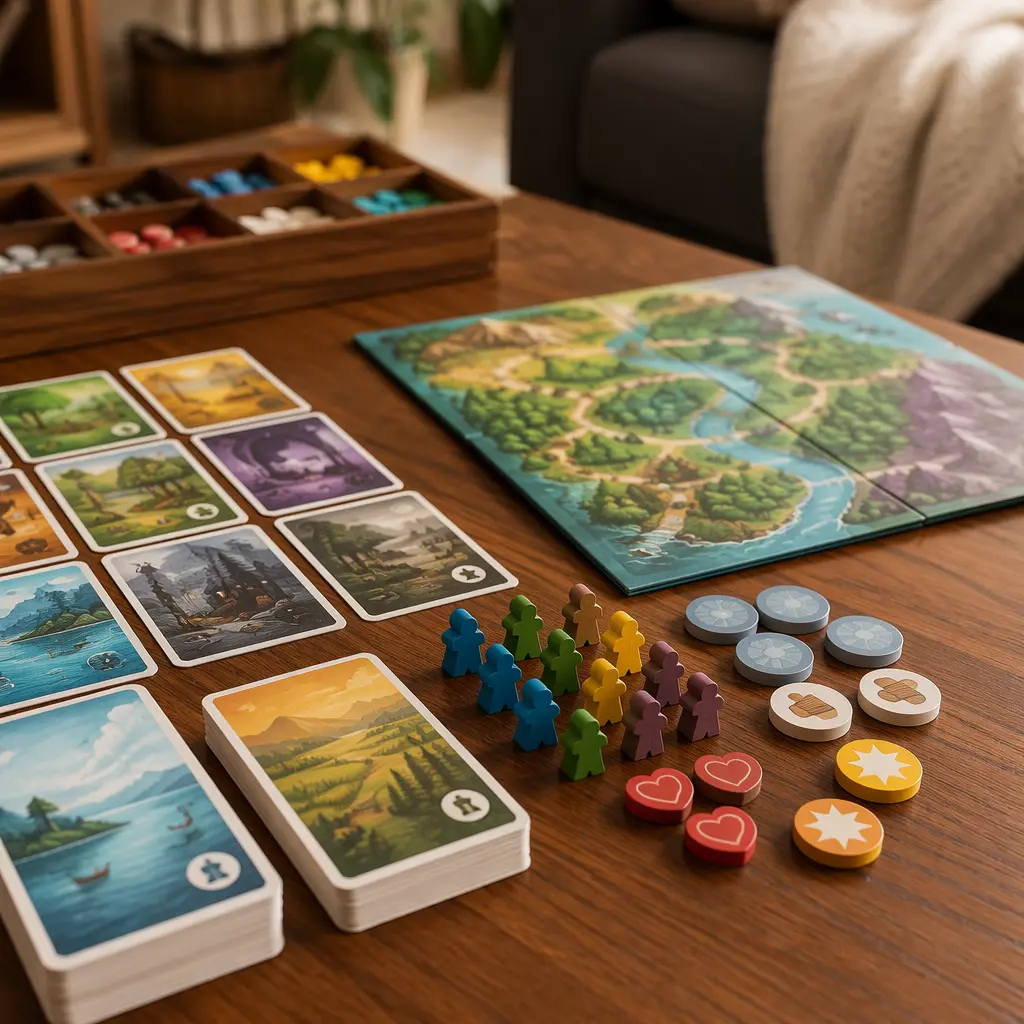
Cooperative board games are usually the safest starting point for children who react strongly to losing. In these games, players solve a problem together, such as escaping a maze, completing a mission, or protecting shared resources before time runs out. The shared outcome reduces blame between players and encourages discussion instead of rivalry. These games often suit children who become upset when singled out or who stop participating after setbacks.
Team-based games can also work well, especially for children who still enjoy excitement and competition but struggle with one-on-one defeat. Playing in pairs spreads responsibility across the group and can make losses feel less personal. However, team games may create tension if one child feels blamed by teammates, so they usually work best with supportive siblings or patient adults.
- Cooperative adventure games: Best for children who enjoy storytelling, teamwork, and shared problem-solving. Usually require moderate supervision for rules and pacing.
- Memory and matching games with shared goals: Good for younger or easily frustrated children because rounds stay short and outcomes feel less harsh.
- Low-conflict strategy games: Suitable for children ready to practise resilience gradually. These games include planning and decision-making without heavy player attacks or stealing mechanics.
- Dexterity games with playful outcomes: Useful for energetic children because mistakes often feel funny rather than punitive. Noise and space requirements can be higher.
- Classic competitive games with adjustable house rules: Some families reduce stress by removing harsh penalties, shortening play sessions, or focusing on cooperative scoring goals instead of strict winners and losers.
Frequently asked questions
Should children avoid competitive games entirely?
Not necessarily. Many children benefit from learning how to handle competition gradually. The key is choosing games with lower emotional stakes, shorter rounds, and opportunities to recover from mistakes. Starting with cooperative play can help build confidence before moving into more direct competition.
What if a child gets upset even during cooperative games?
Some children become frustrated by time pressure, complicated rules, or feeling corrected by other players. Simpler games with fewer decisions may help at first. Adults can also model calm reactions to setbacks and avoid turning every mistake into a teaching moment during play.
Are card games better than board games for emotional regulation?
Card games often have faster setup and shorter play sessions, which can help children who lose focus easily. However, some card games rely heavily on take-that mechanics, where players block or remove each other's progress. Cooperative or pattern-building card games are usually a gentler fit for children sensitive to losing.
How long should game sessions last for this age group?
For many children aged 6–8, games lasting around 15 to 30 minutes are easier to manage emotionally. Longer games can increase fatigue and make losses feel more intense, especially after a difficult school day or during group play with siblings.
Do cooperative games still teach resilience?
Yes. Cooperative games still involve setbacks, problem-solving, and occasional losses. Children practise patience, flexible thinking, and communication while experiencing challenge in a less confrontational format. Over time, this can help some children feel more comfortable with competitive play as well.
The best board game for a child who struggles with losing is usually one that keeps everyone engaged without creating unnecessary pressure. Cooperative adventures, low-conflict strategy games, and short team-based activities can all support emotional growth while still feeling fun and challenging. Choosing games with manageable play times, clear rules, and flexible difficulty often matters more than finding the newest or most complex option.