Briarpatch I Spy Mystery and the Jump From Books to Board Games
Briarpatch I Spy Mystery turned the familiar seek-and-find format into a fast-paced family board game, blending visual puzzles, memory, and cooperative deduction for mixed-age play.
Compare prices and availability
Check current prices and availability for this guide on eBay.
As an eBay Partner, we may be compensated if you make a purchase.
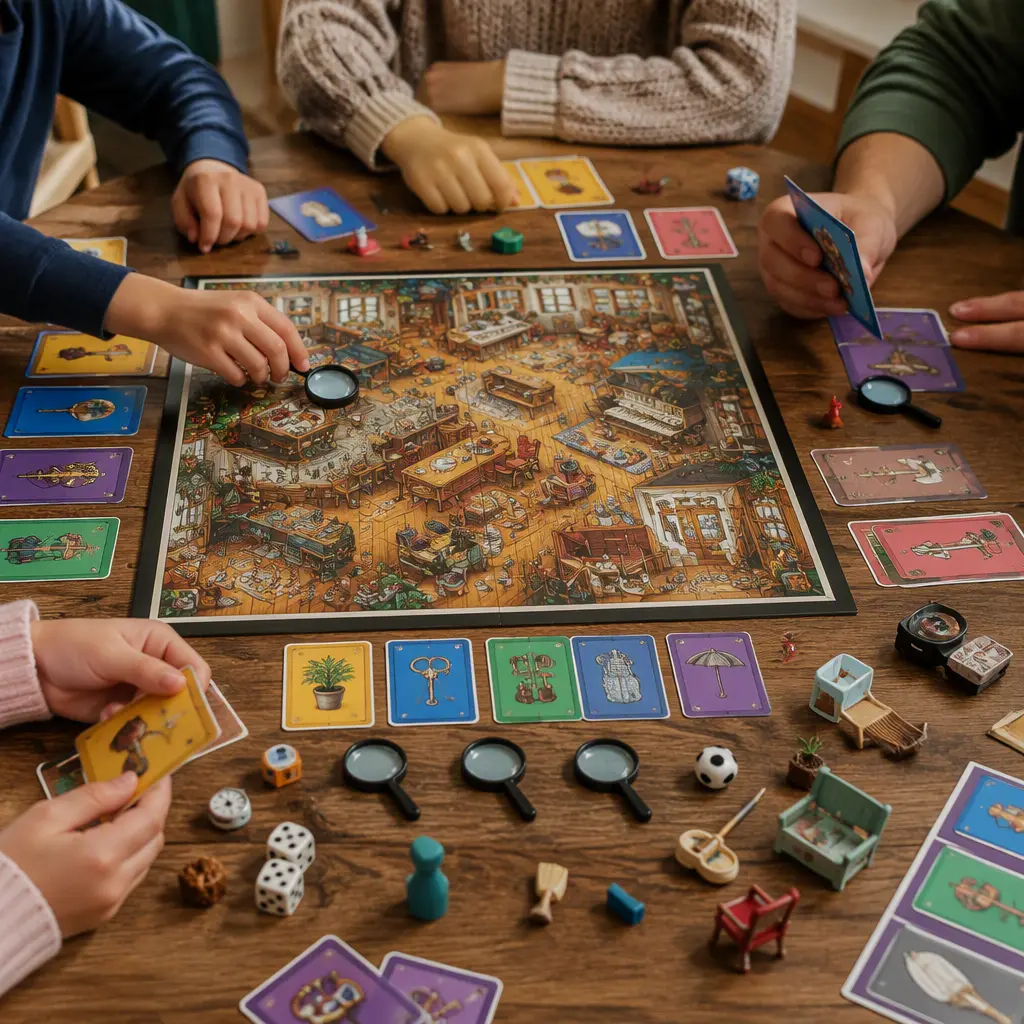
Briarpatch I Spy Mystery arrived at a moment when many children's games were trying to compete with faster digital entertainment, and it did so by leaning into something tactile and familiar. Inspired by the hugely popular I Spy books, the game transformed hidden-object searching into a tabletop race built around observation, memory, and quick decision-making. Instead of quietly flipping through pages alone, players suddenly had to search together, compare clues, and react under pressure. That shift helped the game stand out in the crowded family board game market of the late 2000s.
Where it came from
The roots of I Spy go back well before the board game itself. The original I Spy books, created by author Jean Marzollo and photographer Walter Wick, became a publishing phenomenon during the 1990s. Their formula was simple but unusually effective: highly detailed photographs packed with carefully arranged objects, paired with rhyming riddles that challenged readers to locate specific items. The books rewarded patience and attention in a way that felt playful rather than academic, which made them popular in classrooms as well as homes.
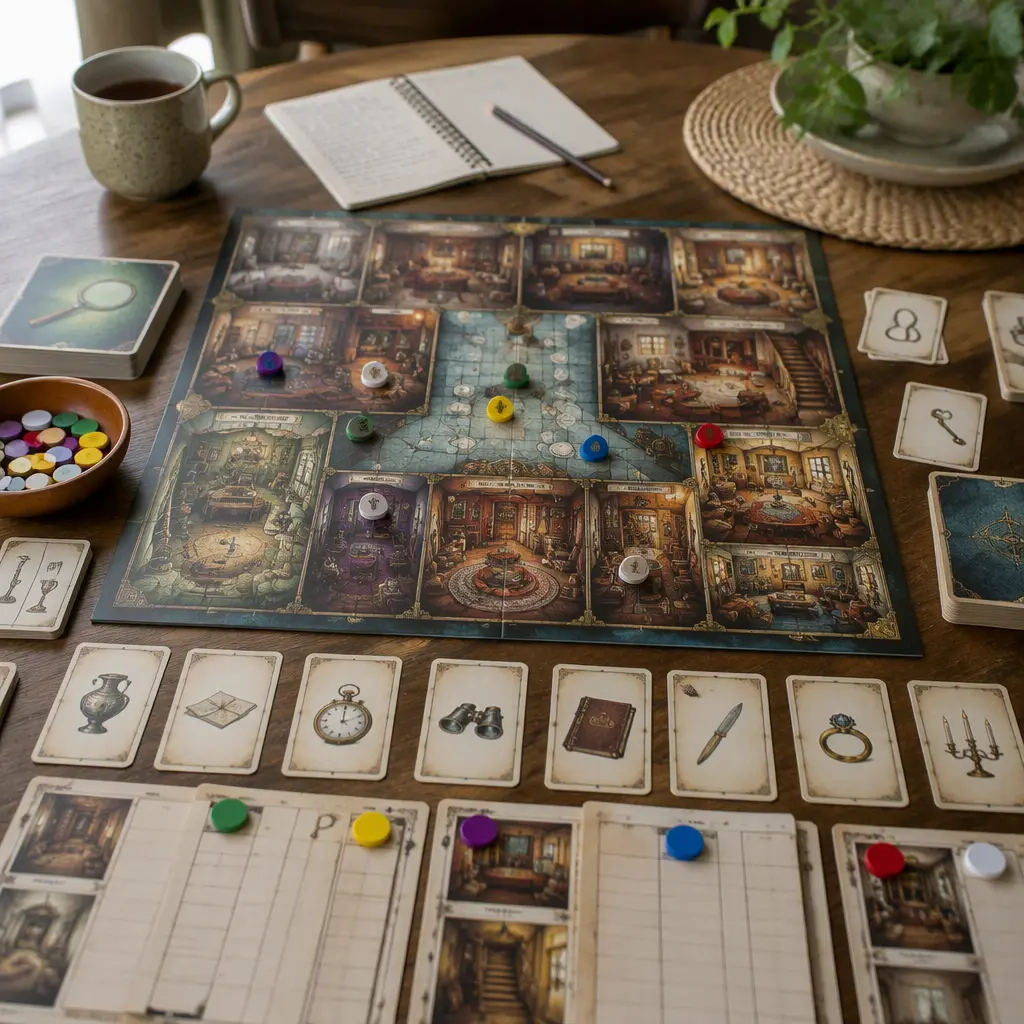
By the time Briarpatch released I Spy Mystery in 2009, the franchise already had a strong identity built around visual discovery. Briarpatch specialized in children's games and educational entertainment, making the transition into board games a natural fit. Instead of merely reproducing book pages on cardboard, the designers built a game structure around suspense and movement. Players explored rooms, uncovered clues, and tried to solve a mystery before the game ran out of time. It kept the hidden-object DNA of the books but added cooperation, competition, and pacing that worked better around a table.
Why it works
What makes I Spy Mystery memorable is the way it turns observation into action. Many seek-and-find activities are solitary and slow by design. This game changes the rhythm completely. Players are encouraged to scan quickly, communicate, and connect clues under mild pressure. Younger players can contribute because the challenge is visual rather than heavily strategic, while adults often become surprisingly competitive once the timer and mystery elements start pushing the pace.
The design also benefits from accessibility. Players do not need extensive rules knowledge or long setup times to understand the core idea. Spotting objects is intuitive, and the mystery framing gives the activity a narrative purpose. That combination helped the game work for mixed-age families, especially households looking for alternatives to trivia-heavy or highly complex board games.
- Seek-and-find gameplay adapted into a multiplayer format
- Strong visual focus that works across age groups
- Short rounds that keep younger players engaged
- Mystery and clue elements that add structure beyond simple object hunting
- Cooperative and competitive play styles depending on house rules
- Easy-to-understand mechanics with low reading requirements
Who it's for
I Spy Mystery is aimed primarily at children and families, but it has broader appeal than its packaging might suggest. Early elementary-age players can participate because object recognition and visual scanning are the central skills, not advanced reading or math. Older children often enjoy the speed and puzzle-solving aspects, while adults tend to appreciate the nostalgic connection to the original books. The game works especially well in households where players have different skill levels, since quick observation can sometimes outperform experience with traditional strategy games.
Variants and what to look for today
Because I Spy existed across books, software, puzzles, and games, families often encounter multiple versions at once. Briarpatch produced several hidden-object and puzzle-oriented titles connected to the I Spy brand, though the mystery-focused tabletop format remains one of the more distinctive adaptations. Some editions emphasize cooperative clue solving, while others focus more directly on speed searching or matching mechanics.
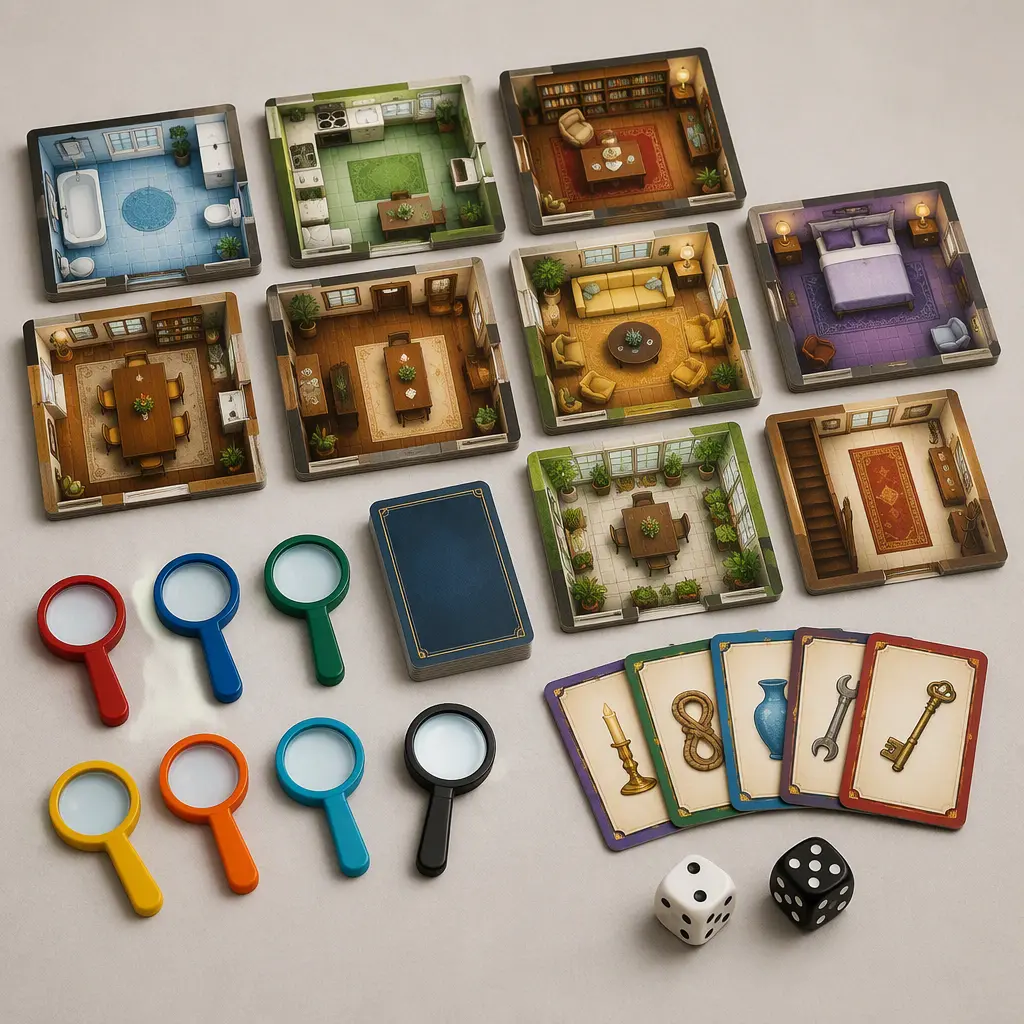
Anyone shopping for the game today will mostly find it through secondhand marketplaces, educational resellers, or family game retailers that carry older catalog titles. Condition matters more than with many board games because the experience depends heavily on complete visual components. Missing cards or clue pieces can noticeably affect gameplay. Families should also pay attention to whether a used copy includes all tokens, timers, and room elements.
- Look for complete component sets, especially cards and clue pieces
- Check box condition if buying secondhand, since storage wear is common
- Younger players often prefer editions with larger visual elements
- Avoid low-quality unofficial reproductions with blurry artwork
- Consider other I Spy tabletop games if you want shorter or more travel-friendly sessions
Frequently asked questions
Is I Spy Mystery cooperative or competitive?
Different households play it differently, which is part of its flexibility. Most official versions include competitive elements, but many families naturally shift toward cooperative play when younger children are involved.
Does the game require strong reading skills?
Not particularly. Observation and object recognition are more important than advanced reading ability. Younger players can often participate fully with minimal assistance.
Why did the I Spy books adapt so well into games?
The original books already encouraged active participation. Readers were scanning busy scenes, racing to spot details, and comparing discoveries with other people nearby. Turning that energy into tabletop gameplay was a natural extension of the format.
Is it still relevant compared with modern app-based puzzle games?
For many families, yes. The physical act of searching together around a table creates a different social experience from solo screen-based puzzle games. It encourages conversation, teamwork, and shared attention in ways digital versions often do not.
Briarpatch I Spy Mystery represents a specific era of family entertainment when publishers were experimenting with ways to turn familiar media into shared tabletop experiences. Rather than simply borrowing artwork from the books, the game captured the appeal that made I Spy memorable in the first place: the satisfaction of noticing details that others missed. More than a decade later, it still works because that basic pleasure remains timeless, whether it happens on a printed page or around a crowded game table.