Best Clip-Together Toys for Kids Who Hate Cleanup
A parent-focused guide to clip-together toys for toddlers ages 1–2, with practical advice on storage, cleanup, durability, supervision, and which toy styles work best for calmer play.
Compare prices and availability
Check current prices and availability for this guide on eBay.
As an eBay Partner, we may be compensated if you make a purchase.
Clip-together toys can be a good fit for toddlers who enjoy building but quickly lose interest when cleanup becomes overwhelming. For children ages 1–2, the best options usually use large chunky pieces that connect easily, stay contained in a small play area, and are simple for adults to sort back into a bin. Many parents also prefer systems with fewer tiny accessories, since scattered parts can turn a short play session into a long cleanup routine. The right set depends on how much floor space you have, how independently your child plays, and whether you want open-ended construction or more guided stacking and matching activities.
What to look for
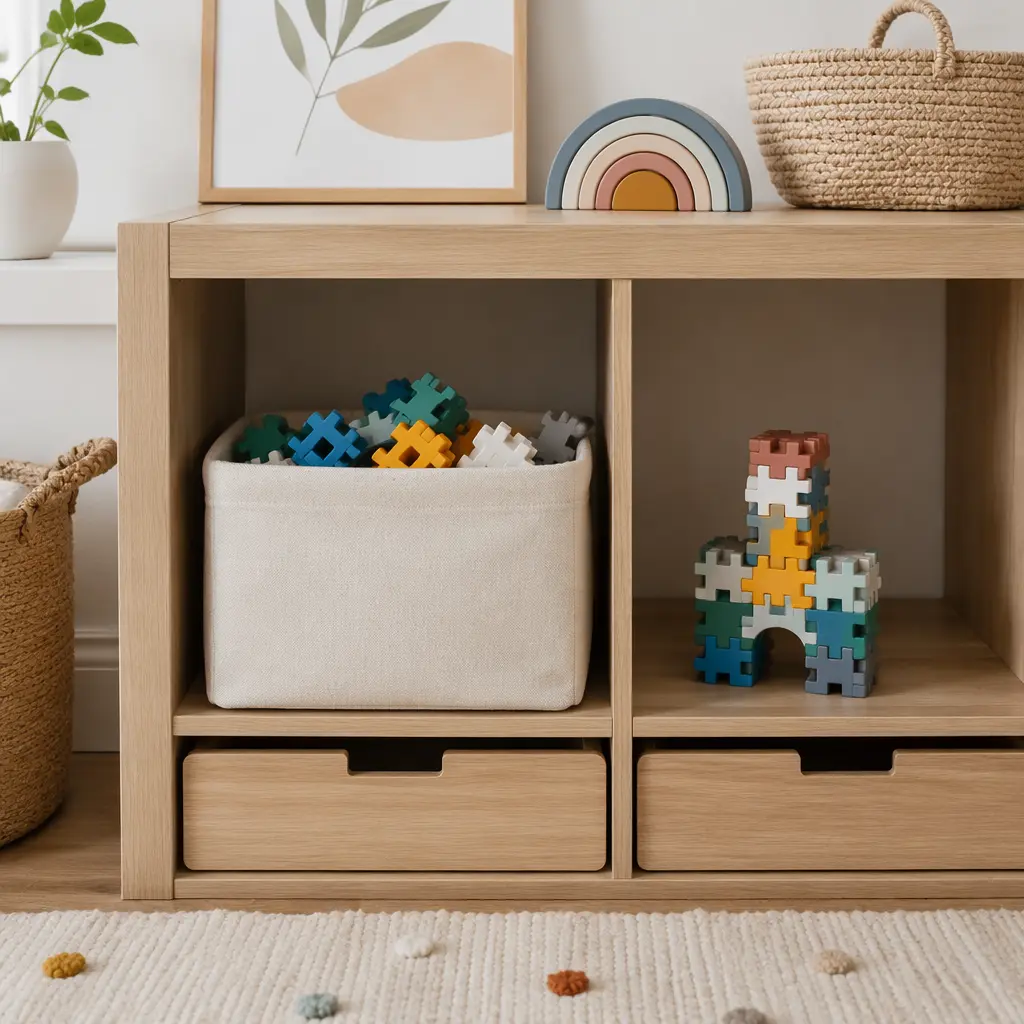
For toddlers, cleanup-friendly building toys are usually less about the exact brand and more about how the pieces behave during play. Large interlocking parts are easier to gather, harder to lose under furniture, and safer for young children still exploring with their mouths. Some systems encourage sprawling builds across the entire room, while others naturally stay compact in a tray or basket. Storage design matters too. A toy that comes with a sturdy tub or can fit into one small container is often easier to maintain long term than a set that spreads across multiple bags and accessory packs.
- Choose chunky pieces that are easy for small hands to connect and separate without frustration.
- Look for sets with limited accessory pieces so cleanup stays fast and predictable.
- Consider softer plastic or rounded edges if your toddler tends to throw toys during play.
- Compact systems work well for apartments, shared playrooms, or homes with limited storage.
- Simple color sorting or shape-matching pieces can add learning value without increasing mess.
- Avoid sets with very small connectors or decorative add-ons that easily disappear under furniture.
- If noise is a concern, lightweight plastic pieces are usually quieter than wood blocks dumped into bins.
Age suitability
Most clip-together construction toys labeled for ages 1–2 focus on basic fine motor skills rather than detailed building. Toddlers in this age range are typically learning how to push pieces together, pull them apart, stack, sort, and carry objects between containers. Very advanced building systems designed for older preschoolers can feel frustrating because the connectors may require more hand strength or coordination. Younger toddlers often benefit from sets with fewer than 30 pieces at first, while older two-year-olds may enjoy larger collections that allow simple pretend structures like trains, animals, or towers. Some children also prefer toys that click together loosely rather than tightly, especially during the early stages of independent play.
Options compared
Large peg-and-socket systems are often the easiest category for cleanup. These toys usually use oversized rounded pieces that connect in straightforward ways and can be swept into one storage basket quickly. They suit toddlers who enjoy repetitive connecting and pulling apart motions more than complex building. Because the pieces are bulky, they are less likely to disappear into couch cushions or get mixed into other toy bins. The trade-off is that builds may look less detailed, so older toddlers sometimes outgrow them sooner.
Chunky brick-style construction sets are another popular option for ages 1–2. Compared with peg systems, they tend to support more recognizable structures like houses, vehicles, or animals. They also stack compactly for storage. However, larger sets can spread widely during play if a child enjoys dumping all the pieces out at once. Some parents prefer limiting the number of bricks available at one time and rotating the rest into storage to keep cleanup manageable.
- Clip-linked chain toys suit toddlers who enjoy sensory movement and flexible building. They are lightweight and portable but can tangle if stored loosely.
- Magnetic toddler construction sets can feel satisfying and quick to assemble, but they usually require closer supervision and careful age checking.
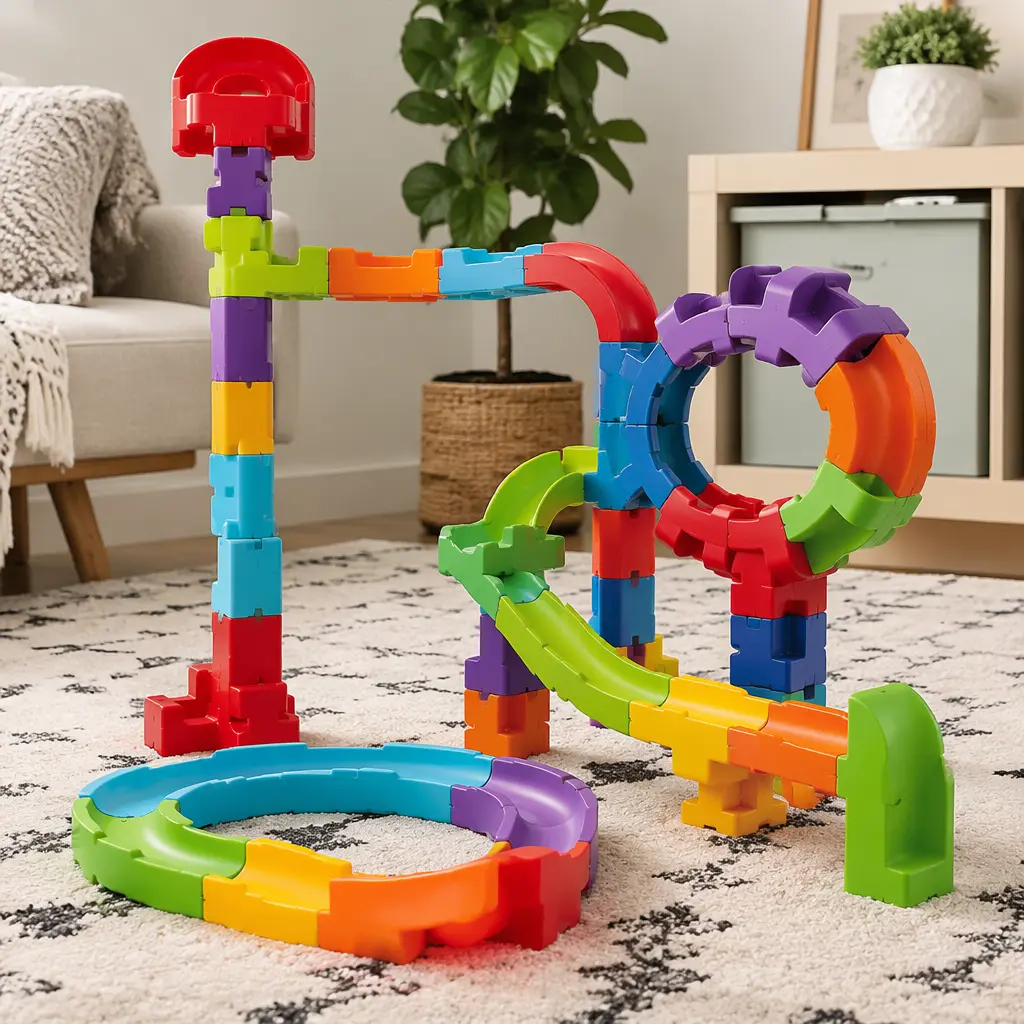
- Pop-together tubes and gears encourage motion and cause-and-effect play. They are engaging but may create more noise during active play sessions.
- Wood-and-plastic hybrid systems often look calmer in shared living spaces and can feel more durable, though they are sometimes heavier when dumped onto hard floors.
- Travel-sized clip systems with carrying cases work well for car trips or restaurant outings because the pieces stay contained in one place.
Frequently asked questions
How many pieces should a toddler construction set include?
For most children ages 1–2, smaller sets are easier to manage and less overwhelming. Around 15–40 large pieces is often enough for open-ended play without creating major cleanup problems. Larger collections can still work well if pieces are divided into smaller bins or rotated over time.
Are clip-together toys good for independent play?
Many are designed specifically for short independent play sessions because the actions are repetitive and easy to understand. Toddlers often enjoy connecting, separating, stacking, and transporting pieces on their own. Simpler systems usually hold attention longer than toys with complicated instructions at this age.
What storage setup works best?
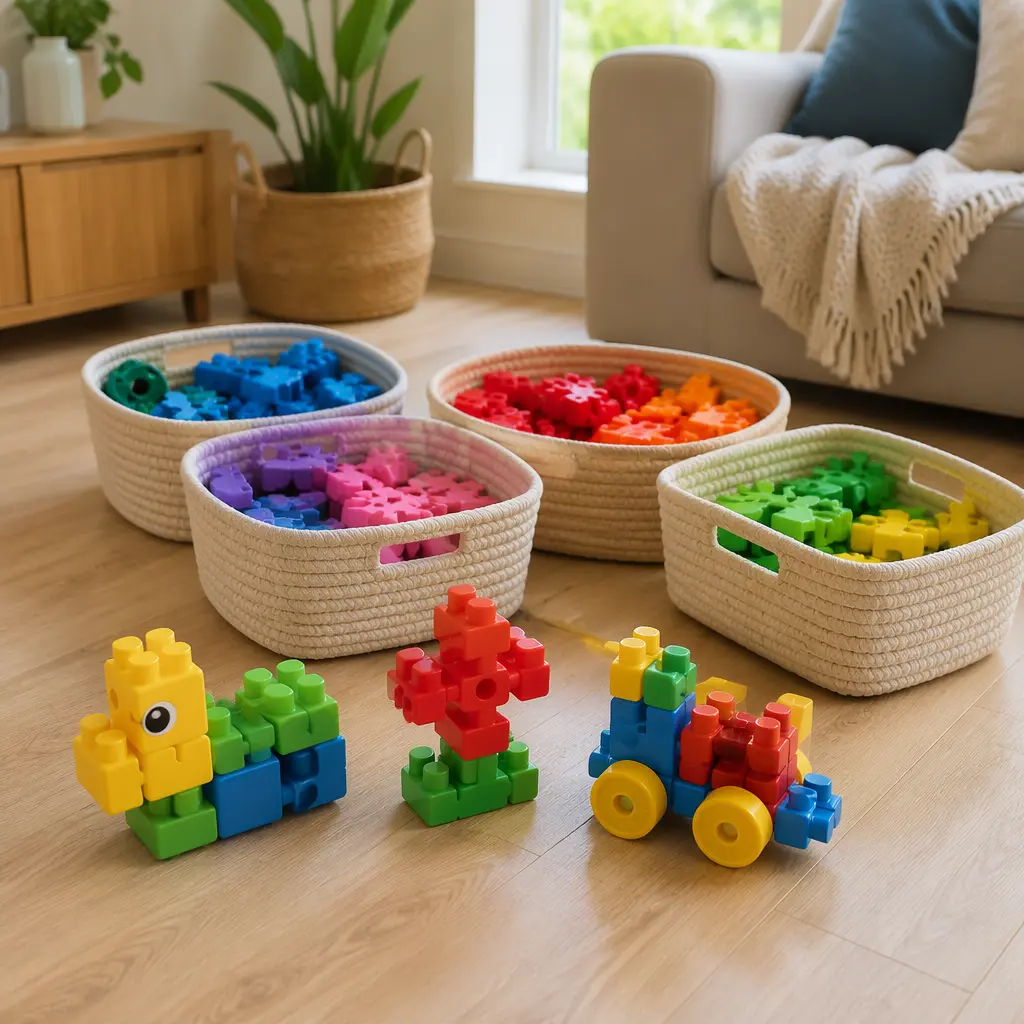
Open bins with wide tops are usually easier than narrow boxes or bags. Toddlers can help with cleanup more successfully when pieces can simply be dropped into one container. Shallow baskets also make it easier to see all the pieces without dumping everything onto the floor.
Do these toys create a lot of noise?
Noise levels vary more than many parents expect. Hollow plastic tubes and gears can become loud when shaken or dumped repeatedly, while softer chunky bricks are usually quieter. Foam play mats or rugs can also reduce the sound of pieces falling onto hard floors.
Can clip-together toys help fine motor development?
Yes. Connecting and separating pieces encourages hand strength, coordination, and controlled movement. Toddlers also practice spatial awareness, sorting, and simple problem-solving while experimenting with how pieces fit together.
The most cleanup-friendly clip-together toys for toddlers are usually the ones with large durable pieces, simple connection systems, and storage that fits naturally into everyday routines. A contained toy system does not guarantee a perfectly tidy floor, but it can reduce scattered parts, shorten cleanup time, and make independent play easier to manage in busy homes. Choosing a set that matches your child’s attention span, motor skills, and available play space is often more useful than choosing the biggest collection available.