Wooden Train Tracks vs Tape Roads for Tiny Apartments
Choosing between wooden train tracks and tape roads for a small home? This guide compares storage, setup space, replay value, floor concerns, noise and age suitability for ages 3–5.
Compare prices and availability
Check current prices and availability for this guide on eBay.
As an eBay Partner, we may be compensated if you make a purchase.
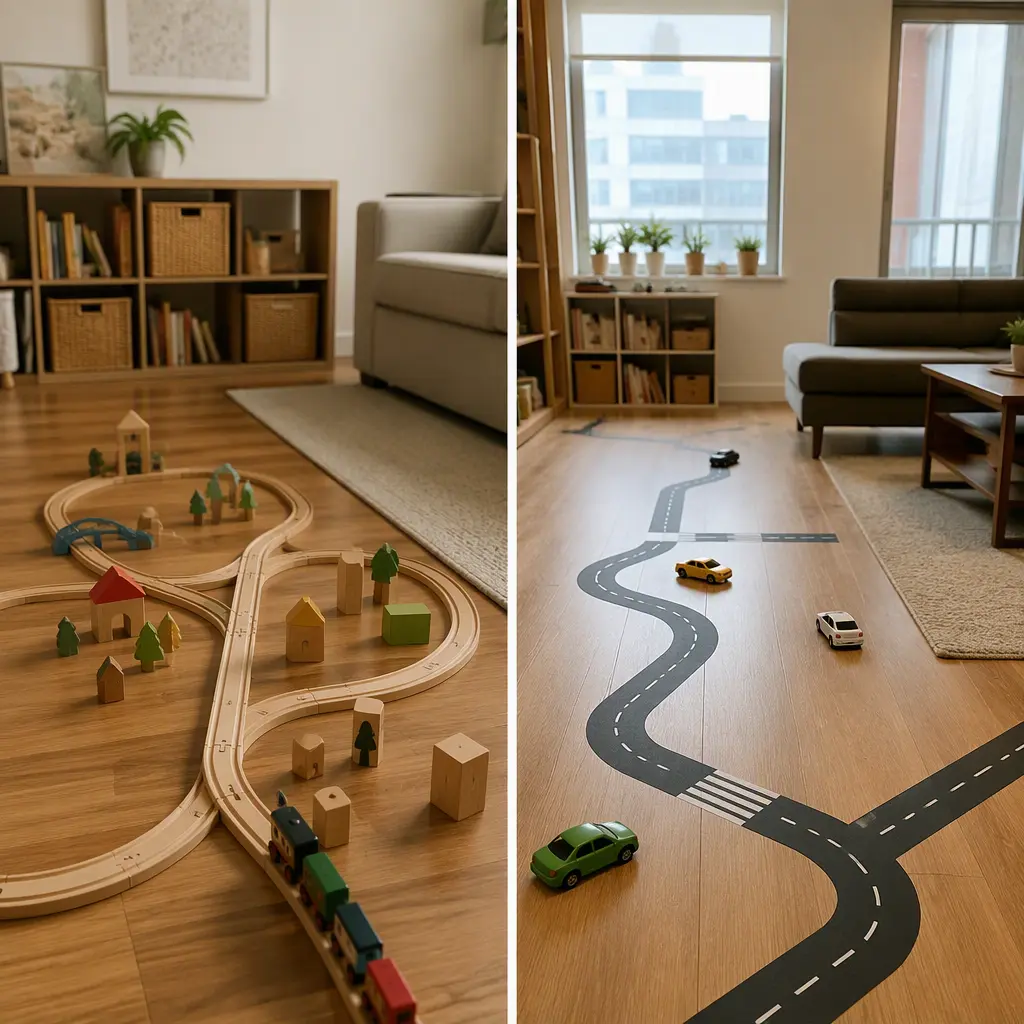
For families living in apartments or shared spaces, large playsets can become a daily storage problem. Wooden train tracks and removable tape roads are both popular screen-free play options for preschoolers, but they work very differently in small homes. One creates a reusable building system with physical pieces to connect and rebuild, while the other turns the floor into an instant road layout with minimal equipment. The better choice often depends less on the toy itself and more on your available floor space, storage limits, flooring type and how your child prefers to play. Parents also need to think about noise, cleanup, replay value and whether the setup can realistically stay out between play sessions.
What to look for
In a small apartment, the practical details matter as much as the play experience. Some toys are easy to pack away but require frequent reassembly. Others provide richer building play but quickly spread across the floor. Before choosing, think about how often your child likes to rebuild layouts, whether the play area doubles as a dining or living space, and how tolerant your household is of clutter and noise.
- Setup footprint: Wooden tracks usually need a dedicated floor area because layouts expand outward. Tape roads can fit narrow hallways, corners or temporary play zones.
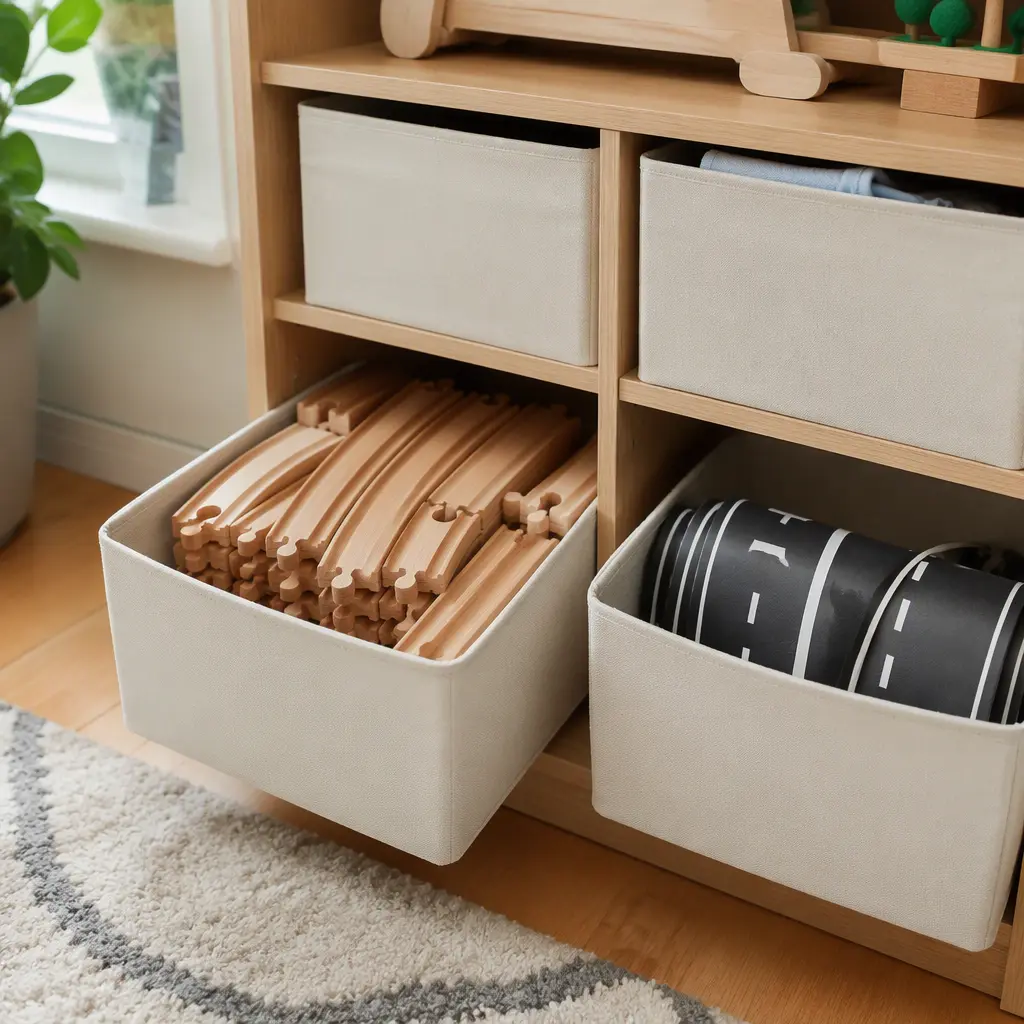
- Storage burden: Tape rolls and a few toy cars take very little storage space. Wooden train systems require bins, shelves or under-bed storage for tracks, bridges and trains.
- Replay value: Train tracks encourage construction, problem-solving and route changes. Tape roads rely more on imaginative vehicle play than building.
- Floor concerns: Some removable tapes may leave residue on delicate finishes if left down too long. Wooden tracks are less likely to affect flooring but can slide on smooth surfaces.
- Noise level: Wooden trains and track pieces can create more clattering on hardwood floors. Tape roads are quieter because the play surface is flat.
- Cleanup time: Tape roads are fast to set up but may need careful removal. Wooden sets take longer to sort and store after play.
- Durability: Quality wooden tracks can last for years and often work across compatible systems. Tape roads are lower-cost but may lose stickiness or tear over time.
Age suitability
For ages 3 to 5, both toy types can work well, but they support different developmental stages. Younger preschoolers often enjoy the simplicity of tape roads because they can begin vehicle play immediately without needing to connect pieces correctly. Children closer to age 5 may get more long-term engagement from wooden train systems because the building process itself becomes part of the fun. Some children also enjoy combining both approaches by placing roads around train layouts for mixed transport play. Families with siblings should consider that wooden train tracks usually offer more cooperative building opportunities, while tape roads tend to support parallel play with cars and figures. Apartment living can also influence age suitability: younger children may become frustrated if large track systems must be packed away every evening.
Options compared
Wooden train tracks are usually the stronger choice for families looking for long-term replay value and construction-focused play. The pieces can be rearranged endlessly, allowing children to experiment with layouts, bridges, stations and obstacle placement. Many systems are designed around compatible track sizes, making it easier to add pieces gradually over time instead of buying one very large set at once. This type of play suits children who enjoy building, problem-solving and repeating projects with small variations. It also works well for households that can dedicate at least part of a room to temporary setups.
Tape roads are often more practical in very small apartments where floor space changes constantly. A temporary road can run around a coffee table, along a hallway or through a bedroom and then disappear quickly at cleanup time. They are usually quieter than wooden train systems and easier to carry during travel or visits to grandparents. However, the play pattern is simpler. Once the roads are placed, most of the activity comes from driving toy vehicles rather than constructing the environment itself. Families who dislike toy clutter or who need fast evening cleanup may prefer this approach, especially if storage space is extremely limited.
- Choose wooden train tracks if your child enjoys building systems, collaborative play and changing layouts repeatedly.
- Choose tape roads if storage space is very tight and you need quick setup and fast cleanup.
- Avoid large train collections if your apartment has limited floor storage or no place to contain loose pieces.
- Avoid adhesive road products on delicate flooring unless the manufacturer specifically describes them as removable and floor-safe.
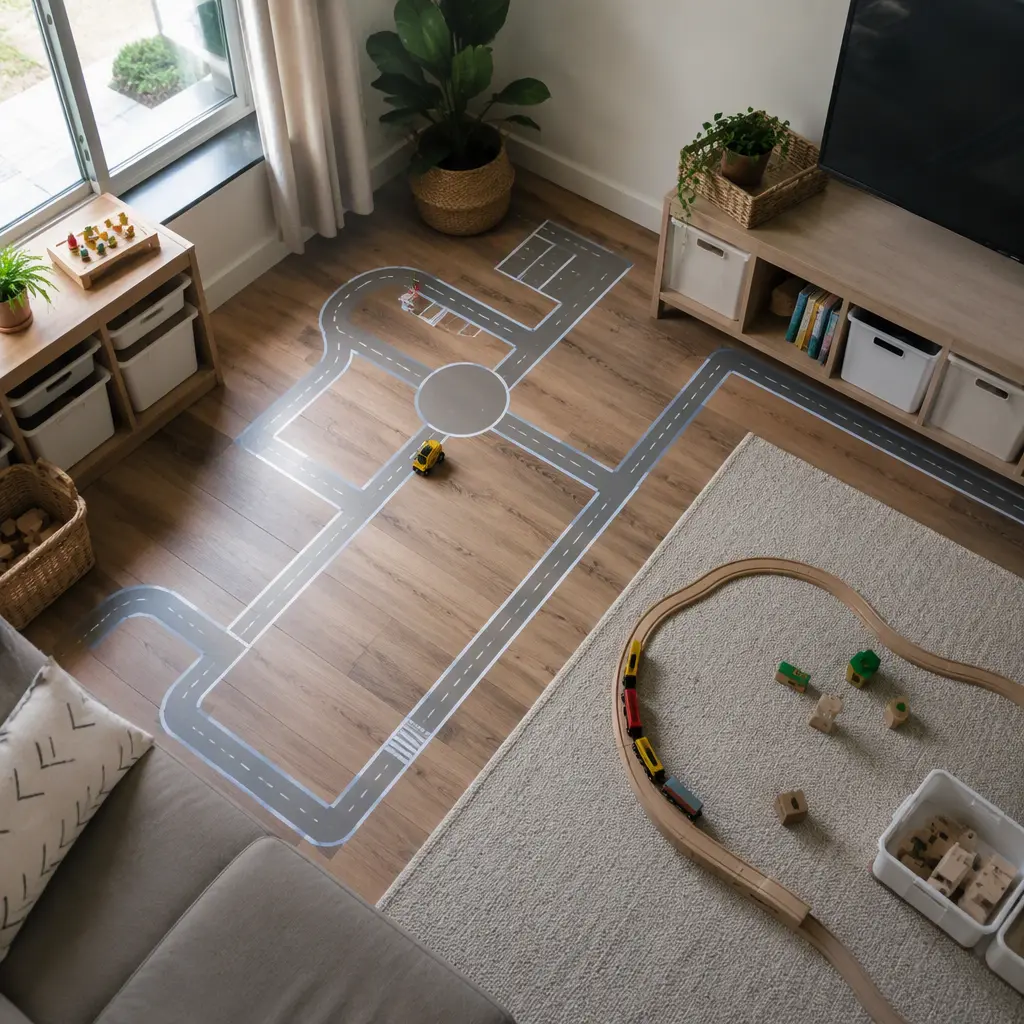
- Consider combining a small train starter set with a limited amount of removable road tape if your child likes mixed vehicle play without a huge footprint.
- For noise-sensitive apartments, softer play mats under train tracks can help reduce clattering sounds on hard floors.
Frequently asked questions
Do tape roads damage floors?
Some removable tapes are designed for temporary indoor use, but flooring materials vary widely. Hardwood, laminate and older finishes may react differently to adhesive products, especially if the tape stays down for long periods or receives heavy sunlight. Testing a small hidden area first is usually safer than applying large layouts immediately.
Which option keeps children engaged longer?
Wooden train tracks generally provide broader long-term play because children rebuild layouts in different ways as they grow. Tape roads often depend more heavily on existing interest in toy cars and imaginative role-play. Some children stay interested in both for years, while others strongly prefer one style of play.
Are wooden train sets difficult to store in apartments?
They can become bulky over time, particularly if additional tracks, trains and buildings are added gradually. Open bins under beds, stackable containers or low shelving can help keep pieces organized. Smaller starter sets are usually easier to manage than large themed collections.
What flooring works best for train tracks?
Flat surfaces such as hardwood, laminate or low-pile rugs are usually easiest for stable layouts. Thick carpet can make tracks separate more easily and may frustrate younger children who are still learning to connect pieces securely.
Can these toys work together?
Yes. Many children enjoy creating towns where roads cross near train stations or run alongside tracks. Combining a compact train loop with a few removable roads can create variety without taking over the entire room.
In tiny apartments, the best toy is often the one that fits naturally into daily routines instead of constantly competing with storage and cleanup needs. Wooden train tracks offer richer construction play and strong replay value, while tape roads provide flexibility, portability and minimal storage demands. Families balancing limited space with active preschool play may find that a smaller, carefully chosen setup works better than a large collection that becomes difficult to manage.