Best Lap-Friendly Toys for Kids on Long Flights
Compare compact, offline toys for ages 6–8 that fit on tray tables, limit dropped pieces, and stay practical for long flights, airport waits, and travel downtime.
Compare prices and availability
Check current prices and availability for this guide on eBay.
As an eBay Partner, we may be compensated if you make a purchase.
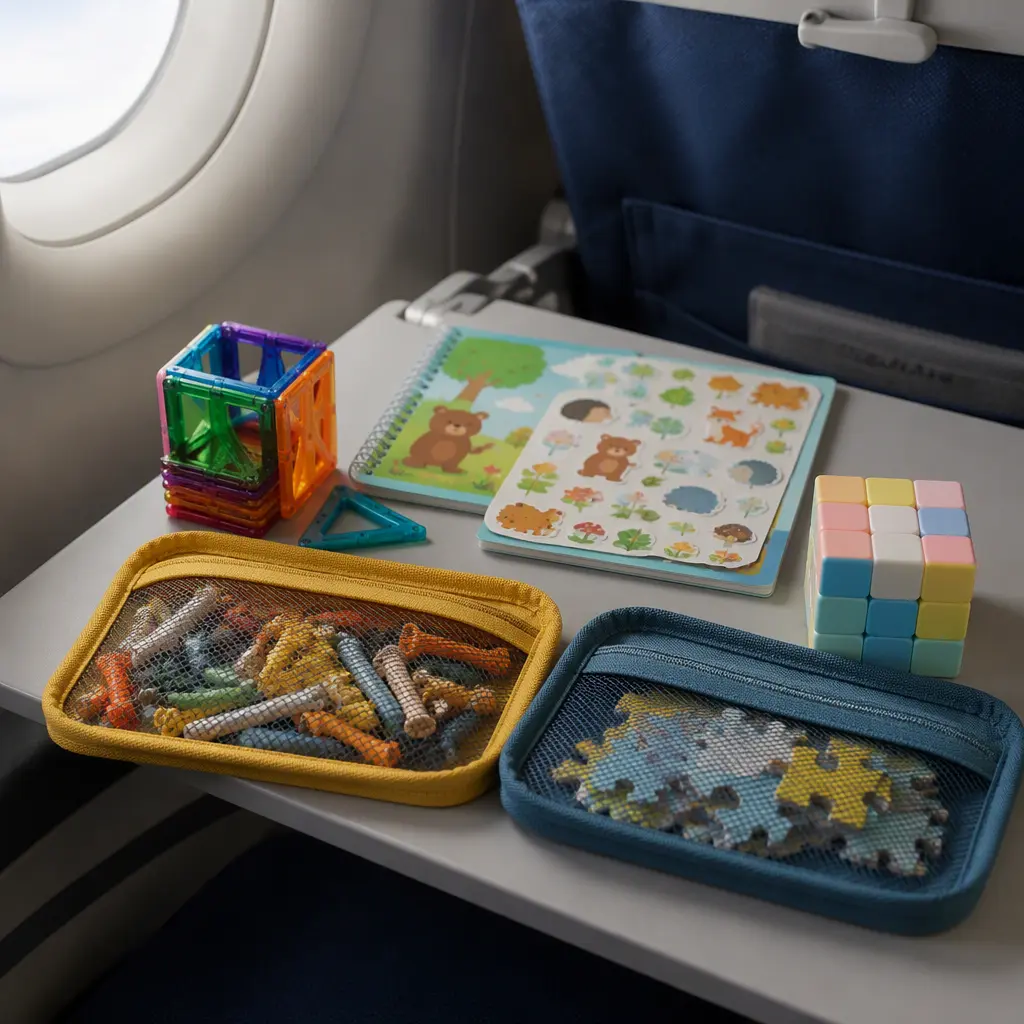
Long flights can be challenging for children ages 6 to 8 because attention spans often shift between active play, quiet focus, and rest. Lap-friendly toys can help fill those stretches without relying entirely on screens, but airplane travel creates extra limits. Toys need to fit on a tray table, avoid noisy electronic features, and reduce the chance of small parts rolling under seats. The most practical choices also pack easily into a backpack and work well during airport waits, layovers, or delays. For this age group, compact building sets, magnetic activities, reusable puzzles, and small-scale creative toys tend to work better than bulky playsets or anything requiring floor space.
What to look for
The best travel toys for flights balance engagement with practicality. Children in the 6–8 age range often enjoy toys that offer open-ended play or repeatable challenges, but parents usually benefit most from toys that stay contained and do not require constant retrieval from the floor. Airplane seats also limit elbow room, so compact activities usually outperform larger building kits or craft projects. Consider how easy the toy is to pause and pack away quickly during boarding, meals, or landing announcements.
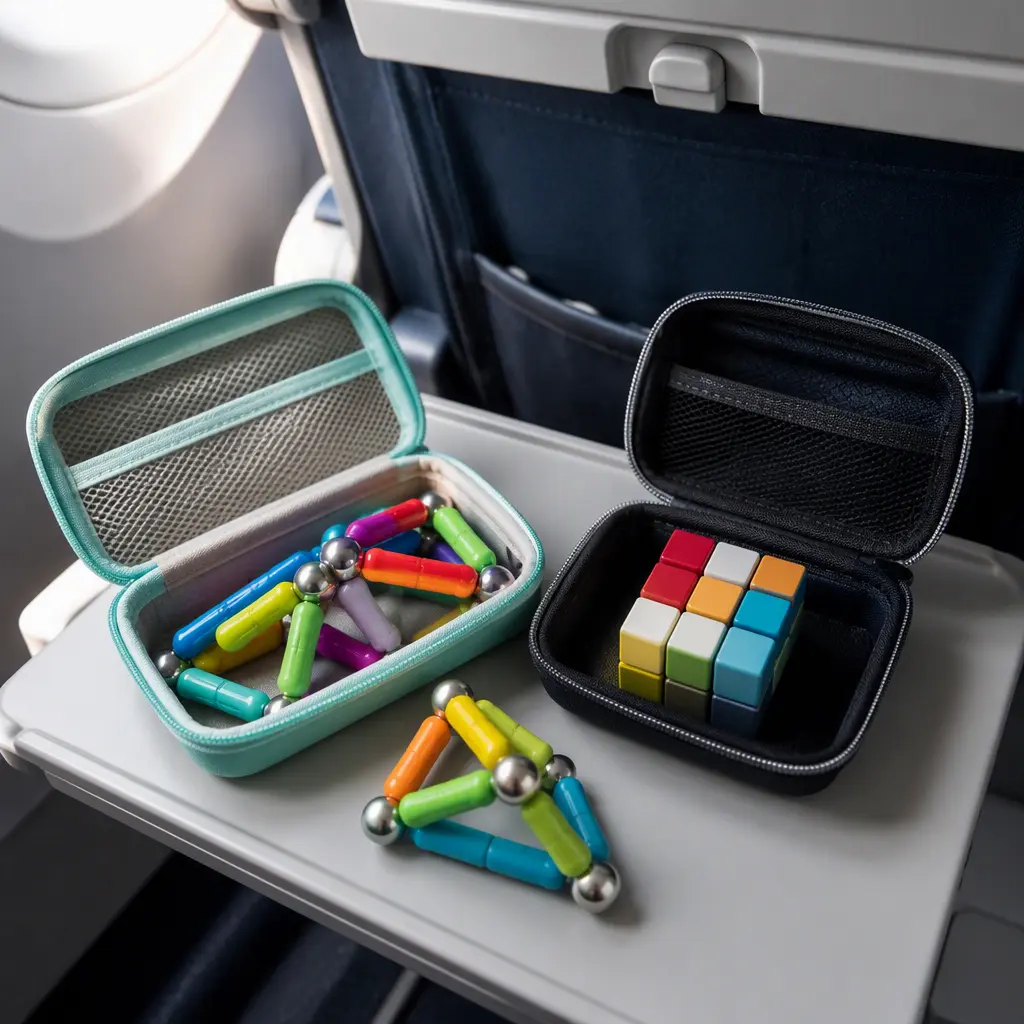
- Choose toys with magnetic, connected, or tethered pieces to reduce dropped parts.
- Look for activities that fit fully on a tray table without spreading into neighboring seats.
- Prioritize quiet play over toys with sound effects, clicking launchers, or loud accessories.
- Soft storage pouches or hard zip cases help keep pieces organized during security checks and boarding.
- Reusable activities such as magnetic puzzles, sticker scenes, and mini construction kits offer longer play value during delays.
- Avoid toys with many tiny loose parts if the child tends to fidget or drop items frequently.
- Compact toys that work offline are useful when screen time limits, battery issues, or airplane mode restrictions matter.
Age suitability
Children ages 6 to 8 are usually ready for more complex travel activities than preschoolers, but they still benefit from toys that are easy to manage independently in tight spaces. Many enjoy miniature building systems, travel logic puzzles, compact card games, and magnetic construction sets because these provide challenge without needing a large play area. Kids closer to age 6 may prefer toys with fewer setup steps and larger pieces that are easier to handle on a moving plane. Older children in this range often enjoy puzzle-based activities or build-and-rebuild construction toys that can hold attention for longer stretches. Families traveling with siblings may also want activities that can be shared quietly between seats without creating clutter.
Options compared
Magnetic construction toys are among the most flight-friendly options because the pieces stay connected more easily than traditional bricks. Flat magnetic tiles, magnetic sticks, or travel-sized magnetic building sets can work well for children who enjoy creative building but need something manageable in a confined space. They are usually quieter than snap-together plastic kits and easier to contain on a tray table. The trade-off is that larger magnetic sets can become bulky in carry-on luggage, so smaller travel-focused collections tend to work better for flights.
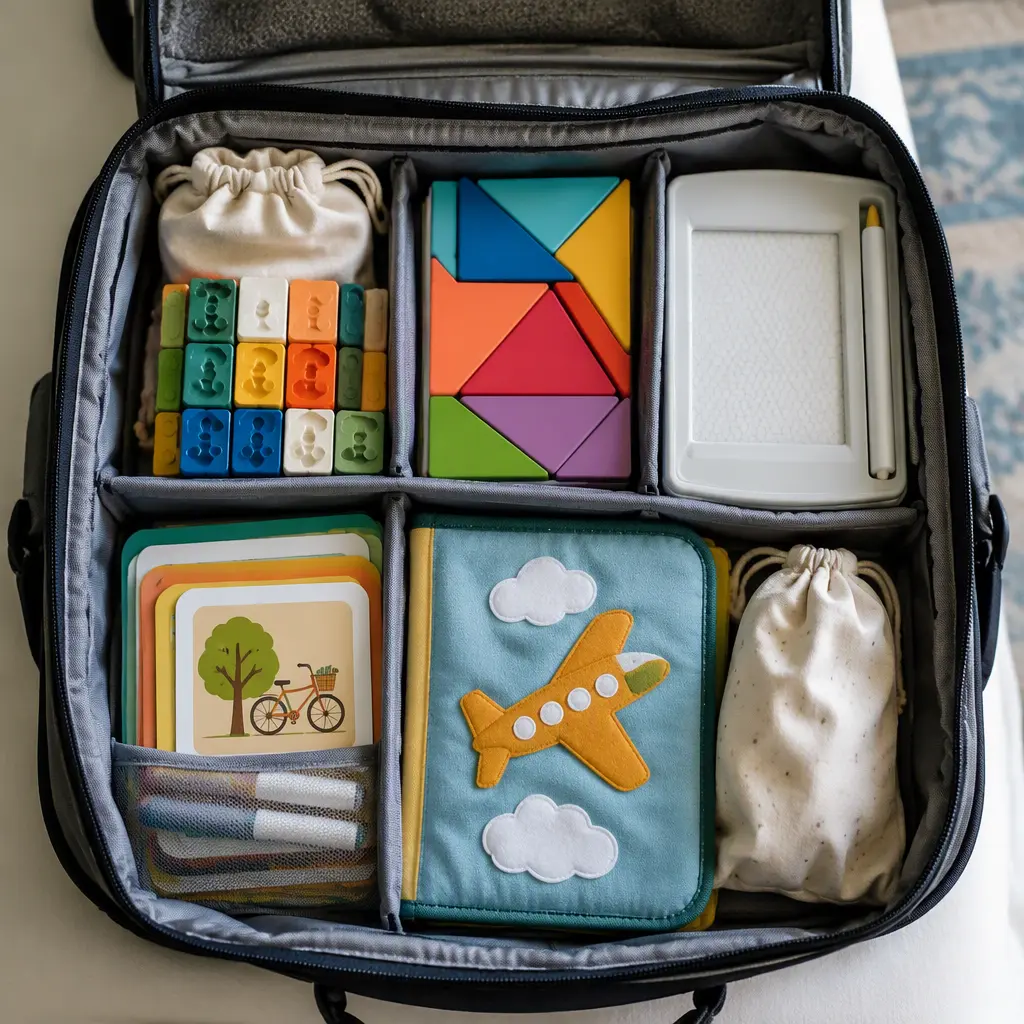
Compact interlocking brick sets can also work for this age group, especially when packed in a divided travel case or zip pouch. These suit children who enjoy following instructions or building vehicles and structures step by step. However, very small pieces are more likely to disappear under seats, making these a better fit for patient children who can keep parts organized. Reusable sticker scenes, magnetic puzzle books, and folding brain-teaser games are often the easiest low-mess choice for families prioritizing convenience over open-ended building play. They require less cleanup, make very little noise, and pause easily during interruptions.
- Magnetic building toys: best for creative play with fewer dropped pieces; can still take up backpack space.
- Mini construction sets: good for focused builders who enjoy instructions; less ideal for children who lose small parts easily.
- Reusable sticker or magnetic scene books: quiet, lightweight, and simple to pack; less appealing for kids wanting hands-on construction.
- Travel puzzle games and logic challenges: strong choice for independent play and longer focus spans; may frustrate younger or easily distracted travelers.
- Drawing tablets or reusable sketch boards: mess-free and flexible for mixed-age travel; not as engaging for children seeking tactile building activities.
Frequently asked questions
Are magnetic toys safe to bring on airplanes?
Small magnetic travel toys are commonly used during flights, but parents should still supervise younger children and check airline or airport guidance if unsure. Strong magnets or loose magnetic balls are usually less practical for travel than enclosed magnetic tiles or puzzle boards.
What toys create the least mess on long flights?
Reusable sticker books, magnetic puzzle boards, travel logic games, and drawing tablets are typically the easiest to manage. They stay contained, require minimal setup, and can be packed away quickly when needed.
Should construction toys be packed in checked luggage or carry-ons?
Keeping a small selection in a carry-on usually makes more sense for in-flight entertainment. Using zip pouches, divided containers, or compact hard cases can help prevent pieces from scattering inside bags.
How many travel toys should children bring?
A small rotation often works better than a large collection. Three to five compact activities with different play styles can help maintain interest without overfilling a backpack or crowding the seat area.
What toy types are hardest to manage on flights?
Large playsets, toys with dozens of tiny loose parts, loud electronic gadgets, and activities requiring floor space are usually less practical. Craft kits involving liquids, sand, slime, or many paper scraps can also become difficult to manage during travel.
The most useful lap-friendly flight toys are usually the simplest ones to manage. Compact magnetic construction toys, reusable puzzle activities, and neatly contained building sets can keep children engaged while staying practical for crowded seats and long travel days. For ages 6 to 8, choosing toys that balance creativity, portability, and easy cleanup often matters more than finding the most elaborate activity.