Chunky Building Sets vs Magnetic Cubes for Toddlers
Compare chunky building blocks and magnetic cubes for toddlers aged 1–2. Learn about cleanup, choking risks, build stability, supervision, storage and long-term play value before buying.
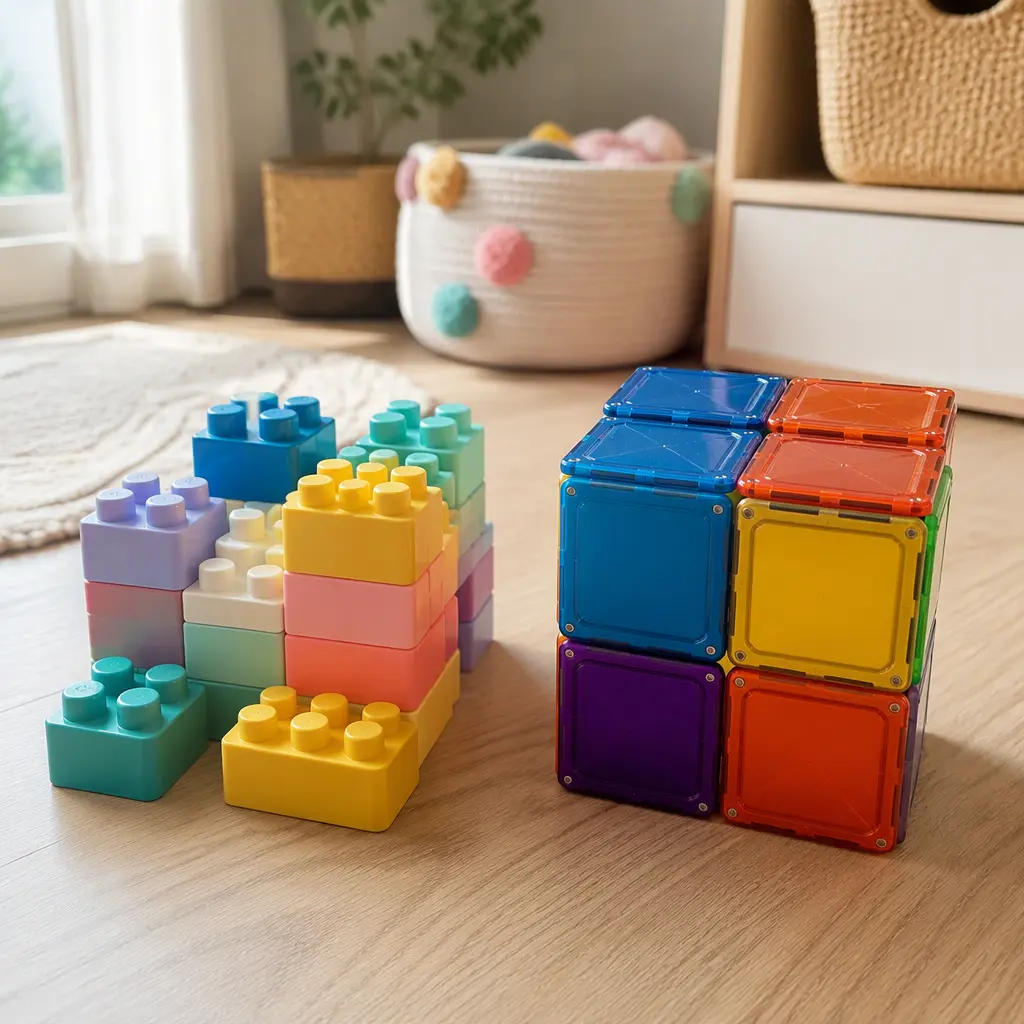
Compare prices and availability
Check current prices and availability for this guide on eBay.
As an eBay Partner, we may be compensated if you make a purchase.
For toddlers aged 1–2, building toys are usually less about following instructions and more about stacking, knocking down, sorting and carrying pieces from room to room. Two common choices for this age group are chunky building sets made from large interlocking plastic or wooden pieces, and magnetic cubes or magnetic building toys designed for younger children. Both encourage fine motor practice and open-ended play, but they differ in important ways that affect daily family life. Cleanup time, storage space, build stability, supervision needs and long-term usefulness can matter just as much as appearance or piece count when choosing a first construction toy.
What to look for
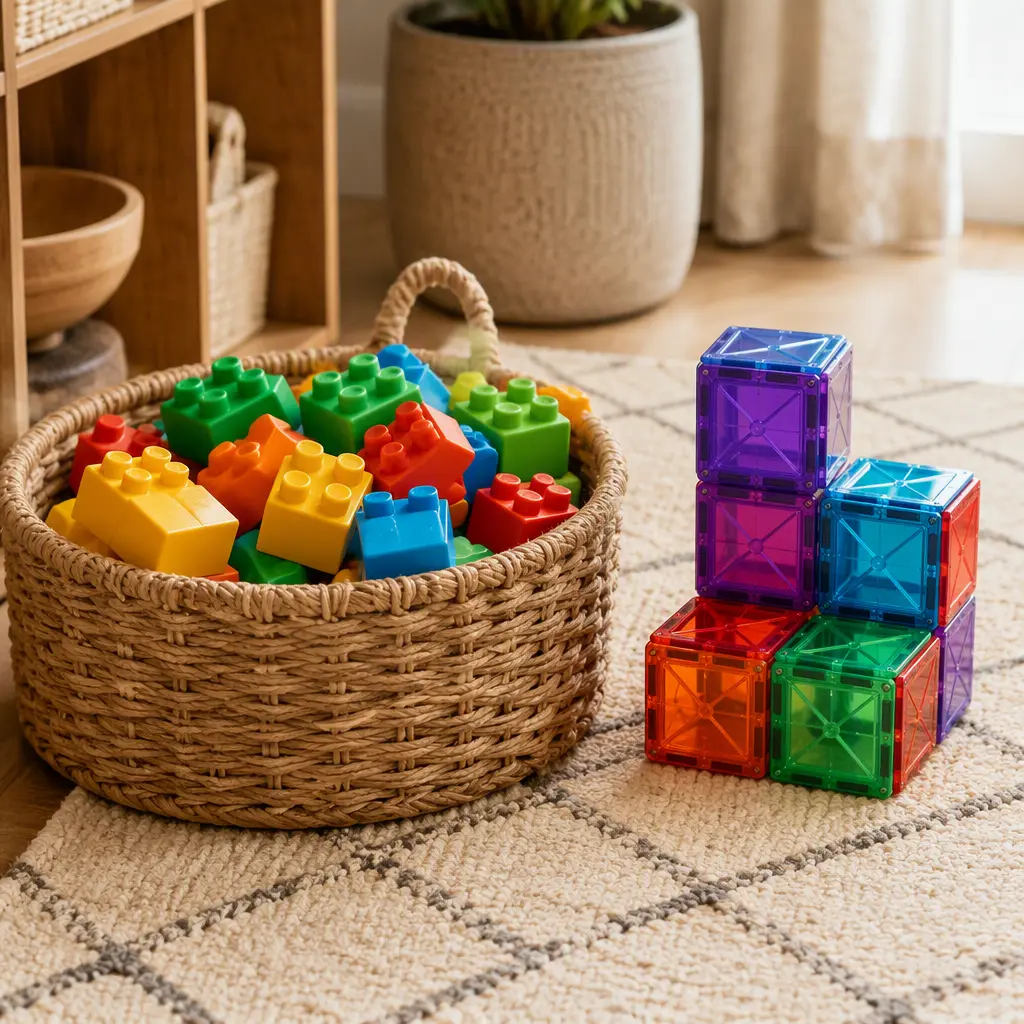
At this age, durability and safety usually matter more than complexity. Toddlers often test toys by chewing, throwing, stepping on and repeatedly knocking structures apart. Pieces should be large enough to avoid choking concerns and simple enough for small hands to grip comfortably. It also helps to think about how the toy will fit into your household routine. Some building sets spread across the floor quickly, while others store more compactly or collect less dust and pet hair.
- Choose pieces clearly sized for toddlers, not older children, especially with magnetic toys.
- Look for rounded edges and sturdy construction that can handle dropping and rough handling.
- Consider build stability. Some magnetic structures collapse easily when bumped by young toddlers.
- Think about cleanup and storage. Large hollow blocks take more space, while magnetic pieces often stack together compactly.
- Check supervision needs. Magnetic toys require closer monitoring if the set includes smaller connectors or loose magnets.
- Consider noise levels. Hard plastic blocks can be loud on wood or tile floors during repeated dumping and rebuilding.
- Think about long-term use. Some systems grow with children into preschool years, while others lose interest sooner.
Age suitability
For most children between 12 and 24 months, chunky building sets are usually the easier starting point. Large blocks are simpler to grip, easier to stack and less frustrating when towers fall over. Toddlers in this age range often enjoy basic cause-and-effect play such as stacking two or three pieces and knocking them down. Magnetic cubes can become more engaging closer to age 2, especially for children with stronger fine motor coordination and patience for experimenting with how pieces connect. Some magnetic toys marketed to toddlers still include smaller parts that suit older preschoolers better, so checking the recommended age range is important rather than assuming all magnetic sets are equally toddler-friendly.
Options compared
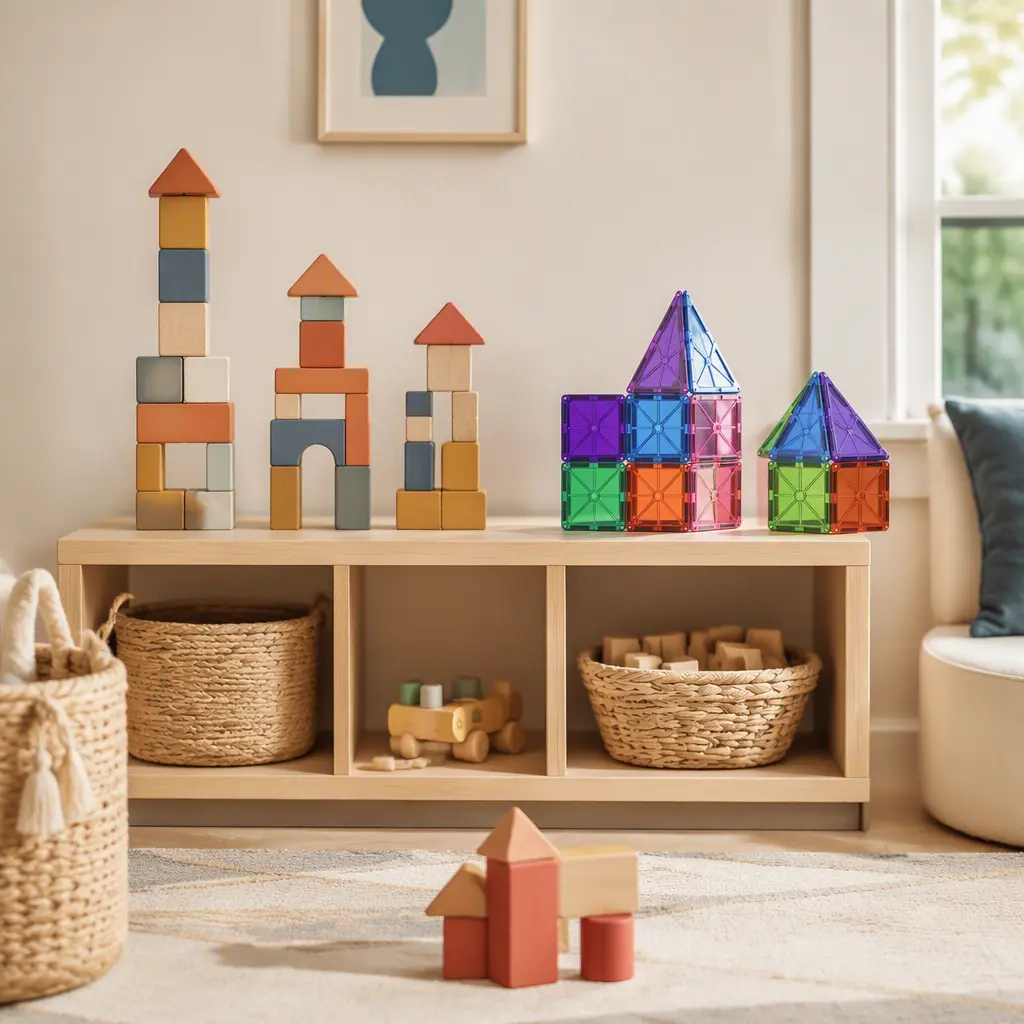
Chunky building sets are often the more practical choice for younger toddlers and busy households. Large interlocking plastic blocks, foam blocks and oversized wooden blocks tend to survive rough handling well and usually create less worry about small components. They are also easier for toddlers to use independently. A child can quickly stack, connect and separate pieces without understanding magnetic alignment. The trade-off is storage space. Bigger blocks fill toy bins quickly, and cleanup can feel bulky in smaller homes or apartments. Hard plastic versions can also become noisy during energetic play.
Magnetic cubes and magnetic construction toys appeal to families looking for longer-term versatility. As children grow, magnets can support more complex building and simple early engineering ideas. Many magnetic systems also store neatly because pieces connect together in compact stacks. However, stability can frustrate younger toddlers. Structures may collapse when lifted or bumped, especially during the early trial-and-error stage of play. Magnetic toys also require more careful supervision and inspection than traditional chunky blocks. For families prioritizing low-maintenance, independent toddler play, oversized blocks are usually the simpler option. For households wanting one construction system that may continue into preschool years, large toddler-safe magnetic cubes can offer better long-term flexibility if used carefully.
- Chunky blocks suit younger toddlers, rough play and simple stacking practice.
- Magnetic cubes suit older toddlers ready for more experimentation and guided play.
- Wooden blocks are quieter than some hollow plastic sets but can still be heavy if thrown.
- Foam blocks reduce noise and injury risk but may feel less satisfying for advanced building.
- Magnetic sets usually store compactly but often need more supervision and routine safety checks.
- Large interlocking plastic blocks tend to hold structures together better during active toddler play.
Frequently asked questions
Are magnetic cubes safe for 1-year-olds?
Some magnetic toys are specifically designed for toddlers with large sealed pieces, but many magnetic construction sets are intended for older children. Parents should check age guidance carefully and supervise play closely, especially for children who still mouth toys or chew on objects.
Which option is easier to clean up?
Magnetic cubes are often quicker to collect because pieces connect together into stacks. Chunky blocks can spread across larger floor areas and take up more storage space, although larger pieces are usually easier to spot and pick up.
Do toddlers get bored of chunky blocks quickly?
Many toddlers return to simple building toys repeatedly because the play changes with development. A child who starts by knocking towers down may later sort colors, build pretend structures or combine blocks with vehicles and figures. Open-ended toys often stay useful longer than expected.
What works better in small apartments?
Compact magnetic cubes can fit more easily into smaller storage spaces, but oversized block sets are sometimes easier for quick independent play sessions. Families short on storage may prefer fewer large pieces rather than very high piece counts.
Are wooden blocks better than plastic ones?
Wooden blocks often feel sturdier and can be quieter than lightweight hollow plastic pieces, but they are usually heavier. Plastic interlocking blocks tend to stay connected more securely, which can reduce frustration for very young builders.
For most children between 1 and 2 years old, chunky building sets remain the easier and lower-maintenance starting point. They support simple motor skills, tolerate rough play and usually allow more independent exploration. Magnetic cubes can become a strong long-term option for older toddlers who are ready for more guided building and closer supervision. The best choice often depends less on appearance and more on your household priorities: storage space, supervision comfort, noise tolerance and how long you hope the toy system will stay in use.