Best Compact Building Toys for Kids in Shared Bedrooms
Compare compact building toys for ages 6–8 with a focus on storage space, rebuild value, noise, cleanup and independent play in shared bedrooms or smaller homes.
Compare prices and availability
Check current prices and availability for this guide on eBay.
As an eBay Partner, we may be compensated if you make a purchase.
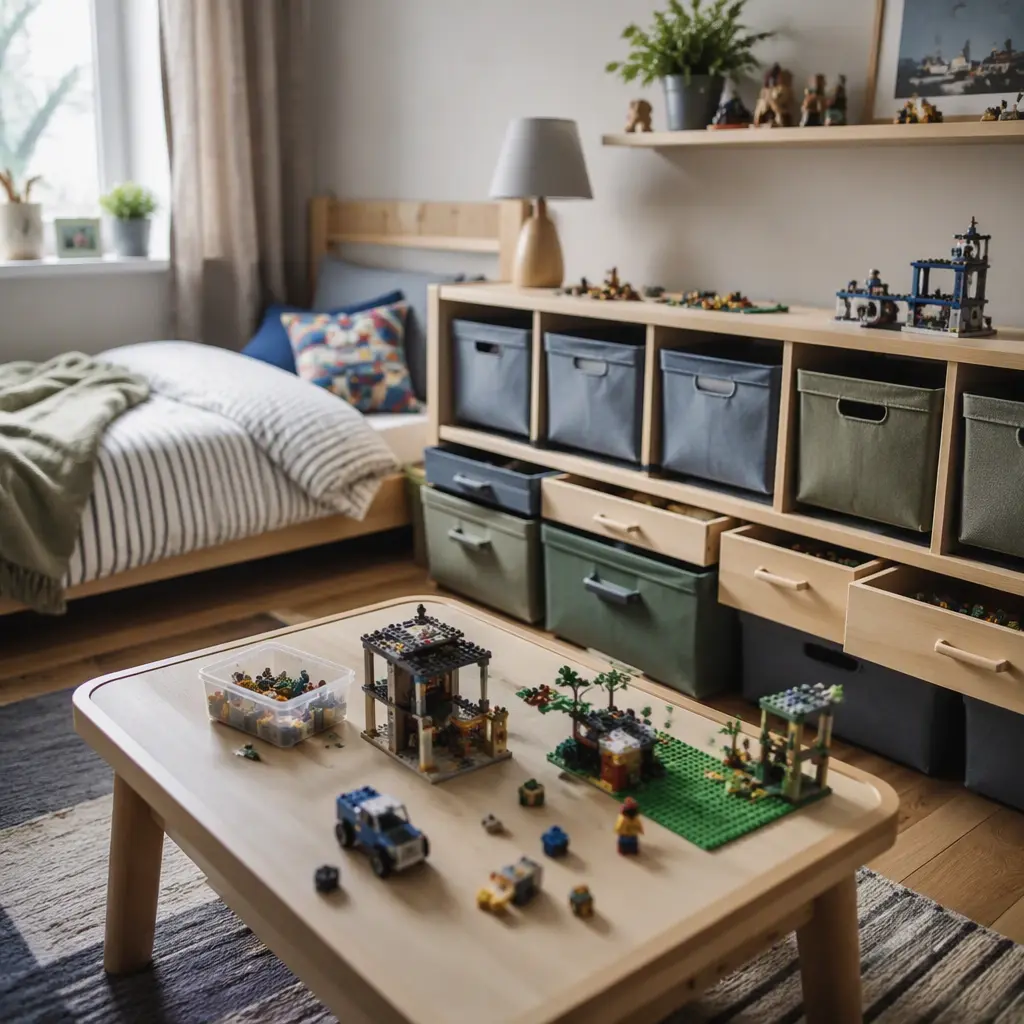
Building toys can work well in shared bedrooms when the sets are easy to store, simple to sort and engaging enough for repeated rebuilding. For children aged 6–8, the challenge is often finding something detailed enough to stay interesting without covering the entire floor in tiny pieces. Parents may also need to balance noise, cleanup time and whether siblings can safely share the same play space. Compact building toys range from magnetic tiles and small brick systems to snap-together engineering kits and travel-sized construction puzzles. The right choice depends less on the biggest set available and more on how independently a child can use it, how quickly it packs away and whether it fits the routines of a smaller home.
What to look for
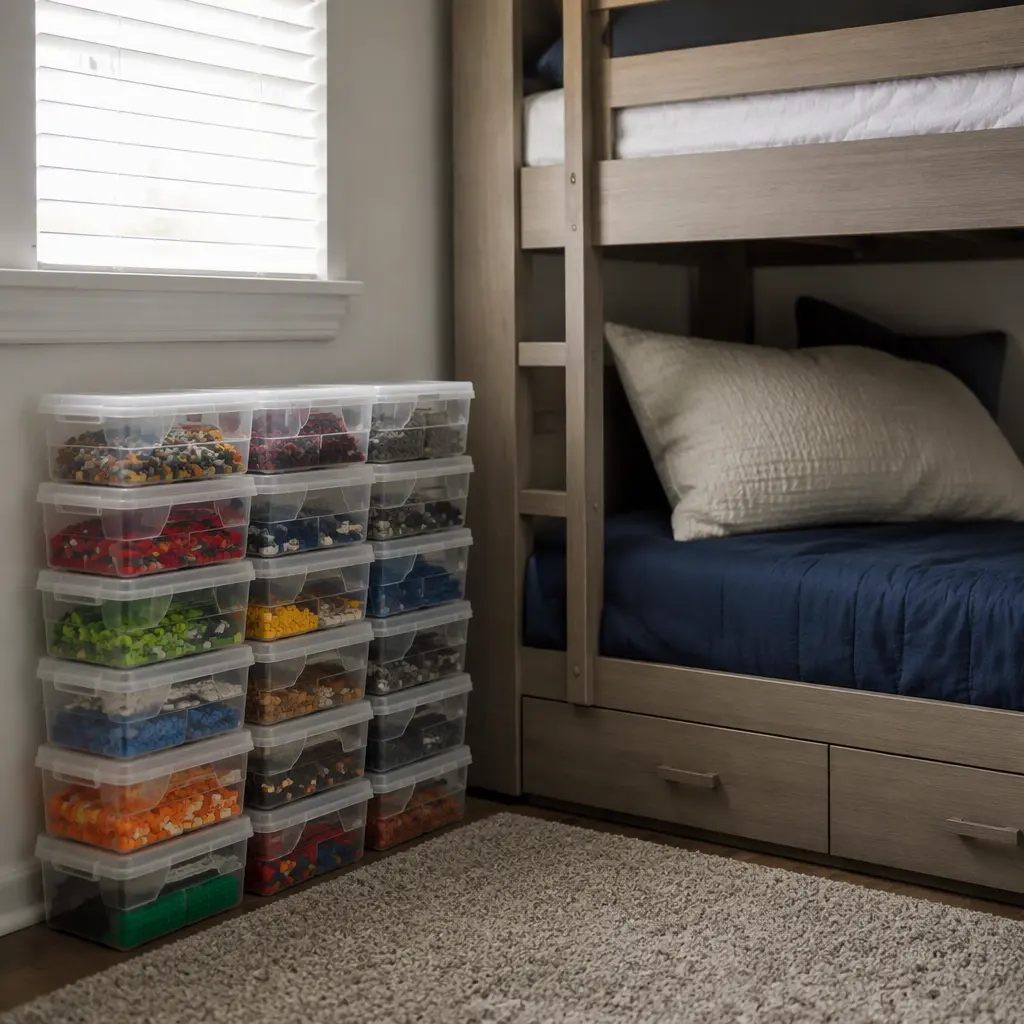
The most practical compact building toys are designed for repeat play rather than one-time assembly. Sets that can create multiple models tend to stay in rotation longer and reduce clutter from forgotten pieces. Storage matters just as much as the toy itself. A shallow tray, zip case or divided container can make cleanup manageable for children in this age group. Noise level is another overlooked factor in shared bedrooms, especially in homes where one child may sleep earlier than another.
- Choose sets with fewer than several hundred pieces unless your child already enjoys detailed sorting and careful cleanup.
- Look for reusable storage cases, stackable bins or flat trays that slide under beds or into shelves.
- Consider piece size carefully. Very tiny bricks save space but are easier to lose in shared rooms.
- Magnetic or snap-together systems are usually quieter than hard plastic bricks dropped onto wooden floors.
- Open-ended sets often provide better long-term value than single-model kits because children can rebuild independently.
- Check whether instructions rely heavily on adult help. Ages 6–8 often benefit from visual step-by-step guides.
- If siblings share the toy area, avoid sets with many nearly identical tiny parts that are difficult to divide fairly.
Age suitability
Children aged 6–8 are usually ready for more structured building challenges, but attention span and frustration tolerance still vary widely. Some children enjoy carefully following instructions and rebuilding the same model repeatedly, while others prefer experimenting freely. Brick-based systems with moderate piece counts often suit children who like detailed construction and collecting. Magnetic tiles and snap-fit builders tend to suit children who become frustrated with precise alignment. Travel-sized engineering kits can work well for children who enjoy problem-solving but have limited floor space. In shared bedrooms, it is also worth considering younger siblings nearby. Sets marketed for older children may include very small components that are unsuitable for mixed-age spaces.
Options compared
Small brick construction sets are often the most space-efficient option because pieces stack tightly into bins or drawers. They suit children who enjoy detailed builds and independent instruction-following. The trade-off is cleanup time and noise. Hard plastic bricks scattered across laminate or wood floors can become disruptive in shared rooms, and incomplete builds may need protected shelf space between sessions.
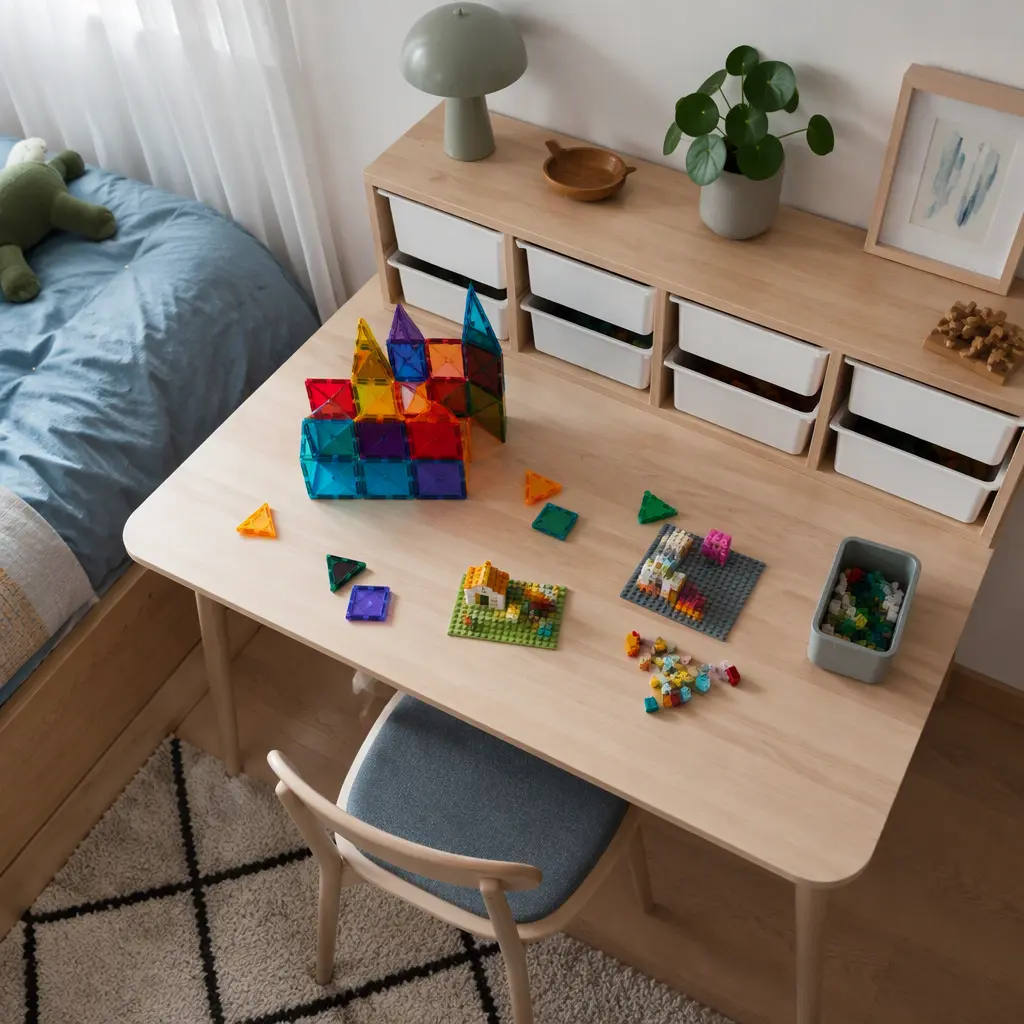
Magnetic tile sets are generally quicker to tidy and quieter during play. Flat magnetic pieces also store efficiently in vertical bins or under-bed trays. They work especially well for children who like building structures freely without strict instructions. However, some children outgrow simpler builds faster if they prefer vehicles, mechanisms or highly detailed models.
- Mini engineering and gear kits: Good for children interested in movement, problem-solving and simple mechanics. Usually compact, but loose connectors can disappear easily in shared rooms.
- Travel-sized building puzzles: Useful for quiet independent play and easy storage in drawers or backpacks. Less suitable for children who want large collaborative builds.
- Wooden construction sets: Often quieter and visually calmer in bedrooms, with durable pieces that resist cracking. Bulkier storage can be a drawback in small spaces.
- Interlocking plastic discs or sticks: Encourage open-ended creativity and fast rebuilding. Some sets become noisy if large structures collapse frequently.
- Magnetic tile systems: Best for quick setup and cleanup, collaborative sibling play and low frustration. Flat designs help with compact storage.
- Classic small brick systems: Best for children who enjoy detailed models and longer concentration. More demanding in terms of sorting, storage and lost pieces.
Frequently asked questions
Which building toys are easiest to store in a shared bedroom?
Flat magnetic tiles, travel-sized engineering kits and compact brick sets with dedicated storage boxes are usually the easiest to manage. Toys that fit into one container without requiring large display areas tend to work best in smaller bedrooms.
Are compact building toys still engaging for older children?
Yes, especially when the toy supports multiple building styles or increasing complexity. Many children aged 6–8 prefer toys they can modify repeatedly rather than one large model that stays assembled permanently.
What type of building toy creates the least noise?
Magnetic tiles and wooden construction sets are usually quieter than hard plastic brick systems. Noise also depends on flooring. Using a play mat or rug can reduce the sound of dropped pieces significantly.
How many pieces are manageable for ages 6–8 in small spaces?
For many families, moderate-sized sets are easier to maintain than very large collections. A smaller number of versatile pieces often leads to more consistent independent cleanup and less frustration when parts go missing.
Should siblings share one building set or have separate collections?
That depends on the children's ages and play styles. Shared open-ended sets like magnetic tiles often encourage cooperative building. Children who prefer preserving detailed models may benefit from separate storage trays or personal project areas to avoid conflicts.
Compact building toys can support creative, screen-free play without overwhelming a shared bedroom. The most practical choices balance rebuild value with realistic cleanup expectations and storage limits. For ages 6–8, toys that encourage independent building while staying manageable in one container are often easier to keep organized long term. Choosing the right format matters more than choosing the largest set.