Foam Building Blocks vs Magnetic Tiles for Toddlers
Compare foam building blocks and magnetic tiles for toddlers aged 1–2 years, with practical guidance on safety, noise, storage, durability, supervision and frustration levels.
Compare prices and availability
Check current prices and availability for this guide on eBay.
As an eBay Partner, we may be compensated if you make a purchase.
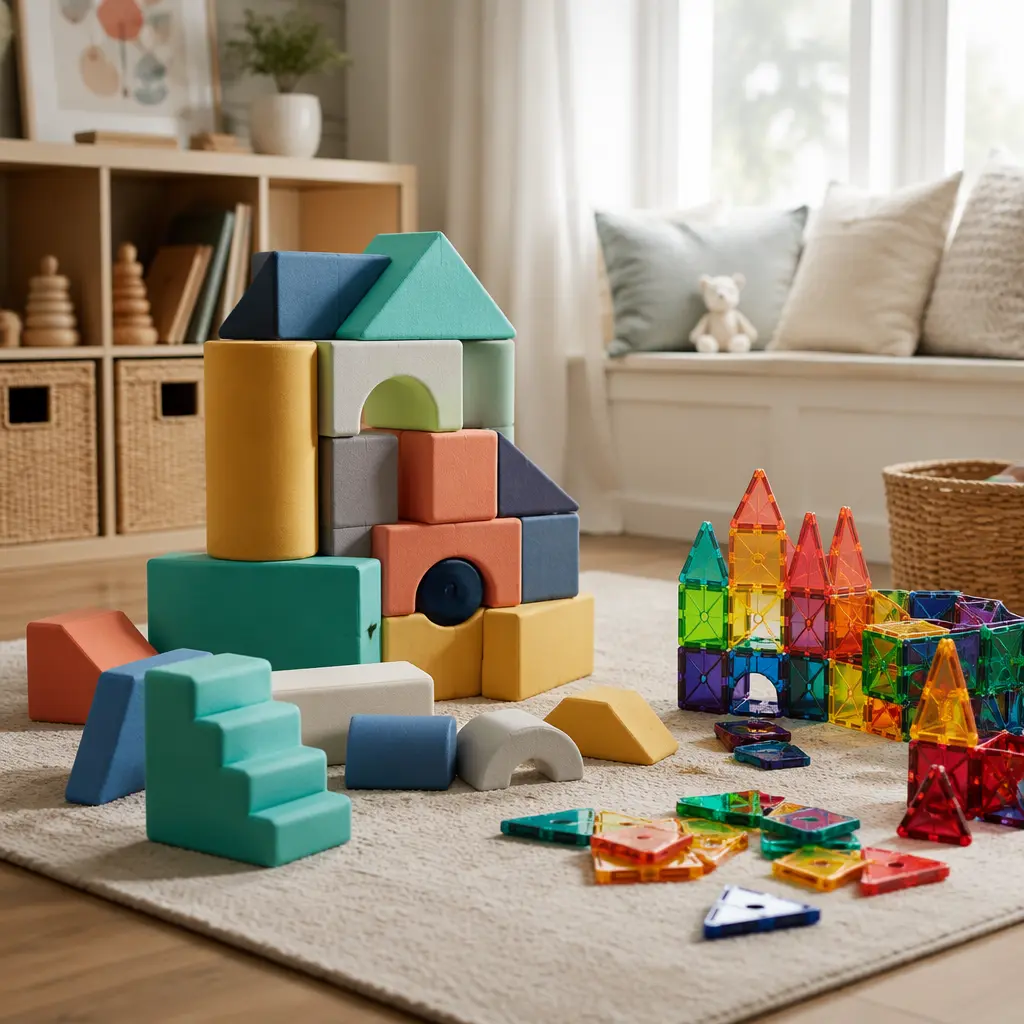
Foam building blocks and magnetic tiles are both popular screen-free construction toys for toddlers, but they suit different homes and different children. For ages 1–2 years, the decision usually comes down to safety, noise, storage space and how easily a child becomes frustrated. Foam blocks are simple, lightweight and low-noise, while magnetic tiles can hold more complex shapes but often require more coordination and closer supervision. Parents choosing between the two should think about how their child currently plays, how much floor space is available and whether the toy needs to work for quiet independent play or more guided building sessions.
What to look for
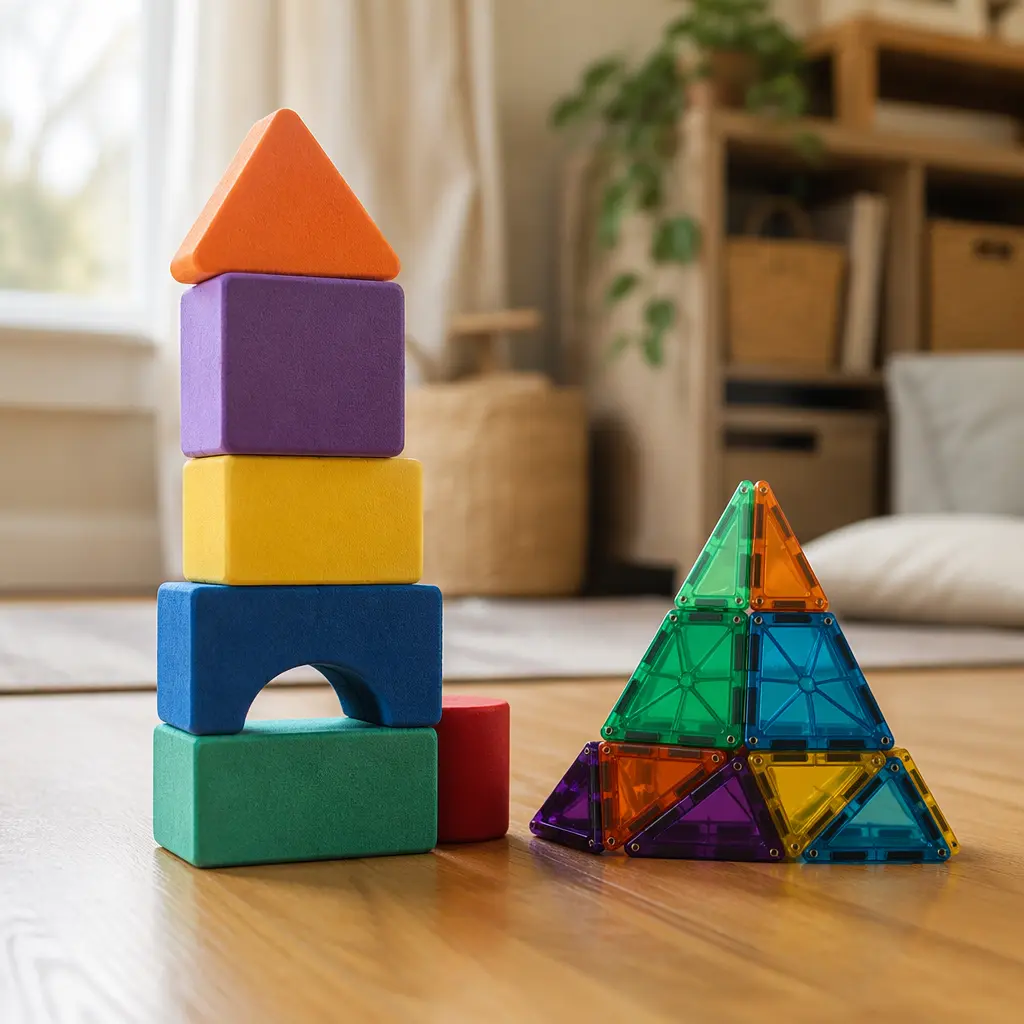
At this age, construction toys need to balance creativity with ease of use. Toddlers are still developing hand strength, coordination and spatial awareness, so toys that are too complicated can quickly become frustrating. Parents should also consider practical household factors. Some building toys create loud crashing sounds on hard floors, while others are bulky to store or difficult to clean after spills and sticky hands.
- Choose pieces large enough to avoid choking risks and easy enough for small hands to grip.
- Consider noise levels if the toy will be used in apartments or shared living spaces.
- Look at storage needs before buying, especially for larger foam sets.
- Check whether the toy encourages independent play or usually needs adult help.
- Think about cleanability, particularly for toys used during messy toddler play.
- Consider frustration tolerance: simple stacking is easier than lining up magnets precisely.
- If older siblings are present, make sure small accessory pieces can stay separate from toddler toys.
Age suitability
For most children aged 1–2 years, foam blocks are the easier starting point. They are light enough for early stacking, unlikely to hurt if toppled and simple to use without instructions. Many toddlers enjoy knocking towers down just as much as building them, and foam blocks support that stage well. Magnetic tiles are often more appealing closer to age 2, when fine motor skills improve and children can better align edges and understand how pieces connect. Some magnetic tile sets are marketed broadly for young children, but parents should check the recommended age range carefully because certain sets may include smaller parts or stronger magnets intended for older preschoolers. A toddler who becomes upset when structures collapse may also struggle more with magnetic tiles at first, since successful building usually requires more precision.
Options compared
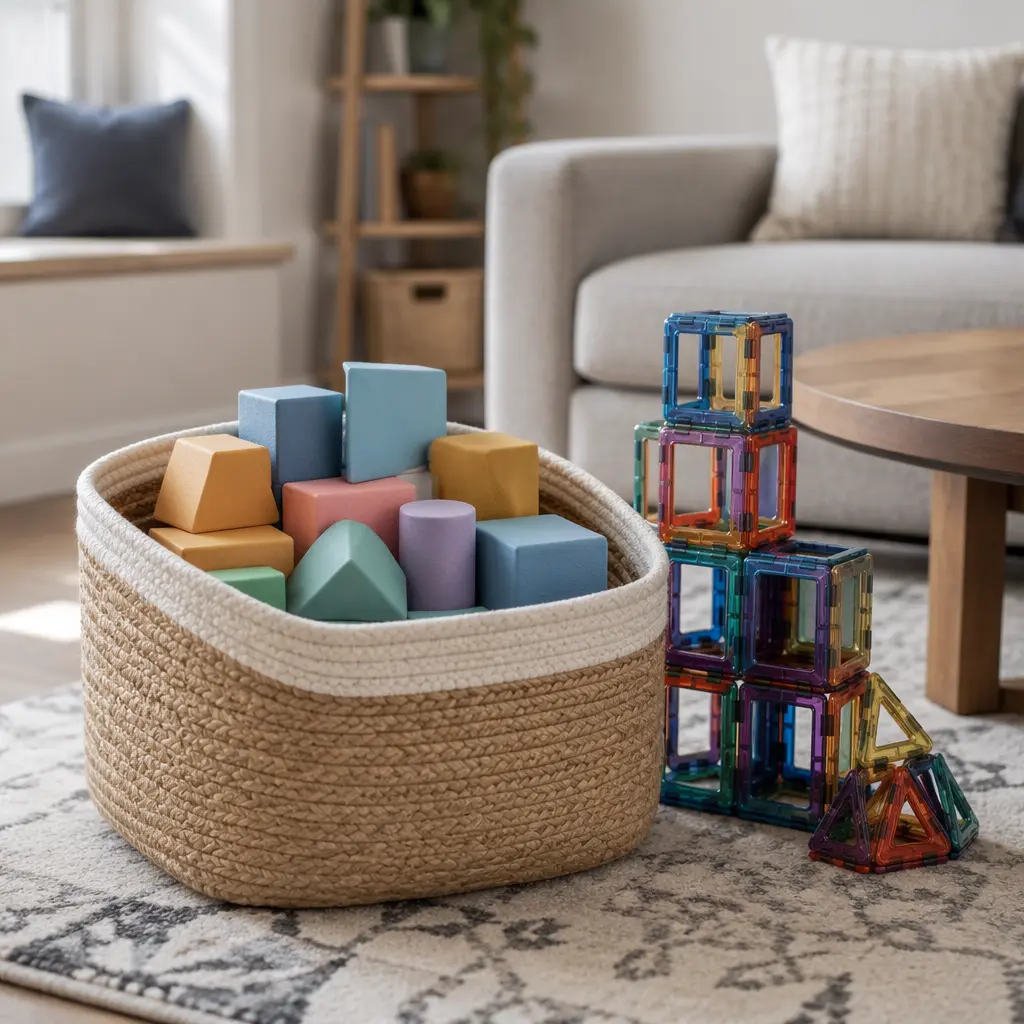
Foam building blocks are usually the better fit for parents prioritizing quiet play and low household stress. They are soft, lightweight and less likely to damage furniture or walls when thrown. This matters because many toddlers in this age group still explore toys physically rather than constructively. Foam sets also tend to work well for open-ended movement play. Children can stack, carry, sort and crawl around them without needing exact techniques. The trade-off is that foam blocks can take up significant storage space, especially larger soft-play style sets. Some foam materials may also show wear faster if frequently chewed or bent.
Magnetic tiles appeal to families looking for a toy that can grow into the preschool years. Even simple tile sets encourage early problem-solving and shape recognition. They also store more compactly than bulky foam blocks because flat tiles can stack into bins or drawers. However, they are usually noisier on hard flooring and can be frustrating for younger toddlers who are still learning controlled hand movements. Some children enjoy the satisfying snapping motion of magnets immediately, while others repeatedly pull structures apart accidentally and lose interest. Magnetic tiles often work best with occasional adult involvement at this age, especially when introducing basic building ideas without overwhelming the child.
- Foam blocks suit toddlers who enjoy active play, throwing, stacking and knocking down towers.
- Magnetic tiles suit toddlers beginning to focus on connecting pieces and building simple shapes.
- Foam blocks are generally quieter on hardwood or tile floors.
- Magnetic tiles are easier to store in small homes or apartments.
- Foam blocks are often better for independent play with minimal setup.
- Magnetic tiles may provide longer-term play value into preschool and early elementary years.
- Children who become frustrated easily may find foam blocks more rewarding at first.
Frequently asked questions
Are magnetic tiles safe for 1-year-olds?
Some magnetic tile products are designed for younger children, but parents should follow the manufacturer’s age guidance carefully and supervise play closely. Any cracked or damaged magnetic piece should be discarded immediately. Large foam blocks are usually the simpler and lower-risk option for most 1-year-olds.
Which toy is quieter for apartment living?
Foam blocks are usually much quieter. They make less impact noise when dropped, thrown or knocked over. Magnetic tiles can create repeated clicking and crashing sounds, especially on hardwood floors or during cleanup.
Do magnetic tiles frustrate toddlers?
They can. Some toddlers quickly understand how magnets connect, while others struggle with alignment and become upset when structures collapse. Short, guided play sessions often work better than expecting fully independent building at first.
Which option is easier to store?
Magnetic tiles are generally easier to store because they stack flat inside bins or drawers. Large foam blocks can require dedicated floor baskets, shelves or playroom space. Families in smaller homes may find storage an important deciding factor.
Can these toys grow with a child?
Both can last beyond toddlerhood, but magnetic tiles usually offer more advanced building possibilities as children grow. Foam blocks often remain useful for imaginative play, obstacle courses and indoor movement activities even after basic stacking loses novelty.
For most families with children aged 1–2 years, foam building blocks are the easier starting point because they are simple, quiet and forgiving during early play. Magnetic tiles can still be a good choice for toddlers showing strong interest in connecting pieces and building shapes, especially if parents want a toy that may stay engaging for several years. The best option depends less on trends and more on the child’s current coordination, the available space at home and how much supervised play fits naturally into the family routine.