Large-Scale Building Toys for Kids Sharing Floor Space
A parent-focused guide to oversized building toys for ages 3–5, comparing foam blocks, cardboard systems, magnetic tiles and more with cleanup, storage and safety in mind.
Compare prices and availability
Check current prices and availability for this guide on eBay.
As an eBay Partner, we may be compensated if you make a purchase.
Large-scale building toys appeal to preschoolers because they turn the whole room into part of the play experience. Towers become forts, roads stretch across rugs and children can physically move pieces instead of working only at a tabletop. For families sharing floor space with siblings, pets or daily living areas, though, oversized construction sets can quickly become a storage problem or a painful tripping hazard. The best options for ages 3–5 balance big creative play with practical concerns such as lightweight materials, fast cleanup, manageable noise and pieces that are easy for small hands to carry safely.
What to look for
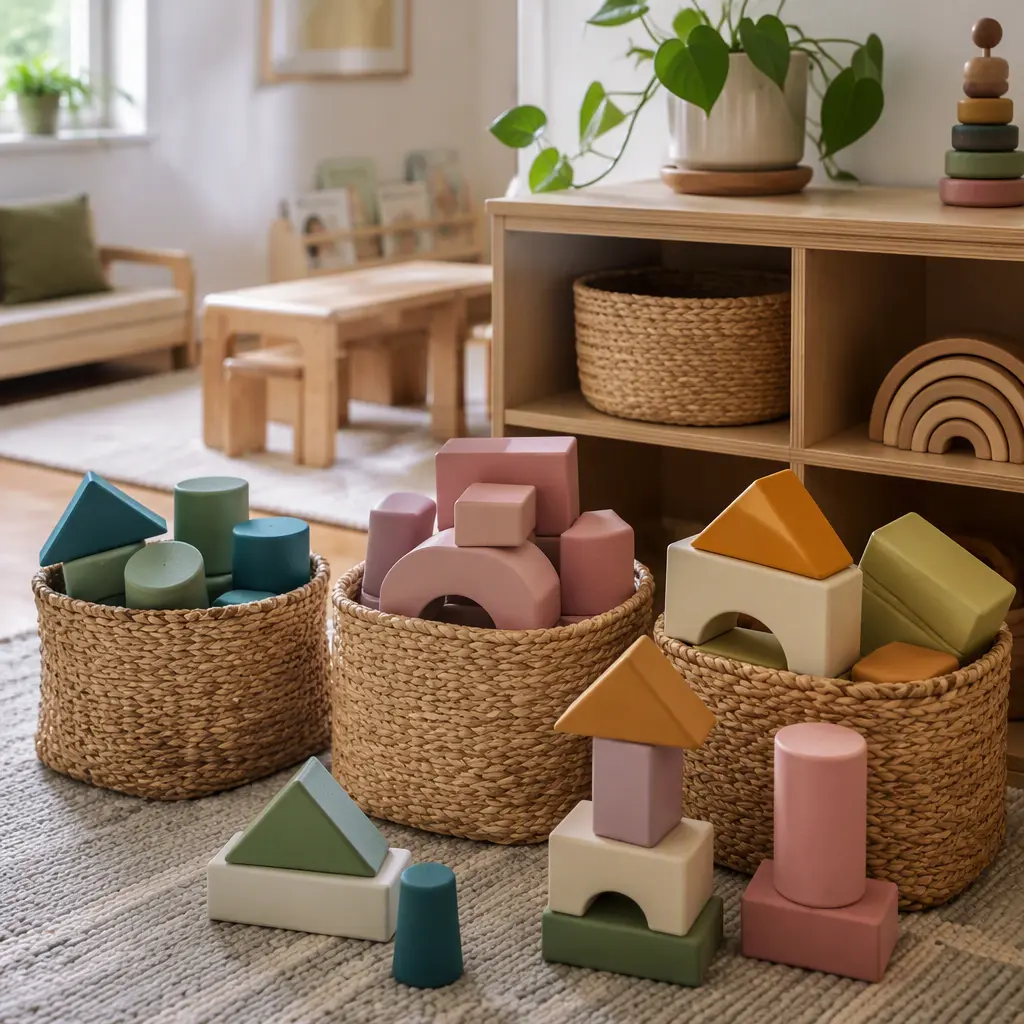
Oversized construction toys vary widely in weight, connection strength and storage demands. Some are designed for active movement and fort-building, while others focus on simple engineering play. In shared living spaces, the easiest sets to live with are usually lightweight enough for children to tidy independently and large enough that stray pieces are easy to spot before stepping on them. Material choice matters too. Foam and cardboard tend to be quieter and gentler on furniture, while hard plastic systems may last longer but create more noise during play and cleanup.
- Look for large pieces with rounded edges that are easy to grip and unlikely to disappear under furniture.
- Check whether pieces stack compactly or require dedicated storage bins when not in use.
- Consider floor noise in apartments or shared homes. Hollow plastic blocks can become surprisingly loud.
- Magnetic systems should use fully enclosed magnets and remain age-appropriate for preschool supervision.
- Foam and cardboard builds are lighter for younger children but may wear faster with rough play or moisture.
- Choose washable or wipe-clean surfaces if the set will be used in living rooms, kitchens or shared bedrooms.
- If siblings of different ages play together, avoid sets with smaller connector pieces that create choking concerns.
Age suitability
For children aged 3–5, oversized building toys work best when construction feels achievable without constant adult help. Preschoolers typically enjoy stacking, balancing, connecting and pretend play more than precise engineering challenges. Foam blocks, jumbo cardboard connectors and large magnetic tiles are often easier for this age group than complex interlocking systems that require strength or careful alignment. Younger three-year-olds may still knock down structures accidentally while moving around, so softer materials can reduce frustration and household damage. By age five, many children can handle more structured systems with stronger connections and larger collaborative builds, especially if they enjoy imaginative role-play or vehicle themes.
Options compared
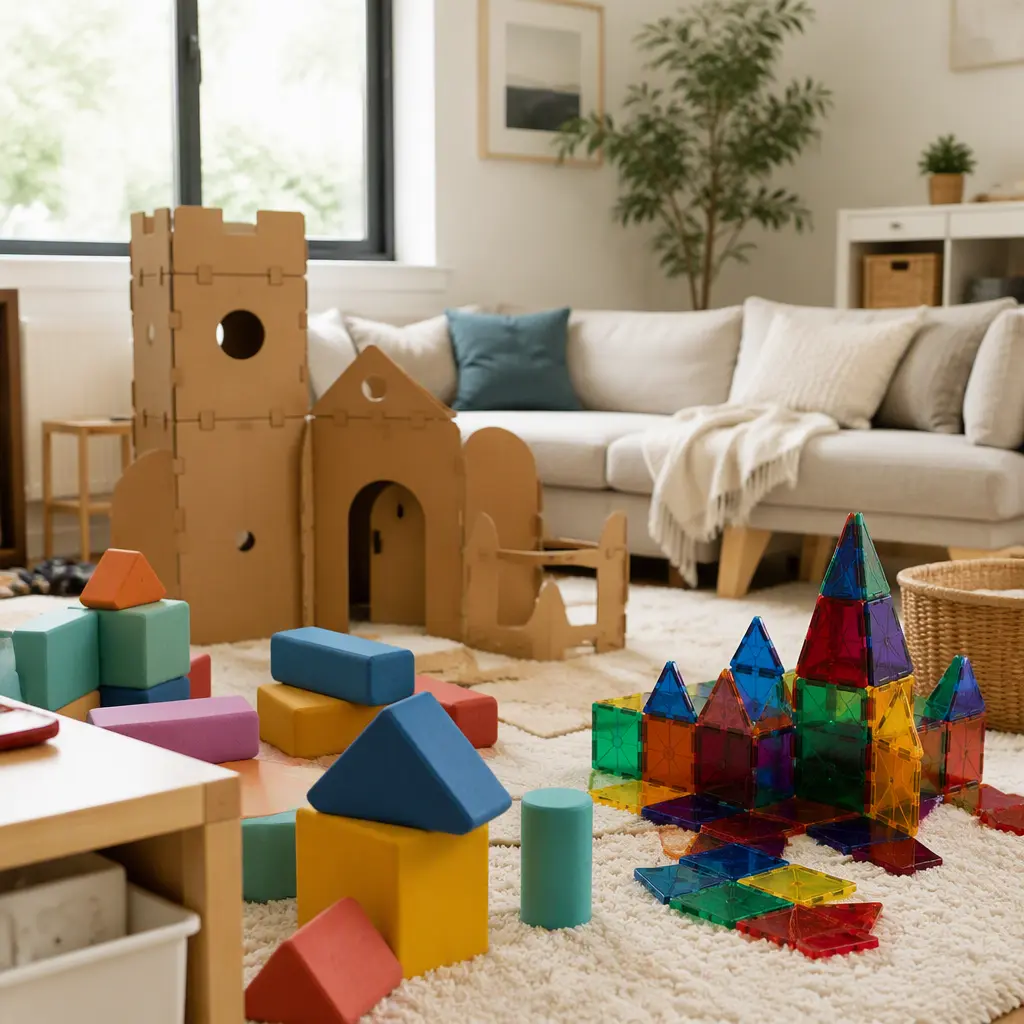
Foam building blocks are often the easiest choice for families prioritising safety, quiet play and quick cleanup. They are lightweight, soft underfoot and generally suitable for energetic preschoolers who build as much with their bodies as with their hands. The trade-off is durability. Foam can dent, tear or lose shape over time, especially in homes with pets or frequent roughhousing. Large foam sets also take up considerable storage space unless they compress or nest together.
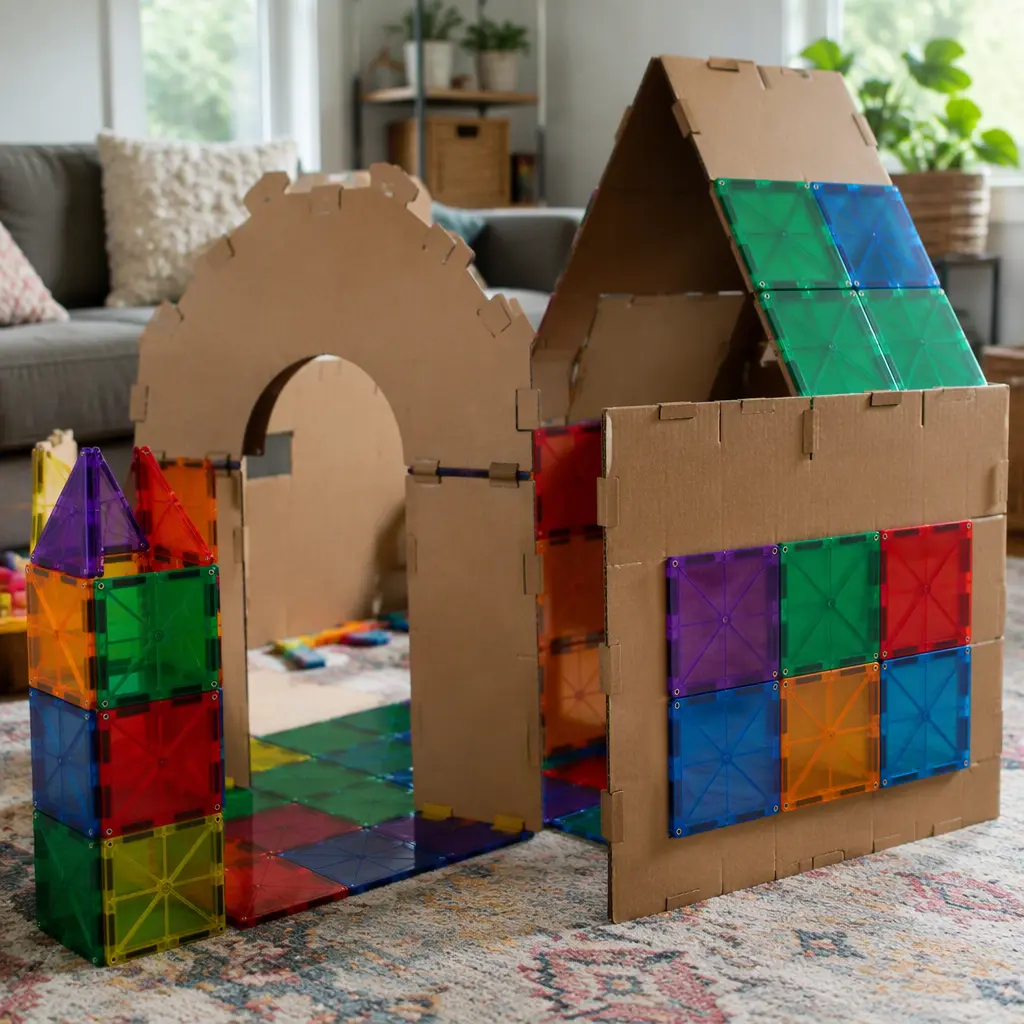
Cardboard construction systems sit somewhere between craft play and engineering play. Large slot-together panels encourage fort building and imaginative role-play without the heavy weight of wood or plastic. They are usually quieter than hard materials and easier to move around a shared room. However, cardboard is less ideal for humid environments or children who prefer very physical play. Magnetic tiles in oversized formats appeal to children who enjoy more structured building and visual experimentation. They stack compactly and often store more easily than giant blocks, but hard plastic edges can be noisy on floors and stepped-on tiles remain uncomfortable even when pieces are larger than traditional bricks.
- Foam blocks: best for active preschoolers, apartments and quieter homes; less durable long-term.
- Large cardboard systems: best for imaginative fort-building and temporary setups; avoid if storage areas are damp.
- Oversized magnetic tiles: best for children interested in patterns, ramps and structured builds; can become noisy on hard flooring.
- Jumbo plastic bricks: durable and easy to clean; bulky storage and louder cleanup are common drawbacks.
- Wooden large-format blocks: sturdy and attractive for open-ended play; heavier pieces require more supervision in shared spaces.
Frequently asked questions
Are oversized building toys better for cleanup?
Usually, yes. Larger pieces are easier to see and collect quickly, especially in living rooms or shared bedrooms. They are also less likely to disappear under furniture compared with small construction bricks. The main trade-off is that large sets need more storage volume even when tidied.
Which material is safest for younger preschoolers?
Soft foam tends to be the gentlest option for children around age three because pieces are lightweight and less likely to cause injury if builds collapse. Cardboard can also work well for cautious builders. Hard plastic and wood may suit older preschoolers who can build more carefully and follow safety rules consistently.
Do magnetic building toys work well for shared spaces?
They can, particularly because many magnetic tile sets stack flat into compact storage bins. However, families with crawling babies or toddlers should be extra careful about keeping all pieces intact and stored securely. Preschool children still benefit from supervision during magnetic play.
How much floor space do these toys really need?
Most oversized construction toys work best with an open rug or play mat rather than narrow walkways. Temporary play setups are often easier to manage than permanent floor builds in busy homes. Some families rotate large building toys in and out instead of keeping them available every day.
Are giant construction toys suitable for siblings of different ages?
Many are, especially large foam or jumbo brick systems that avoid small connectors. Shared play can work well when younger children focus on stacking while older siblings handle more complex structures. Always check manufacturer age guidance carefully if sets include magnets or smaller attachment parts.
The most practical large-scale building toy is usually the one that fits comfortably into everyday family routines rather than the one with the biggest structure potential. Lightweight materials, manageable storage and easy cleanup often matter more than maximum piece counts for preschool households. Choosing a system that matches both a child’s play style and the realities of shared living space helps oversized construction play stay creative instead of becoming another source of clutter.