Magic Tracks: How flexible glow tracks revived toy racing
Magic Tracks turned the familiar toy car set into a bendable, glow-in-the-dark building activity, mixing racing play with simple construction in a format that spread quickly through modern toy aisles.
Compare prices and availability
Check current prices and availability for this guide on eBay.
As an eBay Partner, we may be compensated if you make a purchase.
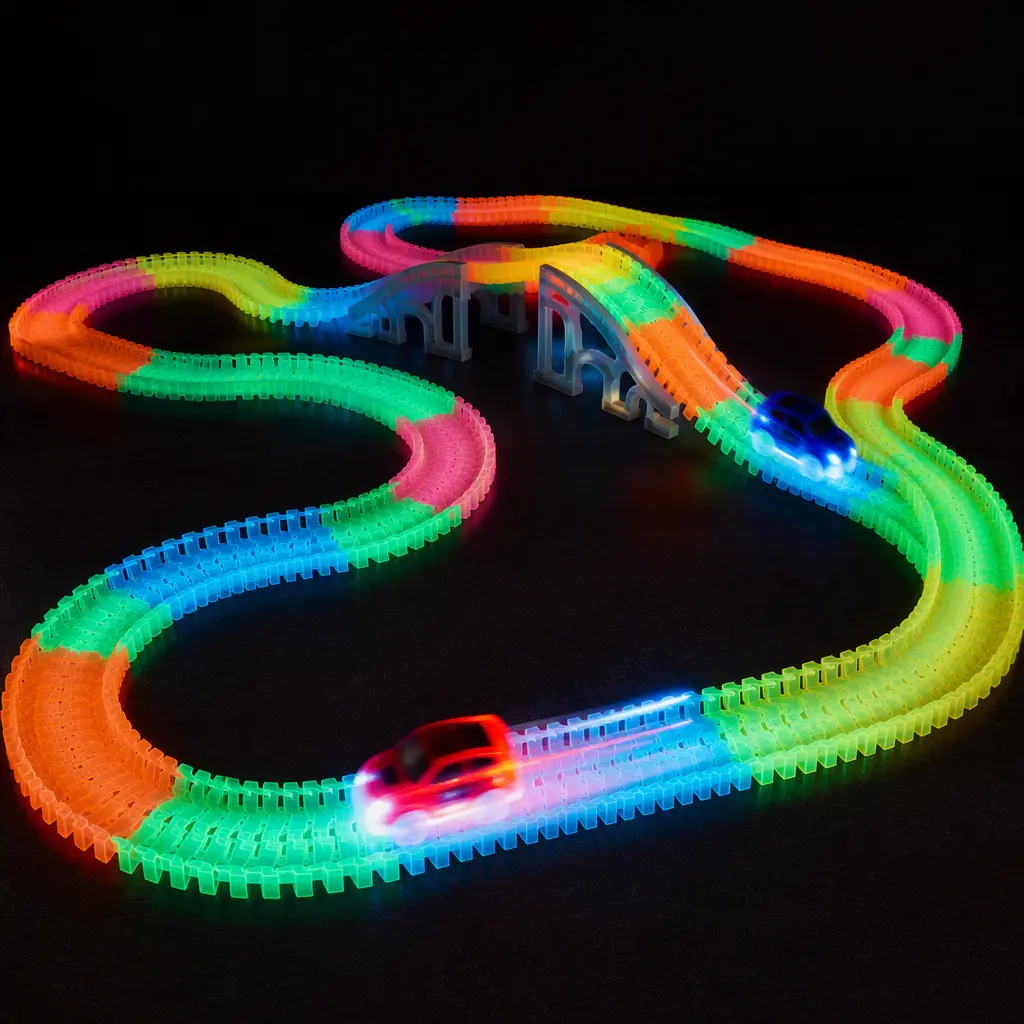
Magic Tracks arrived during a period when classic slot-car sets and battery-powered racetracks were competing with tablets, streaming video, and app-connected toys for attention. Its answer was simple: make the track itself part of the play. Instead of rigid plastic sections locked into a fixed oval, Magic Tracks used flexible pieces that children could bend, twist, loop, and reshape almost endlessly. Add glow-in-the-dark plastic and light-up cars, and the result felt halfway between a racetrack and a construction toy. The concept spread quickly through television ads, online videos, and toy aisles because it delivered something visually immediate. A room could go dark, the track could glow, and the car could keep moving through curves and tunnels built moments earlier.
Where it came from
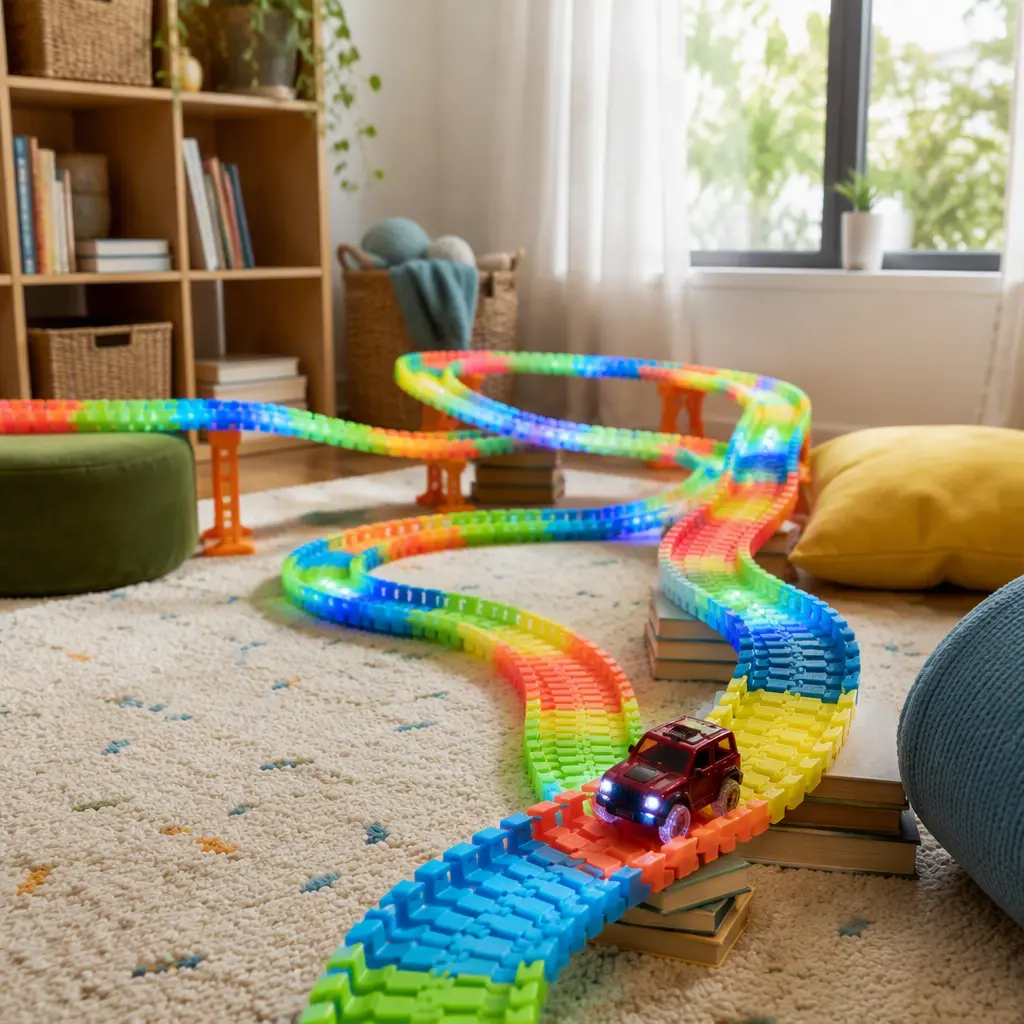
Magic Tracks emerged in the late 2010s, around 2017, as part of a wider trend toward toys that combined multiple forms of play into one product. The toy drew inspiration from traditional snap-together racetracks, battery-powered cars, and modular building systems. Rather than emphasizing speed competition alone, the design encouraged experimentation. Children could assemble a route in minutes, then immediately redesign it into hills, spirals, bridges, or winding paths around furniture and household objects.
The toy's popularity also reflected the continued influence of direct-response toy marketing. Demonstrations showed tracks glowing in dark rooms, cars climbing unusual shapes, and pieces bending into dramatic curves. That visual flexibility mattered because many older racetrack systems required careful setup on flat surfaces. Magic Tracks lowered the barrier to play. The pieces snapped together quickly, the cars ran on simple battery power, and the emphasis shifted from precision racing to imaginative building.
Why it works
The strongest idea behind Magic Tracks is that construction becomes part of the racing experience instead of a separate step before it. Traditional racetrack toys often reward careful assembly and consistent layouts. Magic Tracks leans toward improvisation. Children can rebuild the course repeatedly without worrying much about exact alignment, which creates a more forgiving style of play. The glow effect also changes the mood of the toy. Turning off the lights transforms a basic car run into a moving light display, extending the novelty beyond ordinary vehicle play.
Another reason the format endured is portability. The track sections are lightweight and flexible enough to store in bins or carry from room to room. Many sets also encouraged cooperative play because one child could build while another tested the route. That balance between construction and action helped the toy appeal to a broad age range.
- Flexible snap-together track pieces that bend into curves and loops
- Glow-in-the-dark materials that create a strong visual effect in dim rooms
- Battery-powered light-up cars designed for continuous motion
- Fast setup compared with rigid slot-car systems
- Expandable layouts that encourage rebuilding and experimentation
Who it's for
Magic Tracks is generally aimed at children who enjoy both vehicle toys and open-ended construction sets. Younger children are often drawn to the glowing colors and simple push-button operation, while older kids tend to experiment with more elaborate layouts using ramps, tunnels, and obstacles. Adults may recognize echoes of older electric racetrack systems but often appreciate that this version is easier to assemble and less dependent on exact track alignment. Families also tend to use it as a shared play activity because building the route together is part of the entertainment.
Variants and what to look for today
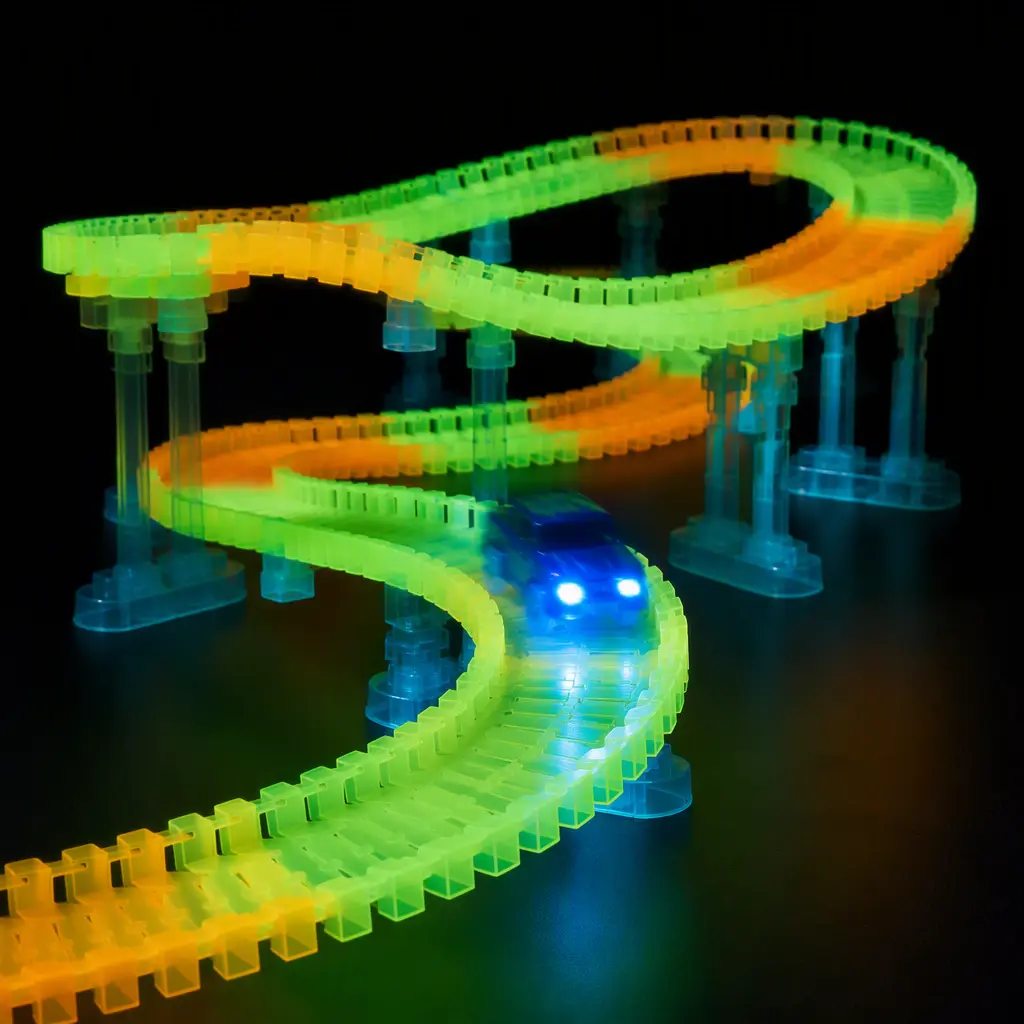
As the toy became popular, the market quickly filled with variations. Some sets focused on larger track layouts, while others added bridges, tunnels, spinning gates, or themed accessories. The core idea usually stayed the same: flexible interlocking track pieces and battery-powered cars with lights. Buyers today will find many similar products under different brand names, especially online. The quality can vary significantly depending on the strength of the track connectors and the durability of the cars.
When shopping for a set now, it helps to pay attention to how securely the pieces snap together and whether replacement cars or extra track sections are easy to find. Larger track counts can create more dramatic builds, but smaller starter sets are often enough to test whether the format suits a household. Rechargeable or longer-lasting battery options can also make a difference because the illuminated cars rely heavily on constant movement and lighting effects.
- Starter sets with shorter loops for younger children
- Expansion packs with extra curves and elevated sections
- Glow-heavy versions designed for dark-room play
- Vehicle multipacks for racing several cars at once
- Track systems with sturdier connectors for frequent rebuilding
Frequently asked questions
Do Magic Tracks cars work on other racetracks?
Usually only on similarly sized flexible track systems. Many versions use slightly different connector shapes or track widths, so compatibility can vary between brands and generations.
Does the glow effect require special lighting?
Most glow-in-the-dark track pieces charge under normal indoor lighting, but stronger light exposure beforehand usually creates a brighter effect when the room is darkened.
Are these tracks durable enough for everyday play?
The flexible plastic is designed for repeated bending, though heavy twisting or stepping on sections can weaken connectors over time. Better-made sets tend to hold together more securely after repeated rebuilding.
Why did the toy become so popular online?
The visual appeal translated well to short videos and television demonstrations. Glowing tracks, moving lights, and rapidly changing layouts are easy to understand in a few seconds, which helped the toy spread quickly through digital marketing and social media clips.
Magic Tracks did not replace traditional slot cars or detailed hobby racing sets, but it successfully reframed what a toy racetrack could be. By making the layout flexible, visually dramatic, and easy to rebuild, it blended construction play with vehicle action in a format that felt modern and accessible. That combination explains why the toy became more than a short-lived novelty and remains recognizable in the broader world of contemporary toy cars.