Magnetic Building Toys for Travel Bags and Road Trips
Compare magnetic building toy styles for ages 6–8, with a focus on hold strength, cleanup speed, storage, and piece loss during flights, car trips, and restaurant waits.
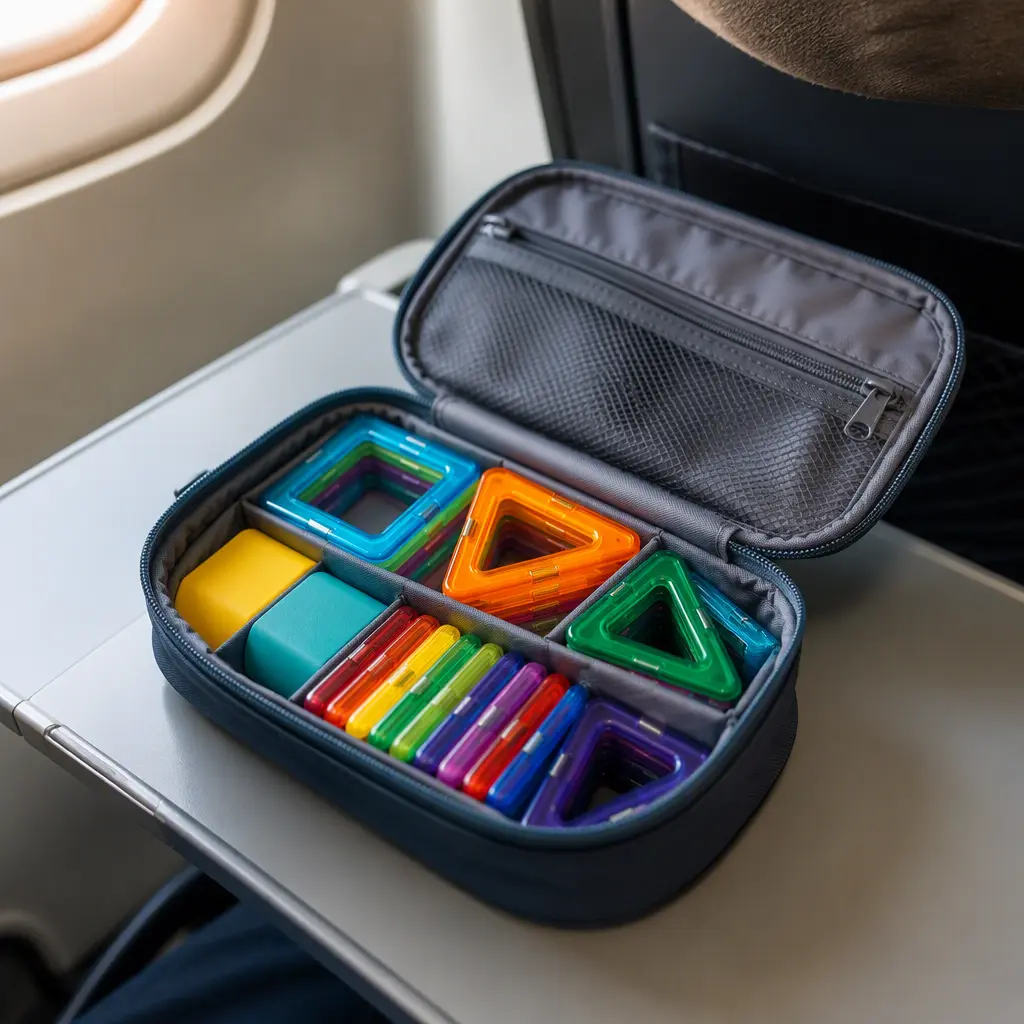
Compare prices and availability
Check current prices and availability for this guide on eBay.
As an eBay Partner, we may be compensated if you make a purchase.
Magnetic building toys can work well for road trips and flights because they are reusable, quiet, and easy to pack compared with larger construction sets. For children ages 6 to 8, the main differences are not only creativity or appearance but also how well pieces stay connected during movement, how quickly everything packs away, and how likely small parts are to disappear under car seats or airport chairs. Some sets are designed for flat geometric builds that store compactly, while others focus on rods, balls, gears, or magnetic figures that encourage more imaginative structures but can scatter more easily during travel. Choosing the right type depends on how much space you have, how long the trip will be, and how much cleanup parents want to manage between stops.
What to look for
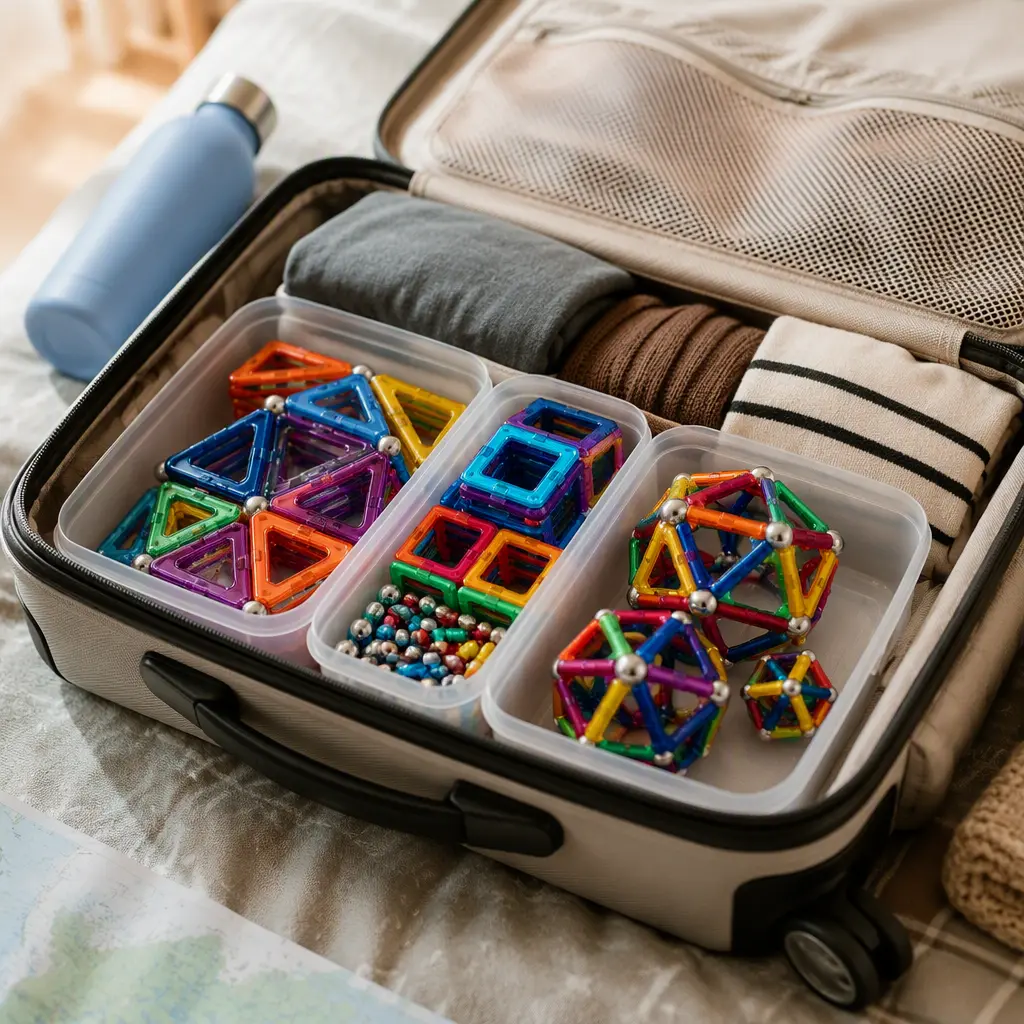
Travel-friendly magnetic toys should balance strong connections with manageable weight and storage. Larger magnetic tiles are usually faster to clean up and easier to track, while smaller magnetic rods or discs often allow more detailed building but increase the chance of missing pieces. For flights and long drives, compact sets with a dedicated storage case are usually easier to manage than open tubs or oversized starter packs. Noise also matters. Hard plastic magnetic pieces can clatter on tray tables or restaurant surfaces, while softer-edged tiles tend to stay quieter during play.
- Look for medium or strong magnetic hold so structures survive bumps during travel without constant rebuilding.
- Choose sets with fewer tiny connectors if piece loss is a concern during flights or rest stops.
- Flat magnetic tiles usually stack compactly and allow faster cleanup than multi-part magnetic systems.
- Travel cases with zippers, trays, or divided compartments help children repack independently.
- Consider weight for carry-on bags. Dense magnetic sets can become surprisingly heavy.
- Check whether pieces wipe clean easily after use on public tables, hotel floors, or car seats.
- Avoid sets with many specialty pieces unless the child enjoys sorting and organizing parts.
Age suitability
For ages 6 to 8, most children can handle standard magnetic construction systems independently, but the best choice depends on play style and attention span. Children who enjoy patterns, symmetry, and quick builds often prefer magnetic tiles because they connect predictably and are easy to restart after disruptions. Kids who like engineering-style play may enjoy magnetic rods and steel-ball systems, though these require more patience and usually more table space. Younger children within this age range may become frustrated if magnets disconnect too easily during movement in a car or plane. Older or more detail-focused children may appreciate systems that support taller structures or moving parts, even if cleanup takes longer. Families traveling with siblings may also prefer larger tile sets because pieces are easier to share without disputes over specialty components.
Options compared
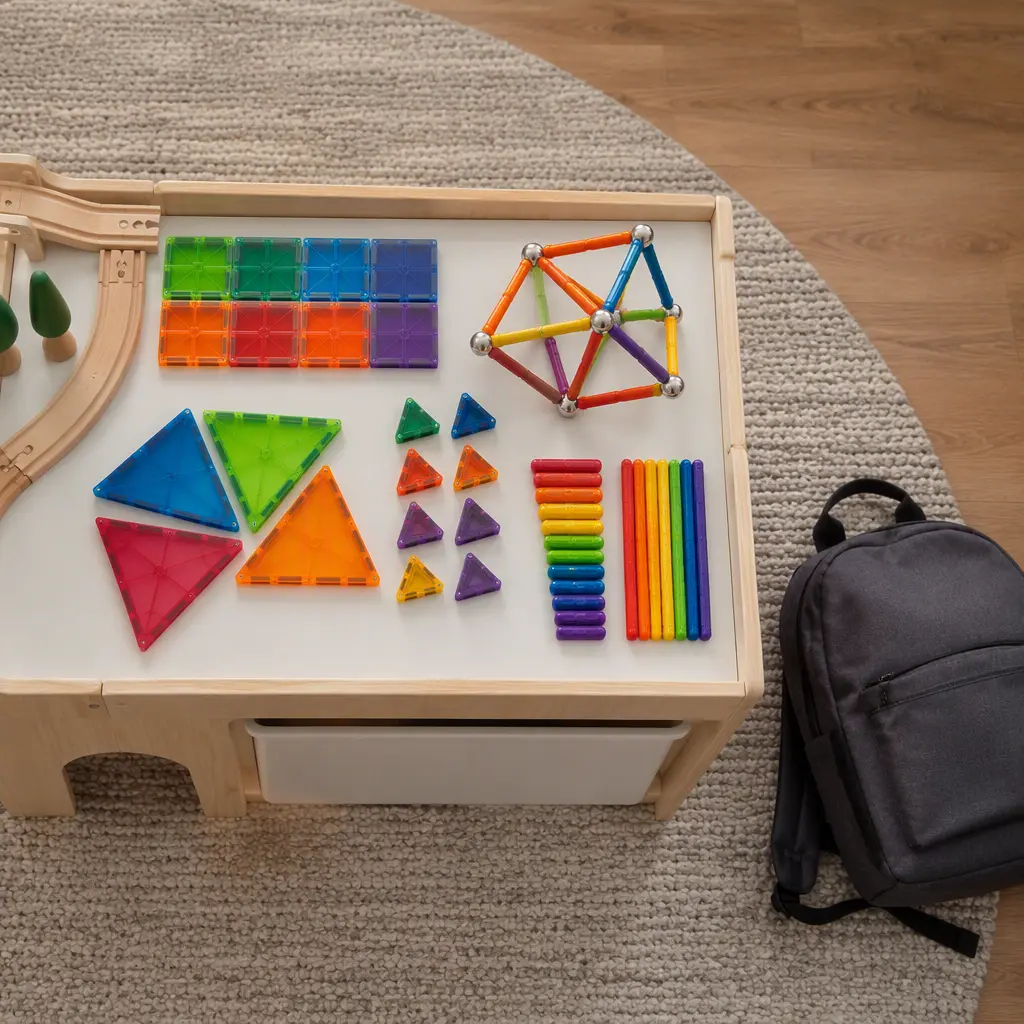
Flat magnetic tile sets are often the easiest option for travel. They stack neatly, connect quickly, and usually create less frustration during turbulence or bumpy car rides. Cleanup tends to be fast because pieces are large and visually obvious. They also work well on small surfaces like airplane tray tables. The trade-off is that many builds look similar over time, especially with smaller travel-sized sets. Children who want mechanical movement or highly detailed creations may lose interest sooner.
Magnetic rod-and-ball construction systems allow more engineering-focused play and can hold children's attention longer during extended travel days. They support taller structures and more experimentation, but they also involve more loose parts and slower cleanup. Small steel balls are especially easy to lose in dark car interiors or hotel carpets. These systems generally suit children who enjoy careful building and can manage organization independently. Magnetic block hybrids, where magnets are enclosed inside larger plastic or foam pieces, usually offer the lowest piece-loss risk and quieter play, though builds may be bulkier and less compact for luggage.
- Magnetic tiles: fastest cleanup, compact storage, quieter play, good for flights and restaurants.
- Rod-and-ball systems: more advanced building possibilities, slower cleanup, higher piece-loss risk.
- Magnetic cubes or blocks: durable and easy to grip, but heavier and less space-efficient.
- Foam-backed magnetic systems: quieter for shared spaces, though often less precise for complex builds.
- Mini travel sets: easy to pack but may feel limiting for children who like large structures.
- Large mixed sets: versatile for hotels or vacation rentals but less practical for light travel.
Frequently asked questions
Are magnetic building toys good for airplane travel?
Many are well suited to flights because they are screen-free, reusable, and relatively quiet. Flat magnetic tiles are often the easiest format for tray tables because pieces stay grouped together and builds can restart quickly if bumped.
Which type is least likely to lose pieces?
Large magnetic tiles and enclosed magnetic blocks are usually easiest to keep track of during travel. Systems with tiny connectors, steel balls, or miniature accessories generally require more careful supervision and storage.
Do stronger magnets always mean better travel play?
Not necessarily. Very strong magnets can make pieces harder to separate in tight spaces and may increase noise when pieces snap together. Moderate hold strength is often enough for travel builds while remaining easier for children to manage independently.
How much should families bring on a trip?
Smaller curated sets often work better than full home collections. Around enough pieces for two or three build styles is usually sufficient for flights, waiting rooms, or restaurant stops without creating a difficult cleanup situation.
Are travel cases worth it?
Dedicated cases can make a major difference during travel because they reduce sorting time and help children recognize when pieces are missing before leaving a location. Soft zippered pouches are lighter for flights, while hard compartment cases can keep specialty pieces organized during road trips.
The best magnetic building toy for travel is usually the one that matches the child’s patience level and the parent’s tolerance for cleanup. For most families traveling with children ages 6 to 8, compact magnetic tiles strike the simplest balance between creativity, portability, and low piece-loss risk. More advanced magnetic systems can provide deeper building play, but they tend to reward children who enjoy organization and careful setup. Focusing on manageable piece counts, reliable storage, and quiet play often leads to a smoother trip than choosing the largest or most complex set available.