Magnetic Tiles vs Cardboard Blocks for Small Playrooms
Comparing magnetic tiles and cardboard blocks for ages 3–5 in small homes. Learn the trade-offs around storage, durability, cleanup, noise, and open-ended play before you buy.
Compare prices and availability
Check current prices and availability for this guide on eBay.
As an eBay Partner, we may be compensated if you make a purchase.
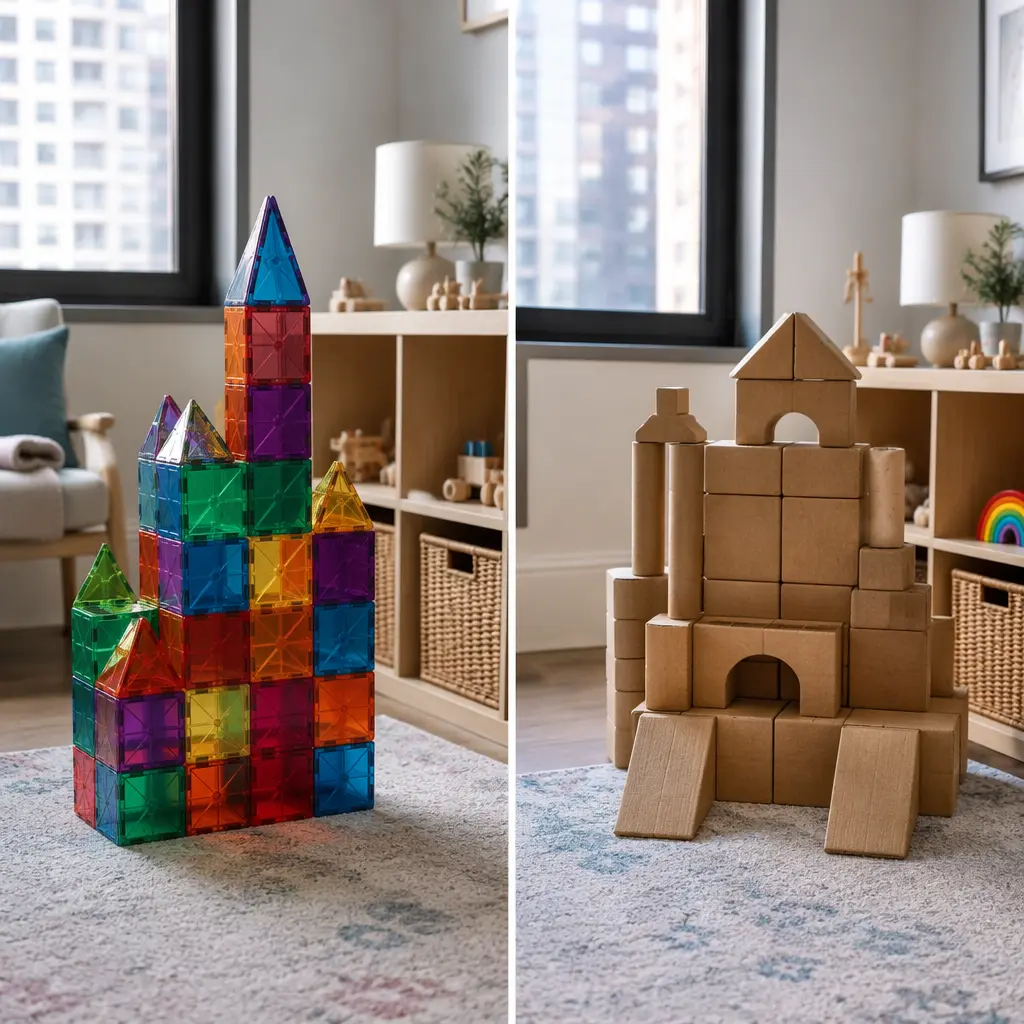
For families living in apartments or homes with limited storage, toy size matters almost as much as play value. Magnetic tiles and cardboard blocks are both popular screen-free building toys for ages 3–5, but they fit small playrooms very differently. Magnetic tiles usually store compactly and work well for tabletop building, while cardboard blocks create larger structures with less floor clutter from tiny pieces. The better choice depends on how much storage space you have, how rough your child plays, how often you want to clean up, and whether quiet play is important in your home.
What to look for
Both toy types encourage open-ended construction play, problem-solving, and imaginative building, but their practical differences become obvious quickly in smaller homes. Before choosing, think about where the toy will live when not in use, how your child typically plays, and how much supervision you want to provide during cleanup and building sessions.
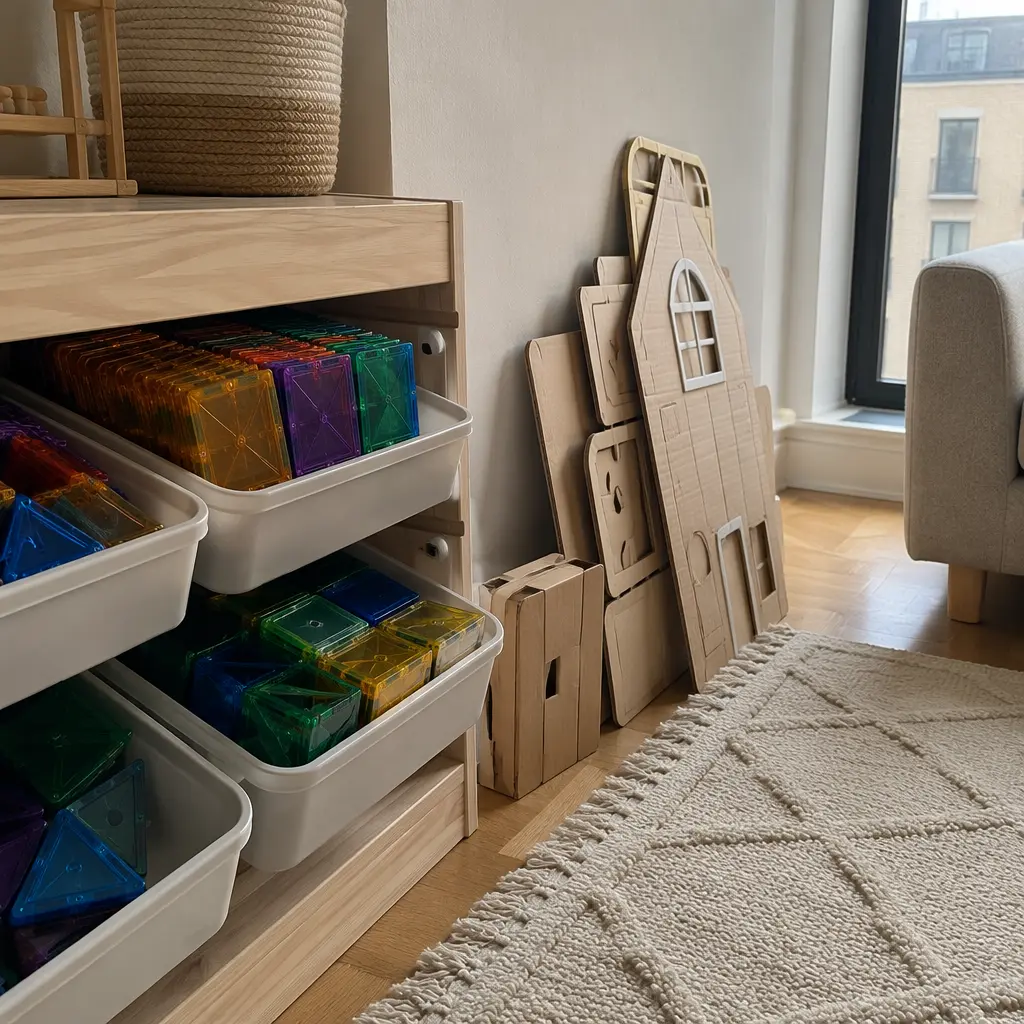
- Storage footprint: Magnetic tiles usually fit into a single bin or shelf basket, while cardboard blocks often need floor space, a large basket, or vertical storage.
- Noise level: Magnetic tiles can click loudly together and onto floors. Cardboard blocks are generally quieter and more neighbor-friendly in apartments.
- Durability: Magnetic tiles tend to hold up longer with frequent use. Cardboard blocks can bend, crush, or soften if stepped on or exposed to moisture.
- Cleanup speed: Large cardboard blocks are fast to gather but awkward to stack neatly. Magnetic tiles take longer to collect piece by piece but store more compactly.
- Building style: Magnetic tiles support detailed structures and flat-surface play. Cardboard blocks encourage full-body movement, forts, tunnels, and large pretend setups.
- Mess and maintenance: Cardboard can attract scribbles, dents, and tape residue. Magnetic tiles usually wipe clean more easily.
- Play longevity: Magnetic tiles often continue appealing into early elementary years, while oversized cardboard blocks may be outgrown sooner by some children.
Age suitability
For ages 3–5, both options can work well when matched to a child’s play style. Younger preschoolers often enjoy cardboard blocks because they are lightweight, easy to grasp, and forgiving during rough play. Large blocks also reduce frustration for children still developing fine motor control. Magnetic tiles usually become more rewarding once children can intentionally connect pieces and plan simple structures, which many children begin doing confidently around age 4. Some 3-year-olds enjoy magnetic tiles immediately, especially with adult participation, but they may focus more on stacking or sorting than complex building at first. Families with siblings should also consider mixed-age safety, since smaller magnetic pieces from some construction sets may not suit younger children nearby.
Options compared
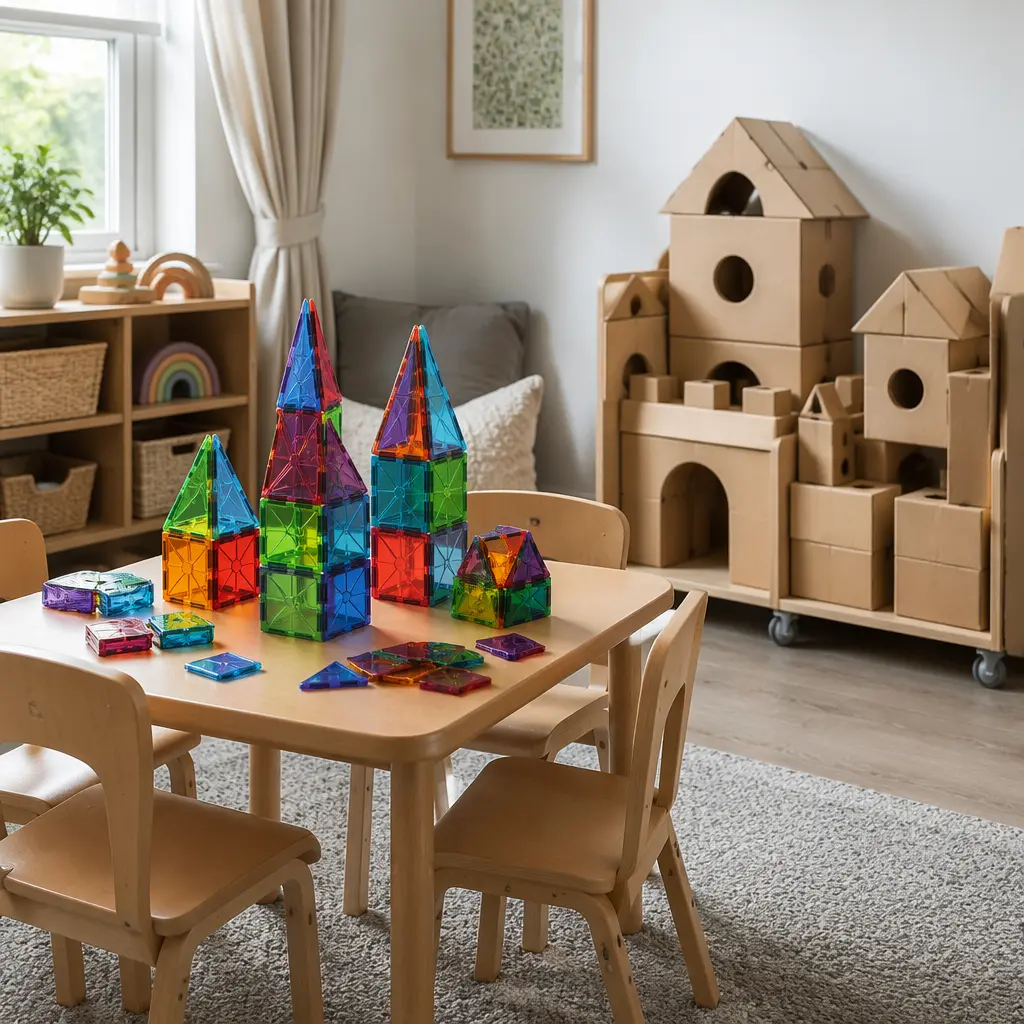
Magnetic tiles are often the easier fit for truly tiny homes because they deliver a lot of play value from a relatively small storage footprint. A medium-sized set can slide into a cabinet or under-bed bin, making it practical for families without dedicated playrooms. They also tend to support quieter independent play sessions at a table or rug. Children who enjoy patterns, pretend houses, roads, ramps, and symmetrical designs may return to magnetic tiles frequently over several years.
Cardboard blocks work differently. They take up more visible space during play and storage, but they encourage large-scale movement and imaginative role play that smaller construction toys cannot match. Children can build tunnels, storefronts, rockets, or obstacle courses using their whole bodies. That makes cardboard blocks appealing for energetic preschoolers who lose interest in tabletop toys quickly. However, apartment families may find that large structures dominate shared living areas and require regular breakdown between play sessions.
- Choose magnetic tiles if you want compact storage, longer-term use, easier cleaning, and more detailed building play.
- Choose cardboard blocks if you want quieter large-scale play, lightweight pieces, and movement-focused imaginative building.
- Avoid large cardboard sets if you already struggle with floor clutter or have limited closet space.
- Avoid small magnetic construction toys for children who still mouth toys or for homes with younger siblings accessing play areas.
- Magnetic tiles generally suit calm indoor play better, while cardboard blocks often suit active children who enjoy fort-building and dramatic play.
- Families in upstairs apartments may prefer cardboard blocks because dropped magnetic pieces can create sharp clicking sounds on hard floors.
Frequently asked questions
Are magnetic tiles too advanced for a 3-year-old?
Not necessarily. Many 3-year-olds enjoy simple stacking, color sorting, and basic building with magnetic tiles, especially alongside an adult or older sibling. More complex engineering-style builds usually appear later as planning and fine motor skills develop.
Which option is easier to clean up quickly?
Cardboard blocks are faster to gather because there are fewer pieces, but they can be awkward to stack or store neatly. Magnetic tiles take more time to collect individually, though they fit into smaller containers once cleanup is finished.
Do cardboard blocks last long enough to justify the space?
That depends on how heavily they are used and how they are stored. In dry indoor spaces with careful use, cardboard blocks can last through several years of preschool play. Rough climbing, moisture, or frequent crushing can shorten their lifespan.
Which toy encourages more independent play?
Magnetic tiles often support longer independent sessions once children understand how the pieces connect. Cardboard blocks tend to encourage collaborative and active play, which can involve more setup, movement, and shared space.
Can these toys work together?
Yes. Some families combine them by using cardboard blocks for large structures and magnetic tiles for windows, decorations, pretend furniture, or smaller architectural details. This approach offers variety but requires enough storage space for both systems.
For apartment families deciding between the two, the simplest question is whether you value compact storage or large-scale movement play more. Magnetic tiles usually make daily life easier in very small homes because they store efficiently and stay useful for years. Cardboard blocks can still be a strong choice for energetic preschoolers, especially when families have enough floor space to leave builds up temporarily. Matching the toy to your home setup matters just as much as matching it to your child’s age.