Magnetic Tiles vs Foam Blocks for Hotel Travel Play
Choosing travel toys for preschoolers often comes down to noise, storage and cleanup. This guide compares magnetic tiles and foam blocks for hotel-friendly, screen-free play.
Compare prices and availability
Check current prices and availability for this guide on eBay.
As an eBay Partner, we may be compensated if you make a purchase.
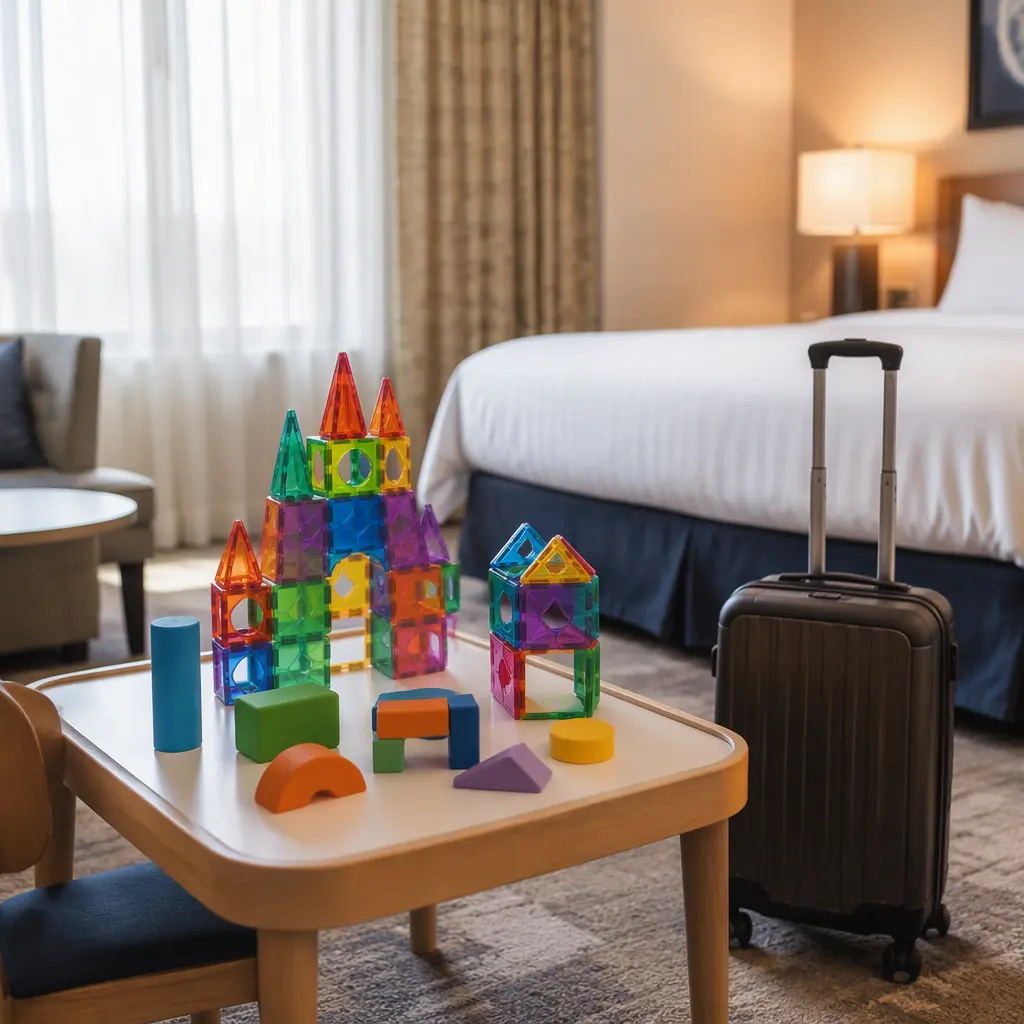
Travel toys for preschoolers need to do more than keep children busy for a few minutes. In hotel rooms, parents often need quiet play that packs easily, creates minimal mess and works in a limited space without constant supervision. Magnetic tiles and foam blocks are both popular screen-free building toys for ages 3–5, but they solve different travel problems. Magnetic tiles usually offer higher replay value and more complex building possibilities in a compact set, while foam blocks tend to be quieter, lighter and easier on hotel furniture and neighboring rooms. The better choice depends on your child’s building style, the length of the trip and how much space is available in your luggage.
What to look for
For hotel travel, building toys need different strengths than toys used mostly at home. Large sets can become frustrating in small rooms, and noisy materials may disturb other guests. Durability matters too, since travel toys are often packed quickly, dropped into luggage and carried between locations. Preschoolers also vary widely in how they play. Some enjoy careful building and imaginative scenes, while others prefer tossing, stacking and rebuilding repeatedly. Matching the toy type to your child’s habits usually matters more than choosing the biggest or most elaborate set.
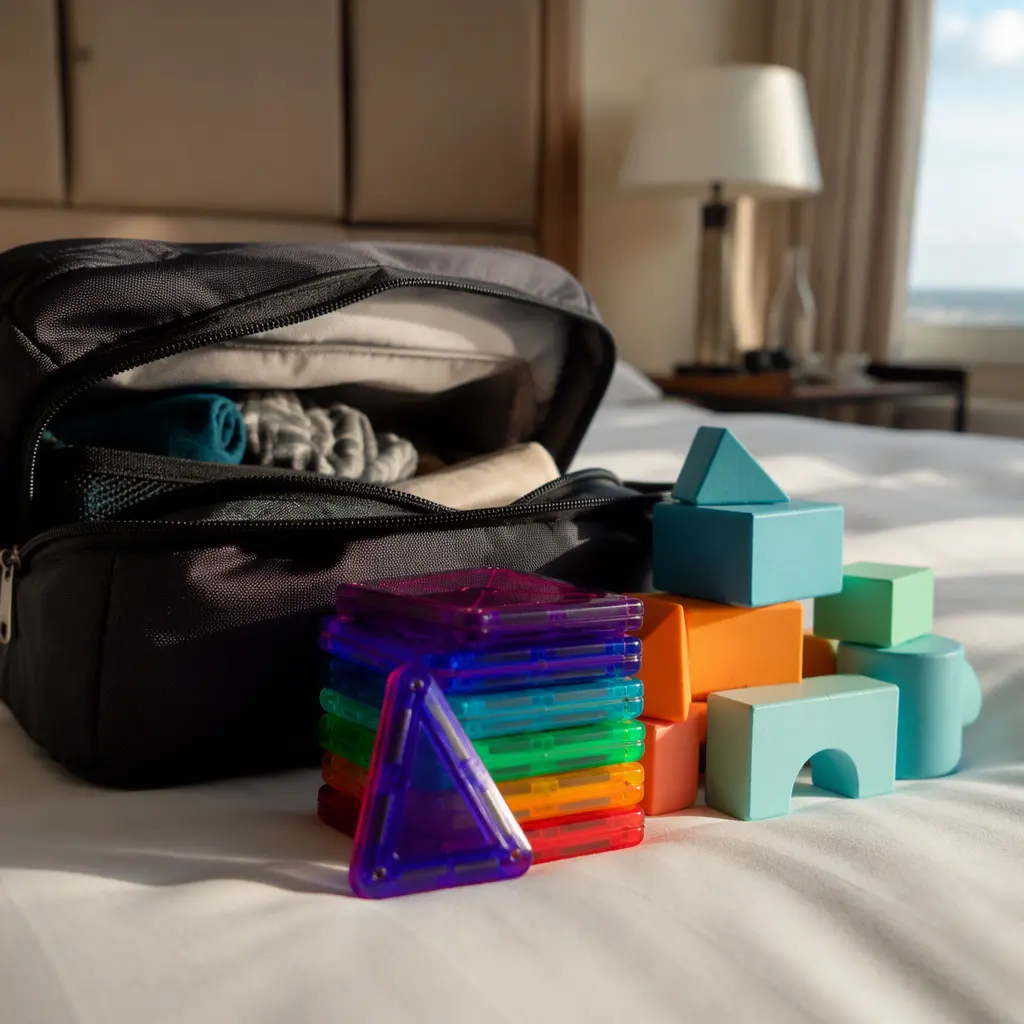
- Packability: Flat magnetic tiles often fit into slim pouches or packing cubes, while foam blocks usually take up more space despite weighing less.
- Noise level: Foam blocks are typically quieter when dropped or knocked over on hotel floors and tables.
- Cleanup speed: Magnetic tiles snap together for easier collection, while lightweight foam pieces can spread around a room quickly.
- Replay value: Magnetic tiles generally support more varied structures and longer independent play sessions for many preschoolers.
- Durability during travel: Dense foam can dent or tear over time, while magnetic tiles may crack if heavily stepped on or packed carelessly.
- Hotel-room safety: Softer foam blocks reduce the chance of damaged furniture or loud impacts in small spaces.
- Shared play: Magnetic tiles often work better for collaborative building between siblings or parents and children.
Age suitability
For the 3–5 age range, both toy types can work well, but the ideal choice depends on developmental stage and play habits. Younger preschoolers closer to age 3 often enjoy foam blocks because they are easier to grip, lighter to carry and forgiving when towers collapse. Children closer to age 5 may stay engaged longer with magnetic tiles because they allow more detailed structures, pretend-play settings and experimentation with shapes and balance. Families traveling with mixed ages sometimes prefer magnetic tiles because older siblings can build more advanced designs while younger children still participate safely with supervision. Very active children who throw toys frequently may be better suited to foam blocks in hotels, especially in rooms with hard floors or fragile decor.
Options compared
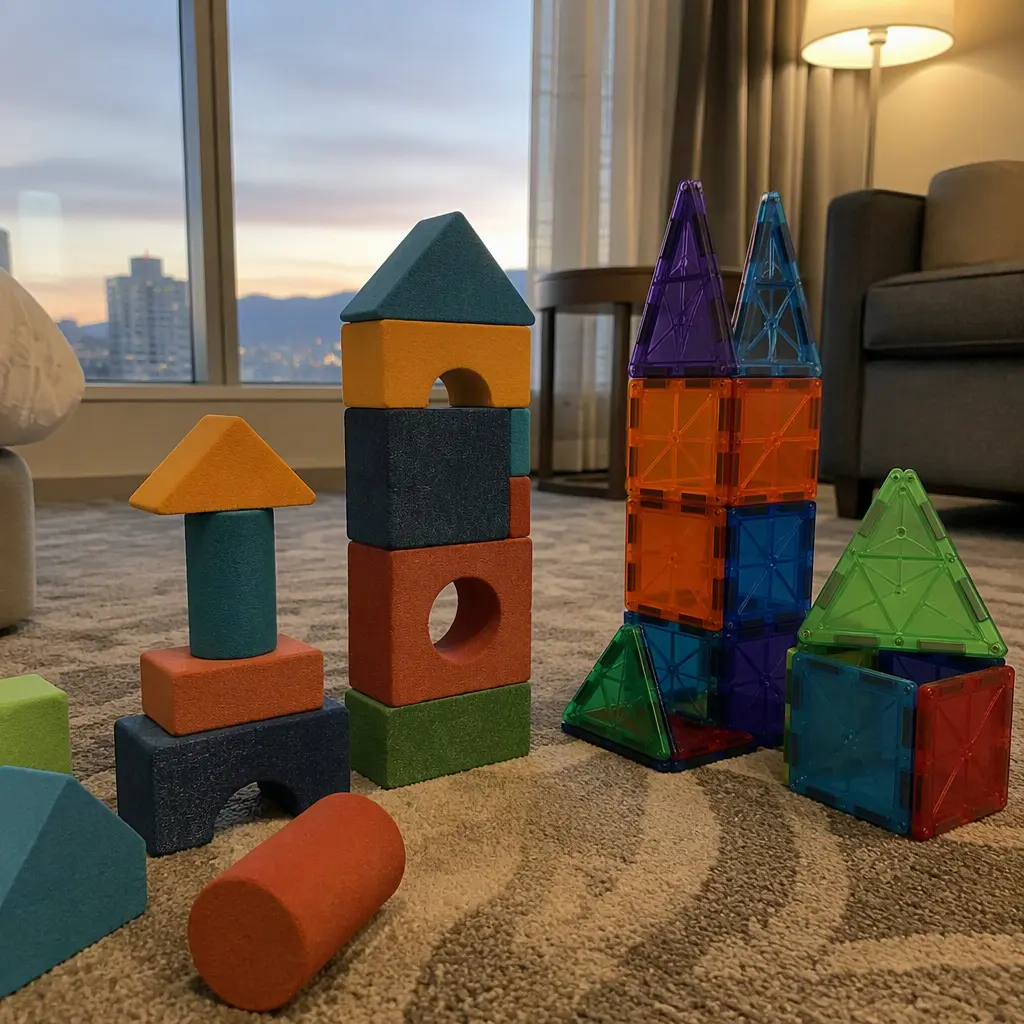
Magnetic tiles are often the stronger option for longer trips or extended downtime in hotels. A relatively small set can support castles, roads, garages, animals and pretend-play scenes without needing additional accessories. Many preschoolers revisit the same set repeatedly because the building possibilities change each time. The trade-off is noise. Tiles clicking together or falling onto hard hotel flooring can become surprisingly loud, especially in the early morning or evening. They also tend to work best on stable surfaces like tables or low-pile carpet rather than soft bedding.
Foam blocks are usually better suited to short trips, highly active children or families prioritizing quiet play. They are soft enough for energetic stacking and knocking down without much concern about disturbing neighboring rooms. They also work well for open-ended movement games, obstacle courses and large structures in floor spaces. The downside is bulk. Even modest foam block sets can consume valuable luggage space, and lightweight pieces may scatter around the room quickly during cleanup. Replay value can also vary more by child. Some preschoolers remain engaged for long periods with imaginative block play, while others lose interest once basic stacking feels repetitive.
- Choose magnetic tiles if your child enjoys detailed construction, imaginative scenes, collaborative building or longer independent play sessions.
- Choose foam blocks if quiet play, soft materials and low-risk indoor activity matter most during hotel stays.
- For air travel with limited luggage space, compact magnetic tile sets are often easier to pack efficiently.
- For road trips with more cargo space, larger foam block sets may become more practical.
- Families staying in small hotel rooms may appreciate how magnetic tiles contain play to a table or single floor area.
- Children who become frustrated when structures collapse may prefer magnetic tiles because the magnets add stability.
Frequently asked questions
Are magnetic tiles too noisy for hotels?
They can be noisy on hard flooring or glass-topped tables, particularly when towers collapse. Using them on carpet, rugs or beds can reduce sound considerably. Smaller sets also help limit large crashing structures in compact rooms.
Do foam blocks work well for independent play?
That depends on the child. Preschoolers who enjoy physical stacking, pretend forts or movement games may stay engaged for long stretches. Children who prefer intricate construction or problem-solving often return to magnetic tiles more frequently.
Which option is easier to clean up quickly before checkout?
Magnetic tiles are usually faster to gather because pieces connect together and are easier to spot under furniture. Foam blocks can spread across the room more easily, especially lightweight sets with many pieces.
Are these toys suitable for restaurant or airport waiting time?
Compact magnetic tile sets are generally more portable for waiting areas, although building space may be limited. Foam blocks are usually better reserved for hotel rooms or larger indoor spaces because of their size.
Is it worth bringing both types?
For longer vacations or travel with multiple children, bringing a small magnetic tile set plus a few foam blocks can create more varied play without adding too much complexity. Families traveling light may prefer choosing one based on available luggage space and the child’s usual play style.
For most families traveling with preschoolers, magnetic tiles offer the best balance of replay value and compact packing, especially for longer hotel stays. Foam blocks remain a strong choice for quieter play and energetic children who benefit from softer materials. The right travel toy is usually the one that fits the realities of your trip: luggage limits, hotel size, noise concerns and how your child naturally prefers to play.