Mechanical Building Kits Teens Can Finish in a Weekend
A parent-focused guide to mechanical building kits for teens, covering realistic engineering play, age suitability, storage, supervision, and the trade-offs between wood, metal, and motorized sets.
Compare prices and availability
Check current prices and availability for this guide on eBay.
As an eBay Partner, we may be compensated if you make a purchase.
Mechanical building kits aimed at teens sit in a useful middle ground between simple snap-together toys and advanced hobby engineering. The appeal is usually less about collecting finished models and more about the process of solving problems, following diagrams, handling real fasteners, and seeing gears, levers, or motors work together. For parents shopping for a weekend project, the key question is not just whether a kit looks impressive when finished, but whether it matches a teenager’s patience level, workspace, and interest in hands-on construction. Some kits focus on precision assembly and realistic mechanisms, while others lean toward creative experimentation and repeated rebuilding.
What to look for
A good mechanical building kit for teens should feel challenging without becoming frustrating halfway through the build. Most weekend-friendly kits fall into a range where assembly takes several hours spread across one or two days. Kits marketed for younger children may assemble too quickly, while advanced hobby kits with hundreds of precision parts can turn into multi-week projects requiring tools, glue, or soldering. Parents should also think about noise, storage, and how likely the finished project is to survive regular handling after completion.
- Look for clear printed instructions with step-by-step diagrams rather than app-dependent guidance.
- Metal construction kits tend to be more durable and realistic but usually require more patience and hand strength.
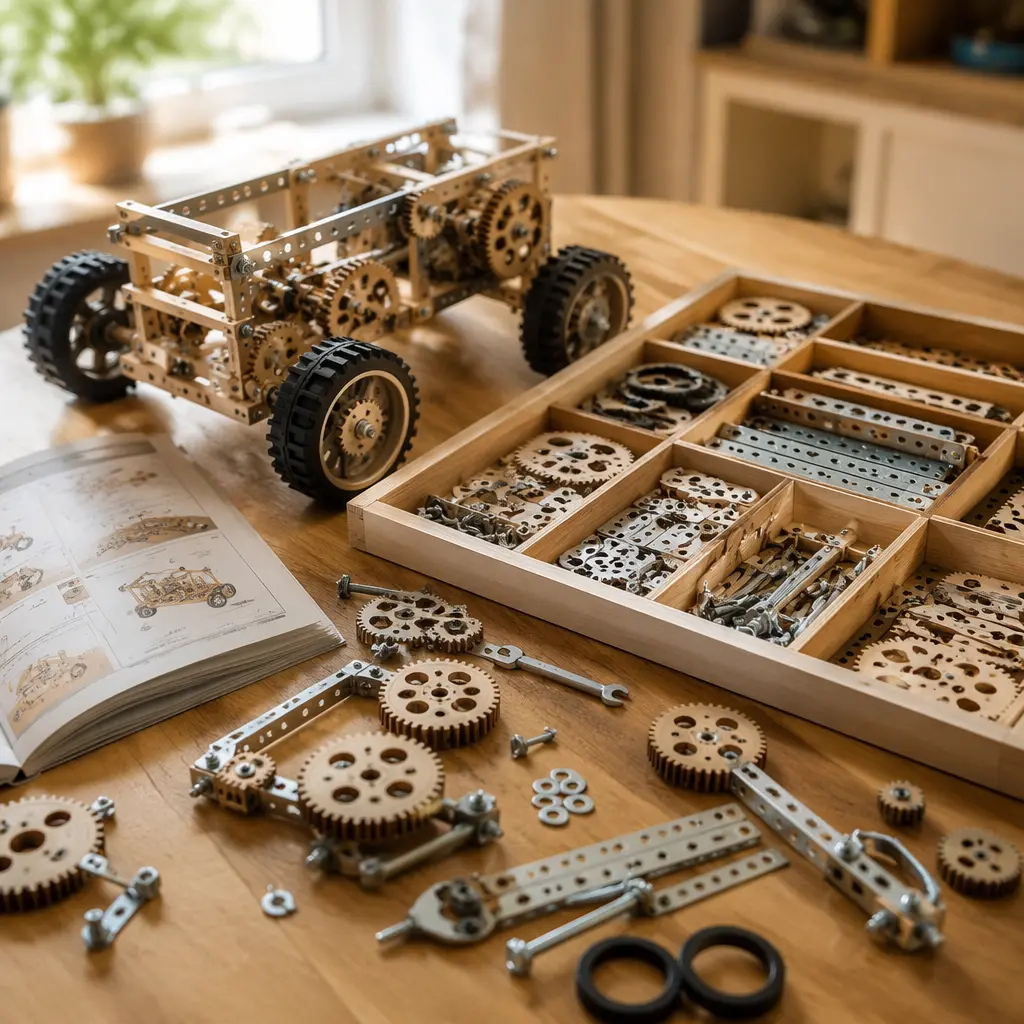
- Wooden mechanical kits often feel more approachable and quieter to build, though some delicate parts can snap under pressure.
- Motorized kits add movement and engineering interest but may need batteries and extra supervision around wiring or gears.
- Compact tabletop builds suit shared living spaces better than large roller coasters, cranes, or marble-run systems.
- Check whether replacement parts are available, especially for kits with many small connectors or specialty gears.
- Consider storage before buying: unfinished builds can occupy a dining table or desk for an entire weekend.
Age suitability
For ages 13 and up, the most satisfying mechanical kits usually involve real assembly techniques rather than oversized pieces designed for younger builders. Teen-focused kits often introduce gear ratios, crank systems, suspension, chain drives, or simple electric motors in ways that feel practical rather than classroom-oriented. That said, maturity matters as much as the age label. A detail-oriented 13-year-old may enjoy a complex gear-driven model, while another teen may prefer an open-ended construction system that allows experimentation instead of strict instruction following. Kits with tiny screws, tensioned parts, or lengthy assembly steps can frustrate builders who want quick results. Families should also consider whether the teen enjoys careful, methodical projects or prefers fast-paced creative play.
Options compared
Wooden mechanical model kits are often the easiest entry point for teens who want a satisfying engineering-style project without dealing with heavy tools or complicated electronics. These kits commonly use laser-cut pieces that slot together into gearboxes, clocks, vehicles, or marble runs. They are usually quieter to assemble and visually appealing on a shelf afterward. The trade-off is durability. Thin wooden gears and tabs can wear down or break if forced during assembly, and some models are intended more for display than repeated play.
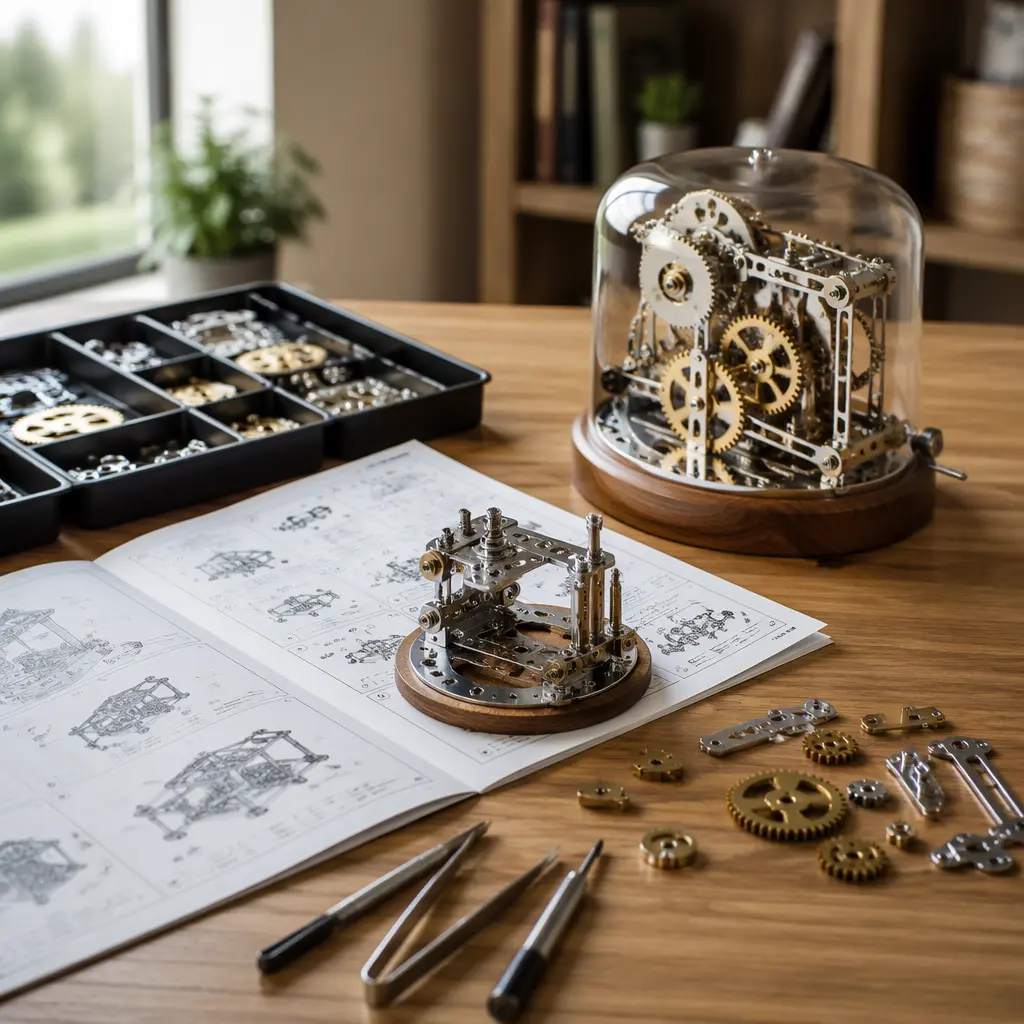
Metal construction systems offer a more traditional engineering feel. Builders tighten bolts, align beams, and create functioning mechanisms using reusable parts. These sets can support rebuilding long after the original model is complete, which makes them appealing for teens who enjoy experimentation. They also tend to withstand rougher handling better than wood. However, assembly is slower, instructions can be denser, and small nuts and bolts are easier to lose. For teens who enjoy problem-solving and precision, this style often delivers the strongest sense of real mechanical construction.
- Gear-driven wooden kits: Best for display-focused builds and teens who enjoy careful assembly without advanced tools.
- Metal engineering systems: Best for repeat building, realistic mechanics, and long-term experimentation.
- Motorized construction kits: Best for teens interested in movement, automation, or basic robotics concepts.
- Marble runs and chain-reaction systems: Best for collaborative family building and visible cause-and-effect engineering.
- Open-ended mechanical sets: Best for creative teens who prefer designing their own machines instead of following a fixed model.
Frequently asked questions
Are mechanical building kits still engaging for teens who already use screens heavily?
Many teens respond well to construction kits because they provide a different kind of focus than screen-based entertainment. The appeal often comes from solving physical problems, organizing parts, and watching a machine function in real space. Kits that produce movement, such as gear trains or marble runs, tend to hold attention longer than static display builds.
How much adult help is usually needed?
Most kits designed for ages 13 and up are intended for independent assembly, although some teens may need occasional help interpreting instructions or handling tight components. Adult supervision is more useful for keeping the workspace organized and preventing lost parts than for completing the build itself.
Do motorized kits require electronics knowledge?
Not usually. Many beginner-friendly motorized kits rely on simple battery packs and pre-designed wiring layouts. The challenge is generally mechanical assembly rather than coding or advanced electronics. More complex robotics-style systems may involve programming, but they are a separate category from most weekend mechanical builds.
Which type is easiest to store after the project is finished?
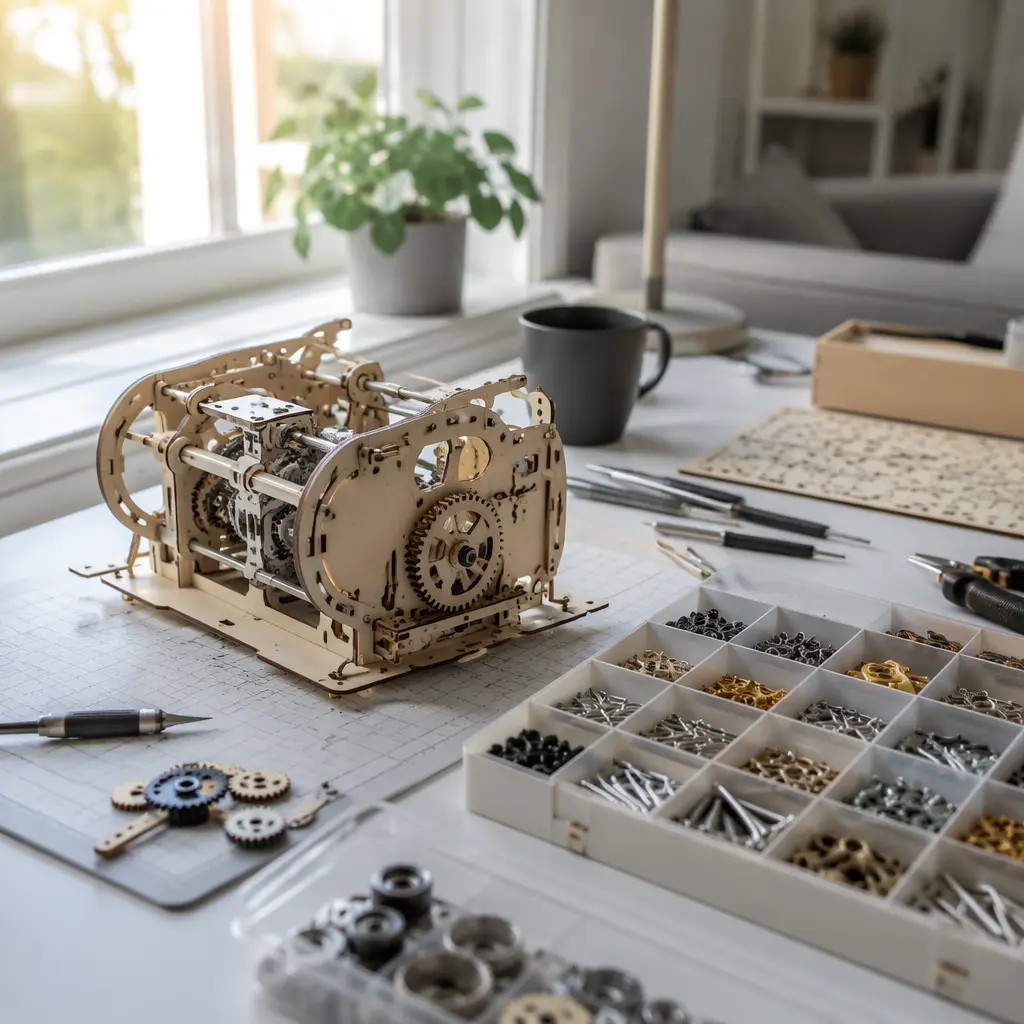
Compact wooden display models are usually the simplest to keep on a shelf once completed. Large construction systems and marble runs often take up more space and may need partial disassembly for storage. Reusable metal systems also require sorting trays or containers to keep small parts organized between builds.
What if a teen loses interest halfway through?
This is one reason manageable project size matters. Kits designed to finish within a weekend are less likely to stall than extremely large builds. Open-ended systems can also help because unfinished work can still become part of another project later rather than feeling wasted.
The best mechanical building kit for a teen depends less on complexity alone and more on how the project matches their attention span, building style, and available space. A carefully chosen weekend build can offer genuine engineering-style problem solving without turning into an overwhelming long-term hobby commitment. Parents who prioritize realistic construction, offline engagement, and reusable play value should focus on kits that balance challenge with achievable progress.