Pop Beads vs Lacing Sets for Fine-Motor Play Ages 3–5
Compare pop beads and lacing sets for preschool fine-motor practice. Learn which toy type is quieter, easier to store, less frustrating by age, and better for independent play.
Compare prices and availability
Check current prices and availability for this guide on eBay.
As an eBay Partner, we may be compensated if you make a purchase.
Pop beads and lacing sets are both common choices for preschool fine-motor practice because they keep hands busy without screens, batteries, or loud electronic features. They also support early coordination skills that help with dressing, drawing, and later pencil control. Even so, the two toy types feel very different in everyday use. Pop beads focus on pushing pieces together and pulling them apart, while lacing sets require threading and more careful hand control. For many families, the easier choice depends less on educational claims and more on frustration level, cleanup, storage space, and whether a child prefers fast results or slower, repetitive play.
What to look for
For children between 3 and 5 years old, the most useful fine-motor toys are usually the ones that children can return to independently without constant adult help. Size, resistance, and storage design matter more than complicated features. Some children enjoy the satisfying click of pop beads immediately, while others prefer the calmer pace of threading beads onto a lace. Parents often notice differences in noise level, cleanup time, and how long a child stays engaged.
- Choose larger pieces for younger preschoolers to reduce frustration and make cleanup easier.
- Look for smooth edges and sturdy cords that resist fraying during repeated use.
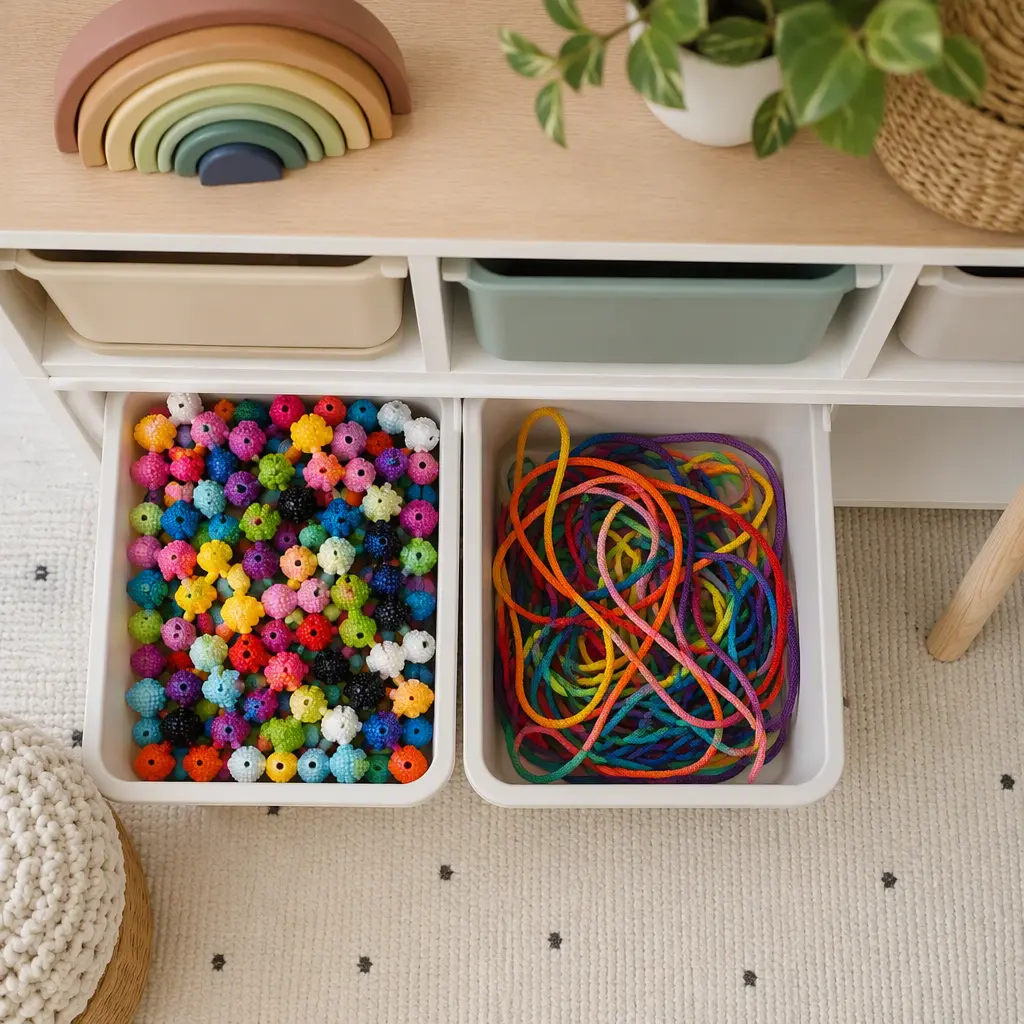
- Consider storage carefully. Wide tubs are easier for pop beads, while lacing sets benefit from divided containers to prevent tangled cords.
- Pop beads are usually quicker to start and reset, which can help shorter attention spans.
- Lacing toys tend to create less floor scatter than rolling plastic beads but may require more adult guidance at first.
- If quiet play matters, wooden lacing sets are often softer sounding than hard plastic snap-together beads.
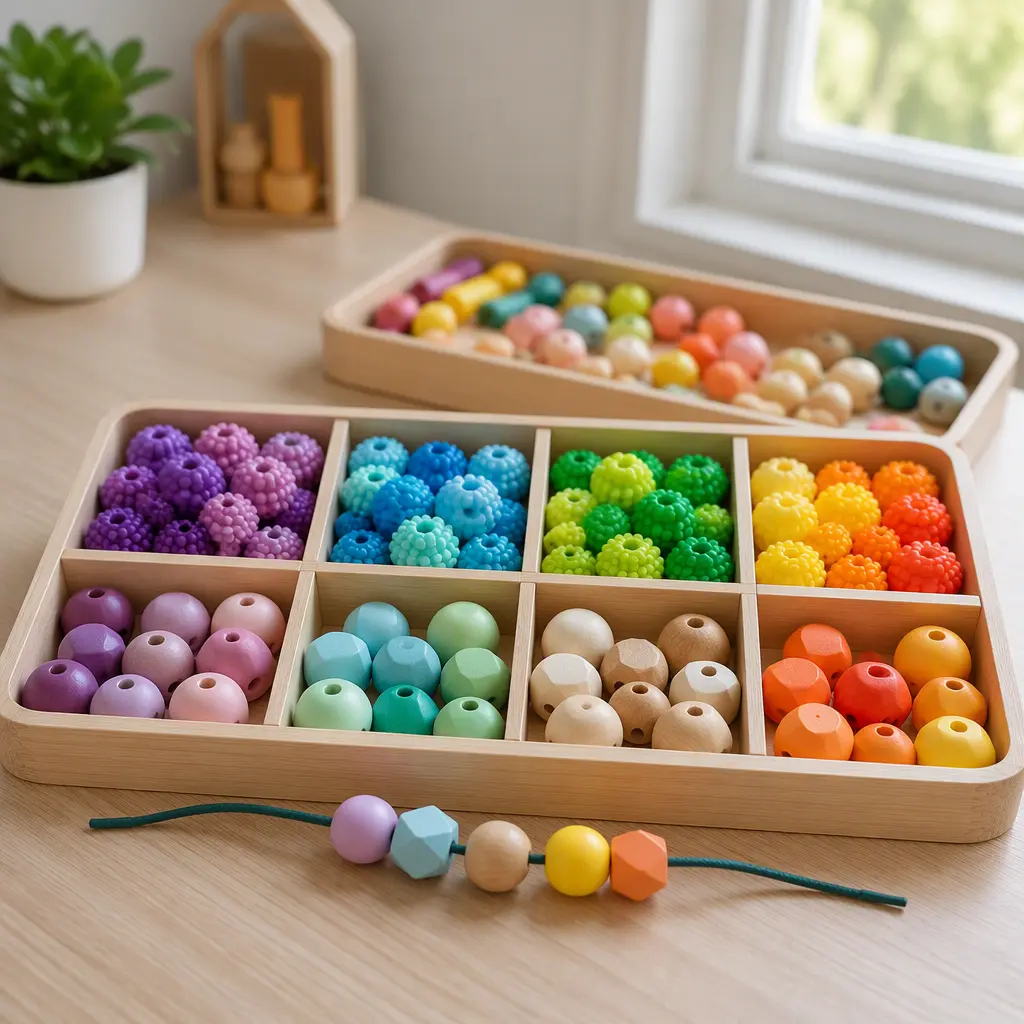
- Travel use can differ. Lacing sets often fit neatly into small pouches, while larger pop bead collections take more space.
Age suitability
At age 3, many children find pop beads easier because the action is direct and visually rewarding. Connecting two pieces together creates immediate success, and there is less precision required than threading a lace through a small opening. Younger preschoolers who become frustrated easily may stay engaged longer with chunky snap-together beads. Lacing sets often become more appealing closer to ages 4 and 5, when children develop better bilateral coordination and patience for multi-step tasks. That said, bead size changes the experience significantly. Large wooden animal lacing pieces can work well for younger children, while smaller beads with thin strings are better suited to older preschoolers who already enjoy puzzles or crafts.
Options compared
Pop beads usually suit children who like building quickly and taking creations apart repeatedly. The snapping motion strengthens hand muscles and can feel satisfying without needing careful concentration. They also support open-ended play because children can make necklaces, chains, pretend food, or abstract creations. The trade-off is that some sets become noisy when dumped onto hard floors or tables, and cleanup can take longer because pieces roll easily. Large collections also require more storage space than many parents expect.
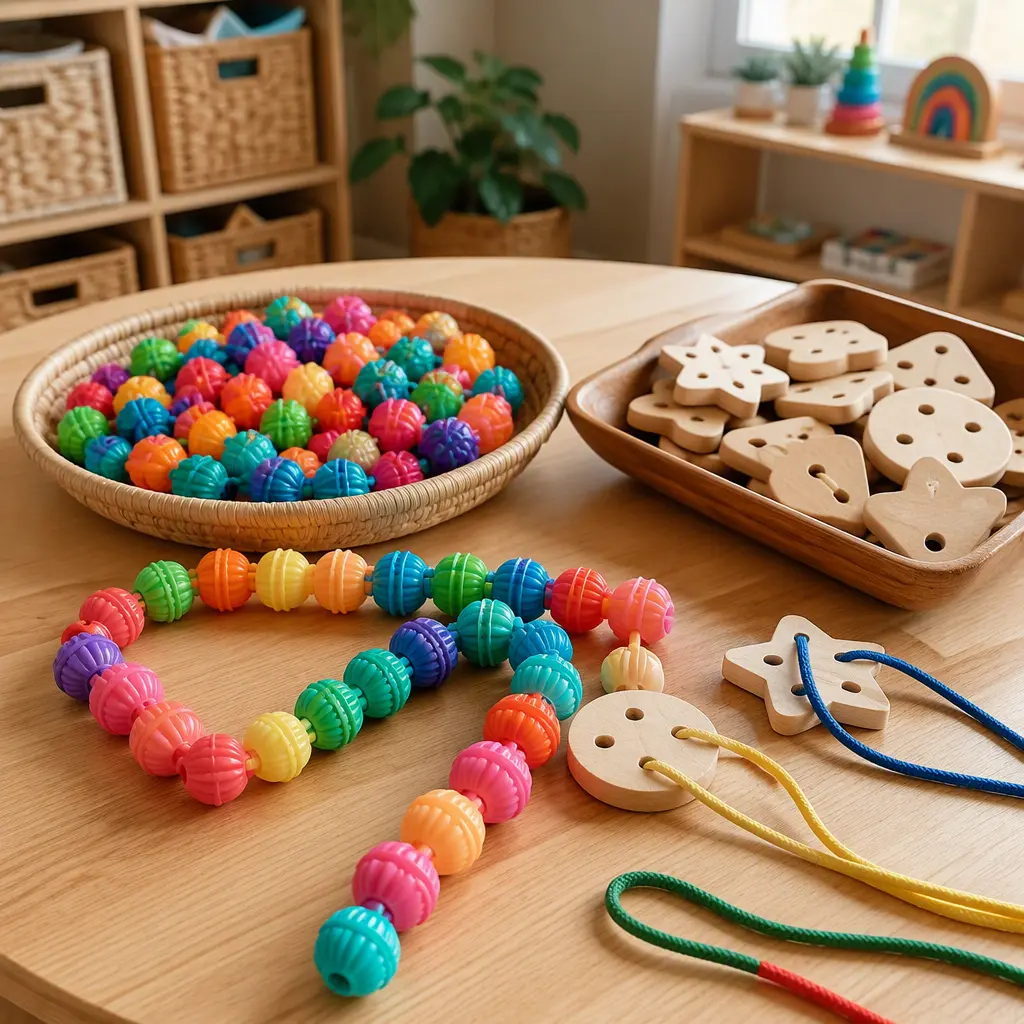
Lacing sets tend to encourage slower, more focused play. Children practice guiding a lace through holes, pulling material through, and planning sequences. This can support persistence and concentration, especially for children who already enjoy crafts, sorting, or repetitive tasks. Lacing toys are often quieter and easier to contain during independent play, making them useful for apartments, shared rooms, or travel. However, they can frustrate children who want fast success or who still struggle with hand coordination. Some children abandon lacing activities quickly if the holes are too small or the string tips bend easily.
- Choose pop beads for children who enjoy construction toys, sensory feedback, and quick results.
- Choose lacing sets for calmer, slower-paced play and children interested in crafts or patterns.
- For shared preschool spaces, lacing sets are often easier to keep organized and quieter overall.
- For children with shorter attention spans, pop beads may hold interest longer because progress feels immediate.
- Families with limited storage may prefer compact lacing kits with fabric pouches or divided boxes.
- Children who dislike resistance in their hands may prefer threading over tightly snapping beads together.
Frequently asked questions
Are pop beads educational or just sensory toys?
They can support both sensory play and practical fine-motor development. Connecting and separating pieces strengthens hand muscles and coordination, while sorting colors and making patterns adds simple early learning opportunities. Their main advantage is often repeated hands-on practice rather than formal instruction.
Do lacing toys help with school readiness?
Lacing activities can support coordination skills connected to everyday classroom tasks, including handling scissors, manipulating clothing fasteners, and controlling drawing tools. They also encourage focus and sequencing. Preschoolers usually benefit most when the activity stays playful rather than highly structured.
Which option works better for independent play?
For many 3-year-olds, pop beads are easier to use independently because the goal is simple and visible. Lacing sets may require initial adult demonstration, especially if strings are flexible or holes are small. By ages 4 to 5, many children can use either option independently if the difficulty level matches their coordination.
Are wooden or plastic sets better?
Wooden lacing beads are often quieter and feel more durable, but they can also be heavier and take longer to dry if used in sensory play. Plastic pop beads are lightweight and colorful, though some hard plastic pieces create more noise during cleanup. The better choice depends on your storage space, noise tolerance, and the child’s play style.
How many pieces are useful for preschoolers?
Very large sets are not always better for this age group. Smaller collections can reduce overwhelm and make cleanup easier, especially for younger preschoolers. A moderate number of chunky, easy-to-handle pieces is usually enough for open-ended fine-motor practice without creating unnecessary clutter.
For ages 3 to 5, pop beads are often the lower-frustration starting point because they reward effort quickly and work well for independent play. Lacing sets become especially useful once children enjoy slower activities and can manage more precise hand movements. Families concerned about noise, compact storage, or travel may lean toward lacing toys, while children who enjoy building and repetitive snapping motions may prefer pop beads. Matching the toy to a child’s patience level and coordination usually matters more than choosing the most elaborate set.