Best Quiet Toys for Toddlers in Waiting Rooms
A parent-focused guide to quiet, drop-resistant toys for toddlers aged 1–2 in waiting rooms, with practical advice on mess, portability, supervision and age suitability.
Compare prices and availability
Check current prices and availability for this guide on eBay.
As an eBay Partner, we may be compensated if you make a purchase.
Waiting rooms can be challenging with toddlers between 1 and 2 years old. Many toys that work well at home become too noisy, too messy or too easy to scatter in public spaces. The most practical waiting-room toys for this age group are quiet, compact, simple to clean and able to survive repeated drops onto hard floors. Toys with a small number of large pieces are usually easier to manage than detailed sets with accessories. Screen-free options can also help avoid overstimulation in busy environments where toddlers are already taking in unfamiliar sounds and activity. Choosing the right type of toy often matters more than choosing a specific brand.
What to look for
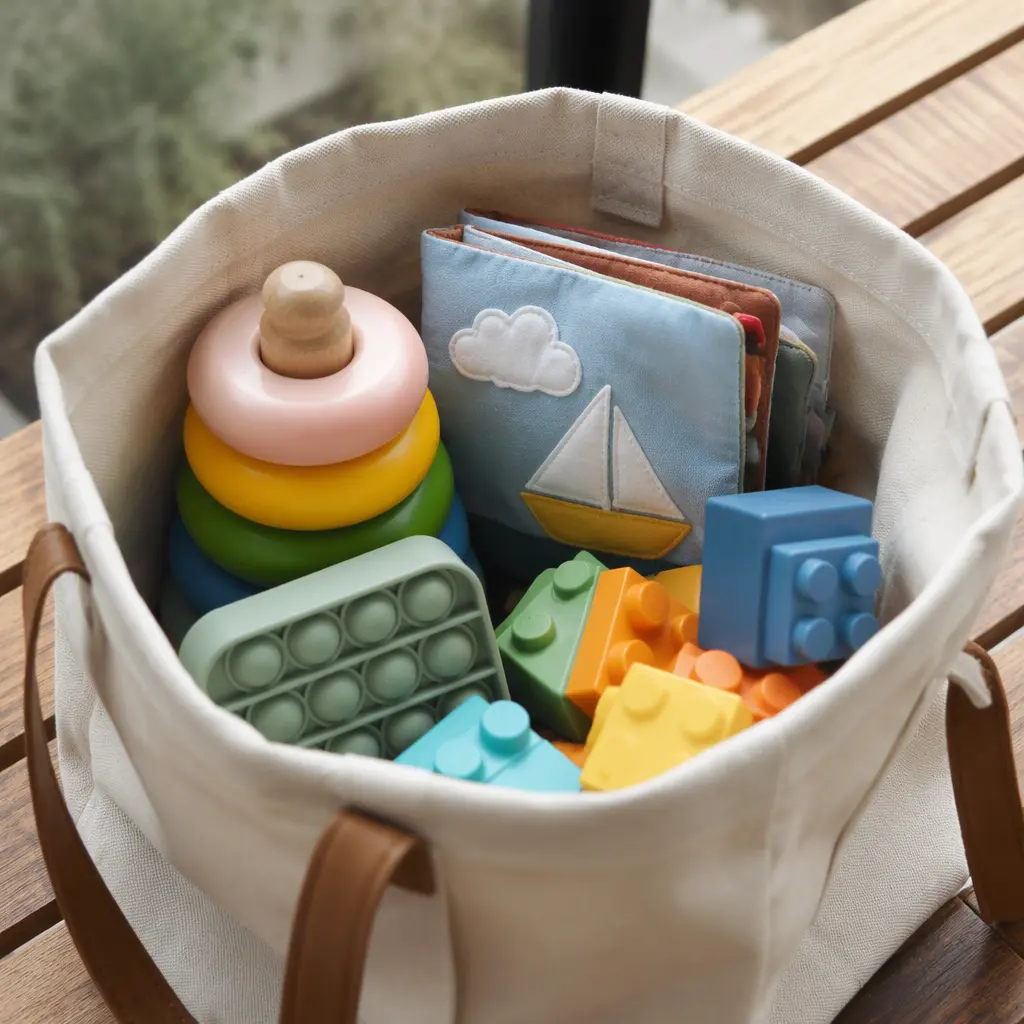
For waiting rooms, the ideal toy keeps a toddler engaged without creating extra stress for parents or other people nearby. Durability is important because toys are likely to be dropped repeatedly on tile or laminate floors. Toys that stay together in one piece or use large connected parts are often easier than sets with loose accessories. Simple sensory play can work well at this age, especially toys with textures, movement or repetitive actions that toddlers can explore independently for short periods.
- Choose toys with large pieces that are difficult to lose under chairs or furniture.
- Avoid hard plastic items that make loud clattering noises when dropped.
- Look for wipe-clean materials such as silicone, sealed wood or fabric designed for toddlers.
- Compact toys fit more easily into diaper bags and are simpler to carry during appointments.
- Quiet repetitive activities like stacking, pressing, spinning or connecting pieces often hold attention longer than pretend play at this age.
- Skip toys with tiny magnets, beads or detachable parts that require close floor-level cleanup in shared spaces.
- Soft-sided busy boards and cloth activity books are useful for travel because they stay contained and make very little noise.
Age suitability
Toddlers aged 1–2 years are still developing fine motor control and attention span, so simpler toys usually work better in waiting rooms than advanced building sets or puzzles. Large stacking cups, chunky interlocking blocks, silicone sensory toys and fabric activity panels are often easier for this age range than toys requiring precise assembly. Some construction-style toys marketed for older children include small connectors or complicated instructions that can frustrate younger toddlers in public settings. For younger toddlers closer to 12 months, lightweight toys that can be grasped with one hand are generally the easiest option. Older toddlers approaching age 2 may stay engaged longer with basic building toys that allow repeated connecting and pulling apart.
Options compared
Chunky building blocks are one of the most versatile choices for waiting rooms because they combine open-ended play with relatively low mess. Soft foam or silicone blocks tend to be quieter when dropped than hardwood blocks, although wooden blocks can feel more durable over time. The main trade-off is storage. Even large-piece block sets can take up significant bag space if you carry enough pieces to keep a toddler occupied.
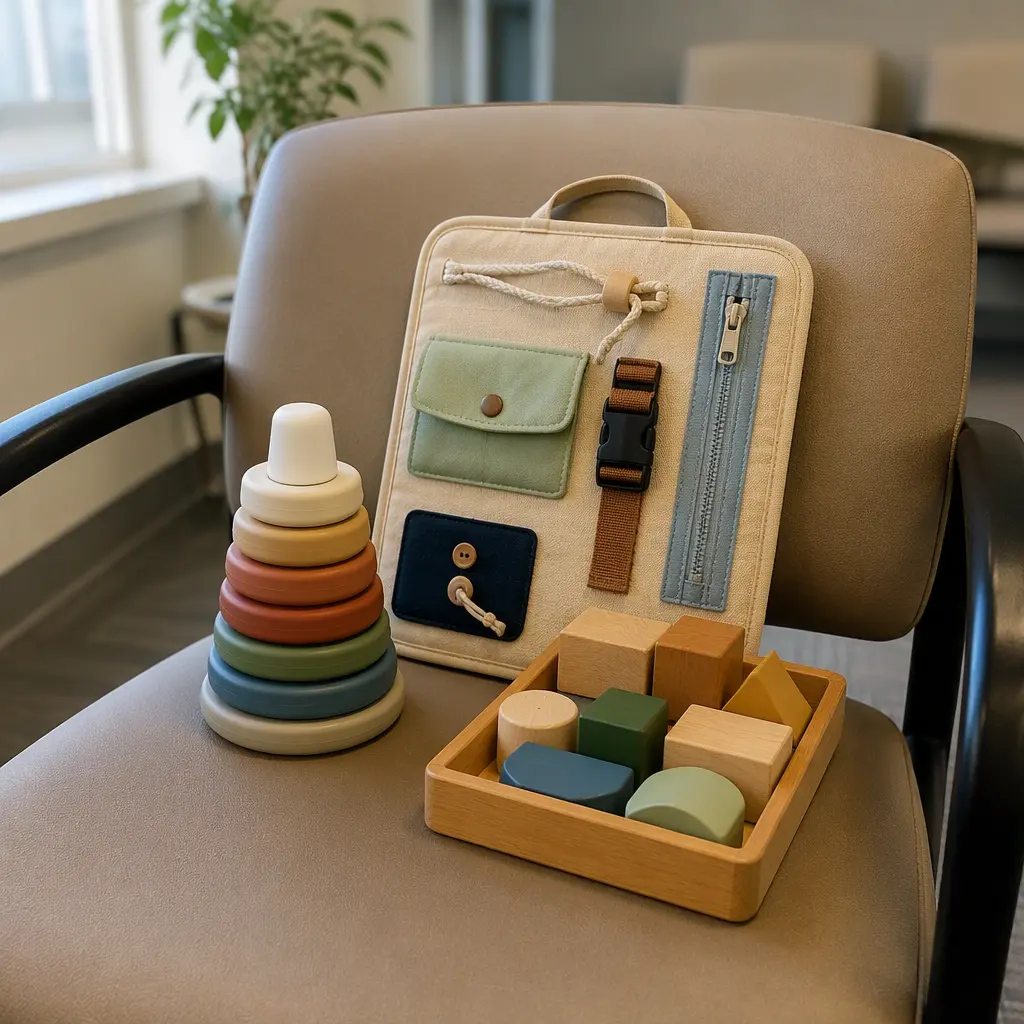
Stacking and nesting toys work especially well for shorter appointments. They encourage repetitive play, are usually lightweight and often stack into compact shapes for transport. However, individual cups or rings can roll away under furniture if dropped. Fabric busy boards and cloth books are among the quietest options available and create very little cleanup, making them useful in medical offices or shared waiting spaces. Their downside is that some toddlers lose interest more quickly because the activities are less physically active than building or stacking.
- Silicone sensory toys: very quiet, easy to clean and compact, but some toddlers outgrow them quickly.
- Chunky interlocking blocks: good for repeated building play and fine motor practice, though bulkier to carry.
- Fabric busy boards: highly portable and nearly silent, suitable for calm play in shared spaces.
- Stacking cups and rings: lightweight and inexpensive, but pieces can roll or scatter.
- Soft magnetic-style construction toys with large enclosed magnets: easy to connect and separate, though adult supervision is still important for younger toddlers.
Frequently asked questions
Are building toys practical for waiting rooms?
Some are, especially large-piece building toys designed for toddlers. The best options for waiting rooms use a small number of chunky parts that connect easily and can be packed quickly. Large complex sets with many loose pieces are usually harder to manage in public spaces.
What types of toys are usually the quietest?
Fabric toys, silicone sensory toys and soft-sided busy boards are typically quieter than wooden or hard plastic toys. Soft materials reduce noise when dropped onto hard floors and are less disruptive in quiet offices or clinics.
How many toys should parents bring?
A small rotation of two or three compact toys is often more practical than carrying a large bag of options. Switching between activities can help maintain attention without creating clutter around waiting-room seating.
Are magnetic toys safe for toddlers?
Some toddler magnetic construction toys are designed with large enclosed magnetic pieces intended for younger children, but supervision is still important. Parents should avoid any toy with loose or damaged magnets and follow the manufacturer’s age guidance carefully.
Which toys are easiest to clean after appointments?
Silicone toys, sealed wooden toys and machine-washable fabric items are usually the simplest to clean. Toys with deep grooves, electronic components or fabric that cannot be washed may be less practical for frequent travel use.
The best quiet waiting-room toys for toddlers are usually simple, sturdy and easy to pack away quickly. Large-piece building toys, stacking sets and soft sensory activities can all work well when matched to a child’s age and attention span. Focusing on portability, low noise and minimal cleanup helps make appointments less stressful for both parents and other people sharing the space.