Best Quiet Toys for Siblings Sharing a Bedroom
A parent-focused guide to low-noise toys for ages 3–5 that support calm independent play in shared bedrooms, with practical advice on mess, storage, supervision and bedtime use.
Compare prices and availability
Check current prices and availability for this guide on eBay.
As an eBay Partner, we may be compensated if you make a purchase.
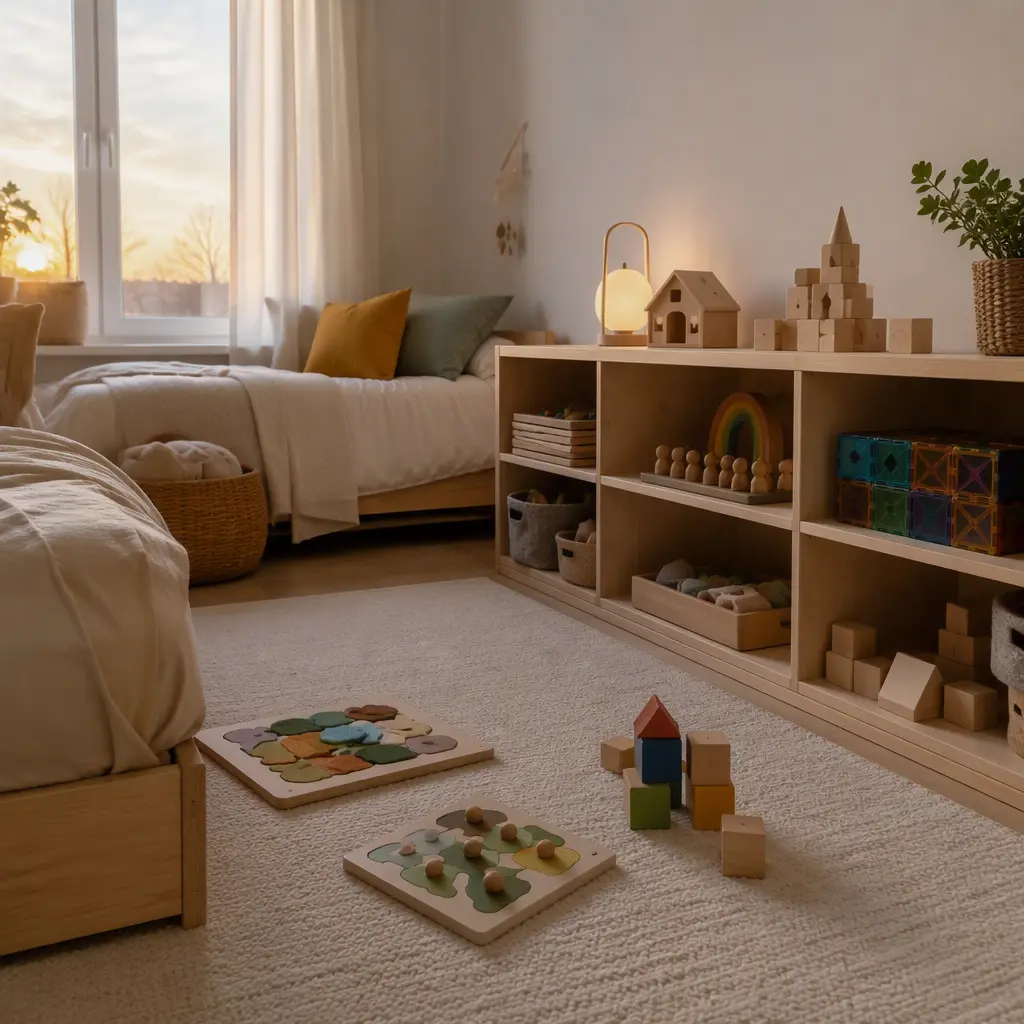
When siblings share a bedroom, toy noise matters more than many parents expect. Loud electronic sounds, hard plastic crashes and toys with repetitive music can quickly turn early mornings or bedtime wind-downs into stressful parts of the day. For children aged 3–5, quieter toys still need enough play value to hold attention independently without relying on screens. Building and construction toys are often a good fit because they encourage focused play, can be used in short sessions and usually scale well between younger and older preschoolers. The challenge is choosing options that stay calm in sound, manageable in size and realistic for shared spaces with limited storage.
What to look for
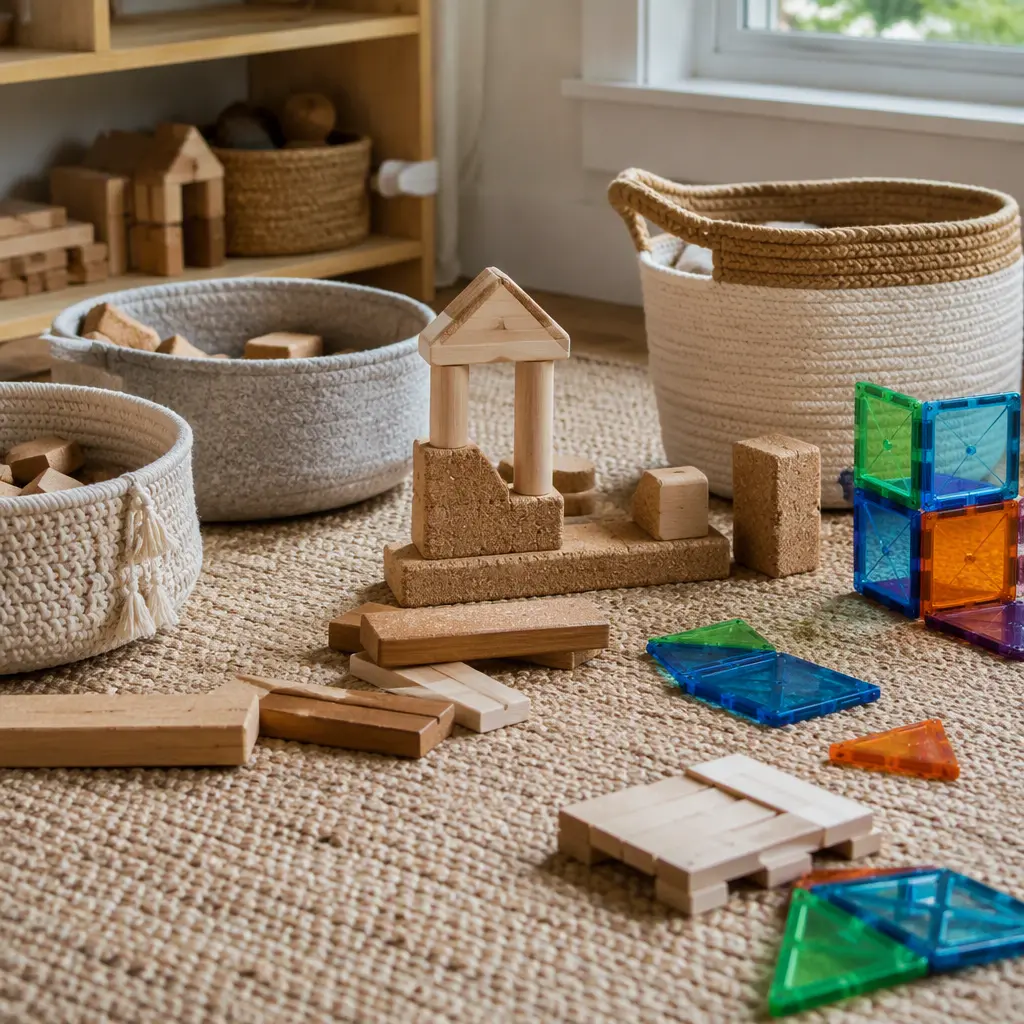
Quiet toys are not only about volume. Materials, cleanup time and how children interact with the toy all affect how peaceful a shared room feels. For ages 3–5, open-ended building toys often work better than highly scripted playsets because children can return to them repeatedly without needing lights, sound effects or constant adult setup. Softer materials such as wood, cork, foam or felt generally create less noise than hard plastic dumped into bins. Storage also matters. A toy that spreads across the whole floor before breakfast may create more tension between siblings than a slightly noisier toy that packs away quickly.
- Choose toys with soft or muted materials such as wood, cork, foam or fabric to reduce clattering noise.
- Look for contained play formats like magnetic boards, tray-based building sets or small-scale construction kits that stay in one area.
- Check piece size carefully. Toys for ages 3–5 should avoid very small parts while still being easy for preschool hands to connect and separate.
- Prioritize open-ended play value so children can build, sort, stack or pretend without needing batteries or screens.
- Consider storage before buying. Lidded baskets, fabric bins and under-bed boxes help keep shared bedrooms usable.
- Avoid toys with built-in music, sound effects or loud click mechanisms if the goal is calm early-morning play.
- Think about sibling compatibility. Cooperative building toys tend to create fewer conflicts than single-user activity boards.
Age suitability
Children between 3 and 5 years old vary widely in patience, fine motor skills and ability to share materials. Simpler stacking blocks and chunky magnetic tiles are usually easier for younger preschoolers, while older children in this range may enjoy more structured building systems or simple cooperative construction challenges. Some quiet toys marketed to preschoolers still include small accessories that are frustrating for younger children or difficult to keep contained in a shared room. For mixed-age siblings, medium-sized open-ended sets often last longer because both children can participate at different skill levels. It is also worth considering bedtime energy levels. Toys that encourage sorting, arranging or imaginative small-world play generally create calmer transitions than toys focused on racing, launching or competitive action.
Options compared
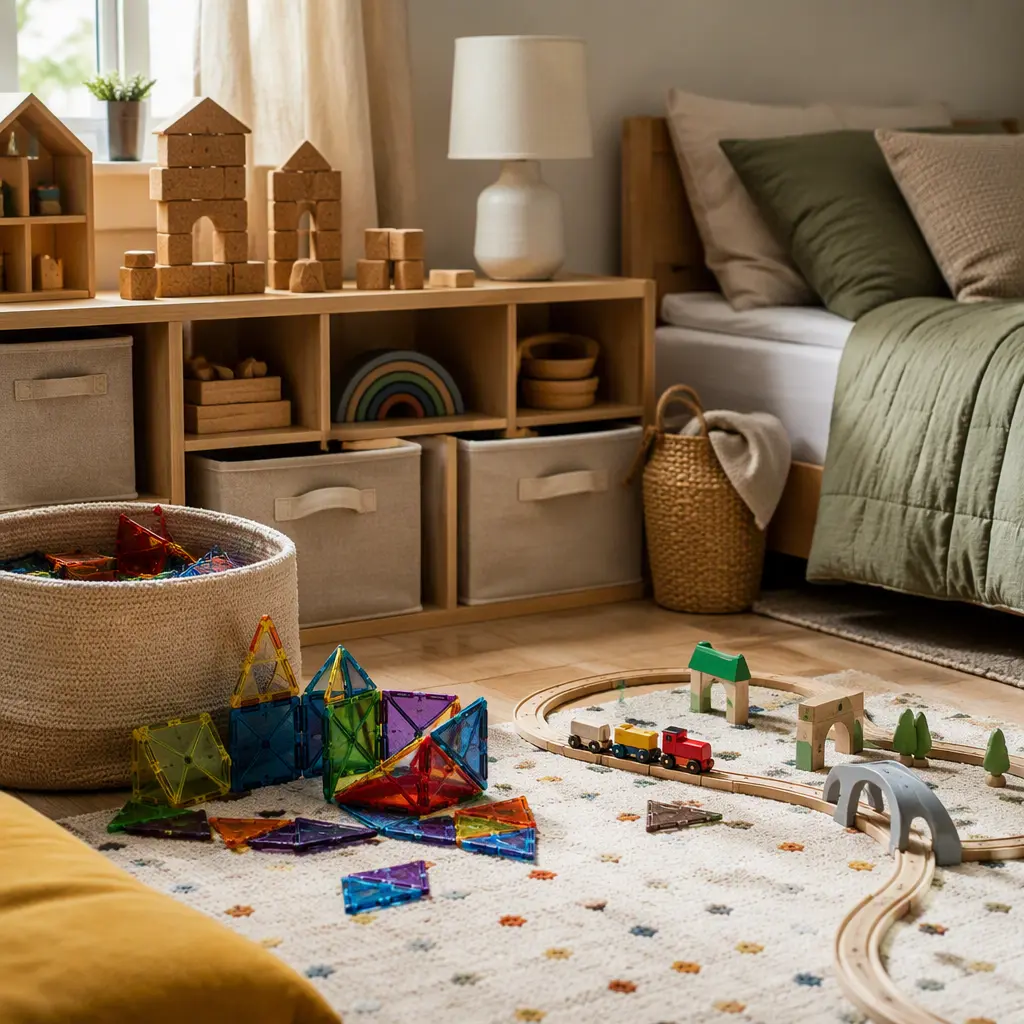
Wooden blocks remain one of the quietest and most flexible options for shared bedrooms. They suit children who enjoy calm, repetitive building and imaginative setups. Solid wood can still make noise if blocks are dumped onto hard floors, so rugs or cork mats help reduce impact sounds. Cork building blocks are quieter still and lighter to carry, although some children prefer the sturdier feel of traditional wood.
Magnetic tiles are popular because they hold attention well without requiring complicated instructions. They are often quieter than interlocking plastic bricks since children do not need to force pieces together or pull them apart repeatedly. However, larger sets require storage space, and some children become frustrated if younger siblings knock over builds. Foam blocks and soft construction sets are among the quietest choices available and work well for early mornings, though they may not satisfy children who want more detailed structures. Felt boards and fabric construction kits create very little noise and store easily, making them useful for smaller bedrooms or bedtime play. Traditional interlocking plastic bricks can still work in shared rooms if used in moderation, but hard pieces on wooden floors and noisy cleanup are common parent complaints.
- Wooden blocks: durable, open-ended and calm, but heavier and potentially noisy on hard flooring.
- Cork blocks: lightweight and very quiet, suited to calmer builders and smaller rooms.
- Magnetic tiles: engaging and versatile with relatively low noise, though larger sets need storage space.
- Foam construction toys: soft, safe and extremely quiet, but less durable for complex builds.
- Felt or fabric building kits: excellent for bedtime wind-downs and travel, though less satisfying for large structures.
- Plastic interlocking bricks: highly engaging for some preschoolers but noisier during play and cleanup.
Frequently asked questions
Are magnetic building toys suitable for ages 3–5?
Many magnetic tile sets are designed for preschool children, but parents should still check age guidance carefully and supervise play. Larger magnetic pieces are generally easier and safer for this age range than smaller magnetic construction systems with tiny connectors.
What toys work best for early-morning independent play?
Quiet open-ended toys with simple setup are usually the most successful. Building blocks, magnetic tiles, felt scenes and sorting activities allow children to start playing independently without needing loud instructions, batteries or adult help.
How can parents reduce toy noise in shared bedrooms?
Soft rugs, fabric storage bins and smaller play trays can make a noticeable difference. Limiting the number of pieces available at one time also reduces noisy dumping and cleanup. Some families rotate toys so only one or two construction sets are accessible overnight or before breakfast.
Do quieter toys hold attention as well as electronic toys?
For many preschoolers, yes. Open-ended toys encourage children to create their own goals and stories, which can support longer stretches of focused play. Interest levels depend more on matching the toy to the child's developmental stage and personality than on sound or lights.
Which quiet toys are easiest to store in small bedrooms?
Flat magnetic tiles, felt sets and compact wooden block collections are often easier to manage than oversized play tables or bulky vehicle tracks. Stackable bins and under-bed storage help keep shared rooms functional without removing play opportunities.
The best quiet toy for siblings sharing a bedroom is usually one that balances calm play with enough flexibility to stay interesting over time. For ages 3–5, simple construction toys often work better than highly electronic options because they adapt to different moods, schedules and developmental stages. Focusing on manageable piece counts, quieter materials and realistic storage needs can help create a bedroom environment that supports both play and rest.