Quiet Travel Toys for Kids on Airplanes Ages 3–5
Choosing travel toys for preschoolers means balancing quiet play, small parts, storage, and attention span. This guide compares compact, lap-friendly options that work well on flights.
Compare prices and availability
Check current prices and availability for this guide on eBay.
As an eBay Partner, we may be compensated if you make a purchase.
Air travel with preschoolers is easier when toys match the realities of a cramped seat, limited movement, and shared public space. For children ages 3–5 who struggle to stay still or kick the seat ahead, the most useful travel toys are usually quiet, compact, and easy to use entirely on a lap or tray table. Open-ended toys can help longer flights feel manageable because they hold attention without requiring screens, loud sounds, or large arm movements. Parents often do best with a mix of short-activity items and one or two toys that encourage longer focused play.
What to look for
The best airplane toys for ages 3–5 usually solve practical problems rather than simply adding entertainment. Preschoolers often switch activities quickly, so toys that reset easily or support repetitive play tend to work better than complicated kits. Storage also matters. A toy that spills dozens of tiny pieces onto the cabin floor may create more stress than value during boarding, turbulence, or landing.
- Choose quiet materials such as silicone, fabric, foam, or magnetic pieces instead of hard plastic with clicking or electronic sounds.
- Look for lap-friendly toys that work within a child's personal seat space and do not require floor play.
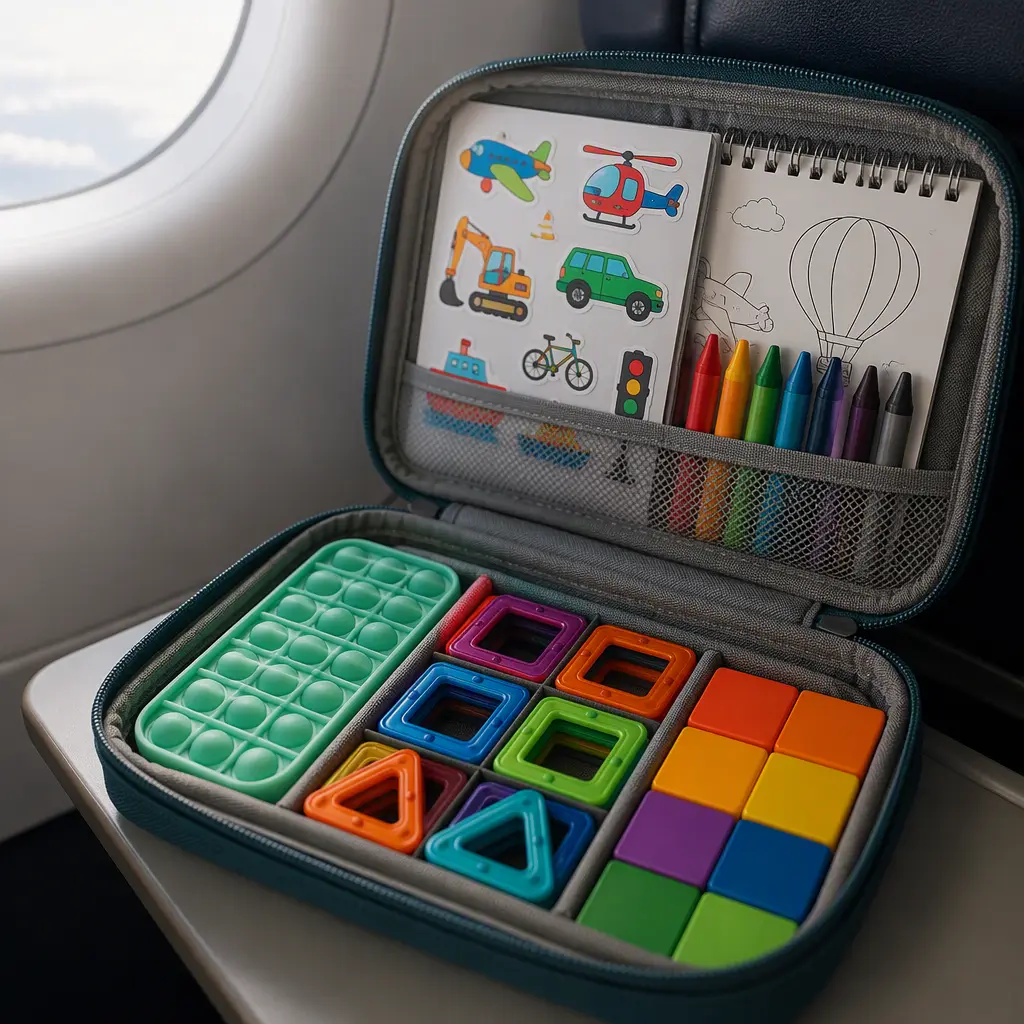
- Prefer attached or contained pieces, such as zip cases, hinged boards, or magnetic sets, to reduce lost parts.
- Select activities that can be paused quickly during snack service, takeoff, or bathroom trips.
- Avoid toys with strong rolling, throwing, or launching actions that can disturb nearby passengers.
- Consider cleanup time. Reusable sticker books and water-reveal pads create less mess than crayons, slime, or sand.
- Pack a variety of short and long activities rather than relying on one toy for the entire flight.
Age suitability
Children ages 3–5 are often interested in building, sorting, pretend play, and simple problem-solving, but their patience and fine motor skills still vary widely. Younger preschoolers may do better with chunky magnetic tiles, pop fidgets, or reusable sticker scenes because they can succeed independently. Older children closer to age five may stay engaged longer with compact building sets, travel puzzles, lace-and-thread activities, or magnetic pattern boards. Parents traveling with multiple children sometimes prefer toys that can be shared without competitive gameplay or strict rules. Small-piece construction toys can work well for older preschoolers who already handle them responsibly at home, but they may not suit children who still mouth objects or become frustrated by fiddly assembly in tight spaces.
Options compared
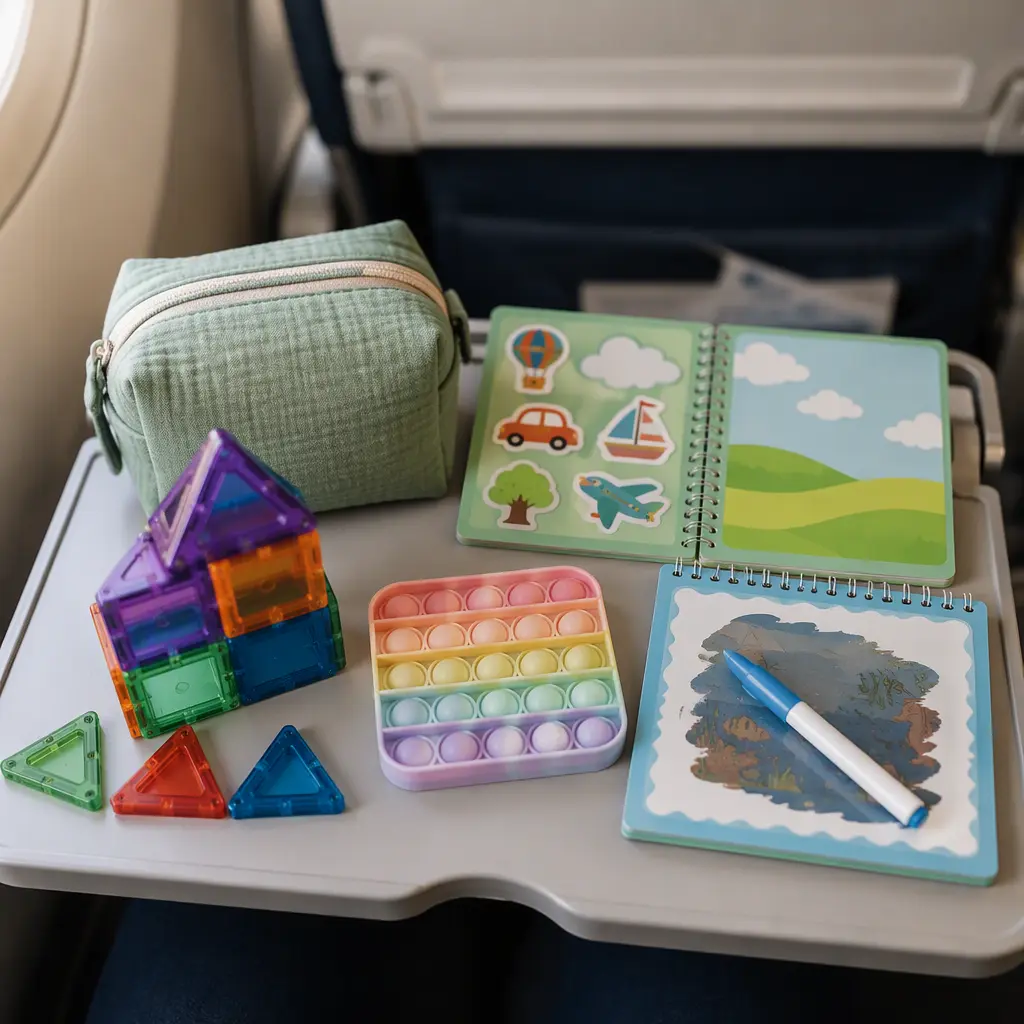
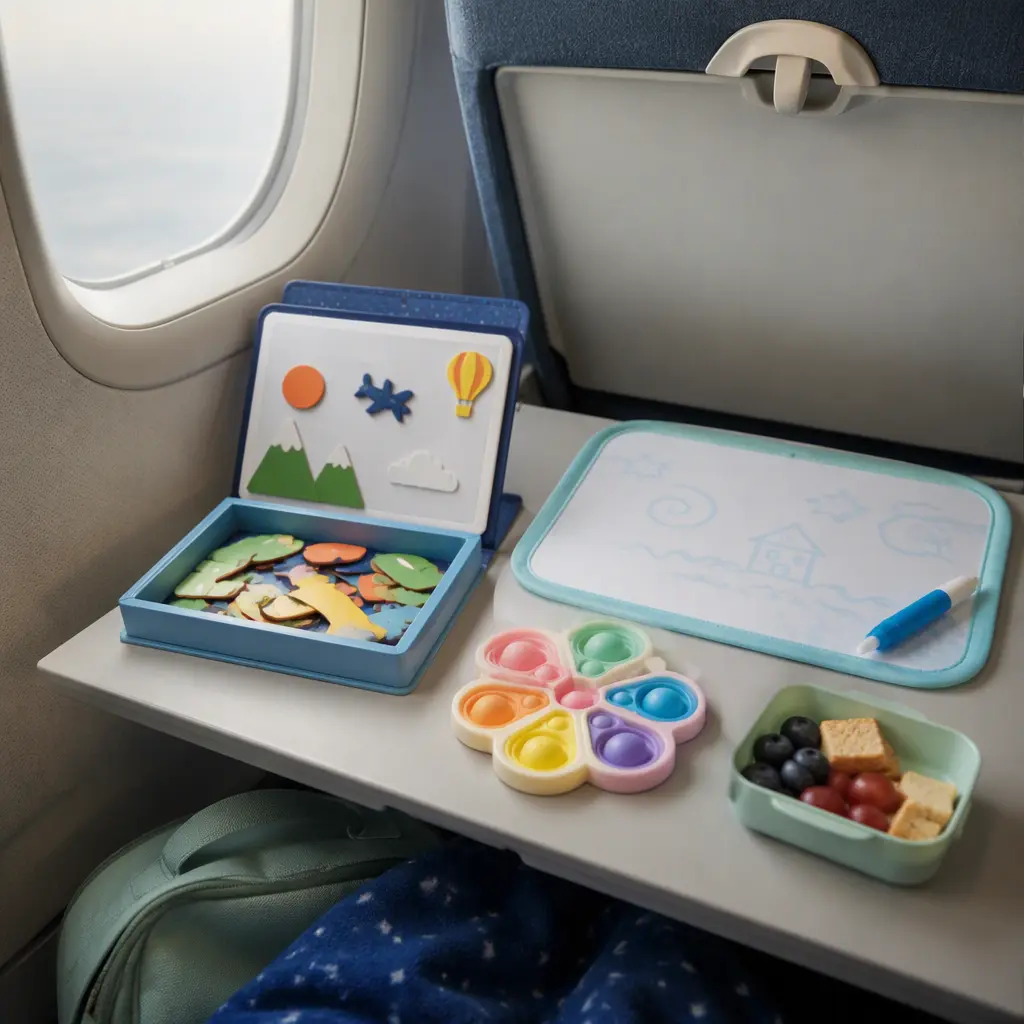
Reusable sticker books are one of the simplest choices for flights because they are lightweight, quiet, and easy to restart. They suit children who enjoy storytelling or arranging scenes repeatedly. The main trade-off is that some children lose interest quickly once the novelty fades. Magnetic play scenes solve some of the same problems while reducing loose-piece movement during turbulence, although stronger magnets are usually easier for younger preschoolers to manage independently.
Compact building toys can work surprisingly well on airplanes when the pieces are large enough and the set is intentionally small. Magnetic tiles, chunky interlocking blocks, or travel-sized construction sets give active children something physical to do with their hands without requiring large body movement. These toys tend to hold attention longer than single-purpose fidgets, but they also need tray-table space and can become frustrating if pieces slide away. Families trying to minimize cleanup may prefer silicone pop toys, soft sensory tubes, or buckle boards instead. Those options are extremely portable and quiet, though they generally provide shorter bursts of engagement.
- Water-reveal coloring pads: low mess, easy for younger preschoolers, limited replay value once completed several times.
- Magnetic travel games and boards: good balance of focus and portability, but small magnets require supervision.
- Soft fidget toys and pop toys: excellent for takeoff, waiting in lines, or short attention spans, though they may not occupy children for long flights alone.
- Compact building sets: best for children who enjoy hands-on construction and can manage pieces responsibly in tight spaces.
- Busy boards and buckle toys: useful for sensory seekers and children who like repetitive hand movements, especially during delays.
- Audiobooks with simple companion activities: helpful for quieter transitions, though they require headphones suitable for preschoolers.
Frequently asked questions
Are electronic toys a good idea on airplanes?
Electronic toys can help in certain situations, but many create noise, flashing lights, or repetitive sounds that may bother nearby passengers. Screen-free activities are often easier to manage during boarding and shorter flights. If electronic devices are used, volume-limiting headphones and downloaded offline content are usually more practical than noisy standalone toys.
What toys are least likely to fall on the airplane floor?
Magnetic toys, attached busy boards, reusable sticker books, and soft fidgets tend to stay contained better than loose blocks or miniature figures. Travel cases with zip closures also help prevent accidental spills when children switch activities quickly.
How many toys should parents pack for a flight?
A small rotation usually works better than a large bag of toys. Many families pack three to six compact activities and introduce them gradually throughout the trip. Saving one unfamiliar item for later in the flight can help restore interest when children become restless.
Are construction toys practical during turbulence?
Large-piece magnetic or interlocking toys are generally easier to manage than tiny brick systems during turbulence. If a child becomes frustrated when builds collapse or pieces slide, simpler sensory activities may work better during unstable parts of the flight.
What should parents avoid bringing on airplanes?
Toys with glitter, slime, kinetic sand, loud buttons, projectiles, or dozens of tiny loose parts can create cleanup and noise problems in confined spaces. Large ride-on airport toys may also become difficult to store under seats once onboard.
The most effective airplane toys for preschoolers are usually simple, quiet, and easy to manage in small spaces. Children who kick seats or struggle to sit still often benefit more from hands-on sensory play and compact building activities than from passive entertainment alone. Choosing toys with manageable piece counts, minimal mess, and flexible replay value can make flights smoother for both families and nearby passengers.