Best Screen-Free Travel Toys for Shared Tray Play
A parent-focused guide to compact screen-free travel toys for ages 3–5 that siblings can share on planes and trains without noisy electronics or easy-to-lose tiny pieces.
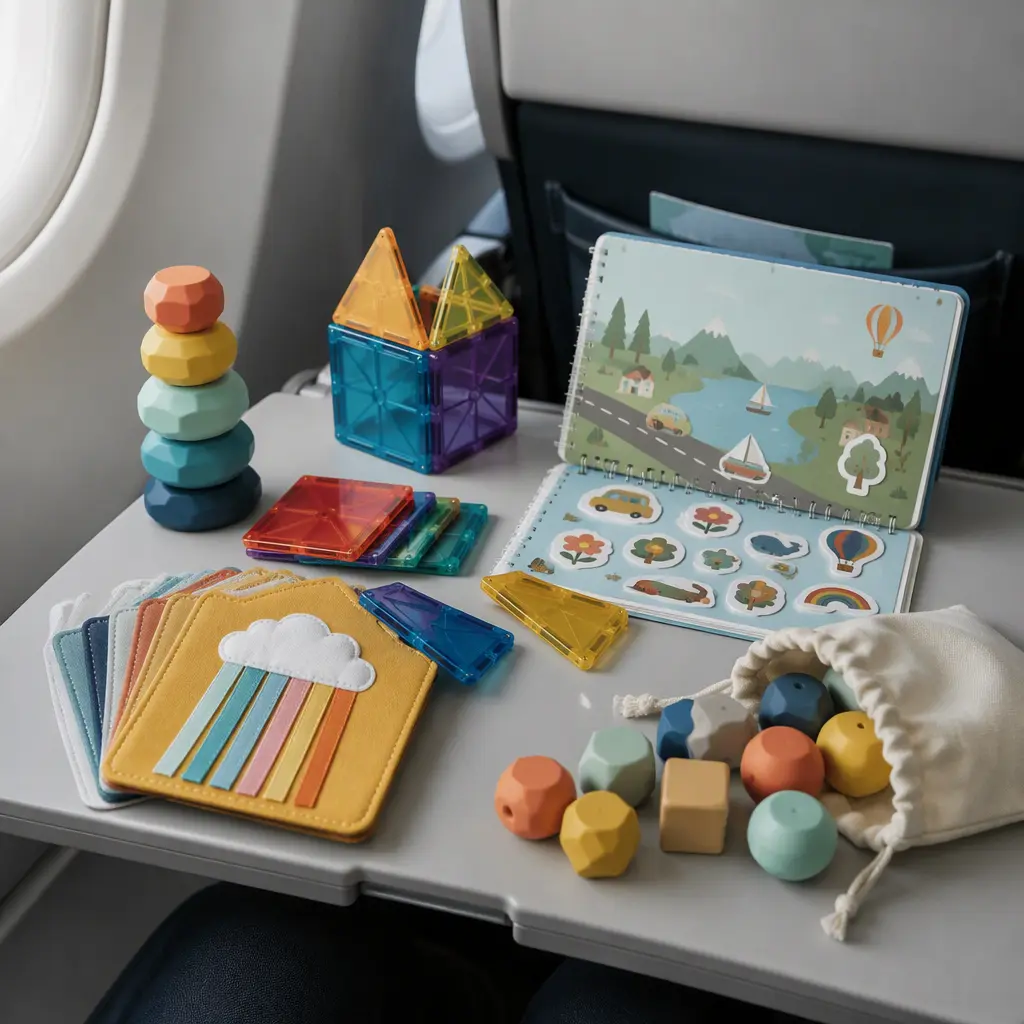
Compare prices and availability
Check current prices and availability for this guide on eBay.
As an eBay Partner, we may be compensated if you make a purchase.
Travel toys for preschoolers need to do more than fill time. On planes and trains, parents often need toys that stay contained, work quietly in small spaces, and can be shared without constant arguments over turns or missing pieces. For children ages 3 to 5, the best screen-free travel toys usually balance simple open-ended play with easy cleanup and low supervision. Shared tray play adds another challenge because two children may be reaching into the same small area at once. Toys that connect together, stick magnetically, fold flat, or store inside their own case tend to work best. Very small accessories, loud sound effects, and toys that spread across the floor can quickly become stressful in crowded travel environments.
What to look for
The most useful travel toys for shared tray play are compact, durable, and easy to reset after interruptions. Preschoolers often switch activities quickly during long trips, so toys that support both independent and cooperative play can stretch attention spans without requiring many separate parts. Storage matters almost as much as play value. Toys that zip closed, stack into one container, or attach magnetically reduce the chance of losing pieces under seats. Texture and noise level are also worth considering, especially in quiet train cars or overnight flights.
- Choose toys with large pieces that are difficult to drop or lose between seats.
- Look for magnetic, snap-together, or tethered components that stay connected during movement.
- Prefer soft or lightweight materials that will not disturb nearby passengers if dropped.
- Avoid toys with batteries, loud sounds, flashing lights, or rolling parts.
- Flat-pack activities such as reusable stickers, felt boards, or magnetic scenes are easier to store.
- Consider whether siblings can build or solve together instead of competing for one key piece.
- Pick toys that wipe clean easily after travel snacks and airport surfaces.
- Check packaging dimensions carefully if fitting toys into a personal item or small backpack matters.
Age suitability
Children ages 3 to 5 are often ready for simple cooperative play, but attention spans and fine motor skills still vary widely. Younger preschoolers may prefer chunky magnetic tiles, linking blocks, or felt play sets with large shapes they can handle independently. Older children closer to age 5 may stay engaged longer with compact building challenges, simple cooperative games, or reusable puzzle activities. Parents traveling with mixed ages may find open-ended toys easier because younger children can stack or sort while older siblings build more detailed structures. Toys marketed for older children sometimes include tiny accessories that are difficult to manage on a tray table, so it is worth checking piece size before traveling.
Options compared
Magnetic building toys are among the strongest choices for siblings sharing one tray because the pieces stay connected while traveling. Large magnetic tiles or magnetic sticks can support cooperative building without spreading far beyond the tray surface. They also tend to work well across the full 3-to-5 age range. The trade-off is weight. Some magnetic sets become heavy in carry-on bags, and smaller travel sets may limit how much two children can build together.
Reusable sticker scenes and felt boards are lighter and quieter than construction toys. They work especially well for children who enjoy storytelling and pretend play. Since the pieces attach to a surface, cleanup is simpler than with loose figurines or crayons. However, these activities may hold attention for shorter periods if a child strongly prefers hands-on building. Magnetic drawing boards and water-reveal activity pads are another low-mess option, though some children may struggle to share a single drawing surface peacefully on longer trips.
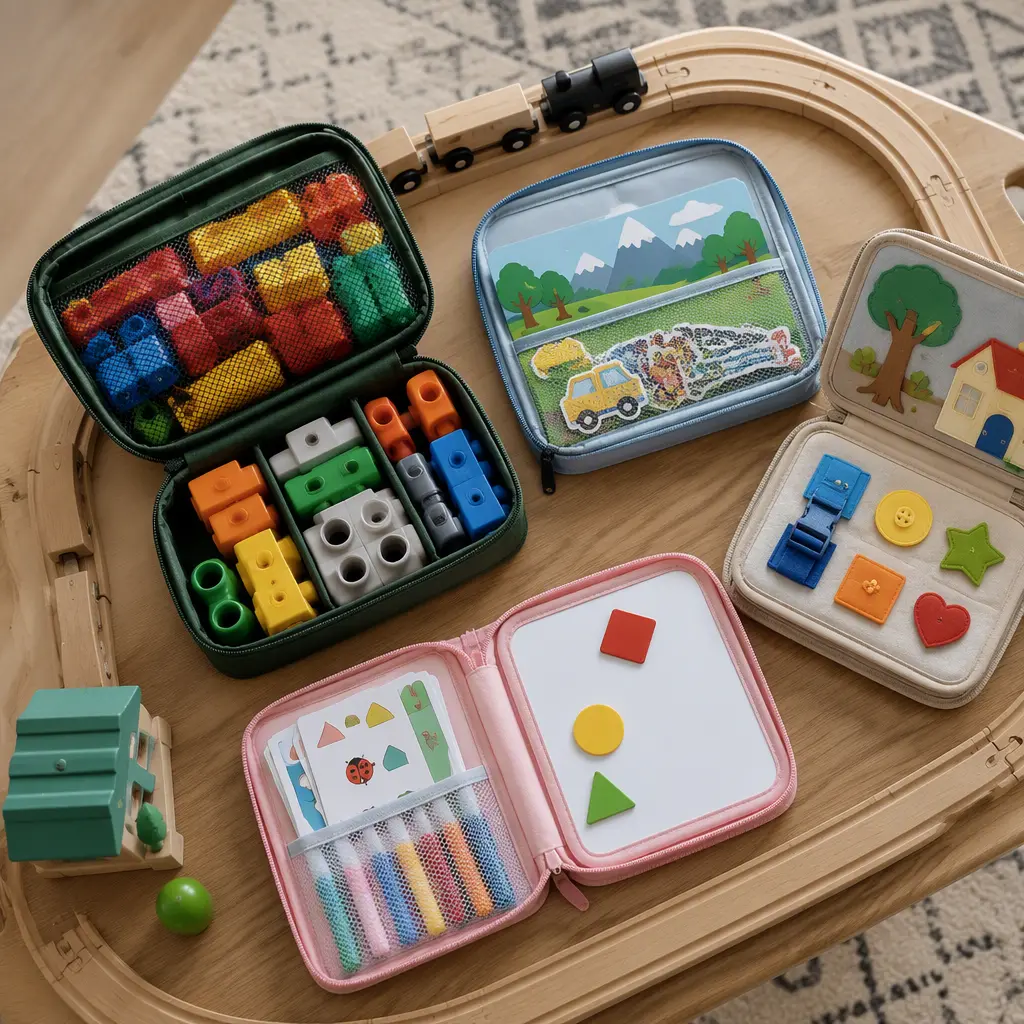
- Chunky magnetic building sets: Best for cooperative building and repeated play; heavier to pack.
- Reusable sticker or felt scenes: Lightweight and quiet; better for imaginative play than engineering-style building.
- Large linking blocks or pop-together pieces: Easy for younger preschoolers to manage; can become bulky.
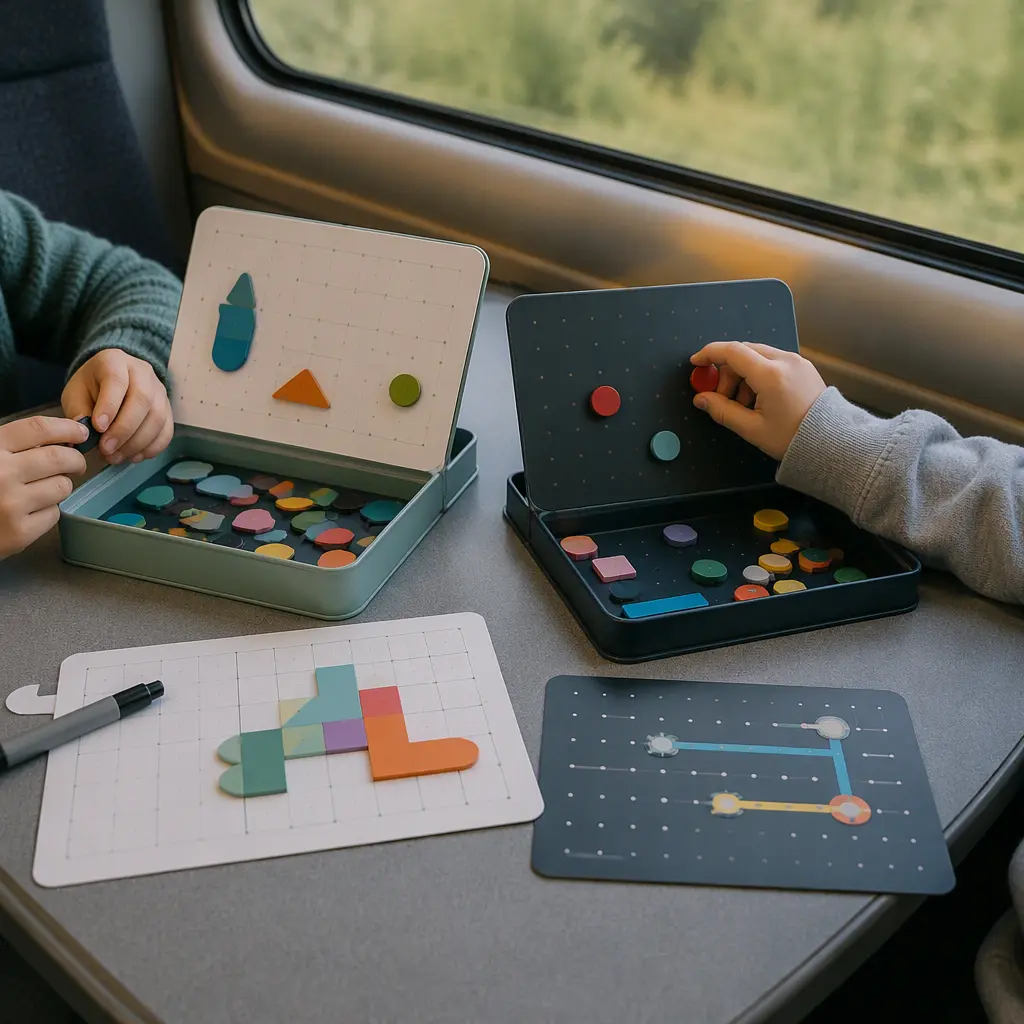
- Magnetic travel puzzles: Compact and self-contained; usually better for calm children who enjoy problem-solving.
- Soft busy books and fabric activity kits: Good for quiet travel and limited space; may not engage older preschoolers for long stretches.
- Cooperative card-style games with oversized pieces: Useful for siblings who enjoy taking turns; avoid decks with many tiny cards.
Frequently asked questions
Are magnetic toys safe for travel with preschoolers?
Large-piece magnetic toys designed for preschool ages are generally easier to manage during travel because the pieces stay attached during movement. Parents should still check for securely enclosed magnets and avoid sets with very small parts, especially when younger siblings are nearby.
What travel toys create the least mess?
Reusable sticker books, magnetic scenes, fabric activity boards, and water-reveal drawing pads usually create less mess than crayons, kinetic compounds, or miniature figurine sets. Toys with built-in storage cases also help reduce cleanup during transfers between gates or stations.
How many travel toys should parents pack for one trip?
A small rotation often works better than a large collection. Two or three compact activities with different play styles can maintain interest without overcrowding a bag or tray table. Many families combine one building activity, one creative activity, and one quiet puzzle-style option.
Which toys are easiest for siblings to share?
Open-ended toys with many equal pieces tend to reduce conflict. Large magnetic tiles, linking shapes, and collaborative scene-building activities allow children to participate at the same time instead of waiting for turns with one central object.
Are travel-sized construction toys worth buying?
Compact construction sets can work well for travel if the pieces are large enough to handle easily and store securely. Very tiny building bricks may be frustrating on moving transport because dropped pieces are difficult to recover in tight seating areas.
For shared tray travel play, the most practical screen-free toys are usually simple, quiet, and easy to contain. Preschoolers rarely need elaborate features to stay engaged during a trip. Toys that support cooperative play, pack down neatly, and avoid tiny loose parts can make flights and train rides more manageable for both children and adults.